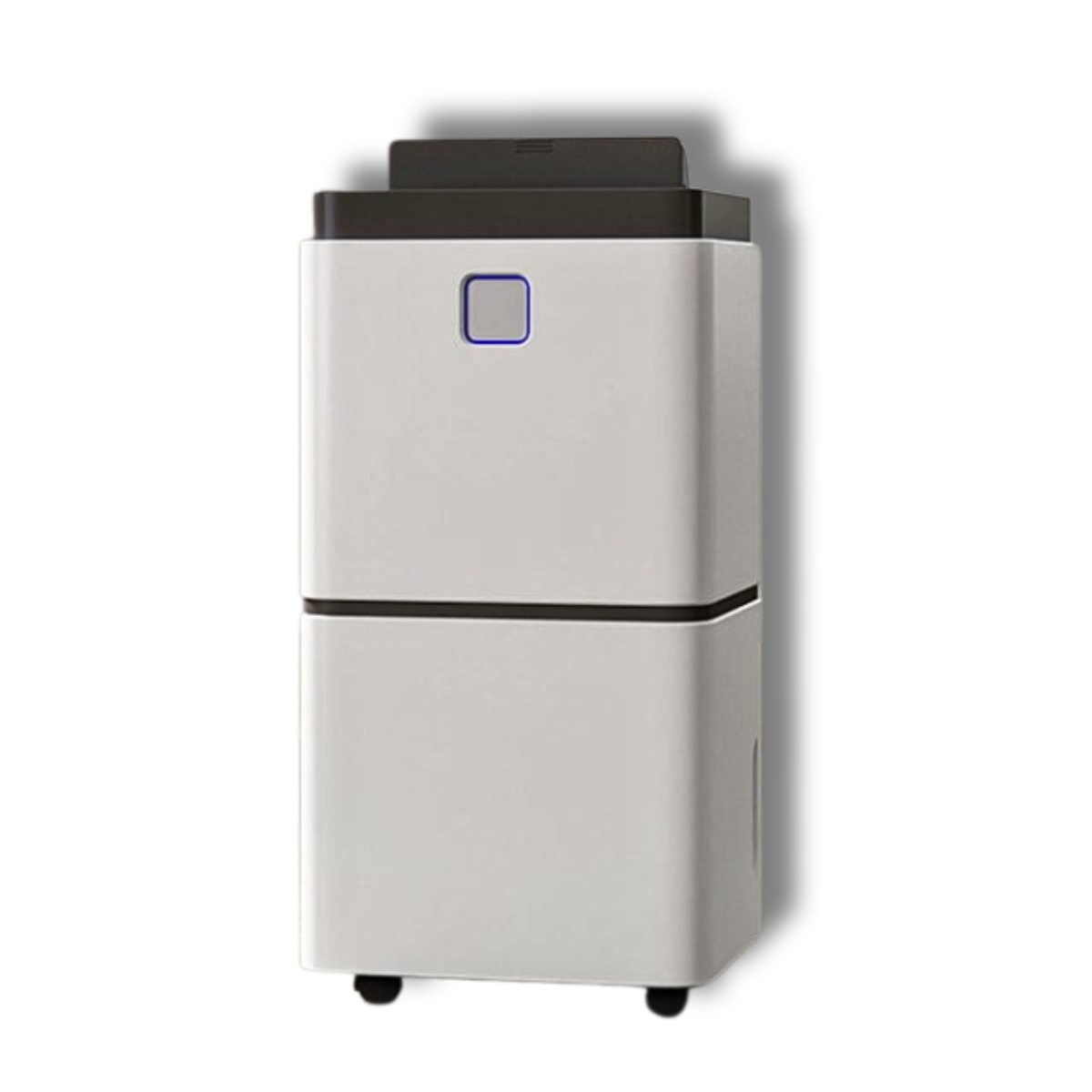
How to reduce and control humidity using dehumidifiers?


- Published Date - November 01, 2026
- Modified date - November 01, 2026
Table of Contents
Dehumidifiers support humidity control by removing excess moisture from indoor air and maintaining a target relative humidity (RH). This helps reduce condensation, mold growth, odors and moisture damage. Dehumidifiers also protect materials such as wood, plaster, flooring and stored paper from moisture related deterioration. Dehumidifiers are needed when signs of excess moisture appear, like condensation, musty odors, mold or mildew, peeling paint or wallpaper, damp materials, high humidity above 60% RH and moisture related pest problems. They help reduce these moisture related conditions by lowering excess indoor humidity.
Dehumidifiers control humidity most effectively when their capacity matches the room size and dampness level. They work more effectively when placed near the moisture source with adequate airflow clearance and regular filter cleaning. They maintain a target RH of 45% to 50% through humidistat operation and regular humidity monitoring.
Dehumidifiers should be used in basements, bathrooms, laundry rooms, bedrooms, kitchens, crawl spaces, storage rooms and garages. They help control moisture in these locations because bathing, laundry, cooking, groundwater, breathing and limited ventilation increase indoor humidity. Dehumidifiers also support standard living spaces when indoor RH remains elevated. They work alongside HVAC systems to support overall humidity management, while proper placement and airflow help maintain effective moisture removal.
Why does dehumidification matter for humidity control?
Dehumidification matters for humidity control because it removes excess moisture from indoor air before moisture settles on cold surfaces. It maintains a stable relative humidity between 30% and 50%, which is the EPA range for occupied rooms. It helps prevent condensation on window glass, cold water pipes and poorly insulated exterior walls.
Dehumidification matters because it prevents stickiness on skin, bedding and upholstery, which makes rooms feel cooler at the same thermostat settings. It limits mold growth below 60%, as spores germinate on damp surfaces within 24 to 48 hours. It also protects plaster, wood floors and stored paper from swelling, cupping and staining by removing excess moisture.
What are the signs you need a dehumidifier for humidity control?
The signs you need a dehumidifier for humidity control are condensation, musty odors, mold or mildew, peeling paint or wallpaper and damp materials. These indicators suggest that indoor air contains excess moisture, which causes surface moisture, material damage, elevated humidity levels and increased pest activity.
The signs you need a dehumidifier for humidity control are given below.
- Condensation: Condensation on windows, mirrors and cold pipes indicates excess indoor moisture, which means a dehumidifier may be needed to reduce humidity and prevent moisture buildup.
- Musty odors: Musty odors from carpets, closets and basements indicate excess moisture, which means a dehumidifier may be needed to keep these areas dry and reduce persistent dampness.
- Mold or mildew: Mold or mildew on walls, ceilings, grout or window frames indicates excessive moisture, which means a dehumidifier may be needed to control indoor humidity.
- Peeling paint or wallpaper: Peeling paint or wallpaper indicates moisture buildup behind surfaces, which means a dehumidifier may be needed to reduce indoor humidity and prevent further moisture damage.
- Damp materials: Damp bedding, towels, cardboard and clothing indicate excess moisture in indoor air, which means a dehumidifier may be needed to keep these materials dry.
- High humidity: High relative humidity such as above 60% indicates excessive indoor moisture, which means a dehumidifier is needed to bring humidity back to a more suitable level.
- Pest problems: Pest problems such as moisture loving pests like silverfish, dust mites and cockroaches indicate damp conditions, which means a dehumidifier is needed to reduce excess indoor humidity.
What are the most effective ways to control humidity using dehumidifiers?
The most effective ways to control humidity using dehumidifiers include choosing the right dehumidifier, placing the dehumidifier correctly and maintaining airflow clearance. These methods involve running dedicated portable units in moisture prone rooms to reduce indoor moisture and support consistent extraction. Dehumidifiers reduce indoor moisture when their capacity, placement, airflow, humidity settings and drainage match room conditions. They target 45% to 50% relative humidity to reduce condensation, mold risk and moisture related material damage. They maintain effective extraction through automatic operation, humidity monitoring and uninterrupted water removal.
The most effective ways to control humidity using dehumidifiers are listed below.
- Choose the right dehumidifier
- Place the dehumidifier correctly
- Maintain airflow clearance
- Set the target humidity level and operating mode
- Monitor indoor humidity
Choose the right dehumidifier
Choose the right dehumidifier by matching capacity to the space’s square footage and dampness level. Check room size and indoor humidity on a hygrometer. Select 20 to 30 pints for moderately damp rooms under 2,000 square feet. Choose 30 to 50 pints for highly damp basements and crawl spaces, which depends on room size. Consider a continuous gravity drain for tank free operation. Select ENERGY STAR certification and an adjustable humidistat to reduce running costs.
Place the dehumidifier correctly
Place the dehumidifier correctly in the dampest room or beside the moisture source. Position it in a central area to support proper airflow. Set it on a stable, level surface to keep the float switch and tank aligned. Maintain 12 inches of airflow clearance around the air inlet and outlet. Close windows, exterior doors and interior doors during operation to contain treated air within one room.
Maintain airflow clearance
Maintain airflow clearance by placing the dehumidifier on a level, open floor area outside cupboards and alcoves. Keep the air inlet and outlet clear of curtains, furniture, vents and registers so indoor air travels through the coils freely. Follow the manufacturer’s 6 to 12 inch clearance distance on every side. Clean dirty air filters every 2 to 4 weeks to prevent restricted intake and restore extraction. Avoid enclosed spaces with limited air circulation, including sealed closets and cabinets.
Set the target humidity level and operating mode
Set the target humidity level and operating mode by selecting 45 to 50% relative humidity in 5% control panel increments. Check air moisture with a hygrometer before operation to identify the required reduction. Select Humidistat mode for normal daily control because the compressor cycles off at the chosen target. Use continuous mode for flooded basements or freshly plastered rooms, where extraction runs without a target.
Monitor indoor humidity
Monitor indoor humidity with a digital thermo hygrometer that reports relative humidity within 2% to 3% accuracy. Place it at chest height away from the dehumidifier outlet, windows and exterior walls. Check readings twice daily during the first 24 to 72 hours to assess capacity. Interpret readings between 30% and 50% as balanced indoor air. Treat readings above 60% as insufficient capacity or an untreated leak. Confirm operation through a falling built-in humidistat reading and a filling water tank.
Where should you use a dehumidifier?
You should use a dehumidifier in basements, bathrooms, laundry rooms, bedrooms, kitchens, crawl spaces, storage rooms, garages, damp living areas and poorly ventilated rooms. These locations retain moisture from groundwater, bathing, laundry, cooking, breathing and limited ventilation, which creates condensation, odors, mold, pest activity and damage risks.
The places where you should use a dehumidifier are given below.
- Basements: Basements absorb groundwater through below grade walls, so a dehumidifier reduces moisture, prevents musty odors and protects stored belongings throughout the year from dampness.
- Bathrooms: Bathrooms retain shower and bath vapor, so a dehumidifier helps remove excess moisture from showers and baths, which protects grout, mirrors and painted ceilings from condensation.
- Laundry rooms: Laundry rooms collect water vapor when washing and drying clothes indoors, so a dehumidifier extracts several pints of moisture from enclosed, poorly ventilated spaces per load.
- Bedrooms: Bedrooms accumulate moisture from overnight breathing and perspiration, so a dehumidifier rated below 50 decibels maintains dry, quiet sleeping air throughout each night for occupants.
- Kitchens: Kitchens generate moisture through boiling, steaming and dishwashing, so a dehumidifier supports extractor fans in spaces without effective external venting systems during meal preparation periods.
- Crawl spaces: Crawl spaces receive moisture from bare earth floors, so a dehumidifier controls dampness before it causes structural damage to joists and subfloors within several seasons.
- Storage rooms: Storage rooms expose cardboard, paper, textiles, archived documents and seasonal clothing to airborne moisture, so a dehumidifier protects materials during extended storage periods effectively.
- Garages: Garages receive moisture from wet vehicles and concrete slabs, so a dehumidifier prevents corrosion on tools, bicycles and metal shelving near exterior walls indoors.
- Damp living areas: Damp living areas need a dehumidifier when humidity feels uncomfortable at normal temperatures, especially near the dampest wall or a persistent moisture source indoors.
- Poorly ventilated rooms: Poorly ventilated rooms exchange air slowly without windows, so a dehumidifier removes accumulated water vapor when natural ventilation does not support effective moisture control.
Can a dehumidifier be used in enclosed spaces?
Yes, a dehumidifier can be used in enclosed spaces because it removes excess moisture from air with limited circulation. A dehumidifier controls humidity in pantries, wardrobes and windowless bathrooms. It prevents mold, mildew and condensation on stored fabrics and cold interior walls during continuous operation.
Where should you not use a dehumidifier?
You should not use a dehumidifier in flat against walls or squeezed into corners, as restricted airflow reduces water collection by up to 40%. A dehumidifier also fails inside unrated wet areas, which include shower enclosures, outdoor patios and uncovered porches.
Should you use a dehumidifier in winter?
Yes, you should use a dehumidifier in winter because indoor humidity is too high in moisture prone rooms. A dehumidifier removes excess moisture from basement, bathroom and laundry room air. It helps prevent mold growth, condensation, musty odors and moisture damage on cold surfaces and stored materials.
Should you run a dehumidifier all day?
No, you should not run a dehumidifier all day because a suitable target humidity lets the compressor cycle off automatically. A dehumidifier uses humidistat control to maintain a consistent humidity level near 50%. It runs continuously during post flood drying or persistent moisture conditions in unheated basements.
How long should you run a dehumidifier?
You should run a dehumidifier about 8 to 12 hours a day, as the room’s humidity determines the required extraction time. A dehumidifier runs longer in saturated basements than bedrooms. It uses a built-in humidistat to shorten runtime after relative humidity reaches the selected target.
Is a dehumidifier worth it?
Yes, a dehumidifier is worth it because a 30 pint unit protects finishes and stored goods worth thousands of dollars. A dehumidifier reduces excess moisture and improves indoor comfort. It remains useful in damp rooms and poorly ventilated areas, where drier air protects materials and supports comfortable living.
What are the downsides of using a dehumidifier?
The downsides of using a dehumidifier are high electricity use, operational noise, constant upkeep and overdrying indoor air. A dehumidifier draws 300 to 700 watts and produces 45 to 55 decibels near a desk. It cracks wood floors and opens joinery seams when settings fall below 30%.
What is the difference between a humidifier and a dehumidifier?
The difference between a humidifier and a dehumidifier is that one adds water vapor, while the other removes it. A humidifier eases chapped skin and irritated sinuses when humidity falls below 30%. A dehumidifier pulls extra water from the air and reduces mold and musty smells above 60%.
How to dehumidify a room without a dehumidifier?
To dehumidify a room without a machine, natural absorbents remove moisture from small sealed spaces. A dehumidifier is replaced by calcium chloride, which pulls up to 1 pint of water each week. It uses a DIY colander and bowl drip trap to separate crystals from brine, while 15 minute cross ventilation twice daily supports healthier indoor air.
Products
Solar Panel
Air Purifier