8 Dehumidifier Disadvantages and Side Effects

- Published Date - November 2, 2026
- Modified date - November 2, 2026
Table of Contents
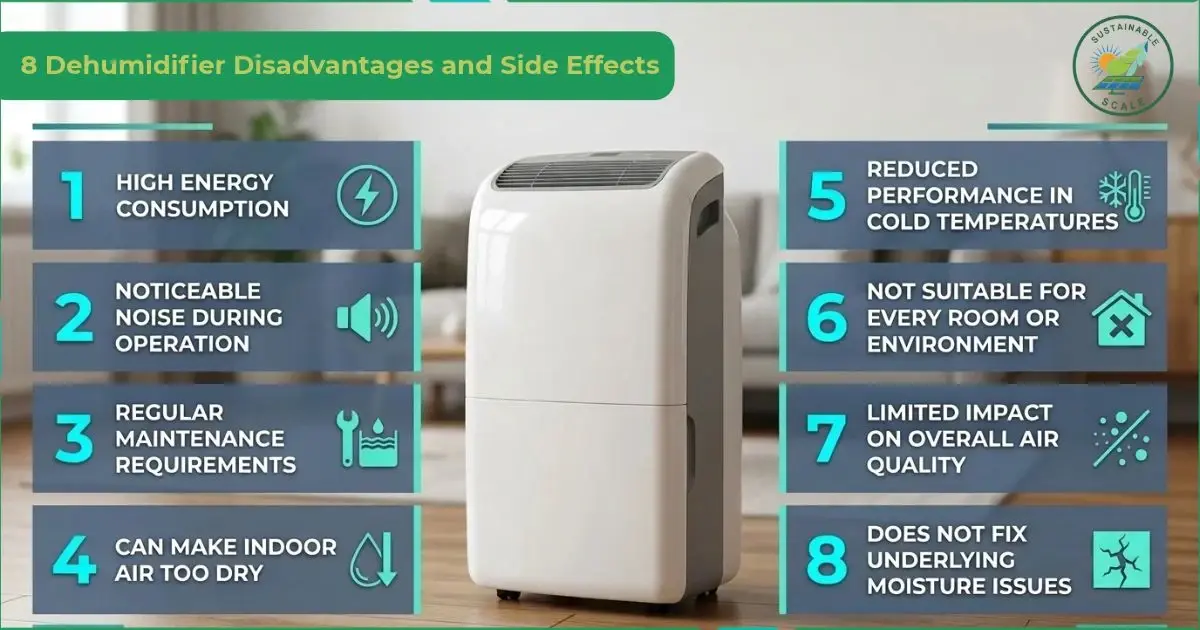
The disadvantages of a dehumidifier are high energy consumption, noticeable noise during operation, regular maintenance requirements and making indoor air too dry. A dehumidifier for room setups relies on energy consumption to power refrigeration or desiccant systems. It produces noticeable noise during operation that disrupts quiet environments and disturbs sleep or concentration in shared spaces. A dehumidifier’s maintenance requirements are regular cleaning, filter service and inspections. It increases dryness in enclosed spaces and also strips moisture from the air in ways that irritate the skin and respiratory tissues.
A dehumidifier shows reduced performance in cold conditions and loses moisture removal capacity as coil surfaces cool. It is not suitable for every room or environment when airflow, temperature and placement conditions reduce efficiency and raise power usage. A dehumidifier increases indoor comfort by humidity control, but its limited impact on overall air quality leaves particles, odors and underlying moisture issues unresolved.
The 8 disadvantages of a dehumidifier are listed below.
- High energy consumption
- Noticeable noise during operation
- Regular maintenance requirements
- Can make indoor air too dry
- Reduced performance in cold temperatures
- Not suitable for every room or environment
- Limited impact on overall air quality
- Does not fix underlying moisture issues
1. High energy consumption
A dehumidifier consumes high energy and draws electricity through a refrigeration cycle and converts latent moisture into sensible heat. It maintains a continuous power draw during constant operation in humid climates and increases energy use and component wear. It drives mechanical and electrical parts under prolonged stress and accelerates internal degradation throughout its service life.
A dehumidifier releases warm air into conditioned spaces and raises the indoor temperature. It increases air conditioner runtime and generates secondary cooling costs for maintaining thermal comfort. It routes condensed moisture and heat through a reheat mechanism and elevates the room’s sensible heat load. A dehumidifier raises grid demand through intensive operation and creates an increased carbon footprint from higher indirect emissions.
2. Noticeable noise during operation
A dehumidifier produces noticeable noise during operation and introduces mechanical sounds into enclosed rooms. Its noise levels show how its compressor produces a humming or buzzing sound that becomes highly noticeable in quiet rooms. A dehumidifier adds a disruption factor when the fan circulates air and the vibrating housing transmits structural noise. It disturbs light sleepers and sensitive listeners, which affects room suitability for rest or focused tasks.
A dehumidifier emits constant mechanical sounds and introduces a steady acoustic presence in occupied spaces. It sends compressor vibrations through mounting points and transmits noise through walls and floors in attached rooms. It interrupts concentration during work and disturbs quiet spaces in small apartments or home offices. It remains acceptable for living rooms when occupants tolerate moderate sound and prioritize humidity control over silence.
3. Regular maintenance requirements
A dehumidifier requires regular maintenance and needs consistent attention to keep performance stable. It requires emptying the water basin on schedule and interruptions occur when manual draining stops moisture removal cycles. A dehumidifier needs filter cleaning to prevent dust buildup, which otherwise restricts airflow and reduces drying efficiency. It depends on coil maintenance to keep heat exchange surfaces clean and maintain effective condensation.
A dehumidifier requires ongoing inspection tasks that increase workload for owners. It needs filter replacements at defined intervals, which raises dehumidifier ownership costs across its service life. A dehumidifier takes internal surface cleaning and poor maintenance promotes mold, bacteria and allergens in collected moisture. It needs regular cleaning and service steps that compare maintenance needs with simpler appliances and make dehumidifiers time consuming to manage.
4. Can make indoor air too dry
A dehumidifier can make indoor air too dry and strip essential moisture from living spaces during extended operation. It leaves occupants with irritated eyes and causes dryness in the nasal passages and the respiratory system. A dehumidifier irritates skin surfaces and increases itching or flaking in sensitive individuals. It increases static electricity throughout rooms and affects comfort when people interact with fabrics or electronic devices.
A dehumidifier removes moisture continuously and alters the balance that maintains indoor humidity within a healthy range. It dries wooden furniture, flooring and instruments and causes wood cracking in vulnerable joints. It accelerates surface degradation and exposes walls to peeling paint in older structures. It lowers relative humidity and increases heating costs because dry air feels cooler and encourages higher thermostat settings.
5. Reduces performance in cold temperatures
A dehumidifier reduces performance in cold temperatures and experiences reduced condensation when the room air drops near or below its dew point. It removes less moisture because low temperatures decrease vapor pressure and limit phase change on the coil surface. A dehumidifier accumulates frost formation on exposed coils as chilled air flows across metal surfaces. It triggers automatic shutoff events that halt moisture removal cycles and interrupt continuous dehumidification in colder spaces.
A dehumidifier runs longer cycles in cool rooms and struggles to maintain a stable average temperature across the coil and the airstream. It activates defrost cycles that pause normal operation and lower overall efficiency in cold conditions. A dehumidifier demands a longer runtime to deliver similar moisture removal and results in a higher energy cost for users. It delivers inconsistent water collection in basements or unheated areas and frustrates expectations for steady dehumidification performance.
6. Not suitable for every room or environment
A dehumidifier is not suitable for every room or environment and develops room size incompatibility when conditions fall outside its design range. A desiccant dehumidifier experiences an efficiency drop when temperature limits restrict its drying performance in marginal conditions. A dehumidifier loses airflow in tightly enclosed spaces and reduces moisture removal as circulation pathways narrow. It faces wet rooms that stress electrical components and reduce dehumidifier safety and performance.
A dehumidifier introduces noise pollution in quiet bedrooms and shared living spaces and disturbs occupants. It creates over drying risks in lightly furnished rooms where limited fabrics retain little residual moisture. A dehumidifier wastes energy when soft surfaces and drafty areas disperse conditioned air and reduce effective moisture capture. It raises power consumption in marginal locations and undermines expected efficiency gains from targeted humidity control.
7. Limited impact on overall air quality
A dehumidifier has a limited impact on overall air quality and focuses primarily on moisture removal from indoor spaces. It extracts water from the air but does not provide particle removal or address odors in occupied rooms. This unit lacks fine mechanical filters that target small particulates and suspended contaminants. A dehumidifier leaves gaseous pollutants in circulation and does not reduce odors or volatile organic compounds VOCs that persist in enclosed areas.
A dehumidifier reduces humidity levels but remains unsuitable for air purification tasks. It maintains drier conditions that discourage mold growth but leaves airborne allergens in place without filtration support. A dehumidifier creates stagnant air risk when circulation is low and ventilation strategies receive insufficient attention. It requires secondary devices such as dedicated air purifiers to manage allergens and improve overall air cleanliness.
8. Does not fix underlying moisture issues
A dehumidifier does not fix underlying moisture issues and reduces only the symptoms of damp air in occupied rooms. It creates a false sense of security when surfaces feel dry while leaks or seepage continue inside walls and subfloors. This unit hides deeper problems and allows persistent material damage in framing, insulation and floor assemblies. It contributes to escalating financial drain when cosmetic comfort improves, but structural defects remain unaddressed.
A dehumidifier lowers relative humidity and masks warning signs that indicate hidden water intrusion. It leaves concealed cavities with enough moisture to support hidden mold growth behind walls and within insulation. A dehumidifier exposes support members to gradual decay and encourages structural rot in building elements over time. It delays thorough investigation of moisture sources and keeps long term risks for occupants and property intact.
What are the side effects of a dehumidifier?
The side effects of a dehumidifier include dry skin, dry eyes, dry throat, dry nasal passages, respiratory irritation and wood furniture damage. These effects appear when indoor air becomes very dry and they increase discomfort in sensitive skin, eyes, nasal passages and breathing.
The side effects of a dehumidifier are outlined below.
- Dry skin: A dehumidifier strips moisture from skin and reduces hydration levels of the outer layer. It makes sensitive areas crack, flake, worsen eczema and create a visible rough texture on exposed regions.
- Dry eyes: A dehumidifier removes ambient humidity around the eyes and destabilizes tear films over delicate surfaces. It decreases contact lens comfort, increases burning sensations and triggers persistent itching.
- Dry throat: A dehumidifier dries inhaled air and causes irritation of the mucous membranes in the throat and upper airway. It makes swallowing uncomfortable, increases scratchy sensations and encourages frequent throat clearing.
- Dry nasal passages: A dehumidifier removes moisture from nasal passages and reduces protective mucus layers along internal tissues. It makes tissues more fragile, increases the risk of nosebleeds, and creates a persistent feeling of internal dryness.
- Respiratory irritation: A dehumidifier lowers humidity around airways and stresses sensitive lung tissues during regular breathing. It makes breathing less comfortable, aggravates Chronic Obstructive Pulmonary Disease (COPD) symptoms and increases coughing in vulnerable individuals.
- Wood furniture damage: A dehumidifier reduces moisture content in wood furniture and destabilizes internal fibers in structural components. It makes surfaces crack, joints loosen and decorative finishes peel, warp or lose their smooth, consistent appearance.
- Hardwood floor shrinkage: A dehumidifier decreases moisture within hardwood floor planks and changes their dimensions across seasons. It makes gaps appear between boards, increases squeaking sounds and reduces the stable fit of flooring along room edges.
How to mitigate the side effects of a dehumidifier?
To mitigate the side effects of a dehumidifier, monitor humidity, hydrate frequently, use saline sprays, apply heavy moisturizers and utilize targeted ventilation. These steps protect skin, eyes, nasal passages and breathing while they keep indoor comfort within a healthy range.
The processes to mitigate the side effects of a dehumidifier are given below.
- Monitor humidity: Monitor humidity between 40 to 50% and check room levels using a hygrometer in key living areas. Maintain stable conditions and prevent excessive dryness that irritates skin, eyes, nasal passages and respiratory tissues.
- Hydrate frequently: Drink water regularly throughout the day and support internal moisture balance. Hydrate body systems and reduce dryness in skin, mucous membranes, throat surfaces and respiratory passages.
- Use saline spray: Use saline spray inside the nasal passages and restore protective moisture layers. Protect delicate tissues and reduce irritation, discomfort and bleeding risks linked to excessively dry indoor environments.
- Apply heavy moisturizers: Apply heavy moisturizers on exposed skin and repair the skin barrier after dehumidifier use. Seal in hydration and reduce cracking, flaking, redness and sensitivity on hands, face and other vulnerable areas.
- Utilize targeted ventilation: Direct targeted ventilation toward localized damp sources and manage airflow paths through problem zones. Remove residual moisture efficiently and prevent reliance on extremely low humidity across entire living spaces.
- Maintain the unit: Maintain the unit through filter replacement, coil cleaning and drain inspection on regular schedules. Protect performance, reduce contamination risks and keep humidity regulation consistent across active rooms.
- Use auto mode: Use auto mode on the dehumidifier and select balanced settings for household needs. Match the runtime with actual humidity levels and reduce unnecessary drying of indoor air and household surfaces.
- Add a humidifier: Add a humidifier in the driest zones and balance moisture distribution inside the home. Prevent extreme dryness, protect wooden materials and support comfortable breathing and skin conditions across seasons.
How to choose the right dehumidifier to reduce the side effects?
To choose the right dehumidifier to reduce the side effects, match capacity, a built-in humidistat, an energy efficient model, a low noise level and a suitable dehumidifier type. Verify automatic features, drainage options, filter maintenance, airflow coverage and smart controls to ensure the unit runs safely.
Things to check before buying a dehumidifier for reducing the side effects are given below.
- Correct capacity: Match moisture removal capacity to your room’s square footage and current humidity level. Avoid running an undersized unit without drying the air properly or wasting energy with an oversized one.
- Built-in humidistat: Select a built-in humidistat to maintain relative humidity within the healthy 40 to 60% range automatically. Prevent the air from becoming too dry, which irritates skin, eyes and respiratory passages.
- Energy efficient model: Prioritize an ENERGY STAR certified model to cut energy use by roughly 20% versus non-certified units. Reduce continuous heat output into the room during long operation through lower power draw.
- Low noise level: Compare decibel ratings and pick a low noise level unit, especially for bedrooms or small enclosed spaces. Reduce sleep disruption and stress caused by constant background appliance noise.
- Suitable dehumidifier type: Identify the suitable dehumidifier type, refrigerant based for warm rooms or desiccant for cold basements, based on climate. Avoid reduced efficiency and leftover excess moisture from using the wrong type.
- Automatic features: Look for automatic features like float sensors and auto shut-off to prevent overflow and unnecessary overnight running. Avoid water spillage risks and reduce unattended energy consumption while you sleep.
- Continuous drainage option: Choose a continuous drainage option with a hose connection to avoid manually emptying the tank in very damp spaces. Ensure uninterrupted operation and prevent stagnant water from breeding mold.
- Easy to maintain air filter: Pick a model with an easy to maintain air filter to prevent mold buildup and maintain airflow performance. Stop dirty filters from recirculating allergens and worsening indoor air quality.
- Appropriate airflow coverage: Verify appropriate airflow coverage by checking the manufacturer’s rated square footage against your actual room size. Prevent pockets of uneven humidity that encourage localized mold or mildew growth.
- Smart controls and scheduling: Opt for smart controls and scheduling with Wi-Fi connectivity to enable programmable scheduling and remote humidity monitoring. Fine tune operation hours and avoid overexposure to constant dry airflow.
What is the best type of dehumidifier to buy for reducing side effects?
Midea Cube (MAD50S1QWT) is the best type of dehumidifier to buy for reducing the side effects because it balances strong drying performance with gentle comfort. Midea Cube (MAD50S1QWT) uses a compressor (refrigerant) model with a 50 pint capacity, which is the most energy efficient and remains durable and cost effective.
What is the most recommended dehumidifier?
The most recommended dehumidifier is the Midea Cube because HouseFresh highlights its performance, efficiency and practical design for real homes. Midea Cube features a unique nesting design, delivers a 4.2 gallon capacity with a built-in pump and reduces emptying effort during continuous operation.
Do dehumidifiers use a lot of electricity?
Yes, dehumidifiers do use a lot of electricity because dehumidifier electricity consumption stays significant during extended operation in damp environments. Dehumidifiers in standard residential units draw power continuously as they remove moisture and they increase household energy bills when they run for long periods.
Are dehumidifiers expensive to run?
No, dehumidifiers are not expensive to run because many modern units are energy efficient and they limit electricity usage in regular household conditions. Dehumidifiers with auto modes and humidistats adjust runtime based on room humidity and they reduce unnecessary operation that increases monthly energy costs.
How can you prevent frequent water tank emptying?
You can prevent frequent water tank emptying by directing collected water into a drain line and reducing unnecessary moisture sources around the dehumidifier. A dehumidifier reduces frequent tank filling when you fix hidden plumbing leaks, prevents accidental siphoning and controls high volume water usage in connected areas.
Can a dehumidifier cause sinus problems?
Yes, a dehumidifier can cause sinus problems when it dries indoor air too much and irritates the nasal tissues. A dehumidifier helps alleviate sinus issues when it controls humidity that encourages dust mites. It worsens congestion and breathing discomfort when dirty filters introduce irritants into the nasal passages.
Are there any benefits of using a dehumidifier?
Yes, there are benefits of using a dehumidifier because it helps control excess moisture that damages materials and affects indoor comfort. A dehumidifier helps by reducing mold and dust mites, which lowers allergies and respiratory issues by creating a drier, more stable environment.
How does a dehumidifier help with dust?
A dehumidifier helps with dust because it reduces airborne particles by controlling the moisture that allows them to cling to surfaces and circulate. A dehumidifier lowers populations of dust mites by drying their preferred environments. It improves indoor cleanliness and comfort when humidity stays within a healthier range.
What issues can you face when using a dehumidifier in winter?
Issues you can face when using a dehumidifier in winter are linked to overly dry air that irritates people and stresses household materials. A dehumidifier produces dry indoor conditions that affect skin, nasal passages and throats, which make indoor environments feel less comfortable for occupants. It increases the risk of cracked woodwork and static shocks when humidity drops too low and fragile materials and surfaces lose their natural moisture balance.
Will a dehumidifier help cool my house?
Yes, a dehumidifier will help cool your house because it removes excess moisture that makes warm air feel heavier and more uncomfortable. A dehumidifier reduces stickiness and sweat on your skin, which improves comfort by making indoor temperatures feel cooler without lowering actual air temperature.
Are there alternatives to a dehumidifier?
Yes, there are alternatives to a dehumidifier because different methods reduce indoor humidity and address moisture problems in targeted ways. A dehumidifier has alternatives that include ventilation strategies that exhaust damp air and lower humidity in enclosed rooms. It also faces alternatives such as air conditioning and moisture absorbing materials that remove or capture excess moisture indoors.
Products
Solar Panel
Air Purifier