Browse our eco-friendly living essentials that power your home with clean energy and improve your indoor air quality.
Discover our best-selling solar panels, air purifiers and dehumidifiers trusted for their performance, savings and comfort. Power your home, purify and remove excess moisture from your air with Sustainable Scale.
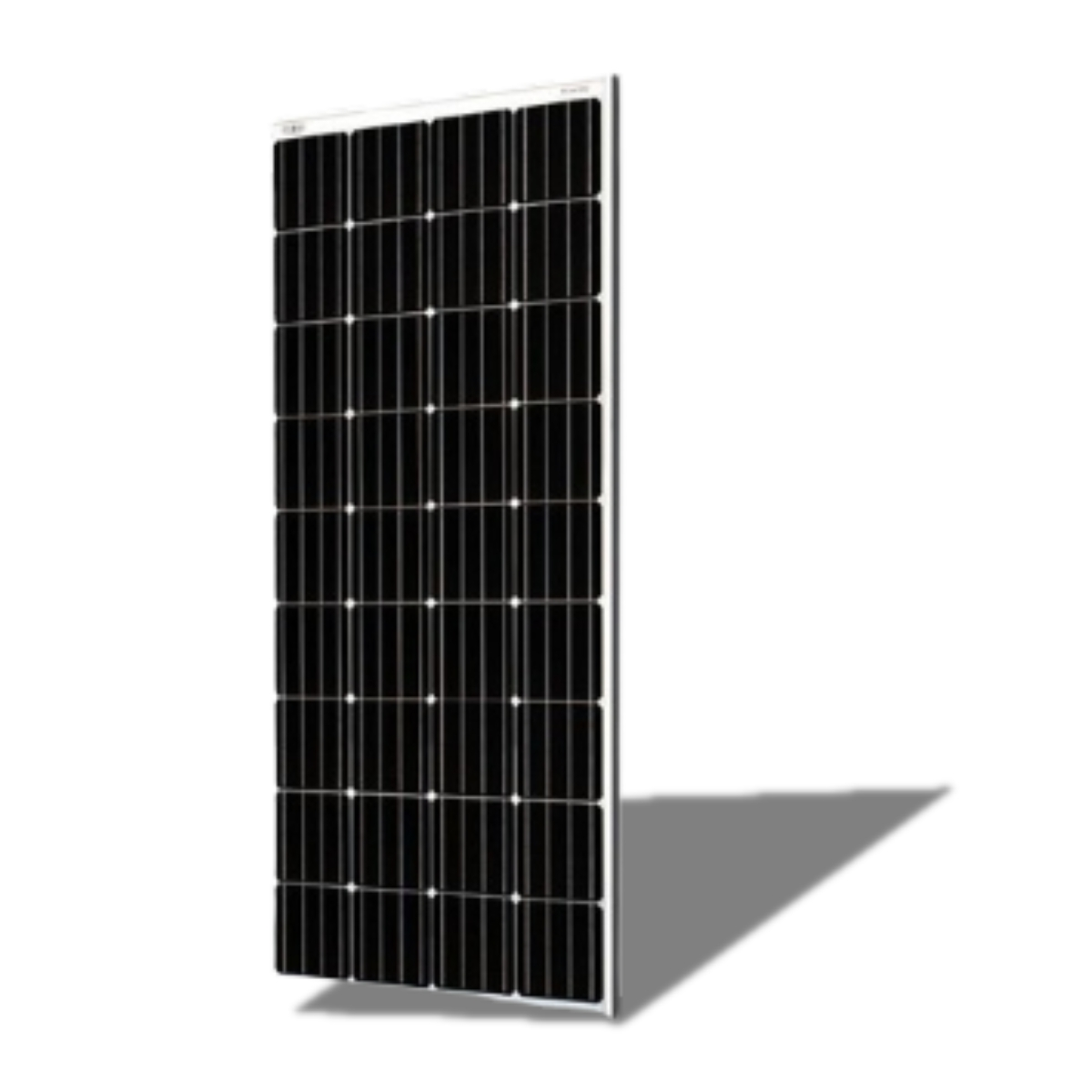
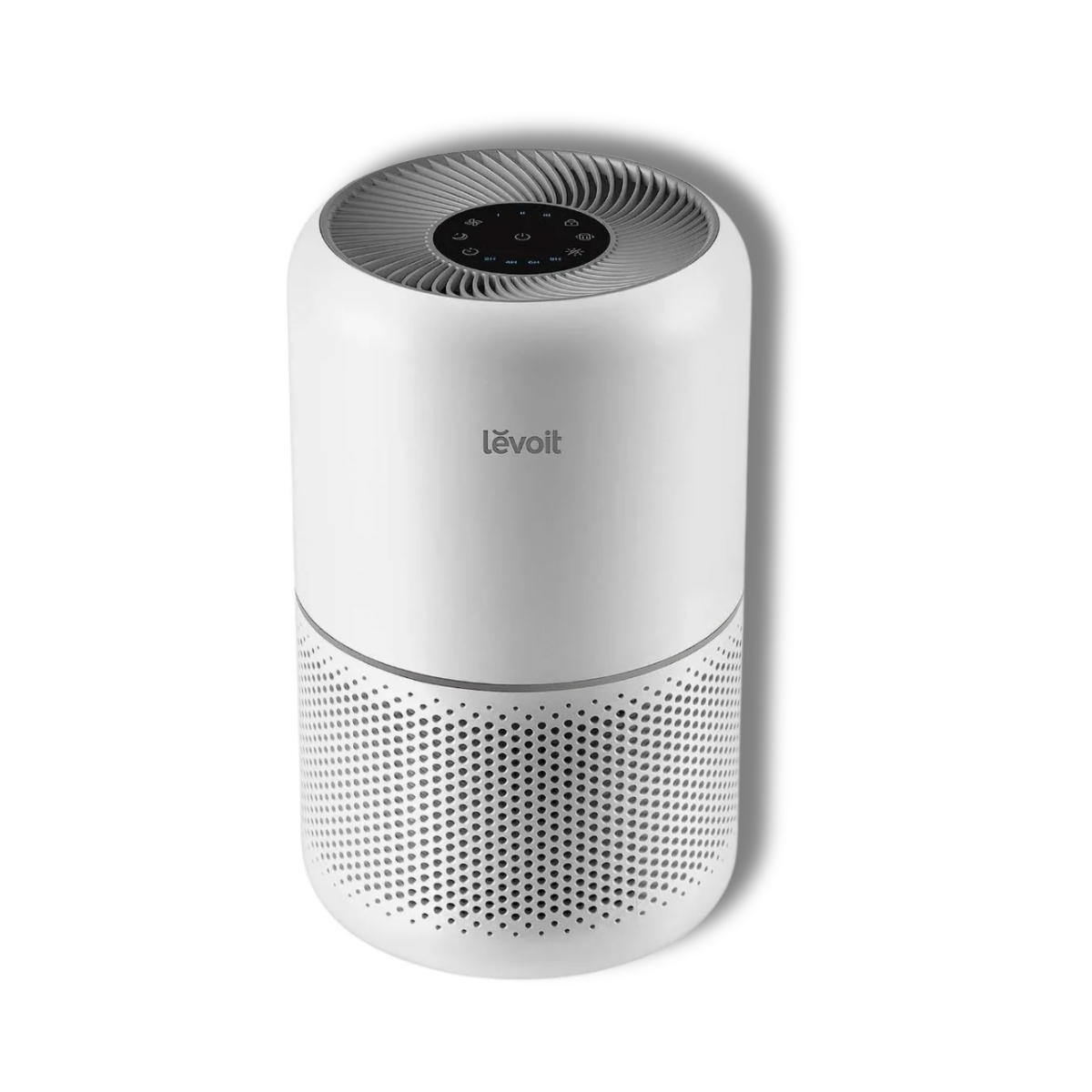
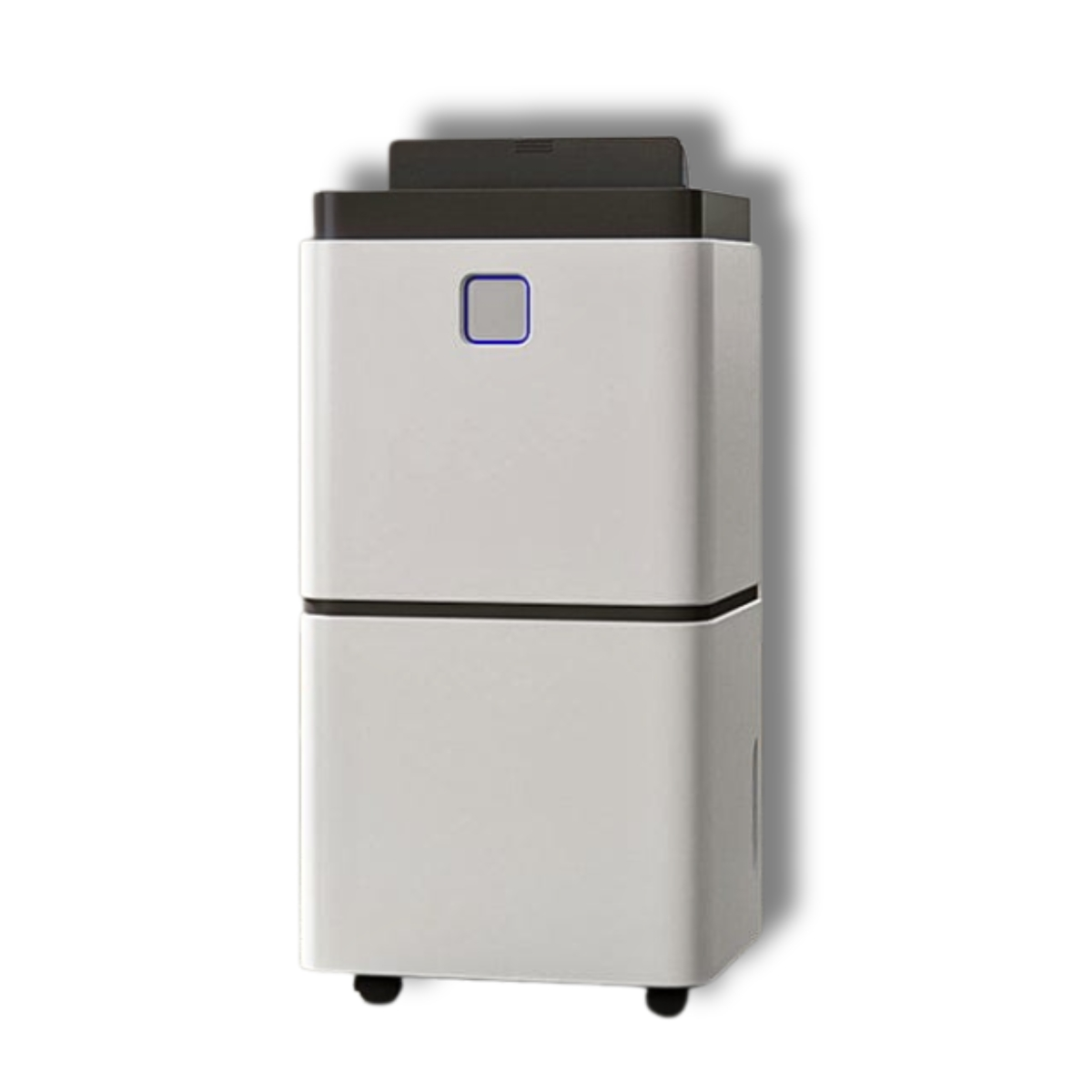
Get our products to transform your home into a cleaner, more efficient space powered by renewable energy and healthy-air solutions.
Sustainable Scale Offers a full ecosystem of solar panels, air purifiers and dehumidifiers designed to make your home energy-efficient, comfortable, and healthy. Our all-in-one solutions simplify your installation, reduce hassle and confirm all your systems work together for maximum efficiency.
Our Systems help homeowners and small businesses cut monthly energy bills, increase property value and qualify for federal and state tax incentives. Combined with air quality and humidity control, you will save on utilities, repairs and healthcare costs over time.
We Design Green Energy solutions for local conditions, high humidity, dust and unstable grid power. Solar systems are customized to your roof, shading and energy use, while air purifiers and dehumidifiers are optimized for the region’s challenging environment. You get performance built for where you live.
We source high-efficiency solar panels and advanced indoor air technologies that meet international performance and safety standards. Our products are energy-efficient, low-maintenance and built to last. Sustainable Scale follows industry best practices to deliver reliable systems that perform for decades.
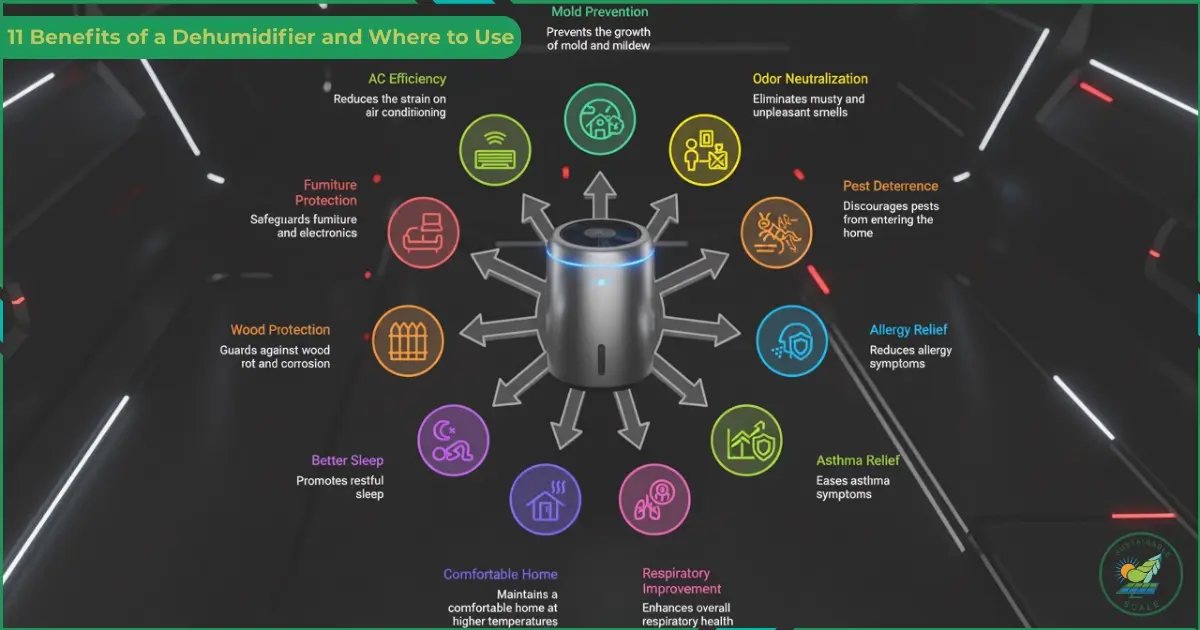
Breathe easier with cleaner, balanced indoor air. Our advanced air purifiers remove allergens, dust and airborne pollutants, while dehumidifiers maintain ideal moisture levels to prevent mold and protect your furniture, walls, and electronics. The result is a safer, healthier and more comfortable home environment year-round.
At Sustainable Scale, we do not just sell products, but we build partnerships. From personalized consultation and professional installation to ongoing maintenance and warranty support, our US-based team confirms every system performs at its best. You get expert guidance, reliable service and complete peace of mind long after setup.
Unlock bigger savings with sustainable bundles that pair clean energy devices with air-quality essentials for a healthier home.

Verified Customer
Sustainablescale made comparing solar panels easy and stress-free. The panel I chose performs perfectly, and my energy bills are already noticeably lower.

Verified Customer
The air purifier from Sustainablescale works quietly and efficiently. Setup was simple, and the site helped me pick the right model for my home.

Verified Customer
Shopping for a dehumidifier was simple on Sustainablescale. The unit is quiet, effective, and has made my basement much more comfortable.
Sustainable Scale is an eco-friendly home solutions brand that provides solar panels, air purifiers and dehumidifiers that help homeowners reduce energy costs, improve indoor air quality and create healthier living spaces.
Yes, Sustainable Scale’s products are really eco friendly because they use solar power to reduce fossil fuel dependence and prioritize energy efficiency. Its products align with recognized sustainability certifications that verify material health, product circularity and low emissions, which confirm an environmentally responsible design and manufacturing process.
Yes, Sustainable Scale products can be trusted to last for years because the company curates items from reputable manufacturers known for durable, high quality materials. It focuses on offering sustainable, reliable products by partnering with manufacturers who embed longevity and eco-conscious design into their production. This approach assures customers of lasting value while supporting environmental responsibility.
Yes, Sustainable Scale products are affordable because the company carefully chooses items that offer a good balance between cost and sustainability. It works with manufacturers and suppliers to keep prices fair, which makes eco-friendly products accessible without sacrificing quality or environmental values.
Yes, Sustainable Scale products can help you save on your energy bills because they are designed to use energy efficiently and run on solar power, which means you rely less on conventional electricity. This lowers your energy use and cuts down your monthly costs.
No, Sustainable Scale does not offer solar system installation. It focuses on selling solar products, while installation is usually arranged separately through local certified installers or service providers. Customers work with professionals to get their systems set up.
Sustainable Scale follows the manufacturers’ return policies. Customers must return items unused, in original packaging, within 14 to 30 days. Customers cover return shipping unless items are damaged or defective. Customers should check specific policy details or contact Sustainable Scale for help.
Sustainable Scale accepts several payment methods such as credit and debit cards, digital wallets and bank transfers. It focuses on providing convenient, secure and eco-friendly payment options to support a smooth checkout experience.
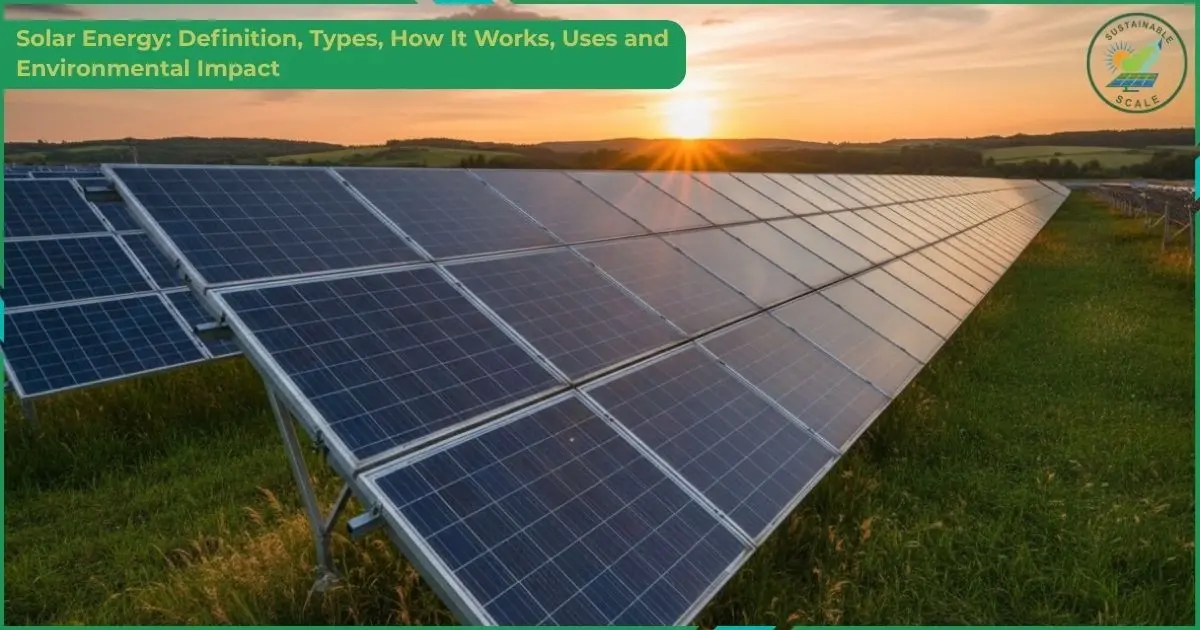
No, solar panels are not 100% sustainable because they still depend on energy intensive manufacturing, raw material extraction and currently limited recycling infrastructure. Solar panels are, however, far more sustainable than fossil fuel systems over their full operating lifetime.
No, solar panels do not need direct sunlight because they generate power from indirect or diffused light, such as on cloudy days. Solar panels work most efficiently and produce maximum output when receiving strong, unobstructed direct sunlight for several hours.
Yes, solar panels work on cloudy days because they use indirect or diffused sunlight to generate electricity, although their output is reduced compared with clear, sunny conditions. Solar panels produce energy, but at a lower efficiency level under heavy cloud cover.
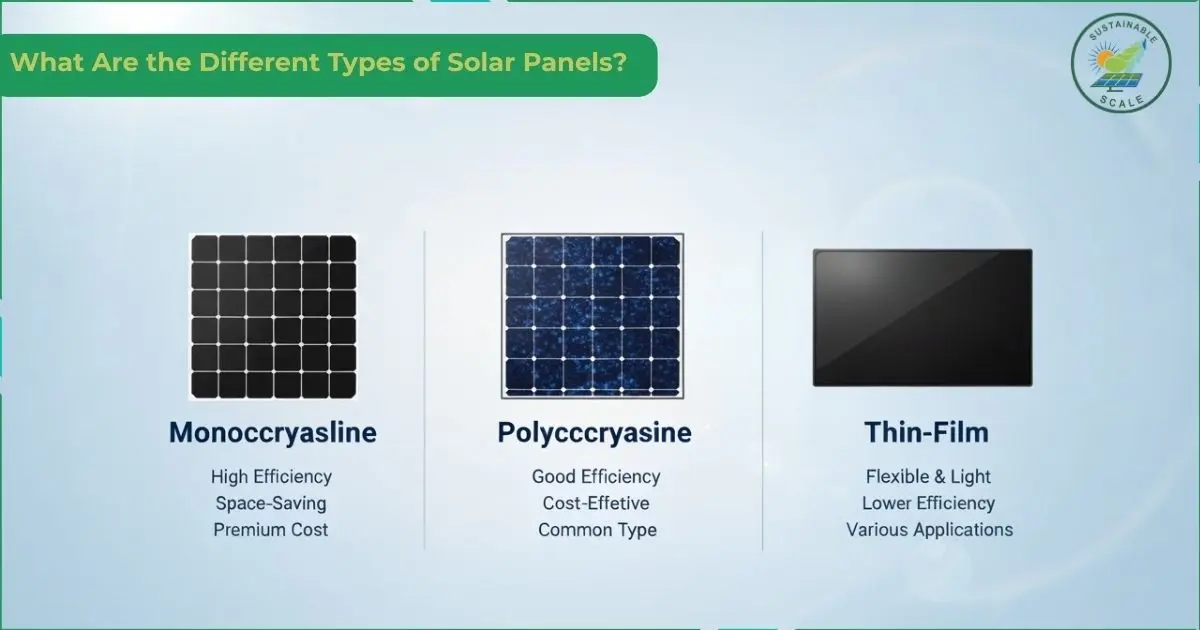
The types of solar panels Sustainable Scale offers are monocrystalline, polycrystalline and thin film. Monocrystalline panels maximize efficiency, polycrystalline panels balance cost and performance, while thin film panels provide lightweight, flexible options suited to unconventional surfaces and space constrained or design driven projects.
Monocrystalline solar panels have the highest efficiency. It uses high purity silicon and a uniform crystal structure, which allows these panels to convert a greater share of incoming sunlight into electricity than polycrystalline or thin film alternatives.
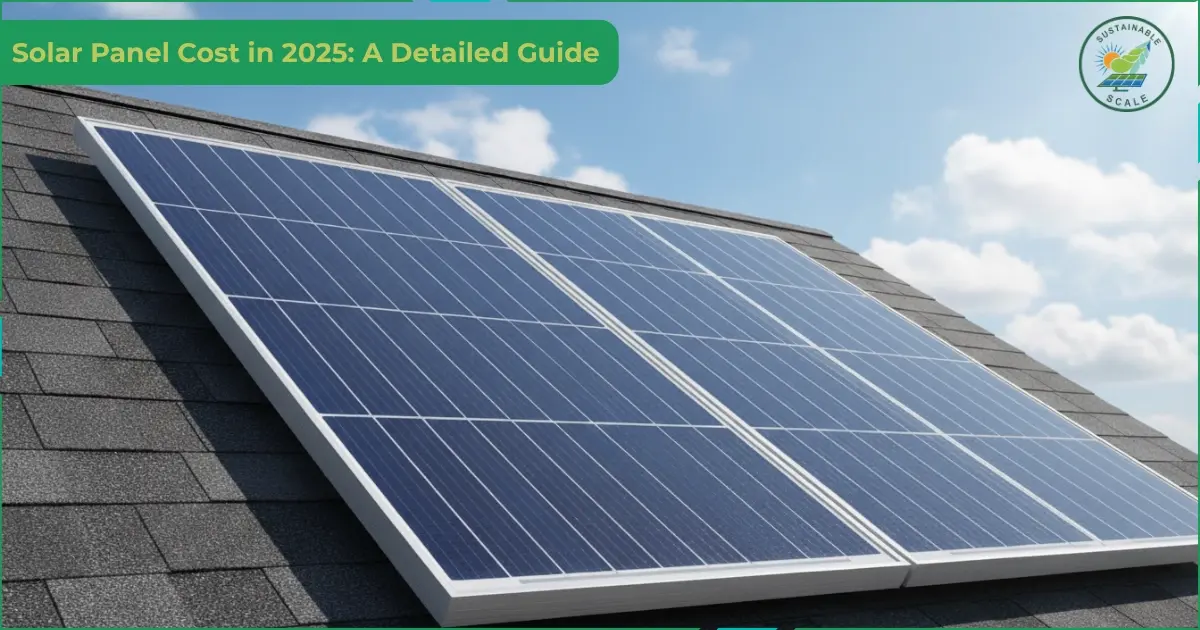
The average cost of solar panels in Sustainable Scale is around 2.50 to 3.50 dollars per watt for residential systems, which totals 15,000 to 25,000 dollars before incentives for a standard home installation in 2026.
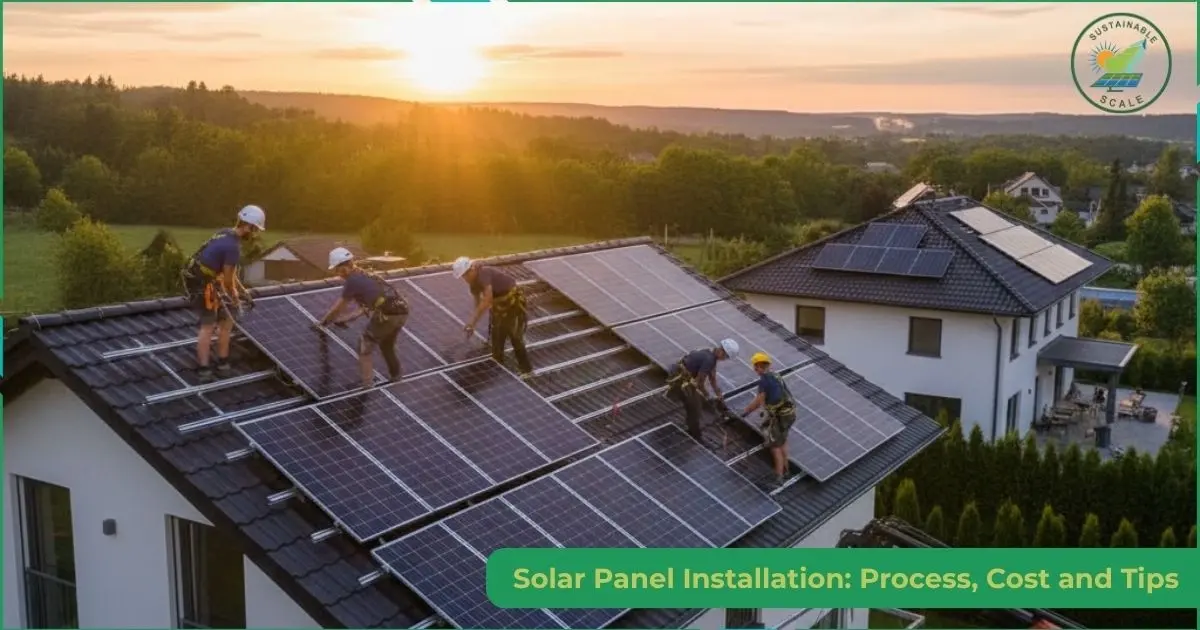
Residential solar panel installation takes about one to three days. It varies depending on system size, roof complexity, permitting or inspection, utility interconnection and installer schedule.
Yes, solar panels need regular maintenance because they lose efficiency if dust, debris or damage is not checked and cleaned. Solar panels require only light, infrequent maintenance such as periodic cleaning and basic system inspections over their lifetime.
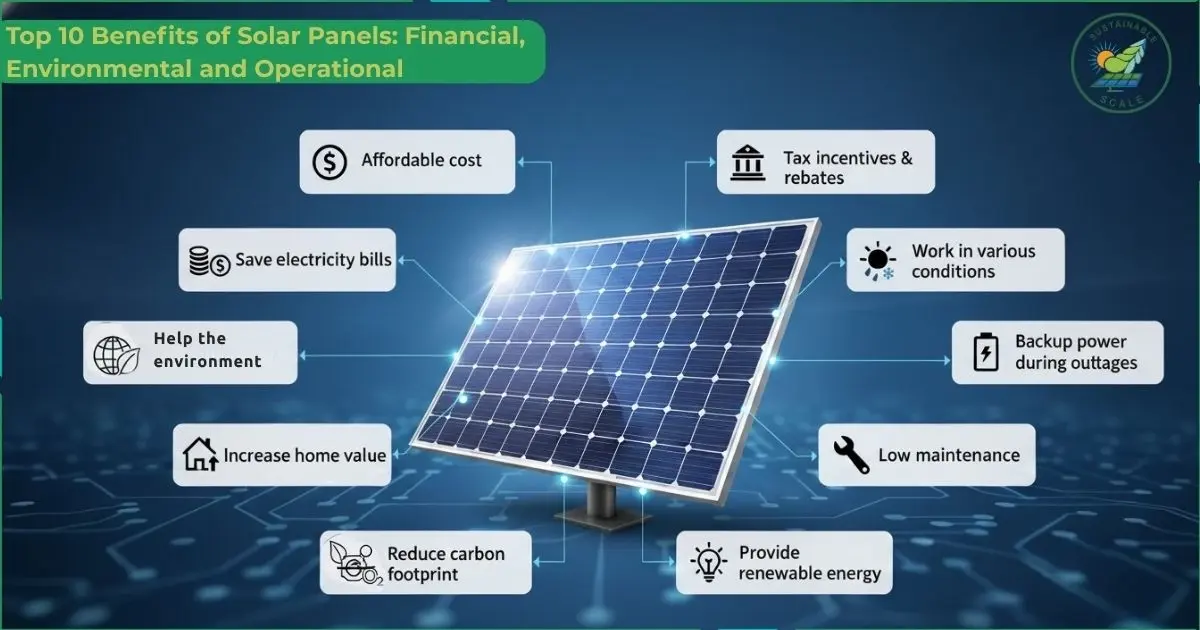
Yes, solar panels lower your electricity bill because they generate onsite power that reduces the amount of energy purchased from the utility. This reduction is greater with net metering and high daytime usage.
Yes, solar panels increase property value because they lower operating costs, signal energy efficiency and appeal to buyers seeking long term savings and sustainability. They deliver higher resale premiums in markets with strong incentives and high electricity prices.
No, solar panels will not get cheaper in 2026 because China’s export tax rebate cancellation from April 2026 will raise module prices by 15% or more globally, compounded by tariffs, silver costs and supply chain shifts.
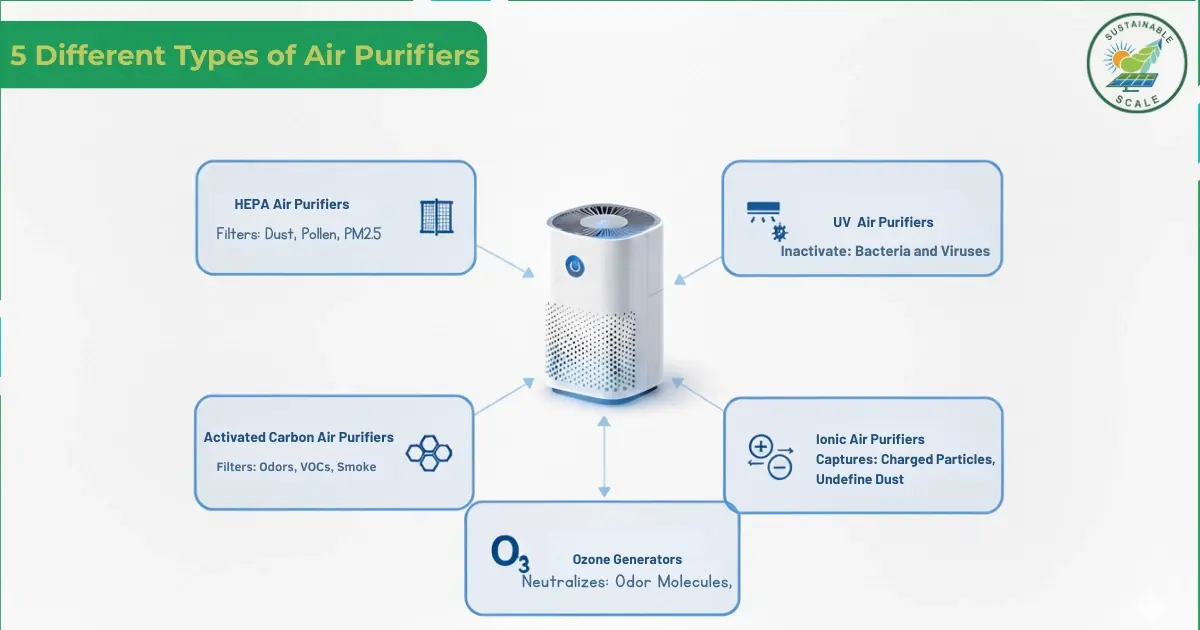
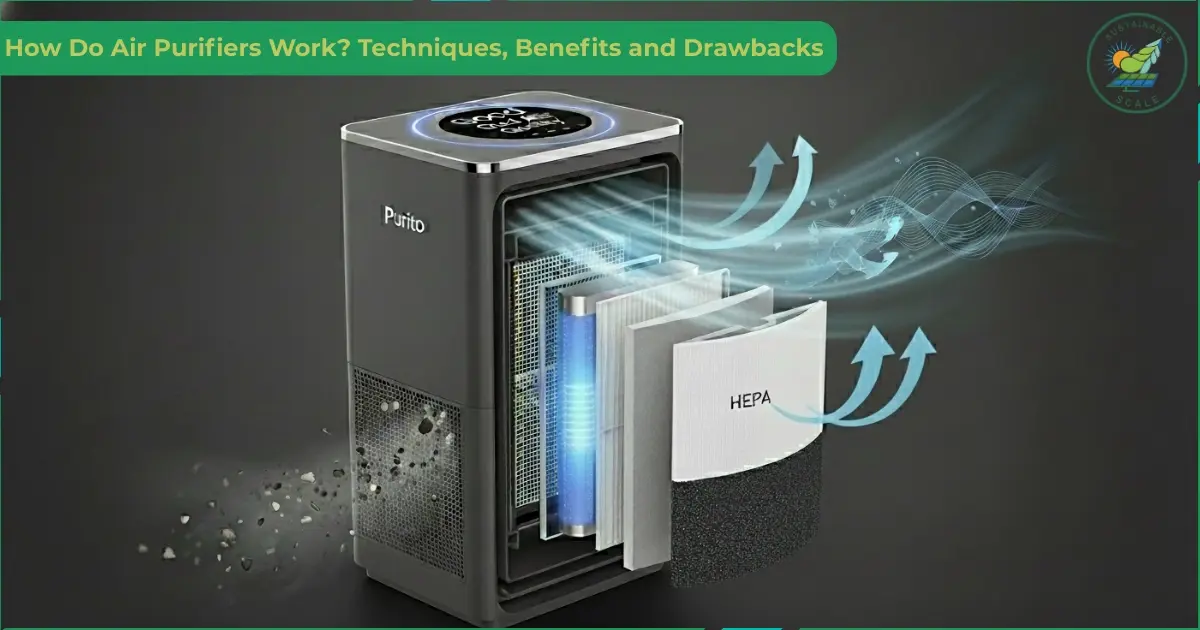
The types of air purifiers Sustainable Scale offers are HEPA filter, activated carbon, UV-C light and ionizer models. These capture fine particles, eliminate odors and VOCs, disinfect pathogens and neutralize airborne pollutants effectively.
Air purifiers cost between $100 and $1,000 on average in the US for portable models. Air purifiers’ price varies depending on brand, filter type, room size coverage and additional features like smart sensors or air quality monitors. Whole-house air purifiers’ average price is about $2,500, but they can range up to $12,000.
The best purifiers of 2026 are Coway Airmega AP-1512HH Mighty, Blueair Blue Pure 311i Max+ and Winix 5500-2, recognized for strong performance and value. These models stand out for efficient HEPA filtration, wide room coverage and consistent removal of allergens and airborne particles.
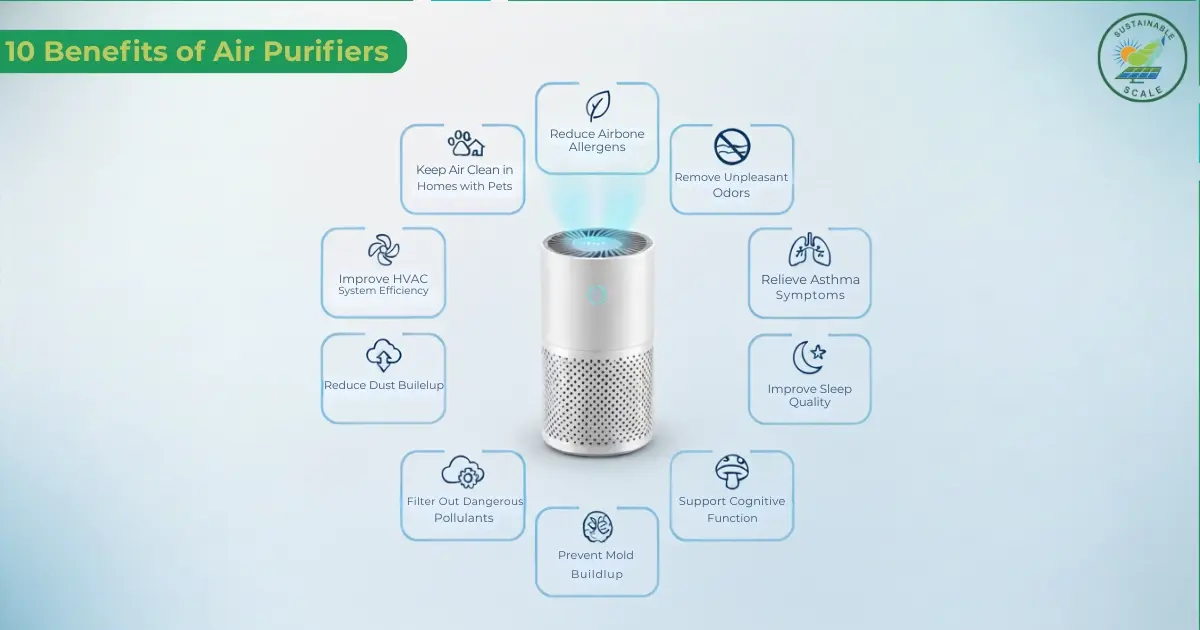
Yes, air purifiers help with dust by capturing airborne dust particles through HEPA or multistage filters. These systems reduce dust circulating in indoor air that makes rooms cleaner and more comfortable for allergy sensitive users.
Yes, air purifiers help with smell because activated carbon and charcoal filters absorb odor causing gases and volatile organic compounds from the air. These systems reduce cooking, smoke, pet and chemical odors that improve overall indoor air freshness and comfort.
Yes, air purifiers help with mold because HEPA filters trap airborne mold spores before they spread through indoor air. Air purifiers reduce exposure and related allergy symptoms, but moisture control and proper ventilation remain necessary to stop mold growth completely.
Yes, air purifiers help with allergies because HEPA filters trap pollen, dust, pet dander and other airborne allergens. They reduce allergen exposure indoors, easing symptoms like sneezing, congestion, and itchy eyes for allergy-sensitive individuals.
Yes, air purifiers help with asthma because HEPA and activated carbon filters remove airborne irritants like dust, pollen, smoke, and pet dander. They improve indoor air quality, reducing triggers that can cause asthma attacks and breathing difficulties.
Yes, air purifiers help with smoke because activated carbon and HEPA filters trap smoke particles and absorb harmful gases. They reduce indoor smoke levels, improve air quality, and minimize irritation to the eyes, lungs, and respiratory system.
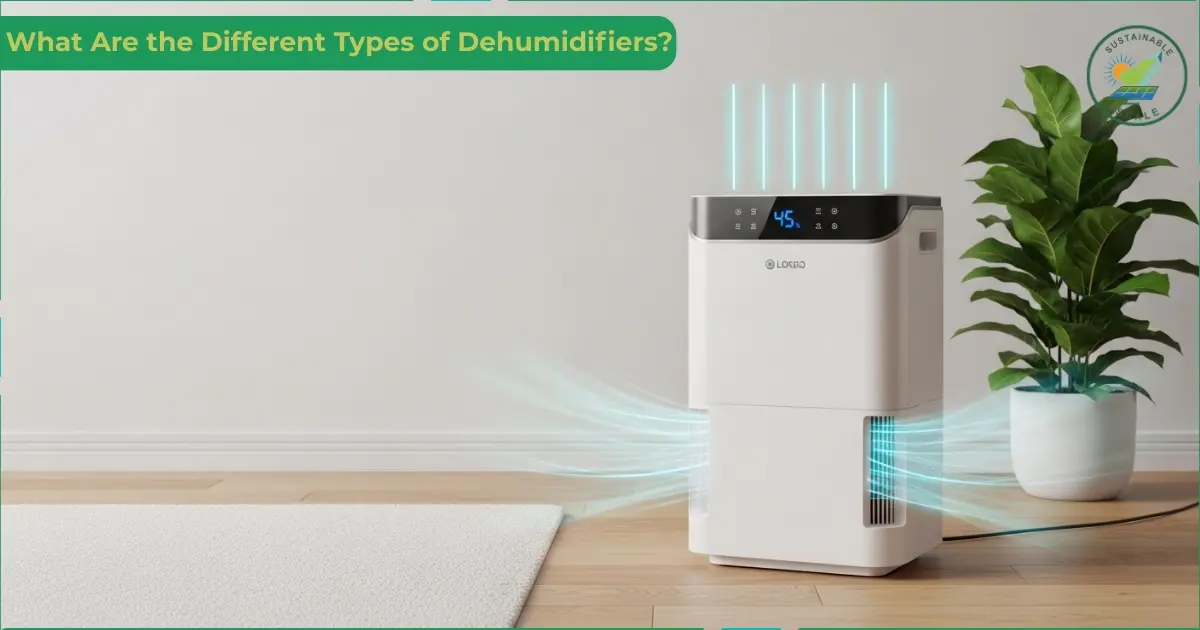
The types of dehumidifiers that Sustainable Scale offers include Refrigerant dehumidifiers (compressor-based), Desiccant dehumidifiers and Thermoelectric (Peltier) dehumidifiers. These types are suited to different conditions, such as warm, humid rooms and cold, small enclosed areas with light moisture.
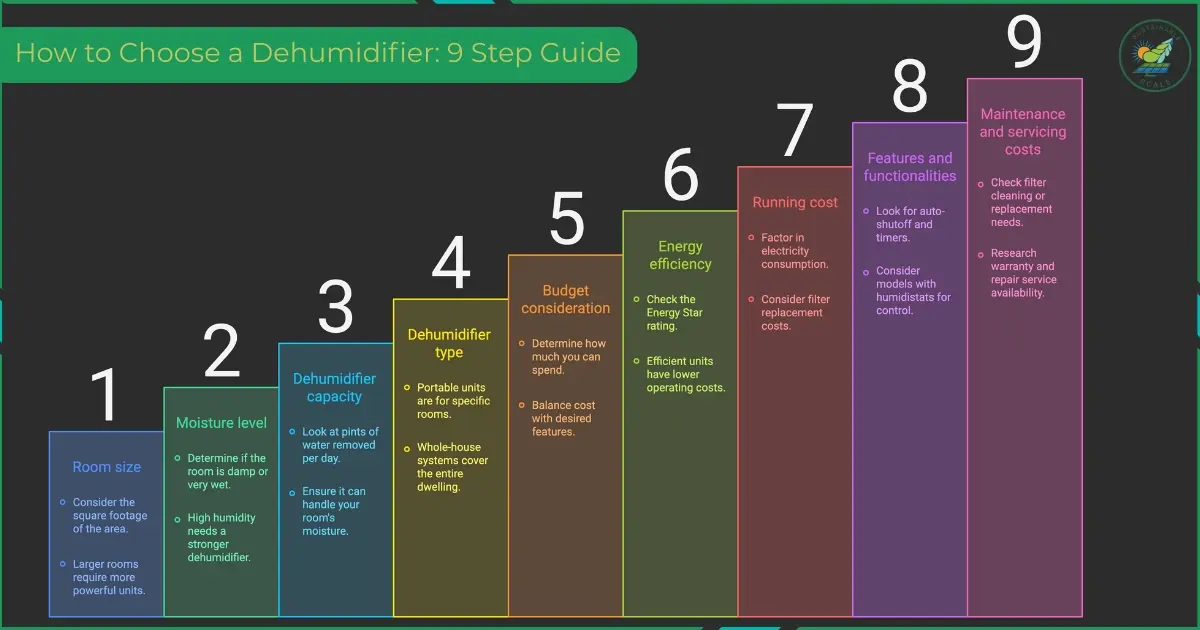
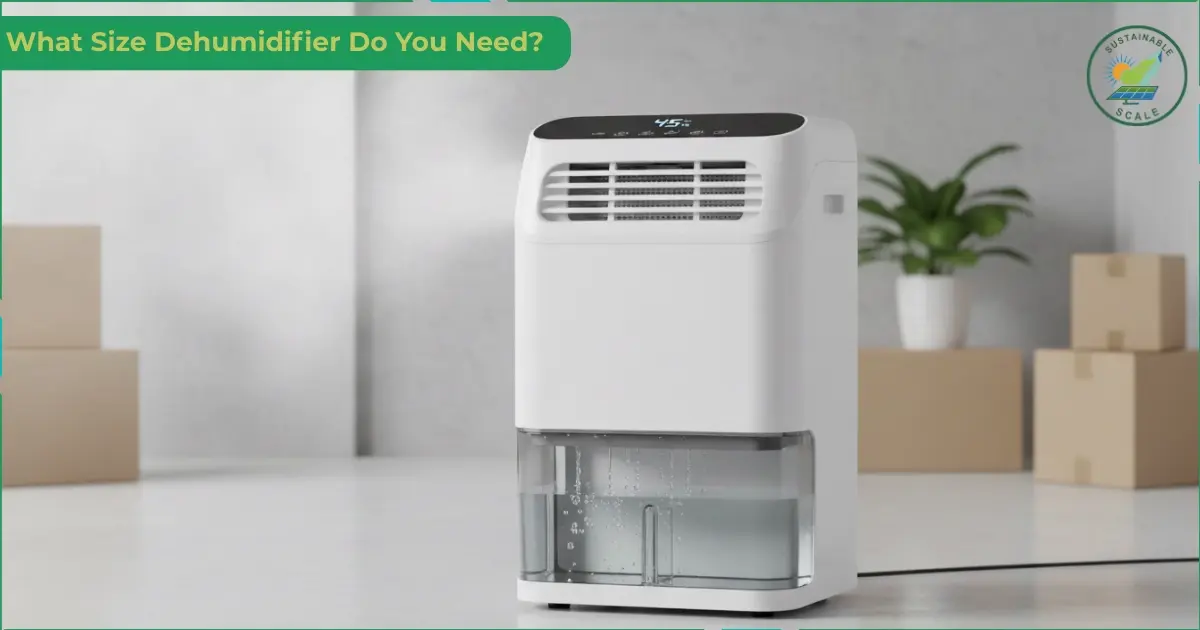
You need a dehumidifier sized according to the room area and level of dampness. You should choose a dehumidifier with 20–30 pints for small and slightly damp rooms, 30–50 pints for medium spaces, and 50–70 pints or more for large, very damp whole‑home areas.
A dehumidifier’s cost depends on its capacity and type. Small portable dehumidifiers cost range from $30 to $300, while larger basement or whole-house units cost between $1,000 and $3,500, including installation.
A dehumidifier uses 300 to 700 watts, which equals 0.3 to 0.7 kWh of electricity per hour. The electricity costs $0.06 to $0.15 per hour to run, which depends on local power rates.
Yes, a dehumidifier prevents mold by keeping indoor humidity around 30–50 percent. It makes conditions too dry for mold to germinate and grow, but it does not kill the existing mold spores.
Yes, Dehumidifiers help with allergies by lowering indoor humidity to roughly 30–50 percent. It reduces mold, dust mites and other moisture‑dependent allergens, which ease symptoms like sneezing, congestion and wheezing.
Yes, Dehumidifiers help with dust indirectly by lowering humidity so that dust mites and mold struggle to survive. They reduce allergenic dust components, but do not physically remove dust particles as an air purifier does.
Yes, dehumidifiers get rid of musty, moldy and damp smells by removing excess moisture that microbes need. They do not fully remove odors if mold or contaminants remain on surfaces, so cleaning or remediation is still required in this situation.
Yes, you should use a dehumidifier in summer’s humid conditions because it reduces stickiness and helps air conditioners cool more efficiently. It cuts mold and dust-mite growth, and lowers energy bills while keeping indoor humidity around 30–50 percent.
Yes, you should run a dehumidifier during winter if indoor humidity stays above about 50 percent or you see condensation, dampness and mold. It is unnecessary to run a dehumidifier in already dry homes, as it can over‑dry the air.
No, dehumidifiers do not cool rooms directly, but they remove humidity so sweat evaporates better and the space feels less sticky. They make it feel cooler and more comfortable, even though the actual air temperature stays similar.
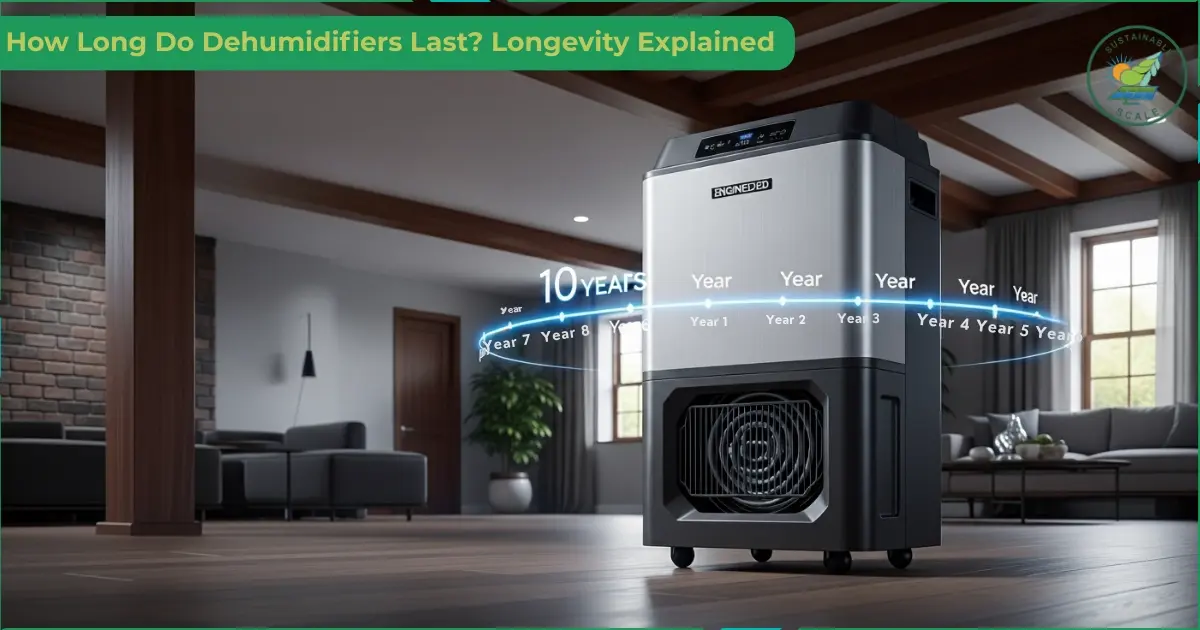
Dehumidifiers last 5 to 10 years on average, though well-built models in good condition with regular maintenance can reach 10 to 15 years. Heavily used or poorly maintained units may fail closer to the lower end of this range.