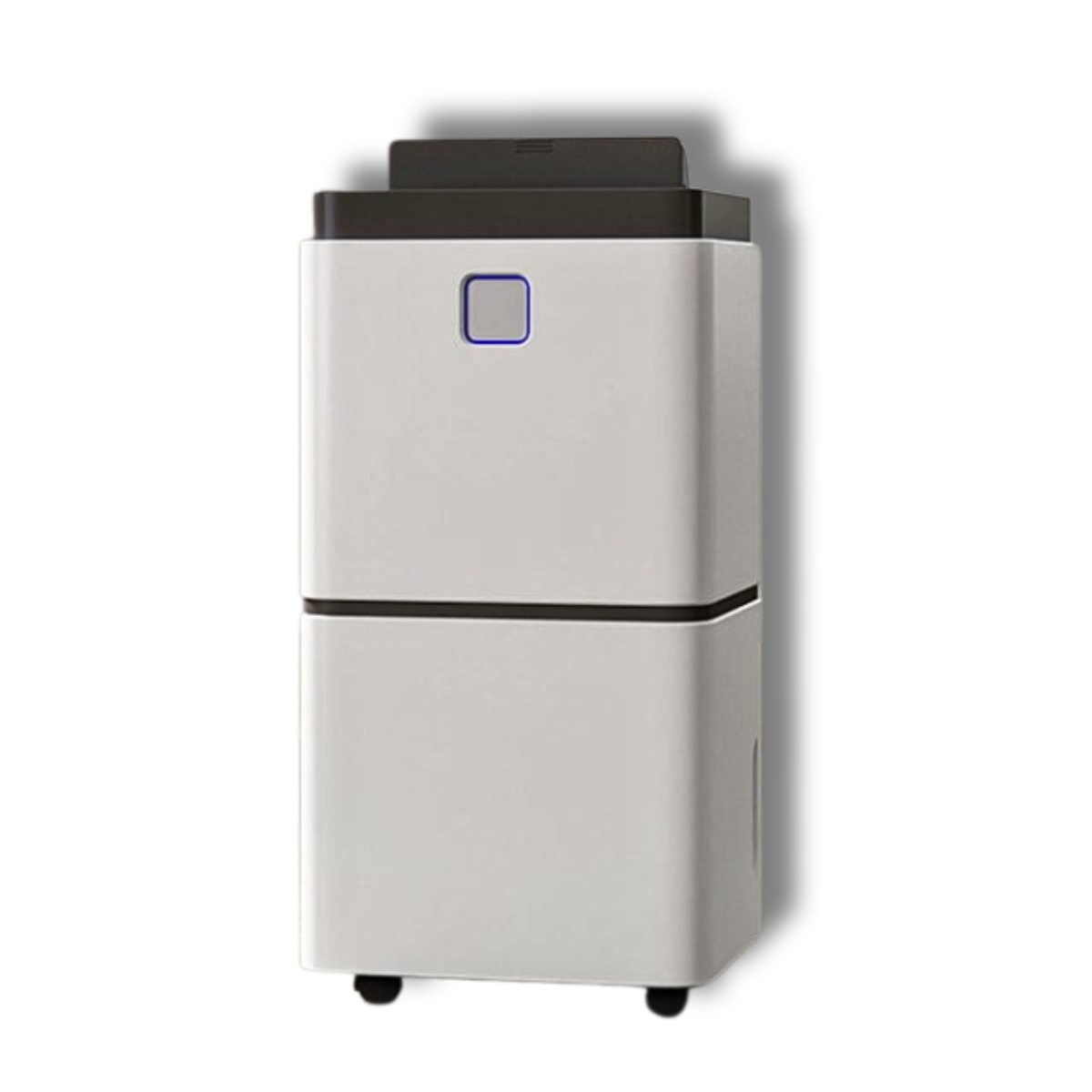
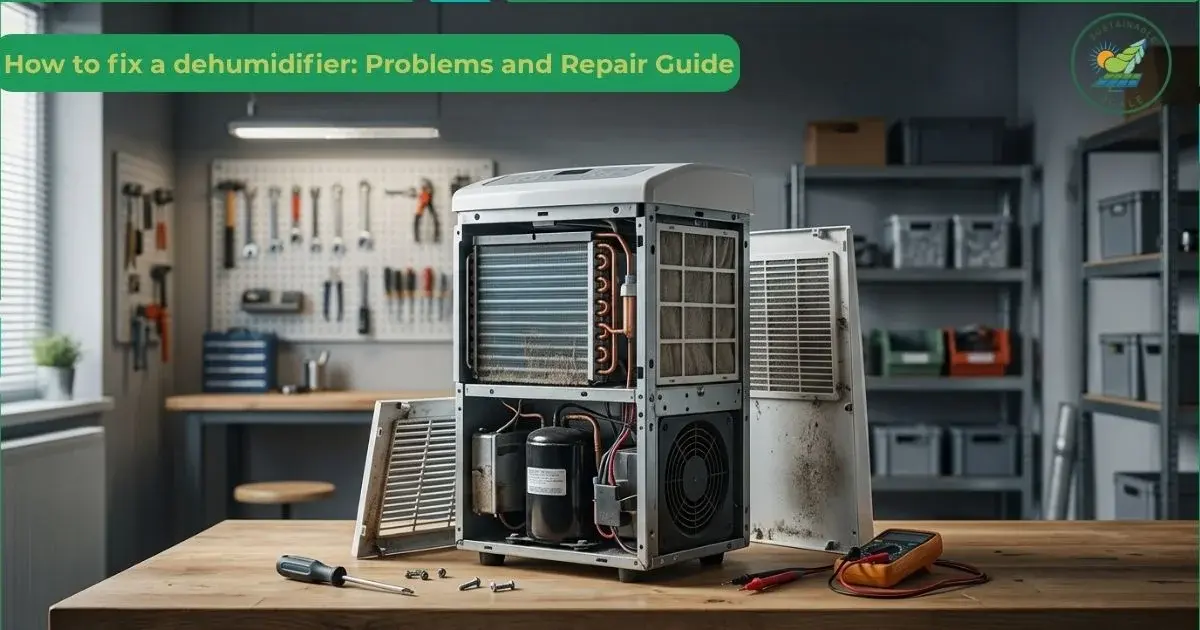

Dehumidifier problems include not collecting water, leaking water, frozen coils, continuous operation, unpleasant odors, loud noises, poor moisture removal, humidity sensor faults, drainage issues and ineffective performance. These problems result from restricted airflow, clogged drains, dirty filters, electrical faults, worn components or incorrect operating conditions that reduce efficiency and reliability. A dehumidifier can be restored by checking the power supply, adjusting humidity settings, cleaning the air filter and clearing airflow or drainage blockages. It may also require thawing frozen coils, inspecting the water bucket, float switch, drain hose, condensate pump, compressor or humidity sensor and replacing faulty components when necessary.
Dehumidifier repair costs range from $50 to $400, depending on the fault type, replacement parts, labor charges and repair complexity. Basic cleaning and maintenance cost $20 to $75, while thermostat repairs average $75 to $150. Fan motor repairs cost $100 to $200, and compressor repairs range from $150 to $400 because they require specialized parts and labor.
Regular maintenance helps avoid common dehumidifier problems and reduces unexpected repair expenses. Users should clean or replace the air filter regularly, empty the water bucket before it overflows and keep the air intake and exhaust vents unobstructed. They should also inspect the drain system, clean the evaporator and condenser coils, check the float switch and operate the unit within recommended temperature and humidity ranges. These practices improve moisture removal, reduce component wear, extend the dehumidifier’s service life and maintain reliable long-term performance.
What are the common problems with a dehumidifier?
The common problems with a dehumidifier include not collecting water, leaking water, freezing coils, running continuously, bad smell, unusual noise, poor performance and sensor problems. These problems result from airflow restrictions, drainage failures, electrical faults, sensor malfunctions or worn components that reduce the dehumidifier’s efficiency and reliability.
10 common problems with a dehumidifier are given below.
- Not collecting water: A dehumidifier fails to extract moisture because of unsuitable settings, restricted airflow or internal system disruptions that prevent normal condensation and collection processes.
- Leaking water: A dehumidifier releases water outside the unit due to blocked drainage pathways or water escaping during collection and discharge processes.
- Freezing coils: A dehumidifier loses moisture extraction capability after ice forms on internal components, restricting airflow and interrupting condensation processes during operation.
- Running continuously: A dehumidifier operates without stopping as control targets remain unmet, causing extended operation while indoor moisture levels stay unchanged.
- Bad smell: A dehumidifier produces unpleasant odors because moisture accumulates inside components, which allows contaminants to develop and circulate through airflow paths.
- Loud or unusual noises: A dehumidifier generates disruptive sounds after moving parts lose alignment, experience wear or encounter obstructions during operation cycles.
- Poor dehumidifying performance: A dehumidifier removes limited moisture because airflow declines, operational efficiency drops or internal processes fail to sustain extraction.
- Humidity sensor problems: A dehumidifier receives inaccurate moisture readings after sensing components malfunction, which causes incorrect operation and inconsistent humidity level management.
- Drainage problems: A dehumidifier experiences water discharge interruptions because a kinked drain hose restricts flow or prevents water movement from the system.
- Ineffective moisture removal: A dehumidifier struggles to reduce indoor moisture through an improperly seated tank, mechanical failure, dirty filters or frozen evaporator coils that interfere with operation.
How to fix a dehumidifier?
Fix a dehumidifier that does not turn on, does not collect water, freezes up, leaks water, has sensor problems, makes loud noises and vibrations by following the appropriate troubleshooting steps. Verify the power supply, empty and reseat the water bucket, adjust the humidity setting, clean the air filter and reset the unit if it does not turn on. Restore moisture removal by correcting room conditions, clearing airflow restrictions, inspecting the bucket, float switch and compressor. Resolve icing by improving airflow, cleaning coils, removing frost and checking the fan motor and refrigerant system.
Stop water leaks by clearing drain blockages, inspecting the drain hose, checking the condensate pump and replacing damaged seals. Correct sensor faults by cleaning, testing, recalibrating or replacing the sensor. Reduce vibration and noise by leveling the unit, tightening loose panels and replacing worn fan components. Restore pump operation by clearing blockages, cleaning the float switch, testing the pump motor and replacing the pump if necessary.
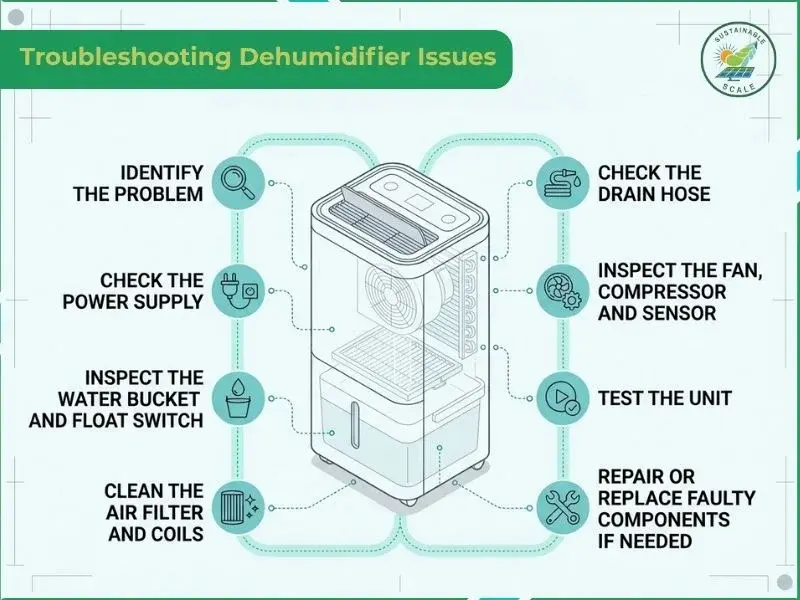
The image below shows the step by step to troubleshoot common dehumidifier issues.
How to fix a dehumidifier that does not turn on?
8 steps to fix a dehumidifier that does not turn on are given below.
- Check the power supply: Verify the outlet works, inspect the power cord for damage and ensure the plug is securely connected.
- Empty and reseat the water bucket: Empty the full bucket and reinstall it correctly to engage the safety switch.
- Adjust the humidity setting: Set the humidity level below the current room humidity to activate the dehumidifier.
- Clean the air filter: Wash or replace the filter to eliminate dust buildup and restore proper airflow.
- Reset the dehumidifier: Unplug the unit for 30 seconds, then reconnect it and restart the operation.
- Inspect the float switch: Confirm the float switch moves freely and does not remain stuck in the raised position.
- Check for electrical or component faults: Inspect the capacitor, control board and electrical connections for signs of damage or failure.
- Contact a repair technician if needed: Seek professional service if the dehumidifier still fails to start after completing all troubleshooting steps.
How to fix a dehumidifier that does not collect water?
5 steps to fix a dehumidifier that does not collect water are given below.
- Adjust room conditions and settings: Lower the humidity setting and keep doors and windows closed to improve moisture removal.
- Inspect the bucket and float switch: Confirm the water bucket is properly seated and the float switch moves freely.
- Clear airflow and drainage blockages: Remove obstructions from air vents and clear the drain hose to restore proper airflow and drainage.
- Check for frozen coils: Turn off the unit, allow the coils to thaw completely and restart normal operation.
- Diagnose compressor failure: Test compressor operation and seek professional repair if the compressor fails to start or cycle properly.
How to fix a dehumidifier that freezes up?
8 steps to fix a dehumidifier that freezes up are given below.
- Check the room temperature: Operate the dehumidifier within the recommended temperature range to prevent coil icing.
- Improve airflow around the unit: Clear obstructions around the air intake and maintain adequate space for proper air circulation.
- Clean the evaporator coils: Remove dirt and debris from the coils using a soft brush or vacuum.
- Clear blocked air vents: Open blocked air vents and remove debris to restore unrestricted airflow through the unit.
- Remove frost buildup: Turn off the dehumidifier and allow all frost to melt before restarting the unit.
- Inspect the fan motor: Check the fan motor for proper rotation, unusual noise or signs of mechanical failure.
- Check the refrigerant system: Have a technician inspect refrigerant pressure and repair any leaks affecting cooling performance.
- Repair cooling system faults: Replace faulty defrost controls or other damaged cooling components to restore normal operation.
How to fix a leaking dehumidifier?
8 steps to fix a leaking dehumidifier are given below.
- Empty the water bucket: Drain the reservoir completely to prevent overflow and restore normal water collection.
- Reposition the bucket: Reinstall the bucket correctly and ensure it engages any retention clips securely.
- Inspect the drain hose: Check the hose for kinks, loose connections or damage that restricts drainage.
- Clear drain blockages: Remove debris from the drain hose and outlet to evacuate collected water properly.
- Check the condensate pump: Test the condensate pump to confirm it moves water continuously without interruption.
- Clean the drain pan: Wash the drain pan thoroughly to remove sludge, mold and debris that block drainage.
- Tighten loose connections: Secure hose clamps and fittings to prevent leaks from drainage connections.
- Replace damaged seals: Install new seals or gaskets to stop water leaks around the bucket and cabinet.
How to fix a dehumidifier sensor?
6 steps to fix a dehumidifier sensor are given below.
- Reset the dehumidifier: Unplug for 5 to 10 minutes, reconnect the power and restart the unit to clear temporary sensor faults.
- Clean the sensor: Remove dust and debris from the humidity sensor to restore accurate moisture detection.
- Check sensor wiring: Inspect sensor wires and connectors for loose, damaged or disconnected electrical connections.
- Test sensor accuracy: Compare the displayed humidity reading with a calibrated hygrometer to verify sensor performance.
- Recalibrate the sensor: Adjust the sensor settings according to the manufacturer’s instructions to improve humidity measurement accuracy.
- Replace the sensor: Install a compatible replacement sensor if testing confirms the original sensor has failed.
How to fix a loud or vibrating dehumidifier?
6 Steps to fix a loud or vibrating dehumidifier are given below.
- Level the dehumidifier: Place the unit on a stable surface to reduce vibration and prevent rocking during operation.
- Tighten loose panels: Secure all screws and panels to eliminate rattling noises caused by loose cabinet components.
- Clean the fan blades: Remove dust from the fan blades and inspect for damaged fan blades that require replacement.
- Remove airflow obstructions: Clear blockages around the air intake to restore proper airflow and reduce fan noise.
- Inspect the fan motor: Check the fan motor and motor mounts for looseness, wear or excessive vibration.
- Replace worn components: Install new bearings, fan blades or mounts if worn parts continue causing excessive noise or vibration.
How to fix a dehumidifier pump that is not working?
6 Steps to fix a dehumidifier pump that is not working are given below.
- Check the pump settings: Verify the built-in pump function is enabled and matches the selected drainage mode.
- Inspect the drain hose: Check the hose for kinks, clogs or loose connections that restrict water flow.
- Clear pump blockages: Remove debris and sludge from the pump chamber to restore proper operation.
- Clean the float switch: Clean the float switch and ensure it moves freely without sticking.
- Test the pump motor: Check the pump motor for power, rotation or unusual noises indicating mechanical failure.
- Replace the pump: Install a compatible replacement pump if testing confirms the original pump has failed.
How much does a dehumidifier repair cost?
A dehumidifier repair costs between $50 and $400 on average, which depends on fault type, component involved and labor in the service area. It varies based on unit age, parts availability and fault complexity within the system. It costs between $20 and $75 when basic cleaning and maintenance address the issue and filter replacements cover the full service. It reaches around $75 and $150 as thermostat adjustment requires a service visit and parts.
A dehumidifier repair moves into a higher range when internal mechanical parts need service. It totals about $100 and $200 as the fan motor replacement covers parts and labor for restoring airflow. It climbs between $150 and $400 when compressor repair involves refrigerant handling, component sourcing and specialist labor for sealed system work.
How to prevent common dehumidifier problems?
Prevent common dehumidifier problems by applying regular practices that clean the air filter, empty the water bucket, keep air vents clear, maintain proper operating conditions and inspect the drain system in sequence. These maintenance practices help improve dehumidifier performance, reduce wear on components, prevent moisture-related issues and extend the unit’s service life.
8 steps to prevent common dehumidifier problems are given below.
- Clean the air filter: Clean or replace the air filter regularly to maintain proper airflow, improve dehumidifier performance, reduce dust buildup and prevent unnecessary stress on internal components.
- Empty the water bucket: Empty the water bucket before it reaches full capacity to prevent automatic shutdown, avoid overflow and ensure consistent moisture collection during daily operation.
- Keep air vents clear: Remove dust, furniture or other obstructions from the air intake and exhaust vents to maintain unrestricted airflow and reduce strain on components.
- Maintain proper operating conditions: Operate the dehumidifier within the recommended temperature and humidity range to prevent coil icing, overheating and reduced moisture removal efficiency.
- Inspect the drain system: Check the drain hose, drain port and condensate pump regularly for leaks, clogs or loose connections that interrupt continuous water drainage.
- Clean the coils: Remove dirt and debris from the evaporator and condenser coils to improve heat transfer, maintain efficient airflow and support reliable moisture removal.
- Check the float switch: Test the float switch regularly to ensure smooth movement, accurate water level detection and reliable automatic shutdown when the bucket becomes full.
- Perform routine maintenance: Inspect electrical connections, tighten loose hardware, lubricate moving parts when applicable and replace worn components to extend the dehumidifier’s service life.
Can maintenance help prevent common dehumidifier problems?
Yes, maintenance can help prevent common dehumidifier problems because it removes buildup, stabilizes components and protects airflow paths inside the unit. It benefits the system through regular cleaning that keeps airflow strong across filters, vents and coils. It supports long term reliability when dehumidifier maintenance schedules align inspection, cleaning and minor repairs before faults interrupt operation.
How often should you clean a dehumidifier?
You should clean a dehumidifier on a regular schedule, cleaning its air filter every 2 to 4 weeks to maintain efficiency. It receives deeper cleaning of the tank, internal coils and intake grilles during longer maintenance intervals. It follows this routine whenever you clean a dehumidifier to keep moisture removal and airflow stable.
Why is my dehumidifier not lowering humidity?
Your dehumidifier is not lowering humidity because the unit is undersized for the room and the moisture load in the space. It struggles when a clogged filter creates blocked airflow that restricts circulation through the coils and reduces moisture removal. It fails as a constant moisture source keeps introducing damp air, so the dehumidifier does not lower the humidity.
Why is my dehumidifier not collecting water?
Your dehumidifier is not collecting water because low ambient humidity reduces moisture extraction and limits condensation within the system. It experiences airflow restriction from a clogged air filter and stops draining when a stuck float switch interrupts operation. It loses water collection as a frozen evaporator coil prevents condensation and the dehumidifier is not collecting water properly.
Why is my dehumidifier leaking
Your dehumidifier is leaking because a blocked internal drain, cracked collection tank, misaligned float mechanism or frozen evaporator coils disrupt water collection and drainage. It releases water outside the collection system when containment or flow pathways fail. It creates a dehumidifier that leaks by allowing moisture to reach surrounding surfaces instead of entering the reservoir.
Why does your dehumidifier keep shutting off?
Your dehumidifier keeps shutting off when a full water bucket interrupts operation, a satisfied humidistat stops moisture removal, or an overheating unit triggers system protection. It shuts down when airflow decreases, electrical connections fail or internal components lose function. It resumes operation after the underlying interruption receives proper correction.
When should you call a professional for dehumidifier repair?
You should call a professional for dehumidifier repair when a unit leaks refrigerant, the compressor or fan motor fails or it constantly frosts during operation. It requires technical diagnosis when troubleshooting does not restore performance or moisture removal. It benefits from professional service as internal components prevent normal function and create recurring operating problems.
Is a dehumidifier repair worth the cost?
Yes, a dehumidifier repair is worth the cost when the problem is minor and limited to simple components or controls. It supports this decision when the dehumidifier repair costs much less than replacement and extends the remaining service life. It becomes less worth the cost as multiple failures increase parts and labor totals beyond the value of keeping the system running.
When should you replace a dehumidifier?
You should replace a dehumidifier when it is more than 5 to 10 years old, runs constantly without removing water, repeatedly leaks or develops a refrigerant leak. It also should be replaced when frequent breakdowns and expensive repairs reduce reliability and make replacement more cost-effective than continued maintenance.
Can you recharge a dehumidifier?
Yes, you can recharge a dehumidifier if it is losing refrigerant because of a repairable leak and the sealed system is restored first. It should not be recharged without a technician’s diagnosis because a permanent leak or other sealed-system damage will cause the refrigerant to escape again.
Solar Panel
Air Purifier