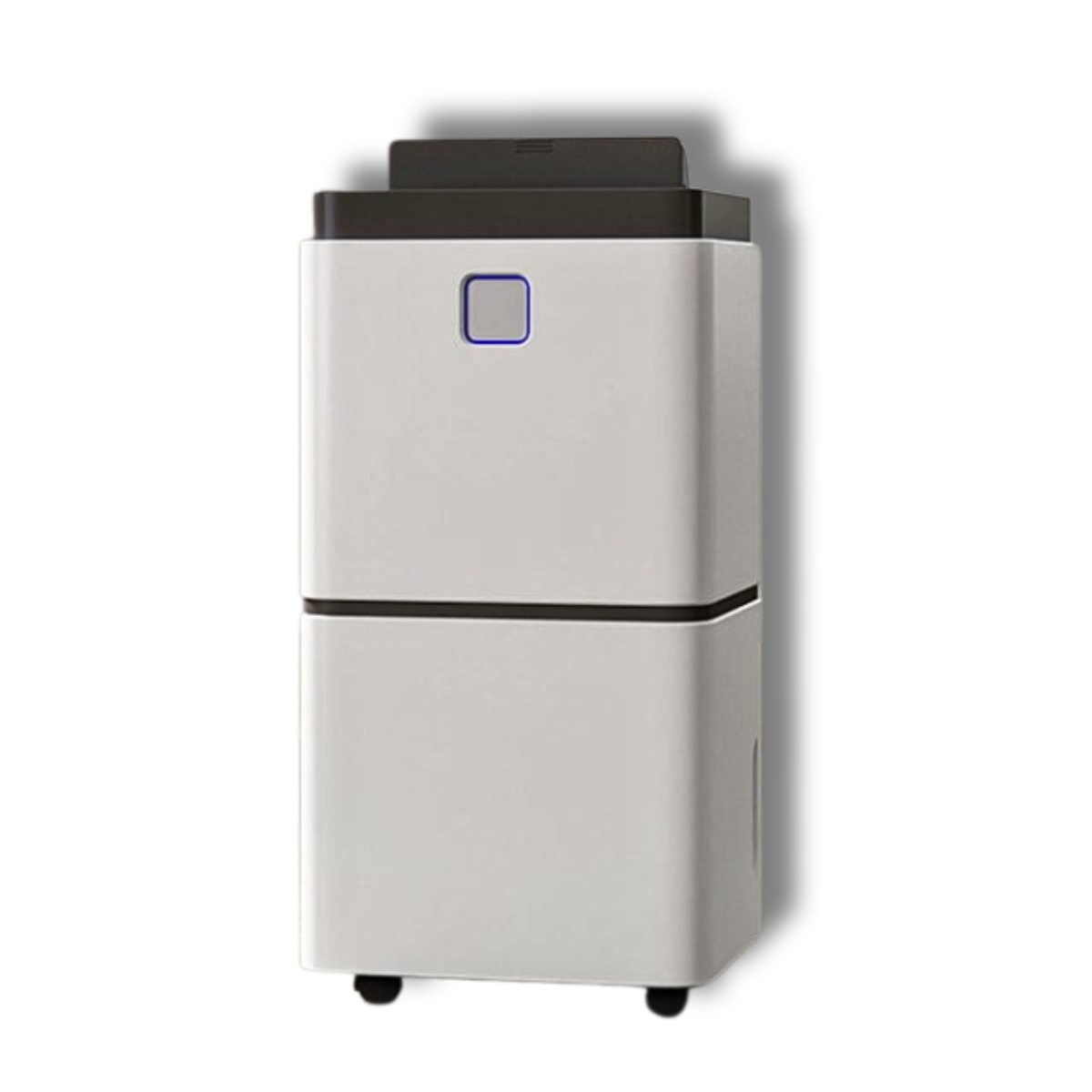


Set your dehumidifier to control relative humidity and regulate cycling. A dehumidifier’s proper setting matters because humidity above 60% supports mold, dust mites and musty odours in indoor spaces. A dehumidifier’s target of 40% to 50% establishes the ideal humidity range for most homes, bedrooms and living rooms. Its balanced target prevents the room from shifting between damp conditions, condensation and excess dryness.
A dehumidifier operates through user steps that include selecting a location, connecting power, arranging drainage, setting humidity, adjusting fan speed and emptying the tank. Its placement requires a damp area location, free airflow, a flat surface and access to electricity or drainage. A dehumidifier’s power connection activates the unit, while its hose route directs collected water to a drain or water tank. Its humidity control buttons set targets and its fan controls select high, low or auto operation. Its tank emptying, filter cleaning, coil inspection and hose checks support odor control, drainage and routine monitoring.
A dehumidifier draws humid air through an intake grille and filter before passing it across cold evaporator coils. Its refrigerant cycle cools air below its dew point and converts water vapour into droplets on coil surfaces. A dehumidifier’s collection path transfers condensate into a tank or hose, while its condenser returns warm, dry air to the room. Its stable setting helps reduce mildew growth and energy use across basements, bathrooms and laundry rooms.
Why do proper dehumidifier settings matter?
Proper dehumidifier settings matter because they regulate indoor relative humidity within a healthy target range, which contributes to preventing damage. The dehumidifier removes excess moisture that drives mold and mildew growth on walls, textiles, wood and concealed surfaces. It reduces dust mites and other humidity-related allergens that irritate sensitive airways and contaminate household fabrics. It limits condensation on windows, pipes and structural materials during sustained moisture exposure.
The dehumidifier protects furniture, flooring and electronics from damp-related damage through stable moisture control. It improves indoor air quality by extracting moisture that feeds biological contaminants in enclosed rooms. The dehumidifier removes musty odours and preserves a cleaner, drier living environment for occupants.
The infographic below shows the importance of dehumidifier settings.
How to operate a dehumidifier?
Operate a dehumidifier by choosing the best location, plugging it in and turning it on, and setting up moisture drainage. These actions ensure safe placement, electrical operation and continuous water removal for moisture control. Set a target relative humidity, empty the water tank and monitor performance to sustain balanced room conditions.
Place the unit on a level surface with clearance from walls, furniture and water sources. Plug it directly into a grounded outlet, configure drainage and choose settings that match room moisture conditions. Adjust fan speed, inspect the tank and filter and examine the drainage path for dependable collection and airflow. Check room conditions after operation and revise settings when readings differ from the selected level.
The steps to operate a dehumidifier are given below.
- Choose the best location
- Plug in and power on
- Set up moisture drainage
- Set the ideal humidity level
- Adjust fan speed
- Empty the water tank
- Monitor and maintain
Choose the best location
Choose the best location by placing the dehumidifier in the dampest room or near the main moisture source. Leave 20 to 30 cm (8 to 12 inches) of clearance on every side, ensuring free airflow around the unit. Avoid placement in corners, against walls, behind furniture or beside open windows and exterior doors because barriers reduce moisture removal. Operate the unit in a central living area on a flat, stable floor within reach of a power outlet or drain.
Plug in and power on
Plug in and power on the dehumidifier by seating the mains cable to its full depth in a suitable grounded electrical outlet. Press the dedicated power button or switch on the control panel to turn on the compressor and fan. Confirm that display or indicator lights illuminate before adjusting the humidity level or fan speed. Set the humidity level and fan speed after the lights confirm electrical power and active dehumidifier operation.
Set up moisture drainage
Set up moisture drainage by removing the rubber plug and connecting a standard garden hose to the unit’s drain port. Route the hose to a floor drain or sink, ensuring the outlet sits below the drain port. Use a condensate pump when gravity drainage is not possible to move water to a higher drain. Check that water flows through the hose without leaks at every connection before operating the dehumidifier.
Set the ideal humidity level
Set the ideal humidity level at 40% to 50% RH, the recommended indoor humidity level for most rooms, with the built-in humidistat. Adjust the target to 45% during summer and 35% to 40% during winter for rooms with cold window condensation. Select 50% to control basement humidity while preventing excess dryness. Maintain this range to improve air quality by limiting mold spores and dust mites that affect respiratory health.
Adjust fan speed
Adjust fan speed by pressing the fan or speed button on the control panel to cycle through available settings. Use high fan speed to pull more air across coils and remove moisture from large damp spaces, such as basements and garages. Select low fan speed for bedrooms to reduce operating noise and limit fan energy use. Choose auto mode to match fan speed with the humidity reading as the indicator light moves between levels.
Empty the water tank
Empty the water tank after turning the dehumidifier off and removing the tank from its housing. Pour the water into a sink, tub or floor drain before rinsing the tank to remove residue and odor. Perform weekly cleaning to control odor and reduce microbial risk from bacteria and mold in standing condensate. Slide the clean tank into the housing after rinsing it. Align the float with the shut-off switch to seat the empty tank securely.
Monitor and maintain
Monitor and maintain the dehumidifier by cleaning or replacing filters every 2 weeks and inspecting coils each month. Check the water tank and drain hose for proper seating, blockages, or leaks, and keep the unit on a flat surface. Adjust humidity settings by season and room type to maintain comfortable humidity in bedrooms, basements and other living spaces. Review the built-in sensor reading on the display to confirm the room matches the selected humidity target.
How do dehumidifiers work?
Dehumidifiers work by taking in humid air, filtering it, removing moisture through cooling and condensation or absorption, collecting the extracted water and releasing drier air back into the room. Refrigerant dehumidifiers use cooling coils to condense moisture, while desiccant models absorb moisture. Both types reduce indoor humidity levels.
The steps of how a dehumidifier works are given below.
- Intake: Dehumidifiers draw humid room air through the intake grille with a fan and send the airflow toward the filter and evaporator coil assembly.
- Filtering: Dehumidifiers force incoming air through a washable filter that captures dust, pet hair and airborne particles before the air reaches the cooling coils.
- Cooling Coils: Dehumidifiers circulate refrigerant through evaporator coils, reduce air temperature below its dew point and create liquid water from airborne vapour on coil surfaces.
- Condensation: Dehumidifiers collect liquid droplets that form on cold coil surfaces and guide the condensate into an internal channel for water collection and drainage.
- Water Collection: Dehumidifiers transfer collected water into a removable tank or drainage hose, which directs condensate toward a sink, floor drain or approved disposal connection point.
- Reheating and release: Dehumidifiers pass dry air across the warm condenser coil, restore air temperature and release lower humidity air into the room with reduced moisture levels.
How does a Peltier dehumidifier work?
A Peltier dehumidifier works by passing direct current through a thermoelectric module, so one side cools and the opposite side heats. A Peltier dehumidifier condenses moisture on the cold metal plate, collects water in a tank and dry air blows through vents.
How does a portable dehumidifier work?
A portable dehumidifier works by running a compressor cycle, so it collects airborne moisture in an onboard tank. It draws in humid room air across cold refrigerated coils, which condenses moisture into its collection tank. Its condenser warms the dry air before release, while 30 pint models hold ratings of 30 pints per 24 hours.
How does a whole-home dehumidifier work?
A whole home dehumidifier works by connecting to central HVAC ductwork, so it treats humid air from every room. A whole home dehumidifier pulls air through return ducts and uses refrigerant coils to extract moisture via condensation. Its supply ducts send dry air back to all rooms, while units remove 70 to 130 pints per day.
What do the numbers mean on a dehumidifier?
The numbers on a dehumidifier mean relative humidity percentages, so users set the moisture target. A 50 pint dehumidifier removes 50 pints of water in 24 hours under standard test conditions. A dehumidifier’s display shows current humidity and target settings from 30 to 80, while model labels identify pints‑per‑day capacity.
What should I set my dehumidifier at?
You should set your dehumidifier at 30 to 50% relative humidity, ideally around 45% for most homes. Dehumidifier settings below 30% can over dry air, while above 50% lets basements thrive with mold and dust mites. Dehumidifier operation in this range balances comfort, energy use and allergen control effectively.
What should a dehumidifier be set to in the basement?
A dehumidifier in a basement should be set to 30% to 50% relative humidity, with 45% to 50% being ideal for most spaces. This humidity setting for a basement helps prevent damp or musty conditions while reducing the risk of mold and excess moisture.
What should a dehumidifier be set to in summer?
A dehumidifier in summer should be set to 45%, which stops mold growth and reduces sticky air. A dehumidifier should avoid settings below 40%, wasting extra electricity without additional comfort.
Should a dehumidifier be placed on the floor?
Yes, a dehumidifier should be placed on the floor because damp air often collects near the room’s lowest level. Dehumidifier placement requires a flat, dry surface that stays clear of clutter for unrestricted airflow. A dehumidifier needs a 15 cm stand above carpet or thick rugs to protect its intake from fibres.
Should I run a dehumidifier all day?
No, you should not run a dehumidifier all day because the built-in humidistat stops the compressor at the set level. A dehumidifier maintains target humidity through short cycles of 20 to 40 minutes per hour after room moisture rises above the setting. Its continuous mode suits flooded rooms, new builds or basements above 70% relative humidity.
How much electricity do dehumidifiers use?
Dehumidifiers use 300 to 700 watts, so a standard medium-sized unit consumes 0.5 kWh per hour. Dehumidifiers’ electricity consumption costs about 0.68 USD daily for 8 hours at an average electricity rate of 0.17 USD per kWh. They use humidistats to reduce compressor runtime between cycles.
Solar Panel
Air Purifier