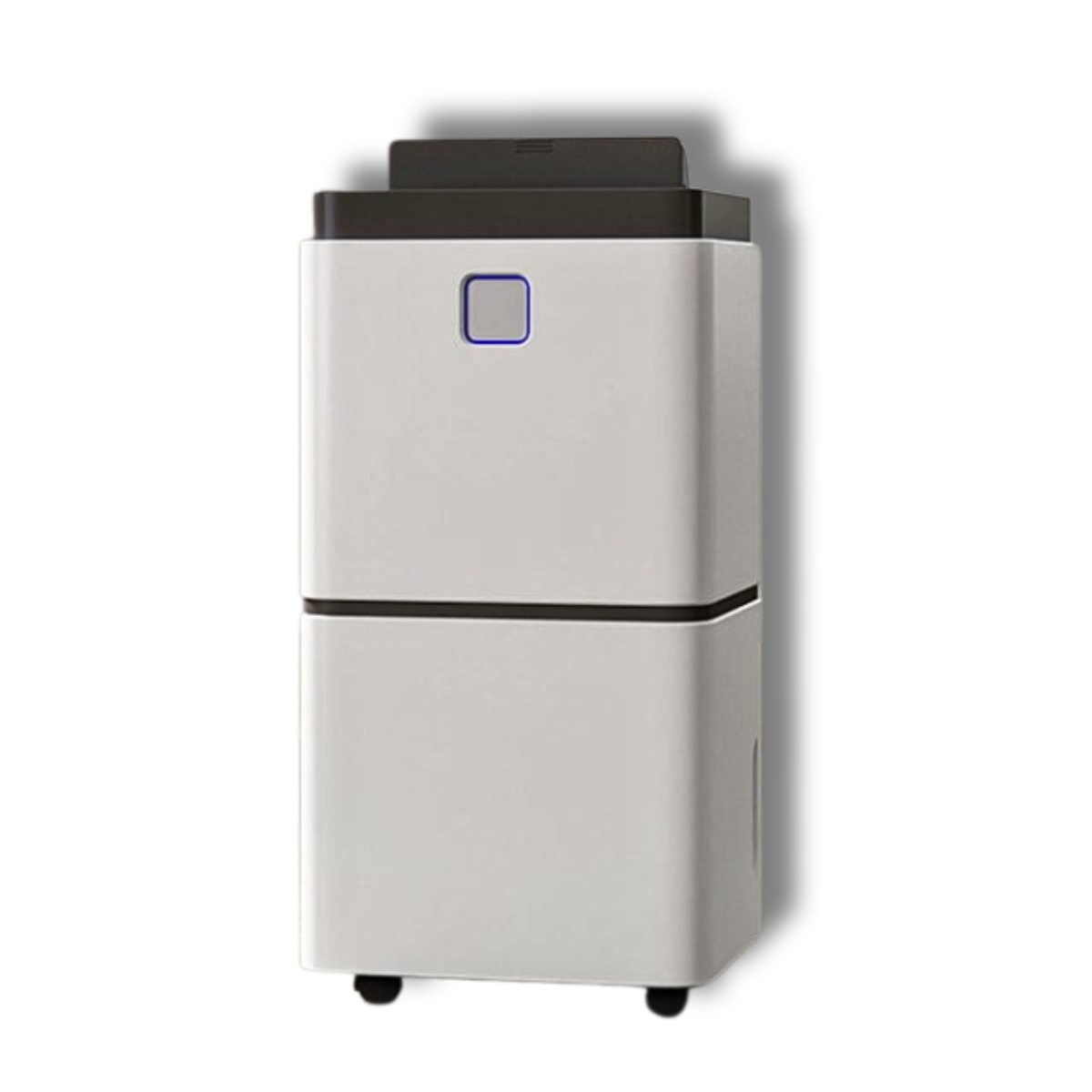


Dehumidifier humidity control matters because it maintains balanced indoor humidity that supports comfort, health, air quality, energy efficiency and long term property protection. It reduces excess moisture that causes mold growth, mildew, dust mites, allergens, musty odors and structural wood damage in high humidity conditions. Dehumidifier experts recommend maintaining indoor relative humidity between 30% and 50%, with a practical sweet spot around 40% to 45%. It is advised to keep within this range while ensuring humidity stays below 50% to 55% to reduce mold and structural risks.
Dehumidifier humidity settings depend on factors such as temperature, seasonal changes, room type and location, moisture sources and unit capacity. It adjusts the dehumidifier set point based on these conditions to maintain effective moisture control. Its optimal comfort setting is around 45% to 50% RH. Dehumidifier’s best humidity settings vary by room type such as bedrooms, living rooms, basements, crawl spaces, bathrooms, laundry rooms and water damaged areas. It requires different moisture levels in each space to secure proper humidity control.
Dehumidifier performance changes with seasonal variations as humidity rises in warm months and falls in colder months. It requires adjustment to maintain balanced indoor conditions throughout the year. Dehumidifier’s incorrect settings cause musty odors, mold, condensation, dry air, static shocks, constant operation and poor water collection. It indicates improper humidity control and reduced efficiency. You should maintain ideal humidity levels by continuously adjusting the operation to the room conditions. It maintains consistent air quality, prevents mold growth and protects both health and property.
Why does dehumidifier humidity control matter?
Dehumidifier humidity control matters because maintaining balanced indoor humidity is essential for comfort, health, air quality, energy efficiency and long term property protection. A dehumidifier helps prevent mold growth by reducing excess moisture that encourages mold, mildew, bacteria, dust mites, allergens, musty odors and structural wood rot. A dehumidifier’s humidity control prevents air from becoming too dry, which causes itchy skin, sore throat, eye irritation, breathing discomfort, static electricity and cracked wood surfaces. Dehumidifier settings should always match the room’s humidity level and moisture conditions to maintain a healthy indoor environment and protect both people and materials.
The image below shows the key reasons to control humidity.
What ideal dehumidifier humidity range do experts recommend?
The ideal dehumidifier humidity range recommended by experts is between 30% and 50% indoor relative humidity for maintaining balanced moisture levels and healthy indoor air quality. A dehumidifier should generally be set within or near the 30% to 50% RH range because most experts consider it the recommended setting for dehumidifier performance and moisture control. They explain that this range supports optimal health and comfort while helping reduce excess indoor dampness across different room conditions.
A dehumidifier performs most effectively around 40% to 45% RH, which experts describe as a practical sweet spot for everyday indoor comfort and humidity balance. It should usually keep humidity below 50% to 55% RH to reduce risks associated with mold, mildew, dust mites, unpleasant odors and structural damage caused by long term moisture exposure.
What factors affect ideal dehumidifier humidity settings?
The factors that affect ideal dehumidifier humidity settings are temperature, seasonal changes, room type and location, moisture sources and ventilation and airflow. These conditions influence how much moisture is present in the air and help determine the most effective humidity level.
The factors that affect ideal dehumidifier humidity settings are given below.
- Temperature: Temperature directly affects evaporation and condensation, which changes current moisture levels and dehumidification set point, so settings on a dehumidifier must adapt to room temperature for stable comfort.
- Seasonal changes: Seasonal changes affect indoor humidity because summer is more humid, while winter is drier, so you need to adjust the dehumidifier setting to keep moisture balanced.
- Room type and location: Room type and location influence ideal dehumidification because the specific room, such as a basement, bathroom or bedroom, affects current moisture levels and required settings on a dehumidifier.
- Moisture sources: Moisture sources such as cooking, showers, leaks and drying clothes add extra humidity to the air, which increases moisture levels and requires stronger dehumidifier settings to maintain balance.
- Insulation and air leaks: Insulation and air leaks influence how much outside air and moisture enter a room, so better sealed spaces keep humidity stable while leaky rooms need more dehumidification control.
- Ventilation and airflow: Ventilation and airflow affect how moisture moves around a space and good air circulation helps the dehumidifier work evenly, while poor airflow causes uneven humidity levels.
- Dehumidifier size and capacity: Dehumidifier size and capacity determine how quickly and effectively moisture is removed, so an undersized unit struggles to control humidity while a properly sized one maintains stable comfort.
What is the best dehumidifier humidity setting by room type?
The best dehumidifier humidity setting by room type includes living rooms and bedrooms, basements, crawl spaces, bathrooms and flooded or water damaged rooms. A dehumidifier should be adjusted based on each space’s moisture level to maintain comfort, prevent mold growth and make sure efficient humidity control.
The best dehumidifier humidity setting by room type is given below.
- Living rooms and bedrooms: Set relative humidity for living rooms and bedrooms around 40 to 50% for comfort, sleep quality and mold prevention using a dehumidifier for humid room control.
- Basements: Maintain 45 to 55% relative humidity using a dehumidifier for a basement setting to prevent dampness, musty odors, mold growth and structural moisture damage.
- Crawl spaces: Keep humidity between 50 to 60% for crawl spaces using continuous dehumidification to reduce wood rot, pest infestation and moisture accumulation in confined underfloor areas.
- Bathrooms: Target 45 to 55% relative humidity after showers using a dehumidifier or exhaust balance to limit condensation, mildew and persistent damp surfaces.
- Laundry rooms: Maintain 40 to 50% humidity during drying cycles with a dehumidifier for humid room conditions to reduce condensation, lint dampness and odor buildup.
- Garages and workshops: Keep 45 to 55% relative humidity in garages and workshops to protect tools, paints and equipment using dehumidification against rust, corrosion and moisture-related degradation.
- Flooded or water-damaged rooms: Use as low as 30 to 40% relative humidity in flooded or water damaged rooms for aggressive drying with continuous operation to speed moisture removal and prevent mold.
How to set the dehumidifier for optimal comfort?
To set the dehumidifier for optimal comfort, set it to 45% to 50%, use a hygrometer, adjust for the season and set lower levels for damp rooms. The dehumidifier keeps each setting tuned to room conditions, so every good setting supports both comfort and protection.
The tips to set the dehumidifier for optimal comfort are given below.
- Set it to 45% to 50%: Set a dehumidifier to maintain humidity between 45% and 50% relative humidity, which is widely considered an ideal range for comfort, health and preventing mold growth indoors.
- Use a hygrometer: Use a hygrometer to monitor indoor humidity accurately, which ensures your dehumidifier settings match real time conditions and help maintain consistent comfort levels throughout different rooms in the home.
- Adjust for the season: Adjust settings for the season, since summer humidity requires stronger dehumidification while winter air needs lower settings to avoid making indoor environments too dry.
- Set lower for damp rooms: Set lower humidity targets in damp rooms such as basements or bathrooms, where moisture levels are higher and more aggressive dehumidifier settings are required for control.
- Start lower if very damp: Start with a lower setting if a space is very damp, which allows the dehumidifier to remove excess moisture quickly before adjusting toward a comfortable humidity level.
- Raise it if too dry: Raise the setting if indoor air becomes too dry, as overly low humidity causes discomfort, dry skin and respiratory irritation in sensitive individuals within the space.
- Lower it if condensation shows: Lower humidity settings if condensation appears on windows or walls, as visible moisture indicates excess humidity that the dehumidifier should reduce to prevent mold and damage.
- Use comfort mode: Use comfort mode on the dehumidifier when available, as it automatically balances humidity levels based on room temperature and helps maintain steady indoor comfort without manual adjustments.
What are the signs of incorrect dehumidifier settings?
The signs of incorrect dehumidifier settings are musty odors and molds, condensation on windows or walls, air feels too dry and static shocks. It dries out damp walls unevenly and causes discomfort in indoor spaces.
The signs of incorrect dehumidifier settings are given below.
- Musty odors and mold: A dehumidifier leaves stale smells and visible mold patches in corners and on surfaces, which indicate poor humidity control and a damp indoor environment.
- Condensation on windows or walls: A dehumidifier fails to reduce humidity when condensation forms on glass or walls, which shows that moisture levels remain too high indoors.
- Air feels too dry: A dehumidifier removes too much moisture when skin feels itchy, the throat feels scratchy and the eyes feel irritated, making indoor air uncomfortable.
- Static shocks: A dehumidifier lowers the humidity too much, increasing static electricity on carpets, metal surfaces and electronics due to a lack of moisture in the air.
- Constant running: A dehumidifier runs continuously without improving comfort, which leads to higher energy use while humidity levels remain unchanged in the room.
- Little or no water collection: A dehumidifier collects very little water even in humid conditions, which shows reduced efficiency and continued moisture retention in walls and materials.
Can a dehumidifier setting help prevent mold?
Yes, a dehumidifier setting can help prevent mold by controlling indoor moisture levels. A dehumidifier helps maintain relative humidity between 30% to 50% RH, as mold grows above 60% to 70% RH. This keeps indoor air balanced and helps the dehumidifier reduce the risk of mold growth, but it does not remove existing mold.
Should you adjust the humidity settings at night?
Yes, you should adjust the humidity settings at night if indoor air feels too damp or too dry during sleeping hours. A dehumidifier should maintain nighttime humidity between 30% and 50% RH for comfort and healthy air quality. It should not allow indoor humidity to consistently exceed 60% RH because excess moisture can increase mold, mildew and dust mite growth. Most homes do not need a different dehumidifier setting at night unless humidity conditions noticeably change.
What humidity level is too low for a home?
Humidity level is too low for a home when indoor humidity falls below about 30% RH. A dehumidifier setting reflects how low it goes and influences indoor humidity below safe levels. It leads to dry skin, itchy eyes, sore throat, chapped lips, irritated sinuses and nosebleeds when indoor humidity stays below safe levels.
What do the numbers on a dehumidifier indicate?
The numbers on a dehumidifier indicate the target relative humidity level. A dehumidifier display begins by showing the current relative humidity before adjustment. A dehumidifier setting of 50 means the unit runs until the room reaches about 50% RH, which defines a controlled moisture balance.
Can you run a dehumidifier 24/7?
Yes, you can run a dehumidifier 24/7 because modern units are designed to maintain consistent humidity. A dehumidifier operates effectively when it is in good condition and used according to its manual. It runs continuously and has built-in humidistats that turn the unit off when the target humidity is reached to avoid unnecessary runtime.
Solar Panel
Air Purifier