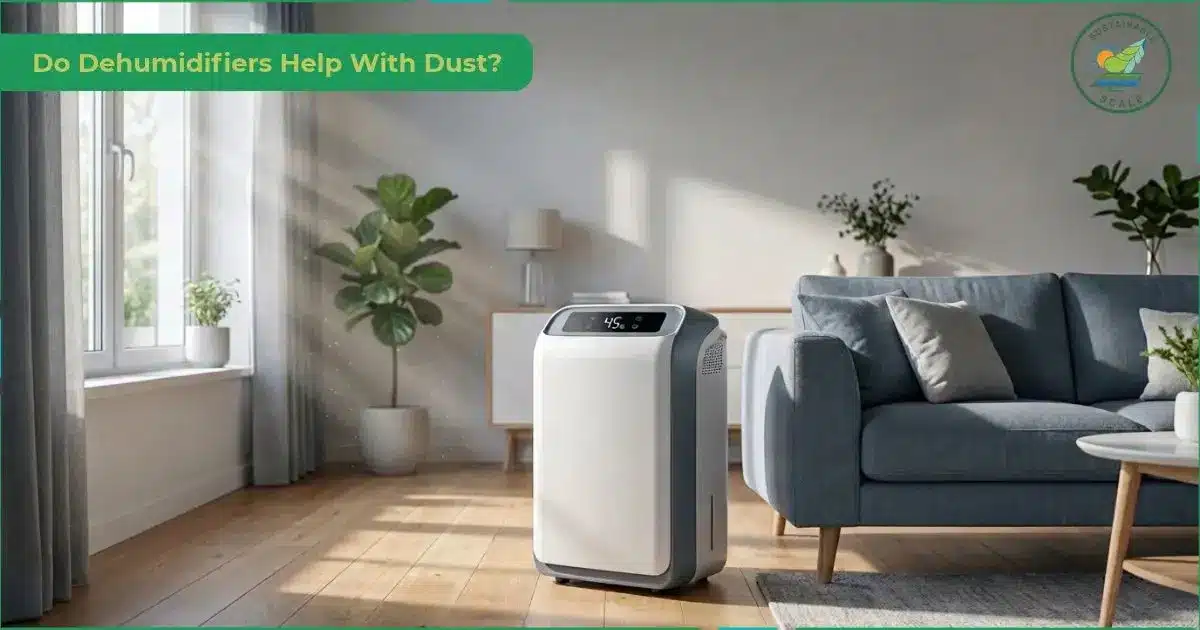
Do Dehumidifiers Help With Dust?

- Published Date - November 1, 2026
- Modified date - November 1, 2026
Table of Contents
Yes, dehumidifiers help with dust because they reduce indoor humidity and create conditions that limit allergen buildup on surfaces and in indoor air. Dehumidifiers reduce indoor humidity so dust mites and mold to thrive lose the moisture support they need in living areas. They lower allergen load by pulling excess moisture from indoor air, which reduces particles that attach to dust and circulate between connected rooms.
Dehumidifiers have clear limitations for dust control because they do not remove dust already settled on floors, furniture or fabrics. They control airborne moisture instead of scrubbing particles from surfaces, so they limit future dust buildup rather than cleaning existing deposits. Dehumidifiers depend on correct sizing, central placement and regular filter maintenance, so improper setup reduces moisture removal in occupied spaces. They weaken overall dust control performance when these setup steps do not follow manufacturer guidance.
Dehumidifiers support best practices for reducing dust when they operate within a defined humidity range and align with structured cleaning routines. They prevent mold growth by keeping humidity between thirty percent and fifty percent, which reduces an important source of indoor dust and airborne allergens. They work with HEPA vacuuming, damp dusting, HVAC filter replacement and routine cleaning, so combined actions maintain cleaner surfaces and support healthier breathing conditions indoors.
How do dehumidifiers help with dust control?
Dehumidifiers help with dust control by killing dust mites, preventing mold growth, minimizing odors and reducing dust adhesion. Dehumidifiers support eradicating dust mites by keeping relative humidity below 50 percent, which removes the moisture mites need to feed and reproduce. They keep surfaces dry, so mold spores fail to germinate and stop adding particles that increase household dust levels and control biological allergens throughout homes.
Dehumidifiers also remove excess moisture that sustains odor producing bacteria, keeping fabrics, carpets and closed rooms fresher and more comfortable for occupants. Dehumidifiers reduce dust adhesion by limiting surface dampness, so loose dust lifts away easily during vacuuming and regular damp cleaning.
The benefits of using dehumidifiers for dust control are given below.
- Kill dust mites
- Prevent mold growth
- Minimize odors
- Reduce dust adhesion
Kill dust mites
Dehumidifiers kill dust mites by reducing indoor moisture so their bodies lose the water they need to survive in fabrics, bedding and carpets. They make relative humidity control effective by keeping levels between 30 and 50 percent, which removes the damp habitat that supports dust mite populations. Dehumidifiers slow dust mite growth further by drying out surfaces where mites feed on skin flakes and organic debris. They leave dead mites and allergenic waste particles on dried surfaces and HEPA-filtered vacuuming removes these residues from the home.
Prevent mold growth
Dehumidifiers prevent mold growth by keeping indoor humidity low enough to control moisture and stop mold spores from germinating on household surfaces. Dehumidifiers maintain indoor humidity between 30 and 50 percent, which removes the damp conditions that mold colonies need to stay active. Dehumidifiers support long term mold control when occupants fix water leaks and improve air circulation, so these steps strengthen humidity control and moisture removal.
Minimize odors
Dehumidifiers minimize odors by reducing excess humidity that sustains odor causing bacteria and moisture related pet odors in enclosed rooms. They discourage bacterial growth and keep fabrics and carpets drier, which limits the damp surfaces where unpleasant smells develop. Dehumidifiers ventilate and manage indoor air as integrated systems that use adsorption and neutralization through filters, supporting long lasting natural odor control in the home.
Reduce dust adhesion
Dehumidifiers reduce dust adhesion by lowering surface moisture and weakening the static forces that make dust particles cling to walls, furniture and electronics. They lower indoor humidity below 50 percent, reduce static moisture on surfaces and help prevent damp dust buildup in corners and on horizontal ledges. Dehumidifiers work with an anti-static spray and a HEPA air purifier to neutralize electrostatic charges, so loose dust lifts away more easily during regular cleaning.
What are the limitations of using a dehumidifier for dust?
The limitations of using a dehumidifier for dust are that it fails to remove settled dust and requires low humidity to work. These limitations show that dehumidifiers depend on dry indoor air and moisture control, so their limited dust impact reflects partial rather than complete dust removal.
The limitations of using a dehumidifier for dust are given below.
- Fails to remove settled dust: A dehumidifier does not remove settled dust from furniture, floors or surfaces, so regular vacuuming and dusting remain necessary for effective dust control.
- Requires low humidity to work: A dehumidifier controls moisture rather than directly removing dust and excessively dry indoor air can cause discomfort without providing significant additional dust reduction.
- Relies on regular maintenance: A dehumidifier requires regular filter cleaning, drainage and component checks to maintain performance and prevent reduced dust control effectiveness.
- Covers limited square footage: A dehumidifier covers only its rated area making correct sizing necessary for effective humidity control across larger spaces.
- Generates operational costs: A dehumidifier consumes electricity during operation that creates ongoing energy costs when used regularly for humidity and dust-related control.
What are the best practices for reducing dust with a dehumidifier?
The best practices for reducing dust with a dehumidifier are optimal humidity level, proper dehumidifier sizing, correct dehumidifier placement and regular filter cleaning. These practices coordinate humidity control with structured cleaning routines that lower both airborne dust and settled dust indoors.
The best practices for reducing dust with a dehumidifier are given below.
- Optimal humidity level: Set target humidity between 30 and 50 percent using a built-in humidistat that suppresses dust mites and reduces dust accumulation across fabrics and hard indoor surfaces.
- Proper dehumidifier sizing: Match unit capacity to room square footage and moisture load so correctly sized equipment manages humidity efficiently and supports consistent dust reduction across living areas and occupied rooms indoors.
- Correct dehumidifier placement: Place unit centrally and maintain clear space around walls and furniture so unobstructed airflow reaches the entire room and carries suspended dust toward the dehumidifier intake grille.
- Regular filter cleaning: Clean filter regularly according to manufacturer guidelines so airflow remains steady, trapped dust stays contained and filtration performance supports steady dust reduction in the conditioned indoor environment.
- Water tank maintenance: Empty water tank before it fills or triggers shutdown so continuous water removal sustains dehumidifier operation and indirectly supports ongoing dust control throughout the treated space.
- HEPA vacuuming: Use a HEPA vacuum on carpets, rugs, and upholstery so captured fine dust, dead skin and settled debris complement dehumidifier based humidity management for comprehensive dust reduction indoors.
- Damp dusting: Wipe surfaces with a slightly damp cloth so loosened dust adheres to fabric instead of resuspending into indoor air and accumulating again on shelves, electronics, and furniture.
- HVAC filter replacement: Replace HVAC filter every ninety days so circulating dust reduces within ducts and vents, which reinforces dehumidifier performance and overall dust management efforts throughout the home.
- Air leak sealing: Seal window frames, door gaps, and duct joints so outdoor humidity and dust do not bypass dehumidifier control and undermine indoor dust and humidity management.
- Routine cleaning practices: Create a weekly cleaning schedule that includes vacuuming, dusting and washing fabrics so combined cleaning and humidity control maintain lower dust levels and cleaner indoor air.
How to choose the best dehumidifier for dust control?
Choose the best dehumidifier for dust control by matching its room-size capacity, moisture removal capacity, humidity control settings, built-in hygrometer, and air filter quality. Consider energy efficiency, noise level, water drainage options, ease of maintenance, and warranty coverage to maintain suitable humidity and reduce operating costs.
The steps to choose the best dehumidifier for dust control are outlined below.
- Room size compatibility: Match the dehumidifier’s capacity to your room’s square footage to remove excess moisture effectively. Select a correctly sized unit to maintain suitable humidity without excessive operation.
- Moisture removal capacity: Select a dehumidifier with sufficient pint capacity to manage your home’s humidity level. Choose higher moisture removal capacity for damp spaces with persistent humidity problems.
- Humidity control settings: Choose adjustable humidity settings to maintain indoor relative humidity between 30% and 50%. Maintain stable humidity to limit dust mites and mold growth.
- Built-in hygrometer: Select a dehumidifier with a built-in hygrometer that monitors humidity levels. Use accurate readings to maintain suitable humidity and prevent excessive drying.
- Air filter quality: Choose a model with a washable or replaceable air filter to capture some airborne dust particles. Remember that a dehumidifier does not replace a dedicated HEPA air purifier.
- Energy efficiency: Choose an ENERGY STAR-certified model, where available, to reduce electricity consumption. Lower energy use helps control electricity bills during extended operation.
- Noise level: Check the manufacturer’s noise rating before purchasing a dehumidifier for bedrooms or living areas. Choose quieter models to improve comfort during sleep and daily activities.
- Water drainage option: Choose a model with a continuous drainage outlet or a large collection tank. Reduce manual emptying with continuous drainage to support uninterrupted moisture control.
- Ease of maintenance: Select a dehumidifier with accessible filters, a removable water tank and simple cleaning instructions. Perform regular maintenance to support reliable operation and consistent moisture removal.
- Warranty and reliability: Compare warranty coverage, customer reviews and replacement part availability before purchasing. Choose a reliable dehumidifier to reduce unexpected repair costs and support long-term humidity management.
Which is the best dehumidifier for dust control?
The best dehumidifier for dust control is a 2-in-1 dehumidifier with a built-in HEPA filter because it removes moisture and captures fine dust together. A dehumidifier targets high humidity breeds conditions that support dust mites and mold inside enclosed rooms. It delivers strong dust control by lowering moisture, trapping airborne particles and reducing allergen levels on surfaces.
Does a dehumidifier get rid of dust?
No, a dehumidifier does not get rid of dust because it removes excess moisture instead of capturing airborne or settled dust particles. A dehumidifier reduces humidity that supports dust buildup, but it does not act as a dedicated dust cleaner for surfaces. It works alongside vacuuming and dusting, which remove visible dust that remains on floors, furniture and other indoor surfaces.
Is a dehumidifier effective for a dusty room?
Yes, a dehumidifier is effective for a dusty room because it extracts excess moisture and reduces conditions that support dust buildup on indoor surfaces. A dehumidifier prevents dust mites and mold by holding humidity in a lower range that limits their growth in living spaces. It does not capture dust like an air purifier, so combined use with HEPA filtration removes airborne particles and supports cleaner air indoors.
Can a dehumidifier system in a basement help control moisture?
Yes, a dehumidifier system in a basement can help control moisture because it manages airborne moisture in the damp, enclosed conditions common in below-grade spaces. A dehumidifier system in a basement prevents mold growth by keeping humidity near fifty percent and protecting walls, insulation and stored belongings. It maintains healthier air and safeguards structural materials when it runs consistently and removes trapped moisture from the basement environment.
Is a dehumidifier good for allergies?
Yes, a dehumidifier is good for allergies because it controls indoor humidity and reduces moisture that supports common indoor allergens. A dehumidifier for allergies keeps humidity between 30% and 50% so dust mites and mold decline in living spaces. It helps improve allergy symptoms by lowering allergen levels in indoor air and reducing triggers that inflame sensitive airways.
Will a dehumidifier help with asthma?
Yes, a dehumidifier will help with asthma because it reduces humidity and limits conditions that support indoor asthma triggers. A dehumidifier reduces dust mite exposure and mold by keeping humidity between 30% and 50% so trigger levels stay lower in living spaces. It makes indoor air lighter and easier to breathe by lowering moisture and reducing irritants that inflame sensitive, asthma prone airways.
Are dehumidifiers good for people with COPD?
Yes, dehumidifiers are good for people with COPD because they maintain dry, stable air and prevent bronchospasm flare ups triggered by excess indoor humidity. Dehumidifiers keep humidity between 30% and 50% so cleaner air remains beneficial for COPD during daily activities. They reduce mold and dust-mite triggers, which eases breathing effort and lowers irritation in COPD affected airways.
How often should you clean a dehumidifier?
You should clean a dehumidifier every two to four weeks because this schedule keeps the filter, tank, and coils free of dust and mold buildup. A dehumidifier that runs continuously in humid conditions needs cleaning at the shorter end of that range to maintain performance. It preserves airflow, moisture removal and healthier indoor air quality by removing accumulated debris from internal components.
Products
Solar Panel
Air Purifier