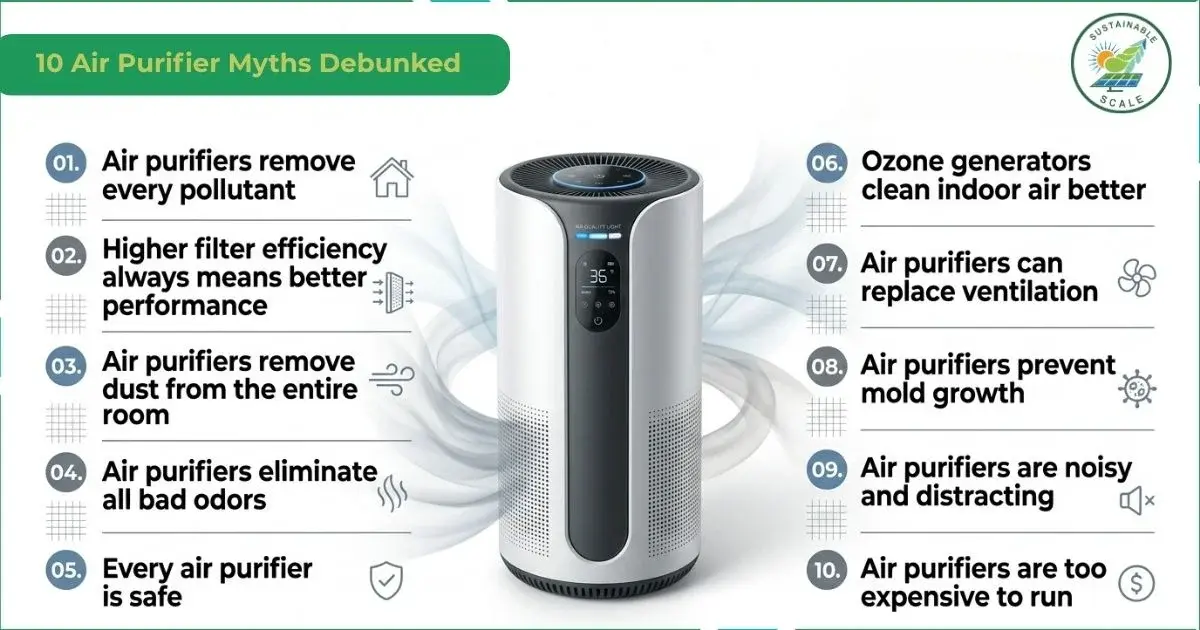
10 Air Purifier Myths Debunked

- Published Date - November 02, 2026
- Modified date - November 02, 2026
Table of Contents
Air purifiers have myths about their filtration, performance, safety, ventilation, mold control, noise and operating costs. Air purifiers capture airborne particles with HEPA filters and adsorb certain gases with activated carbon, but they do not remove every indoor pollutant such as carbon monoxide. Air purifiers with higher filter efficiency do not always perform better because airflow and CADR also affect filtration results. They capture airborne dust that reaches the intake but do not remove dust settled on surfaces. Air purifiers with activated carbon reduce certain odors and gases but do not eliminate every odor or its source. Air purifiers with certain ionizers or electronic technologies can produce ozone, which can irritate the respiratory system.
Air purifiers using mechanical filtration do not require ozone, while ozone generators can create health concerns in occupied spaces. They remove certain airborne pollutants but do not exchange indoor air with fresh outdoor air. They also reduce airborne mold spores but do not remove established mold or control the moisture that supports growth. Air purifiers vary in noise levels, with higher fan speeds generally producing more noticeable operating noise. They have ongoing electricity and filter costs that vary according to power draw, runtime, fan speed and filter replacement.
10 air purifier myths debunked are listed below.
- Air purifiers remove every pollutant
- Higher filter efficiency always means better performance
- Air purifiers remove dust from the entire room
- Air purifiers eliminate all bad odors
- Every air purifier is safe
- Ozone generators clean indoor air better
- Air purifiers can replace ventilation
- Air purifiers prevent mold growth
- Air purifiers are noisy and distracting
- Air purifiers are too expensive to run
1. Air purifiers remove every pollutant
An air purifier does not remove every indoor pollutant because particle pollutants and gaseous pollutants require different filtration methods. It uses a HEPA filter to remove particle pollutants such as dust, pollen, pet dander, smoke particles and airborne microorganisms. It uses an activated carbon filter to adsorb certain gases and volatile organic compounds (VOCs). It does not remove carbon monoxide through typical filtration. It therefore does not remove all indoor pollutants because different pollutants require different filtration methods.
2. Higher filter efficiency always means better performance
An air purifier with higher filter efficiency does not always provide better overall performance because filter efficiency and CADR measure different aspects of filtration. A higher efficiency filter captures more particles of a particular size during each pass through the filter. It can also reduce clean air delivery when higher filter resistance restricts airflow through the unit. It therefore requires consideration of filter efficiency, airflow and CADR together to determine overall filtration performance.
3. Air purifiers remove dust from the entire room
An air purifier does not remove dust from every surface because it only captures dust particles that reach the unit’s intake. It captures airborne dust more effectively when room size, air circulation, placement and CADR support sufficient airflow through the unit. It does not remove dust settled on floors, furniture or bedding. It therefore provides better room wide dust removal when larger rooms receive enough air circulation and the purifier has an appropriate CADR.
4. Air purifiers eliminate all bad odors
An air purifier does not eliminate all bad odors because different odors require different filter technologies. It uses activated carbon to adsorb certain odor causing gases that HEPA filters do not remove through particle filtration. It captures airborne particles but does not remove most gaseous odors from spoiled food or chemical products. It therefore does not eliminate an odor when the underlying source remains present, because some odors require source control.
5. Every air purifier is safe
Not every air purifier is equally safe to use because safety varies by air-cleaning technology. HEPA filters remove particles without intentionally adding chemicals, while some ionizers and electronic air cleaners can produce ozone as a byproduct. Ozone emissions can create a respiratory irritant that irritates the lungs, so ozone emitting air cleaners should be avoided in occupied spaces. Users should look for relevant safety certifications when choosing a purifier.
6. Ozone generators clean indoor air better
An ozone generator does not clean indoor air better because ozone does not remove particulate matter like mechanical filters. It reacts with certain chemicals and biological contaminants and can deactivate some biological contaminants at sufficient ozone concentrations. It can also produce ozone concentrations that exceed public health limits for occupied spaces. It therefore presents health concerns because breathing ozone indoors can damage the lungs and cause chest discomfort.
7. Air purifiers can replace ventilation
An air purifier does not replace ventilation because air cleaning and ventilation perform different functions. It removes certain indoor pollutants by capturing airborne particles without bringing in fresh outdoor air. It reduces accumulated contaminants inside a room but does not exchange indoor air with outdoor air. It therefore works alongside ventilation because both processes address indoor air quality through different methods.
8. Air purifiers prevent mold growth
Air purifiers can help control airborne mold spores, but they cannot stop mold from growing. A true HEPA filter captures airborne spores and can reduce the number of spores circulating indoors. Air purification cannot remove mold already growing on walls, ceilings or other surfaces. Moisture and high humidity allow mold to grow and spread, so moisture control is essential. Homeowners should fix leaks, dry wet materials, improve ventilation, and reduce excess humidity to prevent mold growth. Air purifiers work best alongside these measures and do not replace proper mold removal when growth is already present.
9. Air purifiers are noisy and distracting
Air purifiers are not always noisy or distracting. Their noise level varies by model and fan speed, with higher airflow settings creating more noticeable fan or airflow noise. Low speed settings can reduce operating noise but may result in slower particle removal. Some air purifier models are designed for quiet operation and offer automatic modes that adjust fan speed based on indoor conditions. Noise level is worth considering when choosing an air purifier, especially for bedrooms, offices or other quiet spaces.
10. Air purifiers are too expensive to run
Air purifiers are not necessarily too expensive to run because operating costs depend on power draw, runtime and fan speed. They use more electricity when they run longer or at higher fan speeds. Filter replacements also add to ongoing costs based on filter frequency and price. An energy efficient model and lower fan speeds can reduce running costs, while the purchase price affects the overall cost
How do air purifiers work?
Air purifiers work by drawing in polluted air, catching large particles, trapping fine particles, reducing odors and gases and releasing clean air. Air purifiers repeat this filtration cycle continuously to reduce airborne pollutants throughout the room.
The steps of how air purifiers work are given below.
- Draws in polluted air: Air purifiers use a fan to pull polluted indoor air into the unit, where airborne pollutants enter the filtration system for further cleaning and removal.
- Catches large particles: Air purifiers use a pre-filter to capture larger particles, including dust, hair, lint and visible debris, before air reaches the finer filtration stages.
- Traps fine particles: Air purifiers use a HEPA filter to trap fine airborne particles, including dust, pollen, smoke particles and other microscopic contaminants from indoor air.
- Reduces odors and gases: Air purifiers use an activated carbon filter to adsorb certain odors and gases from cooking, tobacco smoke, household products and other indoor sources.
- Optionally treats microorganisms: Air purifiers can include additional technologies that treat microorganisms, while their filtration systems capture many airborne bacteria and viruses before releasing cleaner air.
- Releases cleaner air: Air purifiers release cleaner filtered air back into the room after airborne pollutants pass through available filtration stages inside the unit during operation.
- Repeats the cleaning cycle: Air purifiers continuously repeat the cleaning cycle as their fan draws room air through filters and circulates cleaner air throughout the indoor space.
Do HEPA air purifiers work?
Yes, HEPA air purifiers work because they are designed to capture airborne particles and reduce pollutants from indoor air. Air purifiers with properly sized HEPA filters can capture fine particles such as dust, pollen, smoke and other airborne contaminants during normal operation.
Does an air purifier dry out the air?
No, an air purifier does not dry out the air because air purifiers remove airborne particles rather than extract water vapor. Air purifiers with heating or strong airflow features make a room feel drier, but air purifiers without these features do not significantly reduce humidity.
What should I avoid in an air purifier?
You should avoid ozone generating ionizers, poor quality filters, weak airflow and excessive noise in an air purifier. Air purifiers with these limitations provide less effective filtration, produce unwanted ozone, circulate air poorly or create distracting sound that makes continuous air purifier operation uncomfortable.
Are there downsides to air purifiers?
Yes, there are downsides to air purifiers because they can produce ozone, consume electricity, create noise and require regular filter replacement. Air purifiers release an unwanted pollutant when ozone generating features are included. They also require ongoing electricity and maintenance and can create noticeable noise during continuous operation.
Do air purifiers protect against RSV?
No, air purifiers do not protect against RSV infection because they cannot prevent every exposure. Air purifiers with HEPA filtration remove respiratory particles from indoor air and they reduce airborne particles that contain respiratory viruses. They support cleaner indoor air but do not provide complete protection against RSV infection.
Can air purifiers help with coronavirus?
Yes, air purifiers can help with coronavirus by reducing airborne particles that contain respiratory viruses. They use HEPA filtration to remove many small particles from indoor air, which lowers the concentration of airborne particles containing viruses. Air purifiers support improved indoor air quality but do not eliminate every possible coronavirus exposure.
What are the signs you need an air purifier?
The signs you need an air purifier are persistent dust buildup, visible airborne particles, lingering smoke or odors and frequent allergy symptoms. Air purifiers reduce airborne particles that remain suspended indoors and they capture dust, smoke and allergens. They provide useful filtration when these signs continue affecting indoor air quality.
Are air purifiers worth it?
Yes, air purifiers are worth it when indoor air contains pollutants because they can improve indoor air quality. Air purifiers with suitable filtration reduce airborne particles and capture common allergens. They provide greater value in rooms with persistent dust, smoke or other airborne contaminants that affect indoor air quality.
How to find the right purifier for you?
Find the right air purifier for you by considering your room size, target pollutants, filter type and energy consumption. Choose a model with suitable airflow for adequate room coverage and filters that target particles, odors, gases or other pollutants. Select an energy efficient model to reduce ongoing electricity consumption.
What are the pros and cons of air purifiers?
The pros and cons of air purifiers are that they reduce airborne particles, improve indoor air quality and reduce certain odors, but they consume electricity, require filter replacement and create operating noise. Air purifiers with effective filtration can capture dust, pollen, smoke particles and other airborne contaminants, while their maintenance and operating requirements add ongoing costs.
Products
Solar Panel
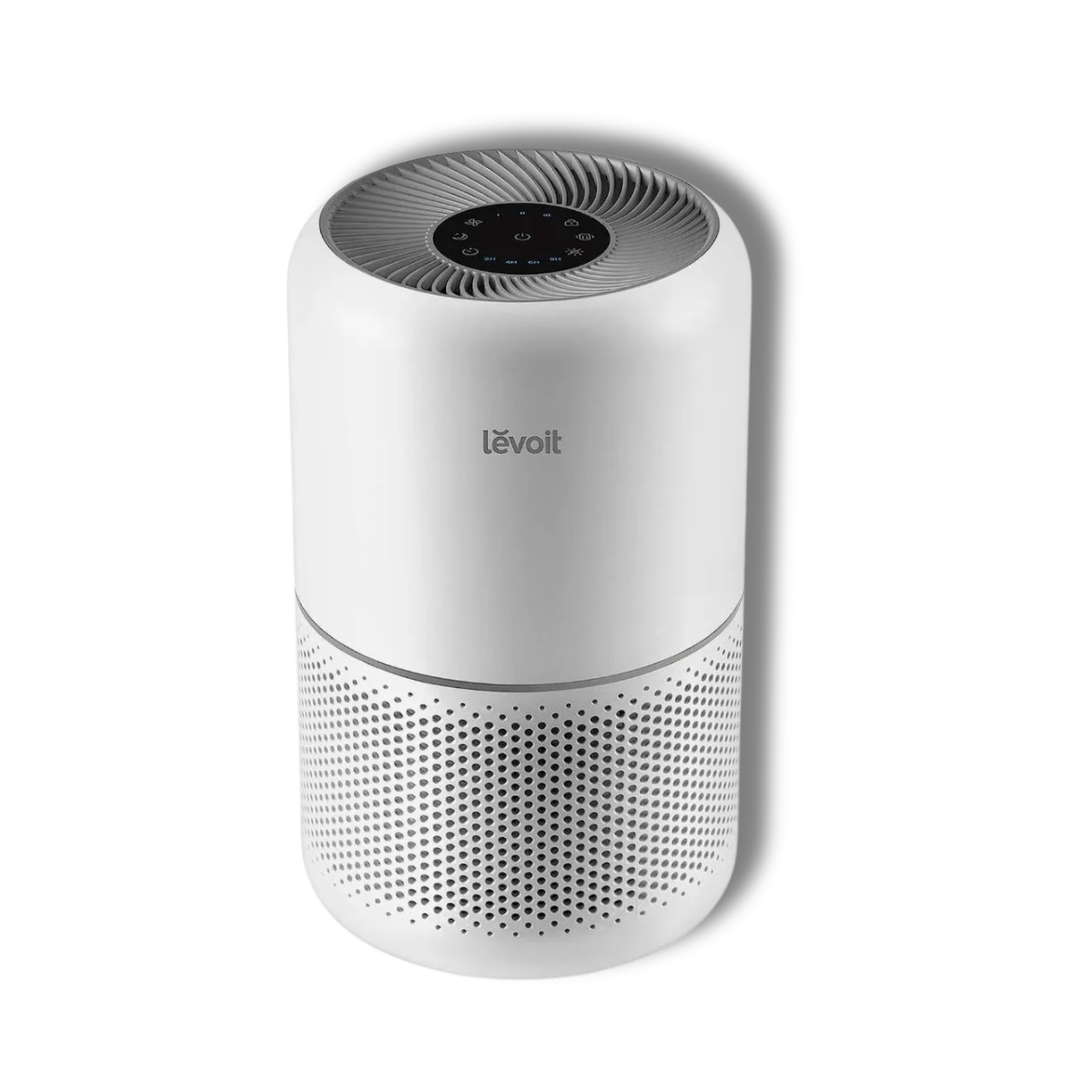
Air Purifier