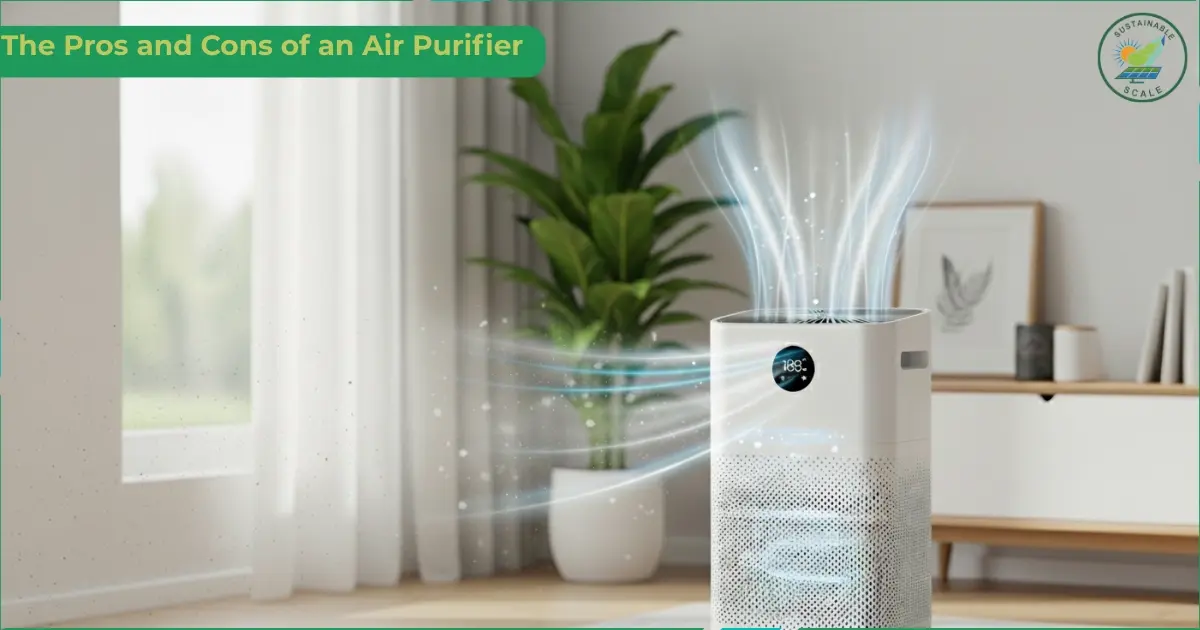

An air purifier cleans indoor environments by extracting harmful elements from circulating air. It targets invisible particles, odors and gases that reduce breathing comfort and affect health, which pulls air through filters, traps pollutants and then releases cleaner air back into the room.
An air purifier provides several advantages like protection against VOCs, odor removal, reducing airborne diseases, improving sleep quality, decreasing inflammation and controlling dust or mold. These contribute to a healthier and more comfortable indoor environment. It also has disadvantages such as upfront costs, potential health concerns, operational issues, noise generation and limited effectiveness in some environments.
Air purifier selection demands review of filter type, cost, room size and energy performance before purchase. It provides safe and efficient operation when matched with correct capacity, durable parts and credible certification suited to individual indoor air conditions.
An air purifier improves indoor air quality by trapping or neutralizing airborne particles, odors and pollutants that create a cleaner and healthier living environment. Air purifiers draw indoor air through filters like activated carbon for VOCs or odors and HEPA for dust and biological particles. They use ionizers to neutralize airborne matter and sometimes UV-C light to deactivate microbes. Air purifiers circulate clean air continuously until indoor air quality improves.
Air purifiers are used to remove dust, allergens, smoke, odors and harmful pollutants from indoor air. They improve air quality, reduce respiratory issues and create a healthier living environment for occupants. Air purifiers also help neutralize airborne viruses and bacteria in enclosed spaces.
The advantages of an air purifier include protecting against VOCs, removing odors, fighting airborne diseases, enhancing sleep quality, decreasing inflammation and controlling dust or mold. An air purifier traps harmful gases and neutralizes odors for cleaner air. It captures viruses and bacteria to reduce health risks and improves sleep by lowering allergens or irritants. An air purifier reduces inflammation, blocks dust or mold spores and maintains overall air freshness.
The infographic below highlights eight benefits of using air purifiers, including their ability to remove odors, fight airborne diseases, and enhance sleep quality.
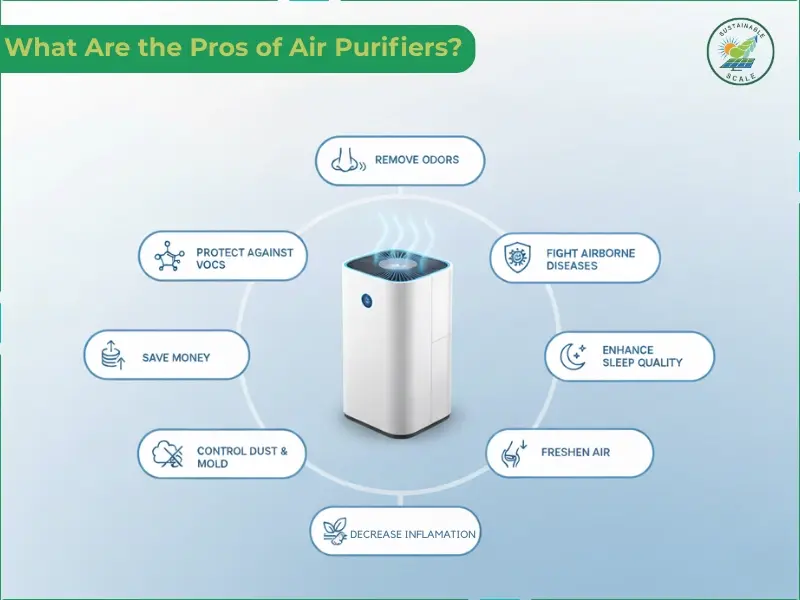
The advantages of air purifiers are given below.
VOCs (volatile organic compounds) are harmful gases released from paints, cleaning products, building materials and smoke. They affect indoor environments and create a serious health impact from VOC exposure. An air purifier with high carbon mass filtration units traps these gases and lowers the concentration in the air. It removes strong odors and reduces headaches, breathing trouble and irritation. Plasma wave technology ionization breaks down chemical structures and improves results beyond standard filters. It gives cleaner air that supports long term lung function, heart health and better sleep. Air quality sensors and auto mode adjust performance automatically and keep exposure at safer levels.
An air purifier removes odors through multiple filtration stages that capture and neutralize odor causing molecules. It traps volatile organic compounds (VOCs) from paints, cleaners and smoke. An air purifier uses activated carbon filters to handle chemical odors from household products and food preparation. It also applies UV technology to break down gases. An air purifier reduces smells from pets, cooking and tobacco. It creates cleaner indoor air without strong residues. An air purifier addresses a wide range of sources that affect comfort. It restores freshness inside rooms by targeting problem particles and gases. An air purifier delivers balanced odor control with steady performance.
An air purifier traps viruses and bacteria through HEPA filters that capture tiny airborne particles in every airflow cycle. It blocks infectious particle removal before it spreads across rooms. Air purifier multi stage filtration combines UV C light, PECO reaction and ionization to destroy microbes beyond physical capture. It supports room size matching purifier capacity to keep circulation strong and coverage complete. An air purifier reduces airborne risks when filters receive timely replacement and units run at a steady speed. It maintains cleaner breathing air and lower chances of indoor disease outbreaks. An air purifier works best with regular hygiene and proper ventilation.
An air purifier improves sleep quality by reducing allergens and irritants that disrupt breathing during the night. It eliminates odors and volatile organic compounds (VOCs), filters out fine particles and promotes better respiratory health. Its quiet operation provides calming white noise, which helps create a relaxing atmosphere conducive to restful sleep. Air purifier placement in bedrooms creates a better sleep environment and promotes healthier respiration.
Scientific evidence from a study in the International Journal of Environmental Research and Public Health shows that an air purifier improves sleep efficiency and continuity. It provides consistent filtration of airborne pollutants that support deeper, less fragmented sleep and fewer nighttime awakenings.
An air purifier decreases inflammation by removing fine particulate matter (PM2.5) that irritates airways and triggers immune responses. It lowers allergen exposure, eases respiratory strain and helps reduce oxidative stress markers associated with chronic disease. Air purifier leads to decreased airway inflammation and improved lung function. It contributes to blood pressure reduction by limiting pollutant effects on the cardiovascular system. Air purifiers deliver clear relief for people with asthma, allergies or cardiovascular conditions. It improves respiratory comfort for children, adults and people with weak immune defenses.
Air purifier freshens air by removing odors and harmful particles through a clean air delivery rate that shows clear performance strength. It improves comfort by reducing headaches and stress that result from poor air quality and strong smells. An air purifier eliminates odors instead of simply masking them, which creates a lasting clean environment. It supports health by lowering exposure to gases and pollutants that weaken breathing and long term wellness. An air purifier with air quality sensor integration adjusts output based on real time changes in the room. It delivers steady freshness that improves both living comfort and overall indoor health.
Air purifiers control dust with HEPA filters for dust and spores that trap fine particles before they spread. It provides continuous air filtration that supports indoor air quality improvement in homes with heavy dust sources. Air purifier blocks mold spores with HEPA filters and UV lights that reduce particles before they settle. It uses activated carbon filters for VOCs and mold odors to keep air fresh in damp rooms. An air purifier protects indoor spaces from mold growth through humidity control when combined with dehumidifiers. It works as a constant line of defense against dust particles and mold spores.
An air purifier cuts costs by lowering medical expenses due to cleaner air and healthcare cost savings from fewer allergies and respiratory troubles. It reduces maintenance needs and extends appliance life. An air purifier operates with low power demand, which drops utility bills over time. It requires fewer repairs because dust and particles stay away from critical systems. An air purifier also cuts the cost of frequent home cleaning by trapping pollutants before they spread. It needs replacement parts mainly in the cost of filters, which stays manageable. An air purifier shows clear gains in a cost benefit analysis.
The disadvantages of an air purifier are financial costs, health concerns, operational problems, noise and limited performance. An air purifier requires ongoing maintenance and filter replacements. It emits ozone and pollutants that irritate the lungs. An air purifier faces clogged filters and poor placement reduces effectiveness. It produces noise that disrupts comfort and covers only single rooms.
The infographic below outlines five common drawbacks of air purifiers, including financial costs, noise levels, and performance limitations.
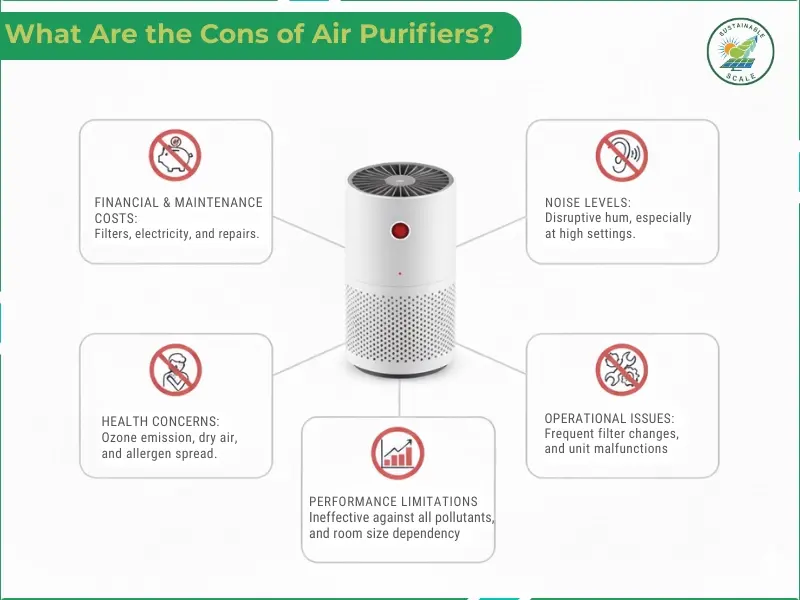
The disadvantages of an air purifier are given below.
Air purifier price covers the upfront financial cost and professional installation fees for larger systems. It requires ongoing filter replacement costs that add to the overall expense. Air purifier operation adds electricity consumption and operational cost that varies with usage. It creates a monthly electricity cost range and possible repair costs for whole home systems.
Air purifiers release ozone and secondary pollutants that affect the lungs and trigger asthma. It exposes people to electromagnetic fields. An air purifier produces dryness and nasal irritation during continuous use. It causes mold growth from poor maintenance and contaminant release. Air purifiers fail to remove odors and mask issues while leaving hazardous gases and ultrafine particles in indoor air.
An air purifier faces operational issues like clogged filters, blocked airflow and dust buildup that causes weak performance and higher strain. It reduces clean air output and shortens product life if not serviced in a timely manner. An air purifier risks damage and poor filtration from incorrect filters or non-approved parts. It performs poorly with improper placement that limits airflow and coverage. Fan motors fail or overheat due to dust or electrical faults.
An air purifier’s noise level depends on its motor, fan, airflow speed, filter type and motor strength. It varies by model, with larger units creating stronger vibrations and louder noise. An air purifier disturbs sleep or focus if noise exceeds comfort levels. It produces less noise in advanced models that balance airflow and use compact motors. Noise affects user comfort and influences purchase decisions.
An air purifier has performance limitations that reduce its overall value. It traps fine particles but leaves gases, odors and larger particles in the air. An air purifier covers single rooms that ignore whole-house needs. It generates ozone in some models, which creates health risks. It causes surface contamination when pollutants resettle. Noise and comfort trade-offs limit daily usability and affect buyer decisions.
Factors you should consider before choosing an air purifier are air purifier types, room size, filter quality, costs, noise levels and performance rating. These factors confirm effective pollutant removal, proper coverage and long term usability.
8 factors you should consider before choosing an air purifier are given below.
Yes, you do need an air purifier because poor outdoor air quality enters homes with poor ventilation. You face breathing problems and respiratory symptoms when this polluted air stays trapped indoors without proper circulation. An air purifier reduces allergy symptoms by clearing harmful particles that trigger health issues during daily exposure. You notice clear signs you need an air purifier when indoor air directly affects comfort and long term health.
Yes, air purifiers actually work because they remove airborne pollutants that affect indoor air. They trap specific pollutants and reduce exposure levels. Air purifier effectiveness depends on filter quality and ultraviolet (UV) purifiers for airborne microorganisms. They perform best when the room size matches the capacity and airflow reaches every corner.
Yes, an air purifier can make you sick because some models release ozone that causes irritation. It triggers allergic reactions when filters collect dust and release particles back. Air purifier health effects vary with design, especially where ozone production exists.
They can be reduced by using a HEPA filter and seeking health consultation if symptoms appear.
The most important room for an air purifier is the bedroom and it gives direct support during sleep when breathing quality matters most. Air purifier placement in a central location in the room improves airflow and circulation. It also benefits from breathing zone positioning near the bed. Open space preference enhances performance and corners reduce effectiveness, so avoid corners and behind furniture.
Yes, an air purifier is worth it because it effectively removes airborne particles, allergens and odors to improve indoor air quality. An air purifier’s worth is especially evident in areas where dust, smoke and gaseous pollutants are common. It helps respiratory health by using a HEPA filter, but consistent performance requires regular cleaning and timely filter replacement for reliable long term results.