How Do Air Purifiers Work? Techniques, Benefits and Drawbacks
Saifur Rahman
Published Date - January 11, 2026
Modified date - January 11,2026
Table of Contents
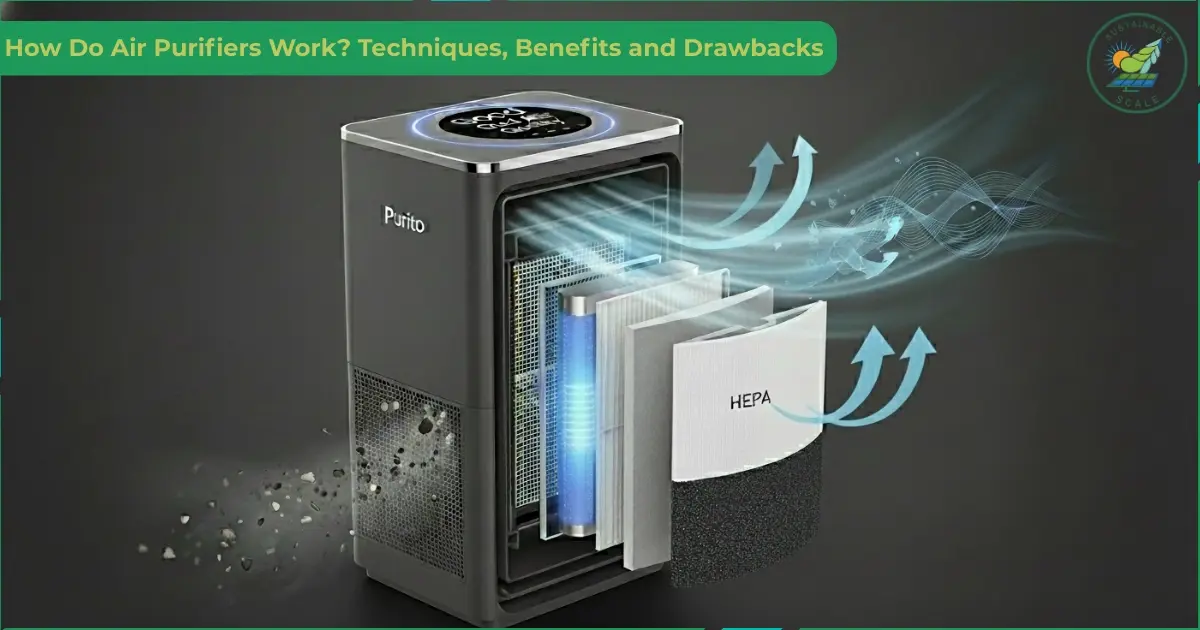
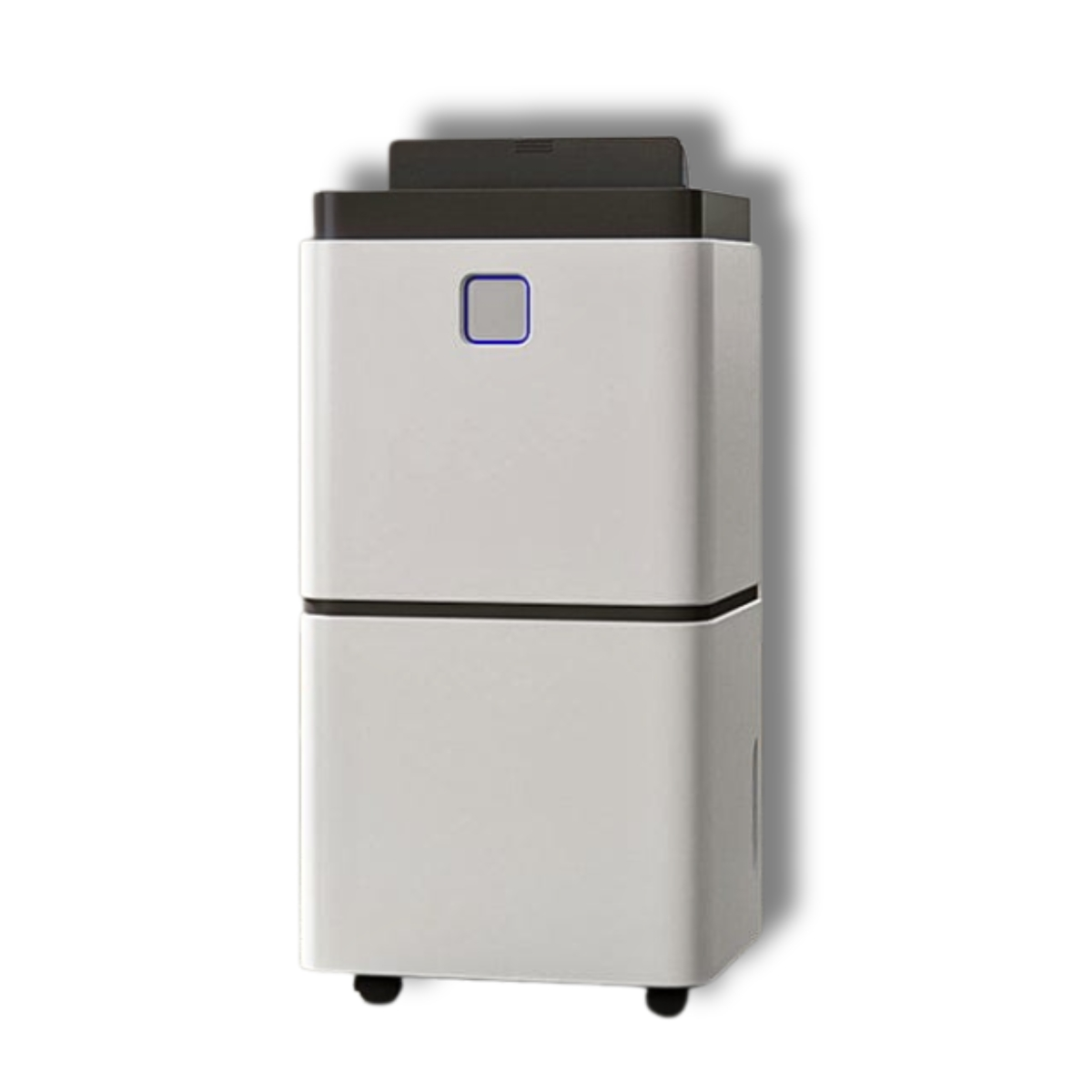
Air purifiers are household devices designed to clean indoor air by removing harmful particles, biological contaminants and volatile organic compounds (VOCs). They improve indoor air quality and reduce respiratory health risks. Air purifiers work by drawing air through intake vents and forcing it through multi stage filtration, including HEPA filters, activated carbon filters and UV C or ionization technologies. They release purified air back into the room and maintain cleaner indoor air.
Air purifiers use filtration to trap dust, pollen and smoke, UV C light or photocatalysis to destroy microbes, ionization to neutralize particles and activated carbon to absorb gases and odors. They remove airborne contaminants and prevent exposure to allergens and pollutants. Air purifiers provide benefits such as improved respiratory health, reduced allergy triggers, fresher indoor air and lower risks of airborne diseases. They enhance sleep quality and support a healthier home environment.
Air purifiers also have drawbacks, including financial and maintenance costs, operational noise, limited room coverage and potential ozone emissions, which can aggravate respiratory conditions. The good quality air purifier balances performance, safety and cost to meet specific room needs and address volatile organic compounds (VOCs). Its users should select a good quality air purifier and follow maintenance guidelines to maximize safety and effectiveness.
What is an air purifier?
An air purifier is a device that supports respiratory health benefits by quietly removing harmful particles and gases in indoor air. It reduces dust, pollen, bacteria, viruses and odors. Indoor air quality improvement minimizes respiratory risks and allergy triggers that lead to respiratory health benefits. Air purifier types include HEPA filters that trap tiny particles, activated carbon filters purifiers that absorb gases and odors, ionic purifiers that charge particles for removal and UV purifiers that destroy airborne microbes. The relevance of filter type to effectiveness defines the air purifier’s impact. These devices contribute to the reduction of airborne diseases by cleaning indoor air directly.
How does an air purifier work?
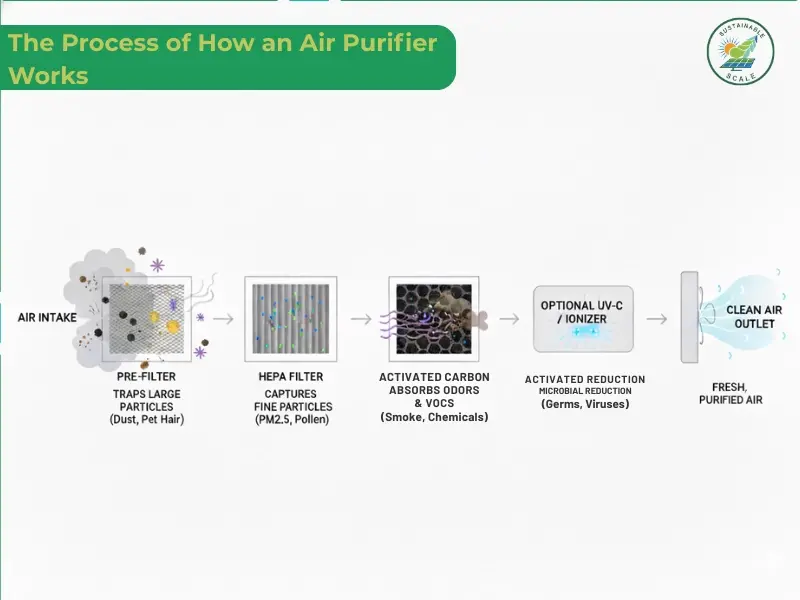
The steps involved in how an air purifier works include airintake, pre-filtration, HEPA filtration,activated carbon filtration and purified air output. This multi stage process removes harmful particles and improves indoor air quality.
The 5 steps of how an air purifier works are outlined below.
Air intake: An air purifier uses a motor driven fan to draw in polluted air from the surrounding environment, which brings in air containing dust, allergens and harmful particles into the device for cleaning.
Pre-filtration: Air first passes through a pre-filter in the air purifier designed to capture large particles such as dust, pet hair and lint, which protects the main filters and prolongs the purifier’s lifespan.
HEPA filtration: An air purifier then forces air through a HEPA filter, which traps at least 99.97% of particles as small as 0.3 microns such as pollen, mold spores, bacteria and fine dust.
Activated carbon filtration: An air purifier passes the air through an activated carbon filter that absorbs odors, gases, volatile organic compounds (VOCs) and harmful chemical pollutants, which improves air freshness.
Purified air output: An air purifier finally releases the cleaned, purified air back into the room, which reduces harmful particles and improves overall indoor air quality for healthier breathing.
What are the techniques used in air purifiers?
The techniques used in air purifiers are filtration, microorganism destruction and electrostatic separation. These approaches improve air quality, support health and safety and optimize filtration efficiency for a range of pollutants.
The techniques used in air purifiers are given below.
Filtration methods: Air purifiers use HEPA filters to capture particles down to 0.3 microns. Activated carbon filters in air purifiers remove odors, VOCs and gases, but need regular replacement.
Technologies for microorganisms and gases: Air purifiers use UV C light or photocatalysis to destroy bacteria, viruses and VOCs. Its performance depends on lamp power, exposure time and proper maintenance.
Electrostatic technologies: Air purifiers with electrostatic technology create strong electric fields to trap airborne particles. These units require filter pad changes to maintain health and performance.
Ionization technologies: Air purifiers withIonization technologies emit charged ions to neutralize particles and VOCs. Health and safety considerations include trace ozone output and regular cleaning of plates or collectors.
Ozone generators: Some air purifiers produce ozone to eliminate odors and kill microbes. Ozone exposure harms lung health that limits safe indoor use in many regions.
Streamer discharge technology: Air purifiers with streamer discharge create reactive oxygen species to break down pollutants and microbes. This method requires periodic maintenance for stable output.
What are the benefits of using an air purifier?
The benefits of using an air purifier include improved respiratory health, removal of airborne particles and enhanced sleep quality. An air purifier helps reduce allergens and pollutants, which promotes better health and creates a cleaner, more comfortable living environment.
The benefits of using an air purifier are given below.
Improved respiratory health: An air purifier helps reduce allergens like dust, pollen and pet dander, which improves lung function and eases breathing for those with asthma or allergies.
Removal of airborne particles: An air purifier captures and removes harmful airborne particles such as dust, smoke and mold, which creates a cleaner environment and reduces the risk of respiratory issues.
Enhanced sleep quality: An air purifier reduces allergens and pollutants that promote better air quality, which leads to improved sleep quality and fewer nighttime allergies or breathing problems.
Reduces risk of certain diseases: An air purifier lowers exposure to harmful particles that decrease the risk of respiratory and cardiovascular diseases linked to air pollution.
Fresher smelling home: An air purifier eliminates unpleasant odors, such as cooking smells or pet odors, which results in a fresher and pleasant indoor environment.
Cost savings: An air purifier improves air quality and reduces allergens, which helps to lower healthcare costs over time by decreasing the need for medical treatments related to allergies or respiratory issues.
What are the drawbacks of an air purifier?
The drawbacks of an air purifier are financial costs, maintenance costs and health risks. They struggle with gases, emit ozone or noise and need frequent maintenance, which makes them less effective and more costly over time.
Financial costs: An air purifier requires upfront investment, ongoing expenses for filter replacements and electricity. These costs add up and strain budgets over time, especially for high capacity units or multi room setups.
Maintenance costs: An air purifier avoids performance loss through regular filter substitutions, but this increases ownership expense. Some filters in an air purifier require professional handling due to hazardous materials.
Health risks: An ionizing air purifier emits ozone, a lung irritant that aggravates respiratory problems like asthma. UV C light air purifiers pose risks if misused and secondary pollutants arise from incomplete chemical reactions during purification.
Health effectiveness: Many air purifiers remove particles but struggle with gases and volatile organic compounds. Microbe removal limitation reduces protection against viruses and bacteria and room size limitations restrict efficacy in larger spaces.
Operational issues: An air purifier creates fan noise, limits airflow coverage and causes dry air side effects that result in discomfort and respiratory irritation during prolonged use.
What do air purifiers not work for?
The things air purifiers do not work for are given below.
Humidity control: Air purifiers do not affect moisture levels in the air and do not regulate indoor humidity or prevent mold growth related to dampness.
Gaseous pollutants: Air purifiers without activated carbon filters fail to remove gases, volatile organic compounds and smoke odor, which limits their effectiveness in reducing chemical air pollution.
Larger particles: Air purifiers struggle to capture heavy, large particles like dust mites and pollen that settle before reaching the device, with improper room size and placement that reduce air circulation.
Mold and nicotine: Air purifiers do not eliminate mold growing on surfaces or remove nicotine residues in the air fully, since spores and chemicals require specialized filtration and surface cleaning.
Odor and chemical removal (without carbon): Air purifiers without carbon filters lack the ability to trap and neutralize strong odors and harmful chemical vapors and restrict their usefulness for comprehensive indoor air purification.
What health risks do air purifiers have?
The health risks of air purifiers are given below.
Lung irritation: Air purifiers that emit ozone can irritate the lungs, which causes discomfort and breathing issues.
Aggravated respiratory conditions: Air purifiers that release ozone and reactive oxygen species (ROS) worsen conditions like asthma or bronchitis, which leads to increased symptoms.
Damage to materials: Air purifiers that produce ozone can degrade materials like rubber, fabric and electronics, which shorten their lifespan.
Permanent lung damage: Air purifiers that produce long-term exposure to ozone cause irreversible lung damage, especially for individuals with existing respiratory problems.
Sinus and throat irritation: Air purifiers release ozone and certain chemicals that can irritate the sinus and throat, which causes discomfort, dryness and soreness.
Do air purifiers help with asthma?
Yes,air purifiers help with asthma because they remove environmental asthma triggers like dust, smoke and pollen from indoor air. Air purifiers for asthma improve lung function, alleviate airway obstruction and reduce allergens, which lowers asthma symptoms and promotes clearer breathing.
Do air purifiers help with allergies?
Yes, air purifiers help with allergies because they reduce allergen exposure by removing airborne particles and irritants. Air purifiers for allergies lower triggers like dust, pollen and pet dander, which improves indoor air pollution control. It works as a symptom management tool, not a cure, by decreasing allergy trigger levels in living spaces.
Does an air purifier help with dust?
Yes, an air purifier helps with dust because it reduces airborne dust particles using HEPA filters that capture 99.97% of particles as small as 0.3 microns. An air purifier’s effectiveness depends on home dust filtration quality, filter maintenance and room specific cleaning routines. It lowers dust buildup and improves air quality.
Can air purifiers improve your sleep quality?
Yes, air purifiers can improve your sleep quality because they reduce particulate matter that triggers nighttime allergy symptoms. They create a cleaner sleep environment, which supports higher oxygen saturation for restful sleep. Air purifiers improve sleep quality further with dimmable lights for comfort and minimal disturbance throughout the night.
Should you leave an air purifier on all day?
Yes, you should leave an air purifier on all day because consistent filtering maintains optimal performance and improves air quality. You need to follow device maintenance and manufacturer recommendations. The air purifier runtime guide advises regular filter changes for air purifier longevity. You also avoid performance drop by sticking to recommended use times.
Are air purifiers worth it?
Yes, air purifiers are worth it because they provide measurable respiratory health benefits by reducing airborne allergens and pollutants. They require continuous purifier operation and correct purifier placement for optimal effectiveness. Portable air purifiers for home use target specific rooms and maintain consistent air quality. Air purifiers are worth consideration for improving indoor air quality.