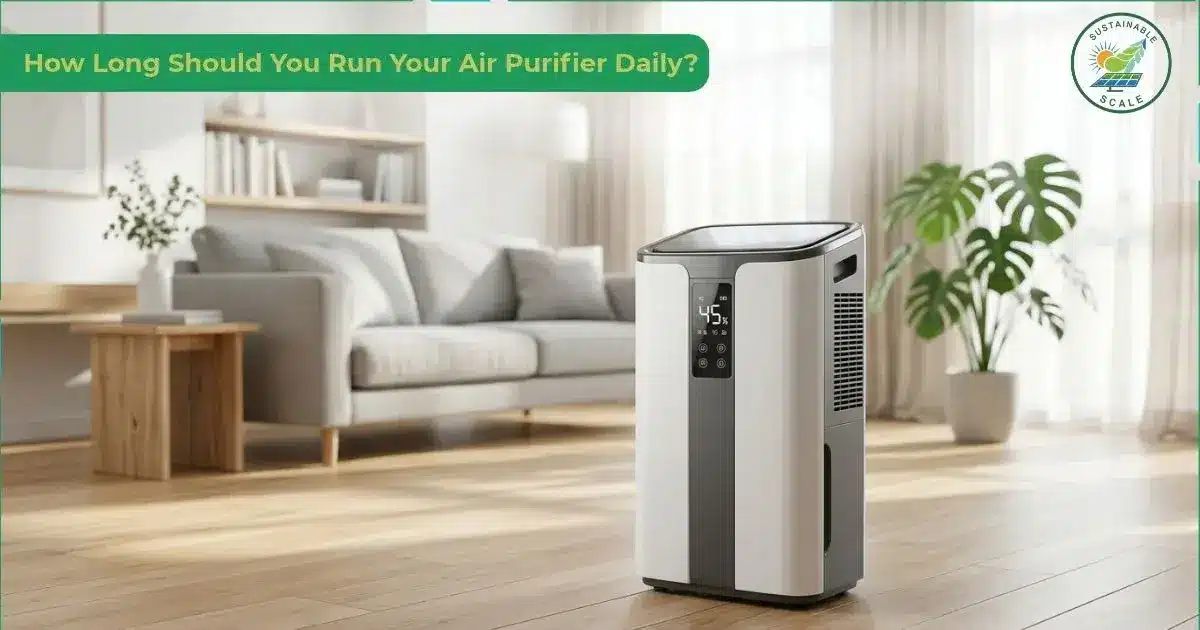
How Long Should You Run Your Air Purifier Daily?

- Published Date - October 31, 2026
- Modified date - October 31, 2026
Table of Contents
You should run an air purifier 10 to 12 hours daily, while continuous 24/7 operation at low speed is ideal in polluted, multi-pet or high sensitivity environments. An air purifier prevents particles, VOCs and outdoor pollution from building up between cycles. It should be used continuously on high pollution days, during wildfire smoke and during peak pollen seasons.
An air purifier’s running time depends on indoor air quality, room size, health sensitivities, air purifier capacity (CADR) and air changes per hour (ACH). You should rely on built-in air quality sensors and smart or auto mode to monitor and adjust runtime effectively. This allows the air purifier to increase speed during pollution spikes and reduce energy use during clean conditions. A practical strategy is to run the unit continuously at low speed for baseline control and switch to higher speeds during activities like cooking or cleaning.
An air purifier’s runtime matters because it ensures consistent air quality, continuous pollutant control, effective air changes per hour, improved filtration efficiency and balanced noise efficiency. A proper runtime planning defines how long you should run an air purifier and how often to run the air purifier for optimal indoor air management.
How long should you run an air purifier?
You should run an air purifier for at least 10 to 12 hours per day. You can also run an air purifier 24/7 for the cleanest and most stable indoor air quality, especially in bedrooms and main living areas. This prevents particles, VOCs and outdoor pollution from building up between cycles. It is best to use full time during high pollution days, wildfire smoke events, peak pollen seasons and whenever windows are closed or airflow is limited. You can run the purifier on a higher setting continuously on heavy pollution or wildfire days, especially in living areas and bedrooms, instead of only for a few hours. You should use a 24/7 operation at lower, quieter speeds to keep triggers low around the clock. An air purifier’s continuous use is recommended in homes with pets or poor ventilation, because fur, dander and stale indoor air are constant sources.
What factors determine the runtime of an air purifier?
The factors that determine the runtime of an air purifier include air quality, room size and volume, placement, number of pets and pollutant sources. An air purifier with a higher CADR rating and proper unit placement reduces overall runtime.
The factors that determine the runtime of an air purifier are listed below.
- Air quality.
- Room size and volume.
- Placement.
- Number of pets
- Health sensitivities
- Air purifier capacity (CADR)
- Air changes per hour (ACH)
- Automatic sensors
- Pollutant sources
Air quality
Air quality determines air purifier runtime by controlling how long the unit must operate to remove pollutants like smoke (PM2.5), odors and allergens. An air purifier should run on high or auto mode for at least 1to 3 hours, then drop to medium or low to maintain clean air in an energy efficient way. Its continuous operation at medium to high speed is ideal during poor air conditions such as wildfire smoke, heavy traffic or cooking fumes. Its shorter runs of 2 to 4 hours or low or eco mode are enough in good air.
Room size and volume
Room size and volume determine air purifier runtime by defining the total air volume that must be filtered to achieve clean indoor air. An air purifier adjusts how long it must run based on the size of the space, because larger or taller rooms contain more air in cubic feet. You can define the total air volume by multiplying room length × width × height to get cubic feet. This volume is then matched to the purifier’s CADR and target air changes per hour. A correctly sized purifier can reach clean air within an hour in a small bedroom, but big or high ceiling rooms need continuous operation to achieve similar results.
Placement
An air purifier’s placement determines runtime efficiency by controlling airflow access and pollutant exposure. Its ideal placement maximizes airflow by reducing the necessary runtime and stabilizing the air purifier schedule. Air purifier placement near primary pollutant sources such as kitchen fumes, pet areas, musty corners and leaky windows, increases early stage contaminant capture and reduces runtime. Air purifier positioned with proper airflow clearance like a few inches to a couple of feet from walls and furniture, maximizes airflow, which reduces runtime. It restricts intake and outlet flow when placed in obstructed areas such as tight corners, behind furniture or under shelves that increase overall runtime.
Number of pets
The number of pets determines the air purifier’s runtime by increasing continuous pollutant generation and filtration demand. This higher pet count often requires longer or even 24/7 operation to maintain stable indoor air quality. They constantly shed dander and hair, which raises airborne particle concentration and increases the time needed for effective purification. A growing number of pets increases the total pollutant load, further extending runtime requirements. It can also reduce efficiency over time by causing faster filter clogging, which forces longer operation. Their accumulated hair and dander restrict airflow and reduce filtration performance, which makes extended operation necessary to achieve consistent results.
Health sensitivities
Health sensitivities determine air purifier runtime by defining how strict indoor air quality control must remain to prevent symptom triggers. Health conditions such as asthma, allergies or chemical sensitivities directly influence the runtime of an air purifier. Asthma increases air purifier runtime demand because airborne particles like dust, smoke and fine pollutants trigger breathing difficulty. Allergies increase runtime by raising sensitivity to pollen, dust mites and pet dander. Chemical sensitivities increase runtime because low concentrations of VOCs, cleaning fumes or odors cause discomfort. Higher health sensitivity requires a higher Air Changes Per Hour (ACH). Higher ACH means the air purifier must cycle room air frequently, which increases runtime or requires continuous operation.
Air purifier capacity (CADR)
Air purifier capacity (CADR) determines runtime by controlling the speed at which indoor air is cleaned. Clean Air Delivery Rate (CADR) measures the volume of filtered air delivered per unit time. Higher CADR means faster and more efficient air cleaning, which reduces the time needed to reach safe indoor air quality levels. A powerful air purifier moves and filters more air per hour, which allows faster removal of dust, smoke and allergens. Lower CADR increases runtime because less air is filtered per unit time. An air purifier that cycles air slowly requires extended operation to achieve the same level of cleanliness, especially in larger or more polluted rooms.
Air Changes Per Hour (ACH)
Air changes per hour (ACH) determines air purifier runtime by defining how fast the unit cycles and filters the total volume of a room. Air Changes Per Hour (ACH) is a ventilation and air purification metric that measures how many times the entire volume of indoor air is replaced with filtered, clean air in one hour. It directly reflects how fast an air purifier works and how quickly it processes the full room air volume. A higher ACH increases air cleaning speed and reduces runtime such as 4 ACH filters all the air about every 15 minutes.
Automatic sensors
Automatic sensors determine air purifier runtime by adjusting operation based on real time indoor air quality conditions. Automatic sensors monitor indoor air quality and control how long and how often the unit runs. Air purifiers use multiple sensor types such as M2.5/particle sensors for dust and smoke, VOC/gas sensors for chemicals and odors and humidity sensors to give a fuller picture of indoor air quality. An air purifier operates in auto mode by adjusting fan speed and runtime based on sensor readings. It increases speed and runtime when it detects higher levels of particles or VOCs.
Pollutants sources
Pollutant sources determine air purifier runtime by controlling pollutant type, concentration and generation rate. An air purifier responds to pollutant sources by adjusting runtime based on how much pollution enters the air and how continuously it is generated. Air purifier runtime increases when pollutant source intensity rises, as cooking smoke, heavy dust and multiple occupants generate higher pollutant concentrations. An air purifier adjusts runtime based on pollutant type as particulate pollutants like dust, pollen, and smoke require continuous filtration, while gaseous pollutants like VOCs and odors require sustained removal.
How to monitor and adjust the air purifier runtime effectively?
To monitor and adjust air purifier runtime, use built-in sensors and smart or auto mode to track air quality and adjust fan speed as pollution levels change. You should run an air purifier for at least 12 hours daily or continuously at low speed, which is energy efficient. It maintains 4 to 5 air changes per hour (ACH) in a correctly sized room, so the air never gets very dirty. You can increase the speed during peak activity such as cooking, cleaning or when outdoor pollution rises. You can also use air quality readings like PM2.5 or VOC levels to decide when to return to a lower setting.
Why does the runtime of an air purifier matter?
The runtime of an air purifier matters because it provides consistent air quality, continuous pollution control, effective air changes per hour, efficient energy use and filter life and better noise efficiency.
The reasons why the runtime of an air purifier matters are given below.
- Consistent air quality: An air purifier maintains stable indoor air quality by using longer, regular runtimes to prevent particle and gas levels from rebounding between cycles.
- Continuous pollution control: An air purifier manages ongoing sources like pets, cooking and outdoor leaks by requiring frequent or continuous operation to control continuously generated pollutants.
- Effective air changes per hour: An air purifier needs sufficient runtime to achieve 4 to 5 ACH, which secures full room air filtration, which is enough for allergy and asthma relief.
- Improved filtration performance: An air purifier increases filtration efficiency through frequent air turnover, which allows HEPA and carbon filters to capture more fine particles and allergens effectively.
- Energy use and filter life: An air purifier saves energy and extends filter life by running longer at low speed instead of short high speed bursts that increase power use and clogging.
- Noise efficiency: An air purifier reduces noise by operating longer at low fan speeds, especially at night, while still maintaining effective and continuous air cleaning performance.
Should you run an air purifier all the time?
Yes, you should run an air purifier all the time, because continuous operation removes dust, pollen, smoke and allergens, which provides clean air quality. An air purifier with continuous operation at low speed maintains a low level of pollutants instead of allowing them to build up between short operating periods.
Should you turn off your air purifier at night?
No, you should not turn off your air purifier at night because nighttime is a long, continuous period when you are breathing the same room air for hours. You should keep an air purifier to maintain consistent air quality and most modern units are designed for continuous use at low fan speeds with minimal noise during sleep.
Does running an air purifier all day increase the electricity bill?
Yes, running an air purifier all day increases the electricity bill, because it draws power continuously even at low speeds. This impact is small, only a few dollars per month, because the electricity usage of an air purifier is 50 watts or less on its normal setting, similar to a small fan or laptop.
Do air purifiers get hot when running continuously?
No, air purifiers do not get dangerously hot when running continuously because they are designed for 24/7 operation with energy efficient motors and built‑in safety standards. A properly maintained unit feels slightly warm near the motor or exhaust, but this is normal operating heat, not a sign of overheating.
Should you run an air purifier on smart mode?
Yes, you should run an air purifier on smart mode because it automatically adjusts to air quality, which saves energy and reduces noise when the air is already clean. An air purifier’s smart or auto mode function uses built‑in sensors to detect particles or VOCs and increases to higher speeds when pollution rises, then drops back to quiet, low power operation.
What are the benefits of running an air purifier on smart mode?
The benefits of running an air purifier in smart mode are listed below.
- Energy efficiency and cost savings
- Reduced noise levels
- Real time responsiveness to pollution changes
- Set and forget convenience for daily use
- Automatic sleep mode for nighttime comfort
- Remote monitoring and control via apps and smart home systems
How long does it take an air purifier to work?
An air purifier works within 30 to 60 minutes, with more noticeable reductions in dust and allergens after a few hours of continuous use. The factors that impact its working time include room size, air changes per hour, pollutant type and fan speed.
Products
Solar Panel
Air Purifier