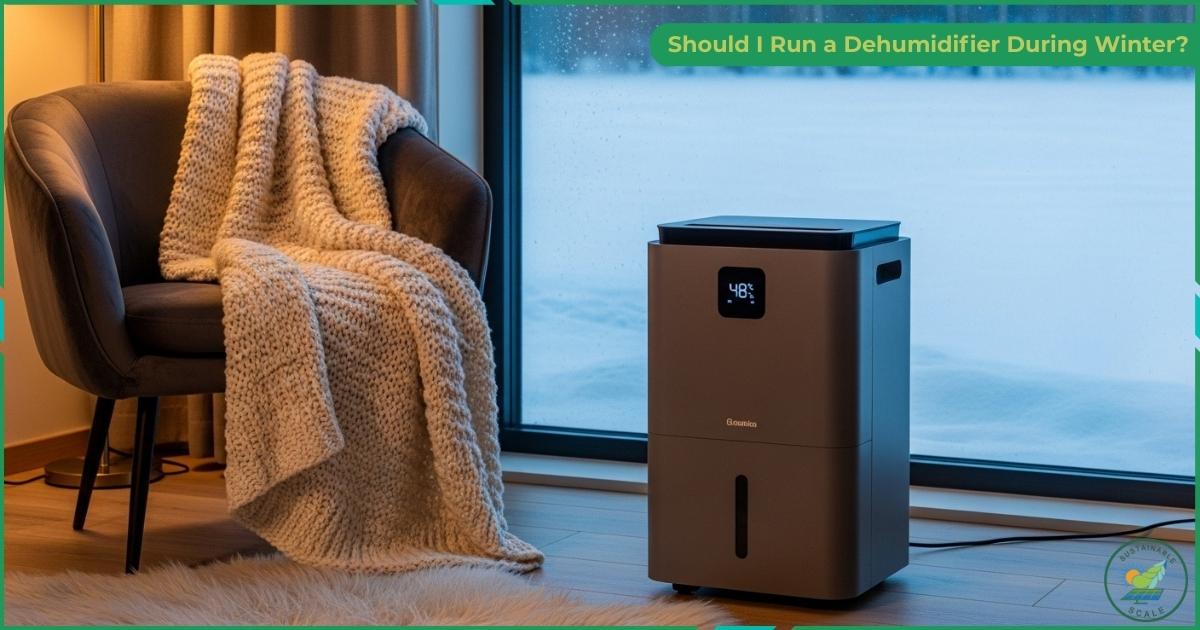
Should I Run a Dehumidifier During Winter?

- Published Date - November 11, 2026
- Modified date - November 11, 2026
Table of Contents
Yes, you should run a dehumidifier during winter to control indoor moisture and maintain comfort. It removes extra humidity to prevent dampness, condensation, and mold growth. You run a dehumidifier in winter after activities, heavy snowfall or when indoor humidity rises above 50%.
Dehumidifier use in cold weather suits temperatures above 41°F to avoid coil freezing and maintain efficiency. You do not run a dehumidifier when indoor air stays naturally dry or the temperature falls below this to prevent damage. Dehumidifier benefits during winter include reduced condensation, improved comfort, lower heating costs and protection of materials from moisture damage. It also limits mold growth and pest attraction.
Dehumidifier drawbacks are dry air causing skin and respiratory issues, wooden furniture damage and coil freezing in very cold conditions. Dehumidifier winter operation works best with stable room temperature, 30 to 50% humidity targets, optimal placement, regular maintenance and monitoring humidity levels with a built in humidistat. These tips ensure longer device life and balanced indoor air quality throughout the winter months.
When to use a dehumidifier in winter?
Dehumidifier use in winter matters when indoor moisture rises above the ideal level. Time to use a dehumidifier in winter includes after activities, high humidity and heavy snowfall or rain. Each situation requires dehumidifier winter settings to keep air dry, maintain comfort and protect health.
The times to use a dehumidifier in winter are given below.
- After activities: After activities indoor moisture rises above the ideal level, so run the dehumidifier in winter settings to lower humidity and keep the air dry for comfort and health.
- High humidity: High humidity inside creates discomfort and health risks. Run a dehumidifier in winter operation to bring the air to the ideal level and maintain balanced moisture throughout the day.
- After heavy snowfall or rain: After heavy snowfall or rain dampness collects indoors. Dehumidifier for winter condensation lowers moisture and restores the ideal level of dryness that prevents damage and supports comfort.
- During early mornings and evenings: When humidity drops outside and indoor dampness increases, run a dehumidifier with winter settings to maintain the ideal indoor humidity level and keep the air dry.
- Damp areas: Damp areas like basements, trap moisture through cold months. Dehumidifier basement winter setup reduces dampness, restores comfort and protects the space against unhealthy mold growth.
- Condensation and mold: Condensation and mold form when indoor humidity crosses the ideal level. Dehumidifier for winter condensation use controls moisture and keeps surfaces dry and safe.
When to run a basement dehumidifier in winter?
A basement dehumidifier runs in winter when the basement temperature stays at or above 60°F (15°C). It removes moisture buildup caused by poor ventilation, dampness and condensation. You avoid mold and mildew growth by maintaining relative humidity below 50%. Desiccant dehumidifiers work well in cooler basements and prevent moisture problems. You monitor basement conditions and run the device whenever moisture threatens. This approach keeps the environment dry and healthy throughout winter.
When should you not run a dehumidifier in winter?
You should not run a dehumidifier in winter below 41 degrees Fahrenheit (5 degrees Celsius) and avoid running it when indoor air stays naturally low in humidity. Water vapor decreases as temperature falls, which reduces moisture in the air. Lack of heating causes indoor air to become overly dry. You stop operating dehumidifiers to prevent frost buildup and damage in cold conditions. They function best above 41°F in spaces that contain enough water vapor. You monitor humidity and temperature to decide when dehumidification might cause over drying rather than help air quality.
What are the benefits of running a dehumidifier in winter?
The benefits of running a dehumidifier in winter include reduced condensation, improved comfort and lower heating costs. It also protects materials, improves air quality and prevents mold and water damage effectively.
The benefits of running a dehumidifier in winter are given below.
- Reduces condensation: A dehumidifier reduces excess moisture in the air, preventing condensation on windows and walls while maintaining dry indoor spaces and avoiding dampness in winter.
- Improves comfort: A dehumidifier improves comfort by keeping humidity at an ideal level, which helps create a pleasant indoor environment in winter.
- Reduces heating cost: A dehumidifier reduces heating costs by maintaining balanced humidity, which keeps indoor air at an optimal level and makes heating more efficient.
- Combats dampness in the basement: A dehumidifier combats dampness in basements, which lead to mold growth, keeps basements dry and prevents water damage.
- Improves air quality: A dehumidifier improves air quality by reducing allergens like dust mites and mold spores, which ensures cleaner air for better respiratory health.
- Protects materials: A dehumidifier protects materials from mold and water damage, which helps maintain the condition of furniture, clothing, and stored items.
- Help with pest control: A dehumidifier helps with pest control by reducing moisture that attracts pests, which creates an environment less favorable for rodents and insects.
What are the drawbacks of using a dehumidifier in winter?
The drawbacks of using a dehumidifier in winter are air dries out, wood damages fast, coils freeze up, efficiency reduces, units malfunction and health issues rise.
The drawbacks of using a dehumidifier in winter are given below.
- Air dryness: A dehumidifier dries out the air, which causes discomfort and dry skin when humidity drops below the recommended 30 to 50% level.
- Damage wooden furniture and instruments: Dehumidifiers damage wooden furniture and musical instruments, which causes cracks or warping in wood due to excess dryness.
- Coil freezing: Dehumidifier causes the coils to freeze in cold temperatures, reducing its efficiency and overall performance in winter.
- Reduce efficiency: Dehumidifier becomes less effective as humidity drops 30 to 50%, which makes it struggle to maintain optimal moisture levels.
- Dehumidifier malfunction: Dehumidifiers can malfunction when temperatures drop too low, which results in decreased performance and potential breakdowns.
- Health problem: Dehumidifiers lead to health issues, like dry throat and irritated airways, due to overly dry air in winter.
What are the tips to run a dehumidifier efficiently in winter?
The tips to run a dehumidifier efficiently in winter are maintaining a stable room temperature, target humidity level and optimal placement. It extends device life while ensuring comfort and consistent performance throughout winter conditions.
8 tips to run a dehumidifier efficiently in winter are given below.
- Maintain a stable room temperature: Dehumidifier operates best at a stable room temperature of around 17°Celcius (63°Fahrenheit), which prevents overworking and improves efficiency.
- Target humidity levels: Dehumidifier targets humidity levels between 30 to 50% to maintain optimal air quality and comfort.
- Optimal placement: Dehumidifier placement in the right spot enhances airflow and dehumidification efficiency.
- Fan speed: Fan speed setting matches actual moisture content in the air to regulate relative humidity. Fan speed optimization supports the dehumidifier for efficient humidity control.
- Heating system: A dehumidifier works well with a heating system, which makes the environment more comfortable and improves moisture control.
- Water drainage: Dehumidifier drains water smoothly, which reduces manual handling and ensures continuous operation.
- Proper maintenance: Dehumidifier proper maintenance includes regular filter cleaning, which keeps it working at its best.
- Humidity monitor: Dehumidifier with a humidistat monitors humidity levels and adjusts settings to maintain the ideal relative humidity.
Does a dehumidifier help with condensation in winter?
Yes, a dehumidifier helps with condensation in winter because it removes excess moisture from moist air before it reaches a cold surface like a window. It lowers humidity, so less moisture collects on windows. A dehumidifier for winter condensation creates a drier, more comfortable indoor space and prevents water droplets from forming on cold glass.
Does a dehumidifier make the room colder in winter?
No, a dehumidifier does not make the room colder in winter because it removes high humidity without reducing heat. It reduces damp air, so the space feels warmer in low temperatures. A dehumidifier in a cold room works best with a cold temperature dehumidifier designed for heating and cooling balance.
Does a dehumidifier make your house warmer in winter?
No, a dehumidifier does not make your house warmer in winter because it removes moisture instead of producing heat. It creates comfort by reducing humidity levels so the air feels less sticky or muggy. A dehumidifier allows a lower thermostat setting since dry air feels warmer at the same temperature.
What level should a dehumidifier be set at in winter?
A dehumidifier setting level in winter should be between 30% to 50%. It prevents static electricity and respiratory irritation caused by dry or overly moist air. Dehumidifier setting in winter balances moisture without over-drying the air. This range maintains comfortable indoor air quality and protects surfaces from damage.
Is it safe to leave a dehumidifier on all night in winter?
Yes, it is safe to leave a dehumidifier on all night in winter because the unit is designed to run for extended periods without risk. It supports a healthy indoor environment by reducing excess moisture. Dehumidifier use overnight helps prevent mold and mildew growth that spreads in damp air.
What can I use instead of a dehumidifier?
You should use dehumidifier alternatives instead of a dehumidifier, which include DIY options with rock salt or charcoal that absorb moisture and reduce dampness indoors. Proper airflow reduces humidity and opening windows helps circulate air. Lilies and Boston ferns absorb moisture naturally while adding beauty and function, which reduces dampness indoors without machines.
Products
Solar Panel
Air Purifier