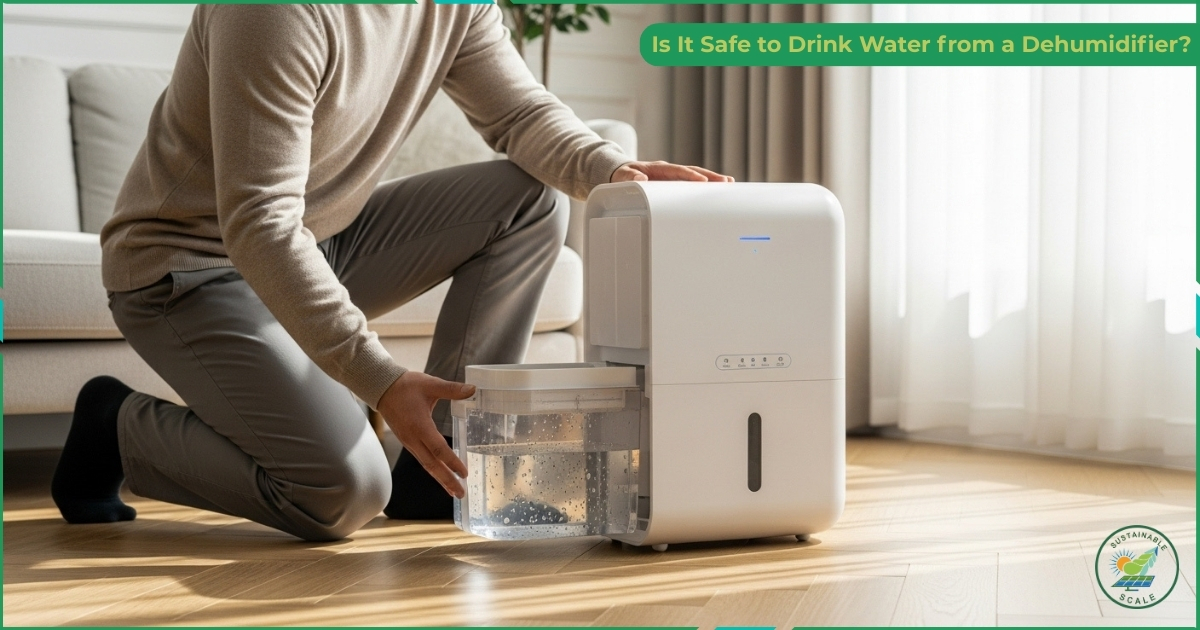
Is It Safe to Drink Water from a Dehumidifier?

- Published Date - November 11, 2026
- Modified date - November 11, 2026
Table of Contents
No, it is not safe to drink water from a dehumidifier because the water carries microorganisms, metal contamination and chemical residues that create serious health risks. A dehumidifier works as a device that pulls moisture from the air and stores it in a collection tank, but the water is not treated to reach potable quality.
Dehumidifier water causes stomach upset, nausea or exposure to heavy metals if you accidentally drink it. Dehumidifier water becomes safe for drinking after strong purification steps like filtration, boiling and distillation to remove contaminants.
Dehumidifier water is safely usable for non-consumptive uses such as plant watering (non-edible), cleaning or flushing toilets, where drinking is not involved. You must avoid direct consumption of dehumidifier water due to health risks and use it for controlled household tasks.
Why is dehumidifier water unsafe to drink?
Dehumidifier water is unsafe to drink because of poor sanitation, possible contaminants and lack of purification. This water collects microorganisms, chemicals and metal contamination that make it unfit as potable water.
5 reasons why dehumidifier water is unsafe to drink are given below.
1. Poor sanitation
Poor sanitation means dehumidifier water collects bacteria and airborne contaminants and harbors stagnant water that breeds harmful microbes. It leaches metals from components such as copper or iron, which is dangerous. A dehumidifier provides no filtration to remove such particles or microbes. Poor sanitation, lack of potable water and minerals essential for health. Poor sanitation leaves dehumidifier water unfiltered and unsafe and the absence of essential minerals to drink.
2. Possible contaminants
Possible contaminants are substances that pollute water and make it unsuitable for drinking. Possible contaminants in dehumidifier water include harmful bacteria, unsuitability for drinking and microbial growth. Dehumidifier water contains harmful bacteria due to microbial growth in the stagnant, damp environment. Heavy metals such as lead and copper leach from metal and plastic components into the water. Dehumidifier water also harbors harmful chemicals such as volatile organic compounds from household products, which dissolve in the collected water. Dehumidifier water accumulates dust and particulate matter from airborne contaminants drawn in by the unit. This combination makes the water unsafe for drinking and promotes microbial contamination.
3. Lack of purification
Lack of purification means the dehumidifier water is not treated to remove bacteria, chemicals or impurities, which results in unpredictable quality and a lack of disinfection. Dehumidifier purification methods like UV sterilization, filtration and chemical disinfection are required for safe water, but are absent in dehumidifier systems. Lack of purification causes harmful bacteria to grow in the dehumidifier water. A dehumidifier water only collects condensed moisture from the air without any purification step. It contains Legionella and Pseudomonas aeruginosa bacteria that cause microbial growth and make the water unsuitable for drinking. This water contains bacteria, harmful chemicals, particulate matter and other contaminants, which makes it unsafe for drinking without proper treatment.
4. Harmful mineral imbalance
Distilled water is water that has boiled into vapor and recondensed by removing dissolved minerals and most impurities. Dehumidifier water is considered distilled water because it forms through water condensation on cooled coils. Dehumidifier water is distilled because it lacks dissolved minerals like calcium, magnesium and potassium that are crucial for health. It causes mineral imbalance because it contains bacteria, mold spores, dust, airborne chemicals and heavy metal contamination from the device’s metal components. Dehumidifier water poses health risks such as mineral deficiencies, gastrointestinal issues and toxic effects with prolonged exposure to contaminants.
5. Bacterial buildup
Bacterial buildup is the accumulation and multiplication of bacteria in the dehumidifier water tank due to the consistently damp environment. Dehumidifier’s warm, moist conditions inside the reservoir are ideal for bacterial growth, especially pathogenic bacteria that cause illness or allergic reactions. Bacteria increase rapidly without regular cleaning and disinfection, which turns the tank into a breeding ground for microorganisms.
What happens if you accidentally drink dehumidifier water?
If you accidentally drink dehumidifier water, it can cause gastrointestinal issues like nausea and vomiting. Dehumidifier water contains contaminants and chemicals that are unsafe for consumption and lead to respiratory problems and other health concerns. Health monitoring after drinking this water is essential and medical advice should be sought immediately. Dehumidifier water ingestion requires avoiding further contact and it is crucial to use safe drinking water only.
How can you make dehumidifier water safe to drink?
You can make dehumidifier water safe to drink by filtration, boiling and distillation. Dehumidifier water becomes safe to drink after these purification steps that remove microorganisms and chemical contaminants. It requires treatment through multiple methods before the water reaches potable quality.
6 steps of making dehumidifier water safe to drink are listed below.
- Filtration: Filtration uses a high quality water filter that supports chemical contaminant removal and improves water recycling for possible consumption, which makes dehumidifier water safe.
- Boiling: Boiling kills harmful microorganisms and prevents health problems caused by unsafe bacteria in untreated dehumidifier water.
- Distillation: Distillation separates pure dehumidifier water from chemical contaminants and heavy metals that are unsafe for health.
- Sanitize storage containers: Sanitize storage containers by using BPA free containers to reduce recontamination and keep dehumidifier water safe after treatment.
- UV light purification: UV light purification destroys microorganisms that survive basic filtration and ensures stronger protection against hidden contamination in dehumidifier water.
- Avoid direct consumption: Avoid direct consumption of untreated dehumidifier water because only full treatment makes dehumidifier water safe for limited use.
Where can you safely use dehumidifier water?
You can safely use the dehumidifier water in watering plants, flushing toilets, cleaning and laundry. Dehumidifier water uses remain safe only for non consumable purposes where direct drinking is not involved.
The places where you can safely use dehumidifier water are given below.
- Watering plants: Watering plants accepts dehumidifier water for non edible plants because it hydrates the soil and supports growth. Unsafe contaminants harm food safety, so caution is required for edible plants.
- Flushing toilets: Flushing toilets with dehumidifier water saves treated supply by reusing non consumable water for waste removal. This practice supports water recycling and reduces strain on potable water use.
- Cleaning: Cleaning outdoor furniture or floors with dehumidifier water avoids waste of drinking water. Its non consumable use works effectively for surface washing and removal of basic dirt.
- Laundry: Laundry benefits from dehumidifier water when used for pre rinse or soaking, though it remains non consumable. Clean clothes still require a final rinse with safe potable water.
- Steam irons: Steam irons use dehumidifier water safely because its low mineral content prevents scale buildup. This extends device life and maintains smooth function without chemical contamination.
- Car maintenance: Car maintenance accepts dehumidifier water for windshield washer fluid and radiator top up. Both are non consumable uses that recycle water without risk to human health.
Is dehumidifier water good for plants?
Yes, dehumidifier water is good for non-edible plants because it offers a way to supplement water sources and support water conservation. Dehumidifier water lacks nutrients found in rain or tap water, which means it hydrates plants but does not nourish them. It is used for watering non-edible or ornamental plants and helps prevent soil drying, while it is not suitable for edible crops due to possible contaminants.
Is dehumidifier water good for cleaning windows?
Yes, dehumidifier water is good for cleaning windows because it contains fewer minerals than tap water. It supports streak free cleaning and leaves a residue free finish. Dehumidifier water helps prevent dust accumulation on window surfaces. It also serves as a clean water source for cleaning floors and other surfaces.
Is dehumidifier water good for batteries?
No, dehumidifier water is not good for batteries because it contains residual impurities that damage internal components. It reduces battery capacity and causes a chemical imbalance inside lead acid batteries. Dehumidifier water contributes to shortened battery lifespan up to 20% compared to pure deionized water. It leaves harmful deposits that interfere with performance and safety.
Is the water in a dehumidifier distilled?
No, the water in a dehumidifier is not distilled because the device does not boil the water and condense steam. It collects water vapor condensation in a reservoir without sterilization. This water remains unsterilized and carries a contamination risk.
Where should you dump dehumidifier water?
You should dump dehumidifier water in safe locations such as floor drains, sinks, toilets or a sump pump for proper water disposal. Proper dehumidifier draining helps prevent water spills and drainage issues. You can also pour it around non-edible plants or add it to compost tea to support moisture in compost piles. Never dump dehumidifier water where it contaminates drinking water or edible plants.
Can you dump the dehumidifier water in the toilet?
Yes, you can dump the dehumidifier water in the toilet because pouring it into the toilet bowl supports water conservation. It avoids direct plumbing to the toilet tank, which causes cleaning restrictions and tank filling complications.
Products
Solar Panel
Air Purifier