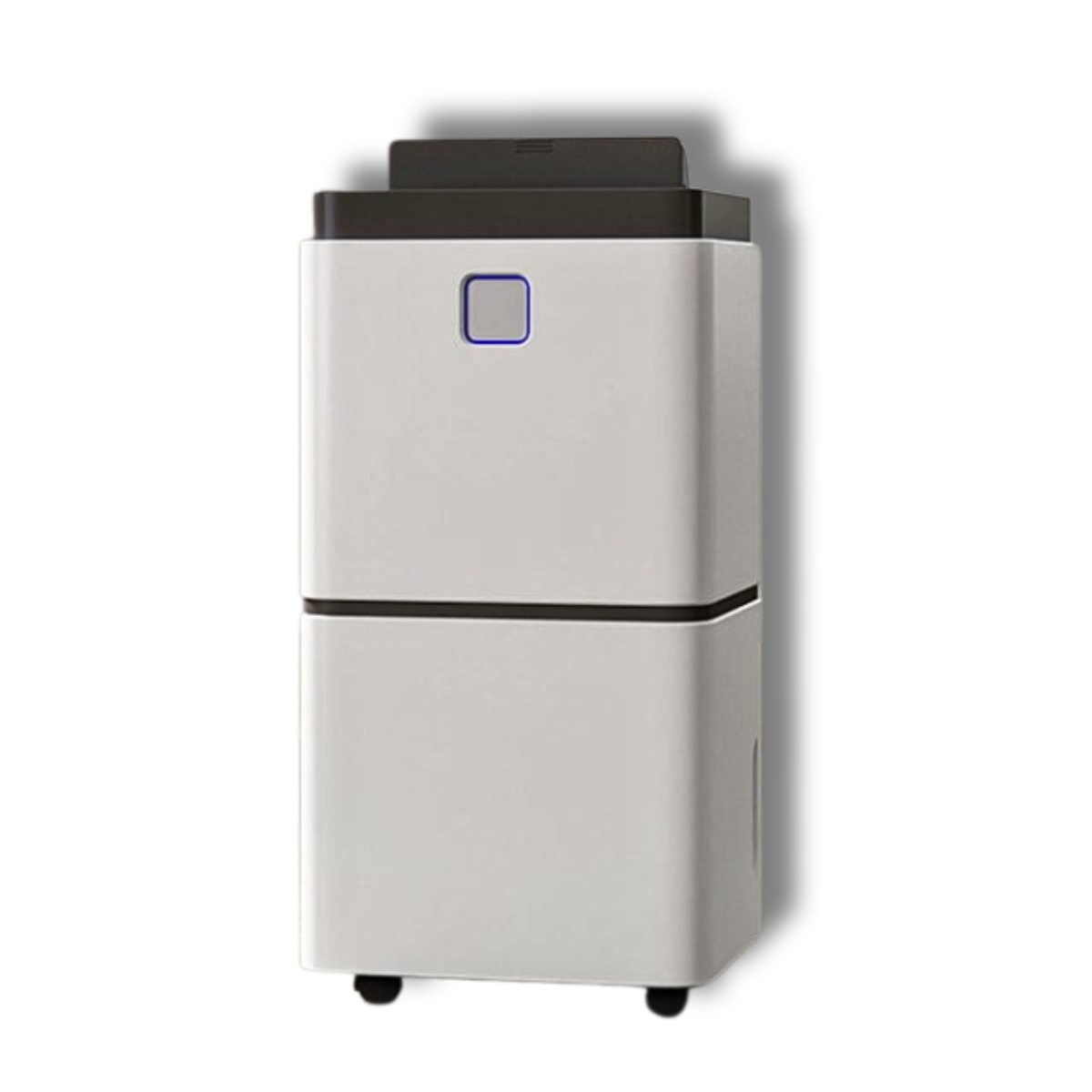
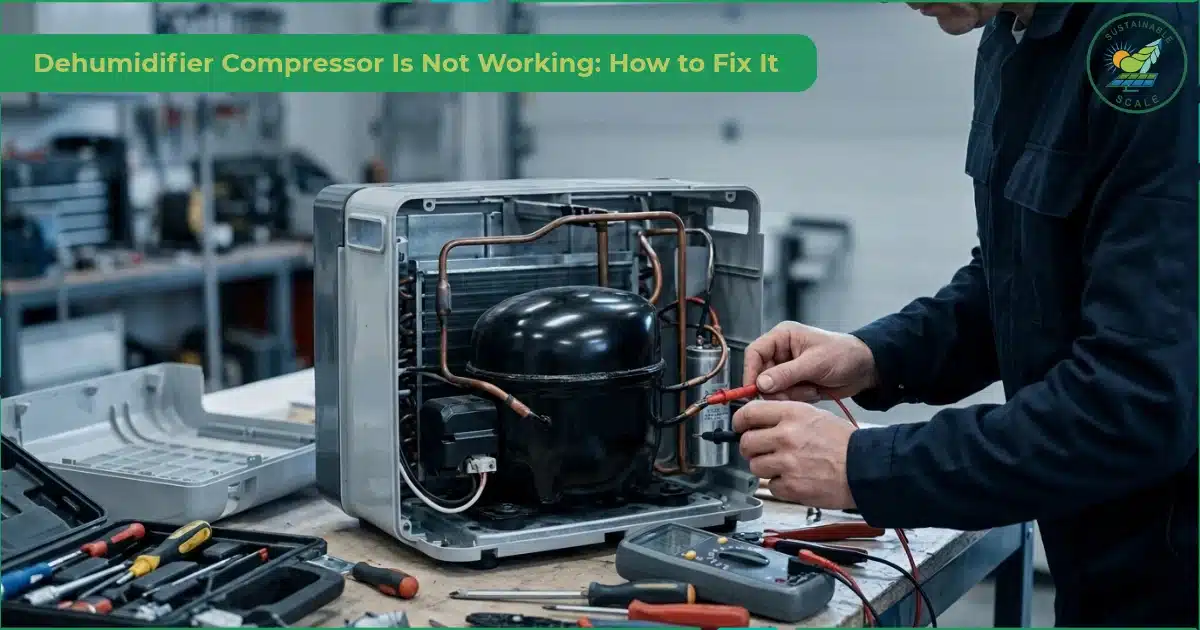
Dehumidifier Compressor Is Not Working: How to Fix It

- Published Date - November 2, 2026
- Modified date - November 2, 2026
Table of Contents
A dehumidifier compressor that is not working stops the refrigeration cycle, so the unit runs without pulling moisture and indoor humidity is high after operation. It shows failure through missing warm exhaust air, an empty water bucket, repeated clicking sounds and continued fan operation despite no condensate. A dehumidifier compressor develops these faults when components such as the start capacitor, overload protector, faulty compressor relay and failed compressor motor fail. It develops faults when leaked refrigerant interrupts normal electrical and sealed system performance.
A dehumidifier compressor then requires stepwise diagnosis by checking the power supply and testing the start capacitor. It completes this sequence to repair dehumidifier compressor faults by replacing the relay. It needs professional sealed system service when refrigerant leaks or internal mechanical damage stop compression and cooling at the evaporator coils. A dehumidifier compressor needs replacement when repair cost exceeds the value of a new compressor or when repeated failures and service life erase economic benefit.
A dehumidifier compressor stays reliable when airflow remains clear, the air filter stays clean, the coils stay clean and the drain system stays unobstructed. A dehumidifier compressor runs within safer limits when the humidity setting stays near 50% and low room temperatures do not freeze the evaporator coils. It gains additional service years when yearly maintenance inspects electrical connections, verifies refrigerant charge and confirms safe operating temperatures throughout the sealed refrigeration system.
How to tell if a dehumidifier compressor is not working?
To tell if a dehumidifier compressor is not working, check for no warm exhaust air, no water collection and the compressor not starting. These indicators confirm system failure through airflow absence, moisture removal failure and mechanical nonoperation across expected normal runtime conditions.
The signs to tell if a dehumidifier compressor is not working are given below.
- No warm exhaust air: A dehumidifier compressor produces no heat at the exhaust vent and air feels the same temperature as room air, which indicates condenser inactivity and refrigerant stagnation.
- No water collection: A dehumidifier compressor fails to condense moisture, so the bucket remains empty after operation, which demonstrates evaporator coils lack cooling and water extraction does not occur.
- Compressor does not start: A dehumidifier compressor does not start or vibrates during power-up, which indicates electrical initiation failure linked to a defective start capacitor or open overload protection circuit.
- Repeated clicking sounds: A dehumidifier compressor emits repeated clicking sounds at intervals, which shows the overload protector cycling as the motor attempts to start but fails under internal fault conditions.
- Warm evaporator coils: A dehumidifier compressor leaves evaporator coils warm during operation, which confirms refrigerant circulation stops within the sealed system and cooling does not occur across coil surfaces.
- High humidity remains: A dehumidifier compressor removes no moisture, so indoor humidity is high after extended runtime, which indicates system capacity loss and absence of condensation within environmental conditions.
- Overheating compressor: A dehumidifier compressor overheats during operation, with housing temperature rising beyond safe limits, which indicates motor winding damage or restricted condenser airflow causing thermal overload conditions.
- Frequent circuit breaker trips: A dehumidifier compressor trips the circuit breaker during startup, which draws excessive electrical current that exceeds rated limits and indicates locked rotor or severe internal failure.
Why is the dehumidifier compressor not working?
The dehumidifier compressor is not working due to a faulty start capacitor, a defective overload protector, a failed compressor motor or a refrigerant leak. These faults prevent stable electrical power delivery, draw excessive current and compress refrigerants inefficiently, so cooling and dehumidification stop during normal runtime.
The reasons why the dehumidifier compressor is not working are given below.
- Faulty start capacitor: A faulty start capacitor stops providing the extra electrical boost required to start the compressor, so the start sequence fails and motor windings stall under load.
- Defective overload protector: A defective overload protector opens the electrical circuit after repeated temperature rises, so compressor power cuts within seconds and motor protection activates against overheating damage.
- Failed compressor motor: A failed compressor motor draws excessive current during startup attempts and loses internal continuity, so internal windings degrade, electrical resistance changes and mechanical rotation no longer occurs.
- Refrigerant leak: A refrigerant leak reduces system charge and pressure, so capacity to compress refrigerant declines, evaporator coil cooling weakens and sealed circuit performance drops below normal operating thresholds.
- Faulty compressor relay: A faulty compressor relay fails to close electrical contacts, so starting current does not reach compressor terminals and the magnetic switching mechanism inside the relay housing no longer functions.
- Low power supply: A low power supply delivers reduced voltage and loose electrical connections restrict current flow, so compressor torque output declines and the motor cannot reach the required starting speed.
- Defective control board: A defective control board stops sending a start signal to the compressor relay, so coordinated control logic breaks, fan operation continues and the compressor remains inactive throughout humidity control cycles.
- Faulty humidity sensor: A faulty humidity sensor reports an incorrect low humidity level, so control board logic blocks compressor activation request and room air moisture remains above target setpoint for extended periods.
How to fix a dehumidifier compressor that is not working?
Fix a dehumidifier compressor that is not working by checking the power supply, resetting the dehumidifier, testing the start capacitor and replacing the compressor relay. These repair steps inspect failed electrical components and sealed system faults, so cooling performance and dehumidifier moisture removal return to normal conditions.
The tips to repair a dehumidifier compressor that is not working are outlined below.
- Check the power supply: Confirm voltage readings and make sure the outlet supplies the correct voltage between 108 and 132 volts, then tighten loose terminals to restore stable compressor power delivery.
- Reset the dehumidifier: Unplug the unit for thirty minutes and clear temporary electronic faults in the control board, then reconnect power so the compressor start sequence resumes normal operation.
- Test the start capacitor: Measure capacitance values with a multimeter and compare them against the manufacturer’s specified range, then replace the start capacitor when readings drift and compressor starting torque drops noticeably.
- Replace the compressor relay: Install a new relay and verify electrical continuity across its contacts, then make sure the component no longer supplies power inconsistently and delivers stable current to compressor windings.
- Inspect the overload protector: Check continuity between overload protector terminals and identify an open circuit, then fit a matching replacement device so compressor protection resets and power flow to the motor returns.
- Check for refrigerant leaks: Examine joints and coil bends and look for oily residue around refrigerant tubing, then schedule a certified technician to recover the sealed system and recharge refrigerant levels.
- Replace the humidity sensor: Compare panel humidity readings near forty percent against a separate hygrometer, then fit a new humidity sensor when mismatched values keep the compressor off during humid conditions.
- Repair the compressor: Arrange professional compressor service and authorize full replacement work, then budget for parts and labor so long term dehumidifier reliability and moisture control performance return.
When to replace a faulty dehumidifier compressor?
Replace a faulty dehumidifier compressor when there is complete compressor failure, high repair costs, severe refrigerant system damage or end of service life. These conditions indicate that a faulty dehumidifier compressor has reached economic and functional limits, where further repair cannot restore reliable cooling and moisture removal performance.
The situations when to replace a faulty dehumidifier are outlined below.
- Complete compressor failure: A faulty dehumidifier compressor no longer starts even after capacitor, relay and overload replacement, which confirms internal motor windings fail and sealed components lose functional integrity.
- High repair costs: A faulty dehumidifier compressor repair quote exceeds the value of a new compressor or reaches half the replacement unit cost and provides limited long term reliability.
- Severe refrigerant system damage: A faulty dehumidifier compressor operates within a sealed circuit where refrigerant leaks or corrosion damages coils and sealed system repair exceeds replacement cost and practical service options.
- End of service life: A faulty dehumidifier compressor reaches the manufacturer’s expected lifespan of about 8 years and declining efficiency prevents repair from restoring effective humidity control and energy performance.
- Repeated compressor overheating: A faulty dehumidifier compressor overheats and trips thermal protection multiple times daily, even after airflow corrections, which indicates persistent internal stress and approaching mechanical failure.
- Recurring compressor failures: A faulty dehumidifier compressor stops working after previous repairs within months, so repeated breakdowns confirm unresolved sealed system damage and justify full unit replacement.
- No moisture removal: A faulty dehumidifier compressor runs while the fan operates, yet the unit collects no water, which proves dehumidification failure despite continuous operation and normal airflow.
- Warranty replacement available: A faulty dehumidifier compressor qualifies for manufacturer’s warranty coverage on sealed system parts, so warranty replacement offers lower cost and higher value than additional paid repairs.
How to prevent dehumidifier compressor problems?
Prevent dehumidifier compressor problems by cleaning the air filter, keeping the coils clean, maintaining proper airflow and cleaning the water bucket. These preventive tips protect compressor components, reduce unnecessary compressor workload and keep cooling performance stable under normal room temperature and humidity conditions.
The tips to prevent dehumidifier compressor problems are given below.
- Clean the air filter: Wash the air filter every two weeks in warm soapy water and restore airflow so efficient dehumidification performance continues without added compressor stress.
- Keep the coils clean: Vacuum the evaporator and condenser coils every three months and remove dust and debris so heat transfer stays effective and compressor cycling frequency remains controlled.
- Maintain proper airflow: Position the dehumidifier at least twelve inches from walls and furniture to prevent excessive heat buildup around compressor components and condenser coils during extended operation.
- Clean the water bucket: Rinse the water bucket with mild detergent each month and remove residue so float mechanisms work reliably and compressor run cycles match actual moisture load.
- Use the correct humidity setting: Set the humidistat between 45% and 50% and reduce unnecessary compressor workload while still keeping indoor humidity within comfortable and healthy target limits.
- Avoid low temperatures: Keep the dehumidifier in rooms above 65°F and prevent coil icing that forces repeated defrost cycles and increases wear on compressor parts.
- Check the drain system: Clear the drain hose and outlet regularly and stop clogs so collected water exits freely and compressor operation does not extend needlessly due to backup.
- Schedule regular maintenance: Arrange yearly service with a qualified technician and include coil cleaning, electrical inspections and refrigerant checks to preserve compressor reliability and long service life.
How often should you clean the dehumidifier to prevent compressor problems?
You should clean the dehumidifier to prevent compressor problems every 2 to 3 weeks, because cleaning keeps airflow clear and protects cooling performance. The dehumidifier compressor stays protected when its filter remains clean in dusty or very humid conditions. It benefits further when a monthly deep clean removes buildup that would overwork the compressor.
Does low temperature prevent the dehumidifier compressor from running?
Yes, low temperature prevents the dehumidifier compressor from running because the low temperature protection feature holds the compressor off below about 65 °F. The dehumidifier compressor stops when the unit shuts the compressor off and lets the fan clear frost from the evaporator coils. It enters a defrost cycle and restarts the compressor once the coils are warm enough for normal refrigerant flow.
Can a dirty air filter stop the dehumidifier compressor?
Yes, a dirty air filter can stop the dehumidifier compressor because restricted airflow across the evaporator coils reduces heat exchange and raises compressor temperature. The dehumidifier compressor then faces a higher risk of overheating as coil surfaces cool unevenly. It experiences frost buildup on the evaporator coils, which triggers repeated defrost shutdowns and interrupts normal cooling cycles.
Can a bad compressor make a dehumidifier ice up?
Yes, a bad compressor can make a dehumidifier ice up because it does not circulate refrigerant at the correct design pressure through the system. A dehumidifier sees a suction pressure drop, so the evaporator coil temperature falls below freezing and frost forms along its finned surface. It develops heavy icing when a refrigerant leak combines with compressor wear to create low system pressure and build a solid ice layer.
Why is the dehumidifier compressor running but collecting no water?
The dehumidifier compressor is running but collecting no water because low refrigerant, dirty air filters or blocked airflow stop moisture condensing on the evaporator coils. It regains normal moisture removal when you clean the filter, clear intake airflow and schedule a refrigerant charge check after airflow correction.
Can a faulty compressor be the cause of a dehumidifier not working?
Yes, a faulty compressor can be the cause of a dehumidifier not working because the compressor circulates refrigerant through the sealed system and drives cooling. A faulty compressor then stops cooling the coils, so the dehumidifier does not remove moisture from the air or maintain normal humidity control. It allows the unit to run without collecting water for extended periods, which confirms refrigeration failure and justifies further electrical or sealed system diagnosis.
How long does a dehumidifier compressor last?
A dehumidifier compressor lasts 5 to 10 years in residential use, and portable dehumidifier compressor units fail closer to the 3 to 5 year mark. Compressor lifespan tracks usage frequency and operating conditions inside that range. A dehumidifier compressor gains 2 to 4 years from regular cleaning and avoiding extreme temperatures.
How much does dehumidifier compressor repair cost?
Dehumidifier compressor repair costs 50 USD to 200 USD for common electrical faults and 150 USD to 400 USD for a full compressor replacement. Its pricing varies depending on the issue, the compressor type and local labor rates between 75 USD and 150 USD per hour. Dehumidifier compressor replacement parts required for sealed refrigeration system work push a home dehumidifier repair past 400 USD.
Is dehumidifier compressor repair worth the cost?
No, dehumidifier compressor repair is not worth the cost when repairs cost several hundred dollars. Dehumidifier compressor expenses compared with buying a new unit at 150 USD to 350 USD are excessive. It develops additional issues within 12 months when the unit is over 8 years old.
Products
Solar Panel
Air Purifier