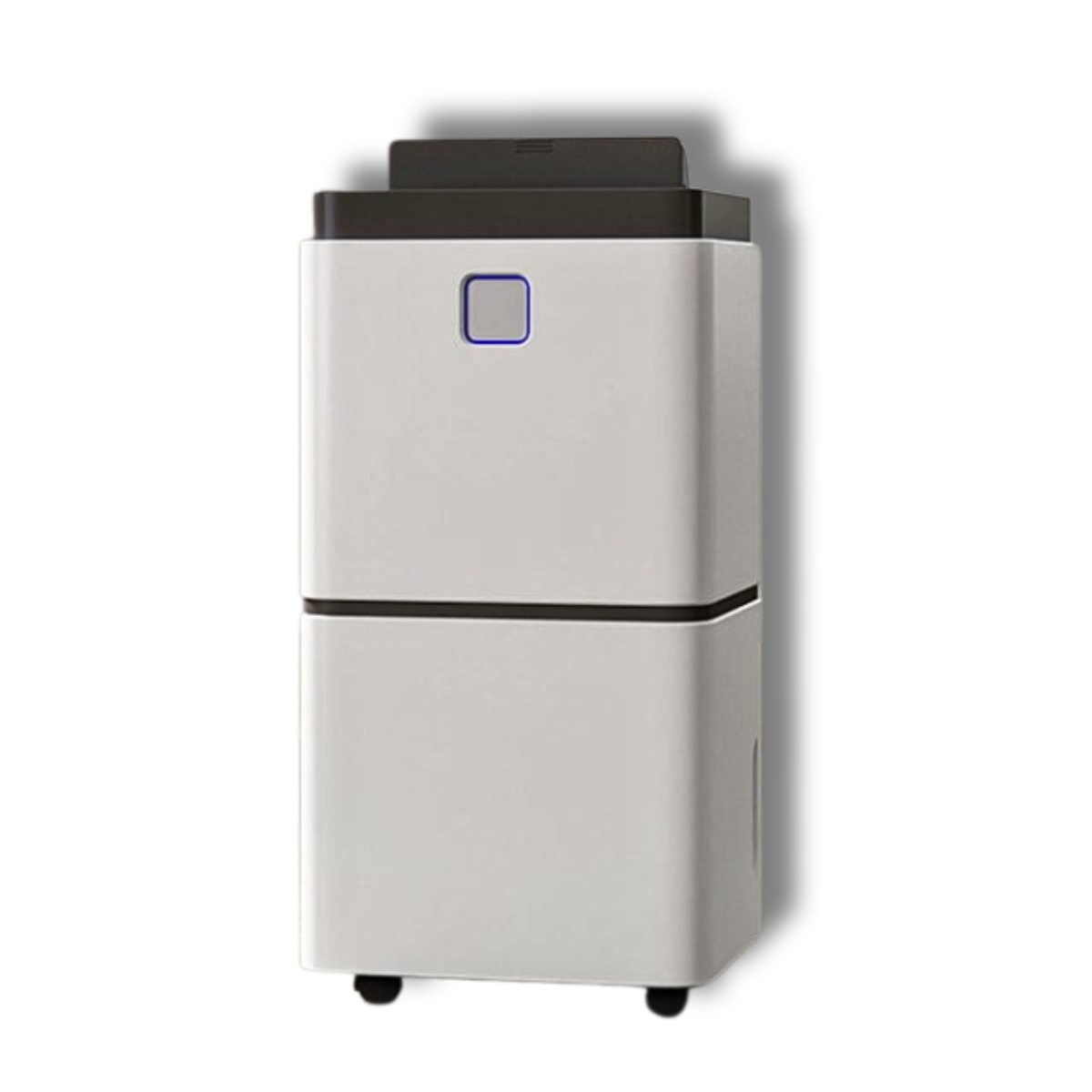


A dehumidifier ices up when it runs in low temperatures, blocks airflow, uses the wrong unit size and runs with a faulty defrost sensor. It develops ice when the evaporator coil becomes too cold during moisture extraction and can not defrost properly. It also freezes when dirty filters restrict airflow, undersized units face heavy moisture loads or defrost sensors fail to regulate coil temperature. This reduces efficiency and blocks air circulation, which leads to system shutdown or damage.
A dehumidifier can be fixed by unplugging the unit, allowing natural defrosting and ensuring safe drainage of accumulated water. It should be checked for proper room temperature, cleaned or replaced filters and restored airflow. It also requires cleaning of evaporator coils and inspection of fans and sensors to ensure stable operation and prevent repeated icing.
A dehumidifier can be prevented from freezing by maintaining warm room conditions, improving airflow and keeping filters and coils clean. It should be placed correctly with proper clearance, supported with safe heating in basements and operated using auto defrost or fan modes. A dehumidifier stays protected from icing through regular maintenance, crawl space ventilation and avoiding cold floor placement.
Why does a dehumidifier ice up?
A dehumidifier ices up when it runs in low temperatures, blocks proper airflow and uses the wrong unit size. It also forms ice when the internal coil temperature drops below freezing during moisture extraction cycles. A dehumidifier restricts heat exchange in conditions such as blocked dehumidifier airflow and dirty air filter buildup. It encounters icing when the defrost control is faulty, which leaves the coils cold and covered in frost.
The causes of a dehumidifier to ice up are listed below.
- Running in low temperatures
- Blocking proper airflow
- Using the wrong unit size
- Running with a faulty defrost sensor
The image below shows the reasons a dehumidifier ices up.

Running in low temperatures
A dehumidifier freezes up when the low ambient temperature in a crawl space falls below its minimum operating temperature. It draws air across the evaporator coil, which causes the coil temperature to drop and increases the risk of freezing. It also develops ice crystals on the evaporator coil when the surrounding air does not provide enough heat to melt frost between operating cycles. A dehumidifier loses moisture removal capacity as ice accumulates on the coil surface, which restricts airflow and blocks normal operation.
Blocking proper airflow
A dehumidifier develops ice forming on the evaporator coil when a blocked airflow path restricts proper intake and exhaust airflow. It loses adequate wall clearance when it is placed too close to walls or furniture, which block the front or rear grilles. A dehumidifier experiences restricted air circulation when the vents block proper airflow through the unit. This device builds ice on the coil as cold air remains trapped around the evaporator fins and prevents frost from melting between cycles.
Using the wrong unit size
A dehumidifier coils ice up when the wrong dehumidifier size does not match the room square footage and pint capacity requirements. It runs for longer periods in large spaces where a room size mismatch leaves excess moisture load in the air. A dehumidifier overworks its compressor and evaporator coil as it struggles to remove the additional moisture. It builds ice on the coil when extended runtime keeps coil temperatures below freezing without sufficient off time for frost to melt. A dehumidifier size calculator helps determine the appropriate pint capacity based on room size and moisture conditions.
Running with a faulty defrost sensor
A dehumidifier develops icing problems when an auto defrost failure occurs due to a faulty defrost sensor that allows frost to remain on the coils. It misses coil frost detection when the sensor problem sends incorrect temperature signals to the control board. A dehumidifier skips the rest cycle operation and continues running while ice remains on the evaporator surface. It experiences repeated freezing on the coils as each operating cycle adds more frost and further restricts airflow across the fins.
How to fix an iced up dehumidifier?
To fix an iced up dehumidifier, unplug the device, defrost the unit, check the room temperature, clean the air filter and ensure good airflow. Unplug the dehumidifier to stop current draw and let the unit cool safely. Defrost the unit by leaving it off until the ice on the coils melts and drains. Check the room temperature to confirm it stays within the minimum operating range. Clean the air filter to remove dust that blocks intake grilles and restricts airflow.
7 steps to fix an iced up dehumidifier are listed below.
- Unplug the dehumidifier
- Defrost the unit
- Check the room temperature
- Clean or replace the air filter
- Ensure good airflow
- Clean the evaporator coils
- Inspect the fan and sensors
1. Unplug the dehumidifier
Unplug the dehumidifier by pressing the power button to stop electrical power before handling the iced up unit. Remove the plug from the outlet to disconnect electrical power and reduce the risk of electric shock while frost remains on the coils. Place a towel under the unit to collect accumulated water as ice melts from the evaporator and drains from the base. Move the dehumidifier to a stable location so runoff drains safely without damaging nearby flooring or furniture.
2. Defrost the unit
Defrost the unit by allowing a natural thaw at room temperature after unplugging and securing the dehumidifier. Place the unit in a warmer room so the temperature increases gradually and the ice on the coils melts into the reservoir. Avoid open flames and direct high heat near plastic components and wiring, as excessive heat causes warping or damage. Drain the reservoir completely, dry the interior surfaces thoroughly and inspect the vents and internal cavities for any remaining frost, moisture or blockages.
3. Check the room temperature
Check the room temperature with a reliable thermometer to determine whether the freezing dehumidifier is operating within the ideal operating range for consumer units. Confirm the manufacturer’s recommended temperature range and note whether the room remains below the stated minimum operating temperature. Understand that temperatures below the recommended minimum cause the evaporator coils to become excessively cold and encourage ice formation on their surfaces. Raise the ambient temperature with safe heating so the coil temperature increases gradually and frost melts without overheating the unit.
4. Clean or replace the air filter
Clean or replace the air filter to reduce dehumidifier icing on the coils and restore proper airflow through the system. Open the filter access panel and carefully remove the dirty filter to prevent dust from spreading into the room. Vacuum the filter to remove loose debris, then wash it gently with warm soapy water to clear accumulated dirt and blockages. Dry the filter completely before reinstalling it and replace the filter if it shows signs of damage, such as tears, warping or a broken frame.
5. Ensure good airflow
Ensure good airflow by eliminating any sources of restricted airflow around the dehumidifier and maintaining the recommended clearance on all sides. Remove obstacles that prevent room air from reaching the intake grille or exiting through the exhaust louvers. Test the fan only mode to confirm proper air circulation without additional cooling of the coils. Verify blower airflow by checking for a steady stream of air and listening for unusual noises. Inspect and clean the vents to remove dust and debris that reduce airflow capacity and system performance.
6. Clean the evaporator coils
Clean the evaporator coils by removing the outer panel to safely access the cold coils. Brush away loose dust and lint using a soft brush to clear airflow paths without scratching or damaging the metal surfaces. Apply a coil safe cleaner to remove stubborn grime that adheres to the fins and tube surfaces. Avoid bending the fins during cleaning and contact a qualified service technician if you notice damaged fins that restrict airflow or affect coil performance.
7. Inspect the fan and sensors
Inspect the fan and sensors by manually rotating the blower wheel to check for free fan rotation without scraping, stiffness or wobbling. Clean the motor housing to remove dust buildup and replace the motor if unusual noise or resistance indicates internal wear or failure. Test the temperature sensors and humidity sensors to ensure readings are stable and consistent with actual room conditions. Check the defrost thermostats and reseat any loose connectors to restore proper electrical contact. Review the display panel finally for fault code diagnostics that indicate sensor or control system issues.
How to prevent a dehumidifier from freezing?
To prevent a dehumidifier from freezing, warm up the room, keep airflow clear, clean or replace the filter and keep coils clean. These actions maintain proper airflow, stable operating temperatures and efficient heat exchange that helps prevent frost buildup on the evaporator coil.
4 actions to prevent a dehumidifier from freezing are given below.
- Warm up the room: Increase room temperature using safe heating methods so warm air surrounds the dehumidifier and prevents ice formation on the evaporator coils during operation.
- Keep airflow clear: Remove furniture, boxes and wall obstructions so air circulates freely around the dehumidifier and avoid cold spots that cause freezing issues.
- Clean or replace the filter: Remove the dirty filter, clean or replace it and reinstall it properly to maintain smooth airflow and stable coil temperature during normal operation.
- Keep coils clean: Clean dust from coil surfaces and maintain metal fins so heat exchange remains efficient and prevents frost buildup that leads to freezing problems.
How to prevent a dehumidifier from freezing in a basement?
To prevent a dehumidifier from freezing in a basement, use a space heater to warm the area and improve crawl space ventilation so cold air does not accumulate. A dehumidifier’s placement on a solid surface instead of a cold floor reduces direct cooling from below and lowers the risk of freezing. The unit should be inspected regularly and the air filter should be cleaned to maintain proper airflow and efficient operation. You should check and use auto defrost or continuous fan mode to help prevent ice buildup on the coils during low temperature conditions.
Does a dirty air filter cause dehumidifier icing problems?
Yes, a dirty air filter can cause dehumidifier icing problems because restricted airflow lowers coil temperature and leads to ice buildup on the evaporator coils. A dehumidifier develops icing when dust and debris clog the filter, especially in small rooms or when the unit has low pint capacity. It also struggles to remove moisture efficiently when airflow is blocked and the humidity load remains high.
Can continuous running make a dehumidifier ice up?
Yes, continuous running can make a dehumidifier ice up because nonstop operation keeps the evaporator coils cold for extended periods. A dehumidifier ices up under heavy moisture load when an overworked compressor runs without adequate rest cycles. It continues freezing when the auto mode fails to pause the operation as the room humidity drops.
Can a dehumidifier ice up in warm weather?
Yes, a dehumidifier can ice up in warm weather when airflow restriction or internal coil imbalance disrupts normal heat exchange. It ices up in a warm room when blocked airflow and dirty coils trap cold air around the evaporator. It also ices up when refrigerant issues cause parts of the coil to become too cold.
Can a frozen dehumidifier become damaged?
Yes, a frozen dehumidifier can become damaged because ice buildup creates stress on the compressor and fan system. A dehumidifier experiences compressor strain and fan resistance when ice restricts airflow across the coil. It also risks damage when repeated freezing causes coil stress and leads to water leakage or internal component failure.
Should you repair or replace the freezing dehumidifier?
Yes, you should repair a freezing dehumidifier when cleaning, sensor reset or drainage fixes solve the icing issue and restore stable operation. A dehumidifier repair cost is worth it when warranty coverage or lower service expenses make repair more economical than replacement. It should be replaced when compressor or coil failure causes the dehumidifier repair cost to approach the price of a new unit.
Solar Panel
Air Purifier