Solar Panel Installation: Types, Process, Cost and Tips
Mahmudul Hasan Reduan
Published Date - January 05 2026
Modified date - January 05,2026
Table of Contents
Solar panel installation refers to setting up photovoltaic (PV) systems that convert sunlight into electricity for home or commercial use. The process includes site assessment, system design, permits, mounting panels, electrical wiring and system testing. Solar installation provides clean and renewable energy that reduces carbon emissions and air pollution compared to fossil fuels.
There are four main types of solar installations including residential, industrial, community solar and utility-scale, with configurations like rooftop or ground-mounted. Solar costs fall between $15,000 and $22,000 for a normal home system, but factors like panel quality, roof condition and payment method affect the price. To get your solar installation right, work with experienced installers, plan carefully and avoid common mistakes like poor placement or using low quality equipment.
What is solar panel installation?
Solar panel installation is the process of setting up a solar panel system that converts sunlight into electricity using photovoltaic (PV) panels.
Solar panel installation starts with mounting the panels on your roof, then wiring them together and connecting everything to an inverter that turns solar energy into usable electricity. Solar system gets linked to your home’s electrical panel and also to the local power grid if needed.
What is the process of solar panel installation?
The process of solar panel installation involves assembling and connecting photovoltaic panels to a structure to convert solar energy into electricity. The process mounts panels, wires them together, connects them to an inverter and integrates the system with the electrical grid.
7 easy steps to install solar panels are outlined below.
Site assessment and survey: Check if your property is suitable for solar panels by checking sunlight availability, roof condition, shading, potential obstructions and your energy usage needs to identify the best spots for panel installation.
System design and planning: Design your solar system based on your energy usage, select appropriate panel types, calculate the required system size and plan the panel layout for maximum efficiency and compatibility with your home.
Permitting and approvals: Secure essential permits and approvals by submitting your solar system designs and documentation to local authorities for compliance with building and electrical regulations.
Installation preparation: Get the solar installation site ready by gathering all necessary materials, checking that the roof is prepared and organizing tools and safety gear before you begin mounting the panels.
Mounting the solar panels: Set up mounting structures tightly, adjust their tilt for maximum sunlight exposure, and carefully position and secure the solar panels for optimal alignment and efficiency.
Electrical wiring and connections: Wire the solar panels together in series or parallel, connect them to inverters and controllers and make sure all electrical connections are compliant with safety standards.
System testing and commissioning: Test your solar system thoroughly to confirm proper operation. You need to check all electrical components for safety, verify system performance and officially commission your solar panels for regular use and energy generation.
What are the different types of solar installations?
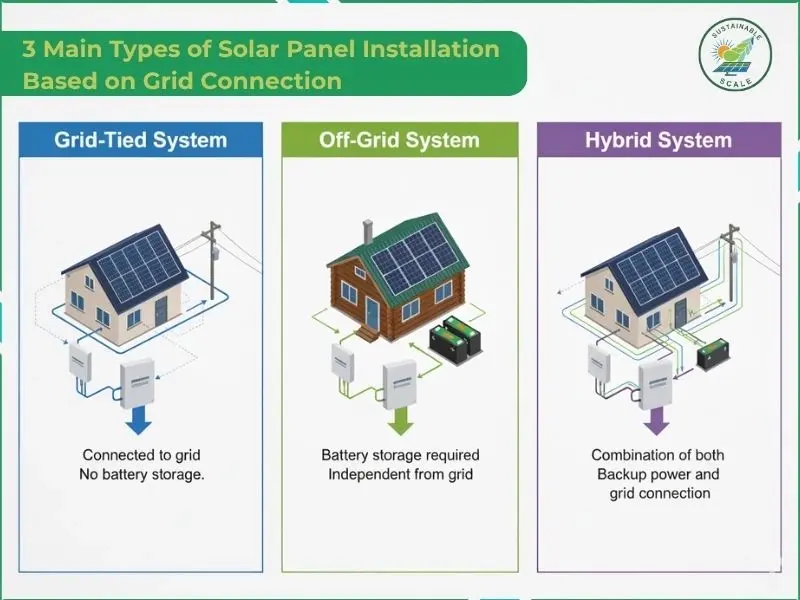
There are four main types of solar installations based on their application and system type, including residential, commercial and industrial, community solar and utility-scale installations. Solar systems are also grid-tied, off-grid or hybrid, depending on their connection to the power grid and use of battery storage.
4 Types of solar panel installation by their application are given below.
Residential solar installations: Residential solar installations supply electricity to single-family homes. They include rooftop, ground-mounted, carport or pergola systems, and send excess power to the grid.
Commercial and industrial solar installations: Commercial and industrial solar installations serve businesses and factories using rooftops, ground mounts or solar canopies. These photovoltaic systems reduce energy costs and generate revenue.
Community solar installations: Community solar installations use shared off-site arrays to provide multiple users with bill credits for their portion of generated electricity.
Utility-scale solar installations: Utility-scale solar installations use large solar farms to generate electricity for the grid and supply power to utilities and consumers.
Solar installations are also categorized based on their physical setup such as rooftop, ground-mounted, canopy or floating systems and the underlying technology including photovoltaic (PV) and concentrated solar power (CSP).
A comparative diagram below illustrates three solar configurations such as grid-tied systems without batteries, off-grid systems requiring battery storage, and hybrid systems that combine both grid connection and backup power.
What is the cost of solar panel installation?
The cost of solar panel installation for an average residential system (6 to 8 kW) ranges from $15,000 to $22,000 before incentives, according to 2025 stats by the MarketWatch.
The total cost of installing solar panels in the United States varies based on system size, location and equipment quality. Larger solar systems, such as an 11 kW installation, average around $29,000 before incentives and approximately $20,552 after applying the 30% federal tax credit. Additional state or local incentives can reduce solar installation cost further.
Incentives like the federal tax credit can help reduce your initial PV panel installation cost and speed up your return on investment to make solar power an even smarter choice for long-term savings.
What factors determine solar panel installation costs?
Factors that determine solar panel installation costs are given below.
Solar system size: Larger solar systems cost more upfront but offer better long-term savings.
Equipment quality: High-efficiency solar panels and advanced inverters increase costs but improve performance.
Roof type and condition: Complex or older roofs require extra labor or repairs to install solar panels.
Location: Regional labor rates, permitting fees and the availability of sunlight impact the cost of solar power installation.
Financing: Paying cash reduces total cost of solar panel installation, while loans or leases add interest and reduce tax credit eligibility.
Add-ons: Batteries and regular monitoring of solar panels add to the total solar power installation price.
What are the essential tips for a successful solar panel installation?
The essential tips for a successful solar panel installation include choosing a reputable installer, making sure your property is structurally suitable and maximizing sun exposure for highest energy production.
8 tips for solar panel installation are given below.
Assess your energy needs: Check your electricity bills from the past year to evaluate your average usage before solar installation. Knowing how much energy you use helps size your solar system properly so you are not under or over investing.
Evaluate roof suitability: Check your roof’s condition, orientation and shading for solar panel installation. A strong and shade-free roof with the right tilt increases solar output and provides long term durability.
Research incentives and financing: Explore available tax credits, rebates, and financing options before going solar. Incentives can reduce upfront costs and improve your return on investment.
Choose a reputable installer: Select a certified and experienced solar panel installer, by comparing reviews, warranties and quotes for professional workmanship and reliable service.
Obtain required permits: Get all necessary building and electrical permits before solar installation, as compliance with local regulations avoids delays and legal issues.
Plan panel placement: Work with your solar installer to design an optimal panel layout. Proper placement avoids shading and maximizes sunlight exposure throughout the year.
Prioritize safety: Make sure the solar installer follows all safety rules, especially when working on the roof or with wiring. Safety is not just about regulations; it protects your home and everyone involved.
Schedule maintenance: Plan for regular cleaning and inspections of solar panels. Well-maintained panels operate efficiently and have a longer lifespan that protects your investment.
You can enjoy efficient and reliable solar energy at home with these installation steps in mind. Make sure you always follow safety protocols and local solar installation regulations throughout the process.
What are the common mistakes to avoid during solar panel installation?
The common mistakes to avoid during solar panel installation include improper site assessment, choosing the wrong panel size or type and not checking roof condition or structural integrity.
10 common mistakes to avoid during solar panel installation are listed below.
Inadequate research and planning: Failing to study solar system options, incentives and regulations can lead to poor decisions and missed savings.
Incorrect solar system sizing: Underestimating or overestimating your energy needs results in a solar system that is either too small to meet demand or overly expensive.
Installing on an old or damaged roof: Placing panels on a roof near the end of its lifespan leads to costly removal and reinstallation when roof repairs become necessary.
Poor panel placement and positioning: Ignoring shading, orientation or tilt reduces energy output of solar panels and system efficiency.
Neglecting electrical safety: Improper wiring and grounding of solar panels or using non-certified installers increase fire and electrocution risks.
Skipping permits and inspections: Not obtaining required permits or passing inspections of solar panels can result in legal issues and unsafe installations.
Using low-quality equipment: Choosing cheap panels or components may save money upfront but leads to lower performance and shorter system lifespan.
Ignoring maintenance needs: Failing to plan for regular solar cleaning and inspections can cause system failures and reduced power output over time.
Walking or stepping on panels: Stepping on solar panels can cause micro-cracks which leads to power loss and fire hazards.
Overlooking installer credentials: Hiring inexperienced or unlicensed solar panel installers increases the risk of faulty installation and voided warranties.
You can make sure that your solar system is both safe and effective for the long term solar energy production by carefully avoiding these common installation errors.
How to apply for solar panel installation permits?
4 steps to apply for solar panel installation permits are given below.
Finalize your solar system design: Work with your installer to complete detailed plans including site layout, electrical diagrams and equipment specifications.
Prepare and submit application: Gather required documents such as permit forms, site plans, structural and electrical drawings and contractor licenses, then submit them to your local permitting authority online or in person.
Wait for review and approval: Local officials review your application for code compliance. You need to respond promptly to any requests for additional information or revisions.
Receive permit and schedule installation: Receive permit and proceed with scheduling your solar panel installation and required inspections, once your application is approved.
How to properly mount your solar panels?
To properly mount your solar panels, follow the 6 steps listed below.
Mark roof rafters: Locate and mark the roof rafters to get a solid foundation for mounting attachments and to distribute the weight evenly across the structure.
Install roof attachments: Secure mounting brackets or flashings to the marked rafters using bolts for waterproof seals to prevent leaks and protect the roof.
Attach mounting rails: Fix racking rails to the roof attachments, so they are level and spaced according to panel specifications for proper alignment.
Check rail alignment: Double check that rails are parallel and properly spaced by measuring diagonals and adjust as needed for accuracy and stability.
Lift and position panels: Carefully lift solar panels onto the rails, aligning mounting holes with the rails and check adequate airflow beneath the panels for cooling.
Secure panels to rails: Use clamps or fasteners to attach the solar panels to the rails, tightening according to manufacturer specifications for stability and safety.
What is the solar panel inspection process?
The 11 steps involved in the solar panel inspection process are given below.
Confirming compliance with local building, electrical, fire and utility codes before solar system activation.
Reviewing Authority Having Jurisdiction (AHJ) and utility requirements, obtaining solar permits and scheduling solar inspection with all parties.
Verifying that solar system installation matches approved installation plans and manufacturer specifications.
Inspecting solar installation quality including panel mounting, rail attachment and structural stability.
Checking electrical components such as breaker size, wire gauge, conduit type, grounding and AC/DC disconnect switches in a solar system.
Checking fire safety compliance including clear roof pathways and correct safety labeling during solar inspection.
Accessing roof or attic if needed to inspect attachments and wiring of solar system.
Granting permission to operate (PTO) if the solar system passes solar inspection.
Addressing solar inspection failures, which sometimes require corrections or a redesign with re-permitting.
Conducting monitoring and periodic solar inspections to maintain the performance and safety of the solar system.
Prepare accurate plans and coordinate clearly to avoid solar inspection delays.
What components are included in a solar panel installation kit?
7 Components that are included in a solar panel installation kit are given below.
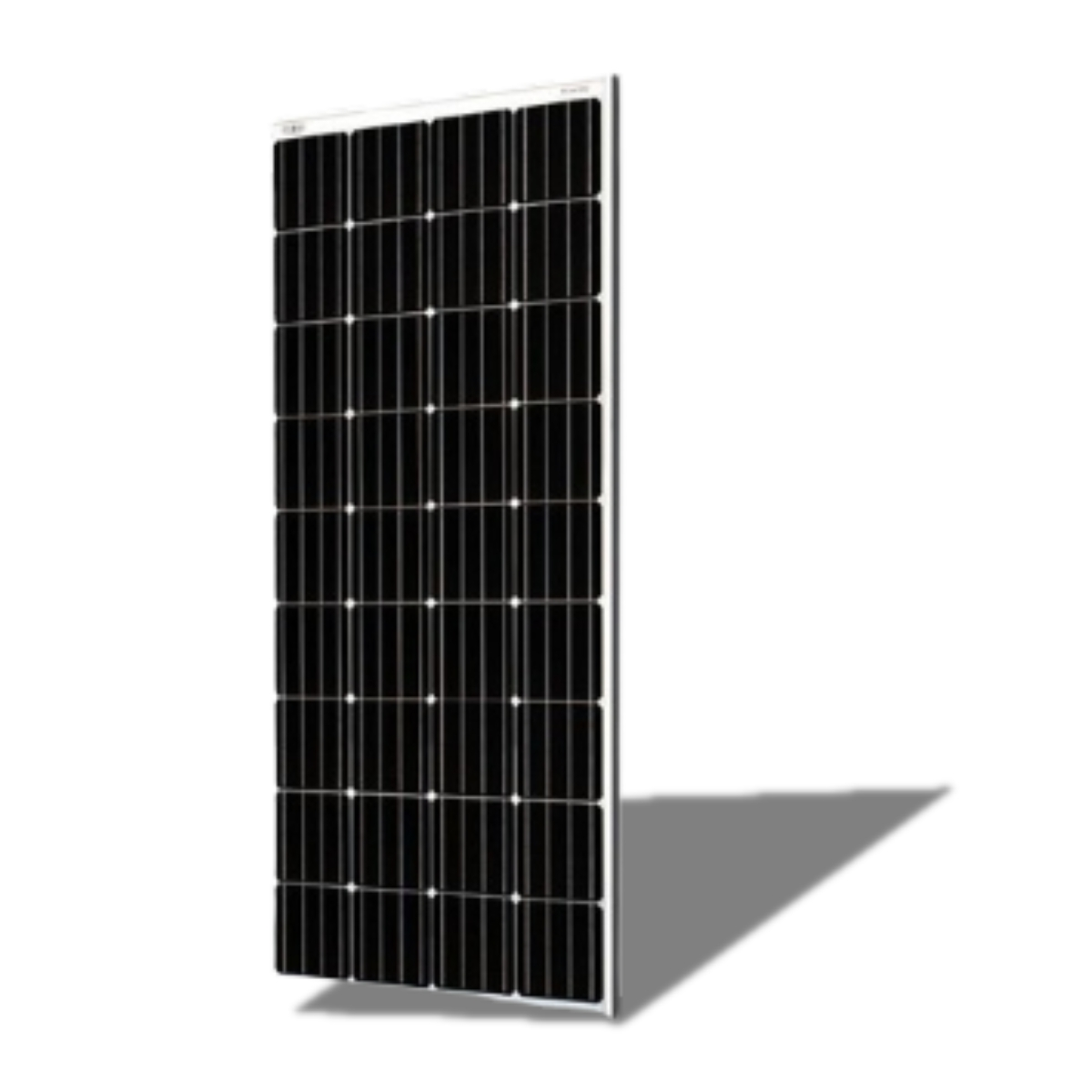
Solar panels: Solar panels are components in a solar installation kit that capture sunlight and convert it into electricity.
Inverter: An Inverteris included in a solar installation kit which converts the direct current (DC) from panels into usable alternating current (AC).
Mounting hardware: Solar installation kit has mounting hardware including racks, brackets and rails for firmly attaching panels to a roof or ground structure.
Wiring and cables: Solar installation kit has wires and cables to connect panels, inverters and other components for safe power transfer.
Charge controller: Solar installation kit has a charge controller that regulates voltage and current to protect batteries in off-grid systems.
Batteries (optional): Batteries are an optional part of a solar installation kit that store excess energy for use when sunlight is unavailable.
Junction box and connectors: A solar installation kit includes a junction box and connectors that provide safe electrical connections and protect the wiring.
How to install a solar battery?
To install a solar battery, follow the 6 steps given below.
Calculate your energy storage needs based on electricity usage and solar system size.
Choose a solar battery location that is cool, dry and well-ventilated, such as a garage.
Get necessary permits to make sure you comply with local solar battery installation regulations.
Install mounting equipment and wire the solar battery using manufacturer and safety guidelines.
Connect the solar battery to the inverter and solar panels using code-compliant wiring.
Power up the solar system and perform operational checks to monitor performance of the solar battery.
How do you choose the right solar panel installer?
Check that your solar installer is properly licensed in your area and certified by trusted organizations like NABCEP (The North American Board of Certified Energy Practitioners).
Look for solar panel installers with several years in business and a proven history of successful solar installations.
Research customer reviews and request references to assess reputation, service quality and long-term customer satisfaction of your solar panel installer.
Get multiple detailed quotes of solar installers to compare pricing and equipment quality, and then review offered warranties for panels and workmanship.
Confirm the solar installer uses high-quality solar panels and inverters with strong performance and durability records.
Choose a local solar panel installer for better service, faster support and familiarity with regional regulations and incentives.
What is DIY solar panel installation?
DIY (do it yourself) solar panel installation is the process where homeowners personally plan, purchase and set up their own solar energy systems without hiring professional solar installers. This approach involves researching solar system requirements, selecting appropriate components, handling permits and physically mounting and wiring the panels.
Solar panel installation at home saves on labor but demands solid electrical knowledge, code compliance and attention to safety. This method is best for individuals comfortable with technical work and responsible for system performance and compliance.