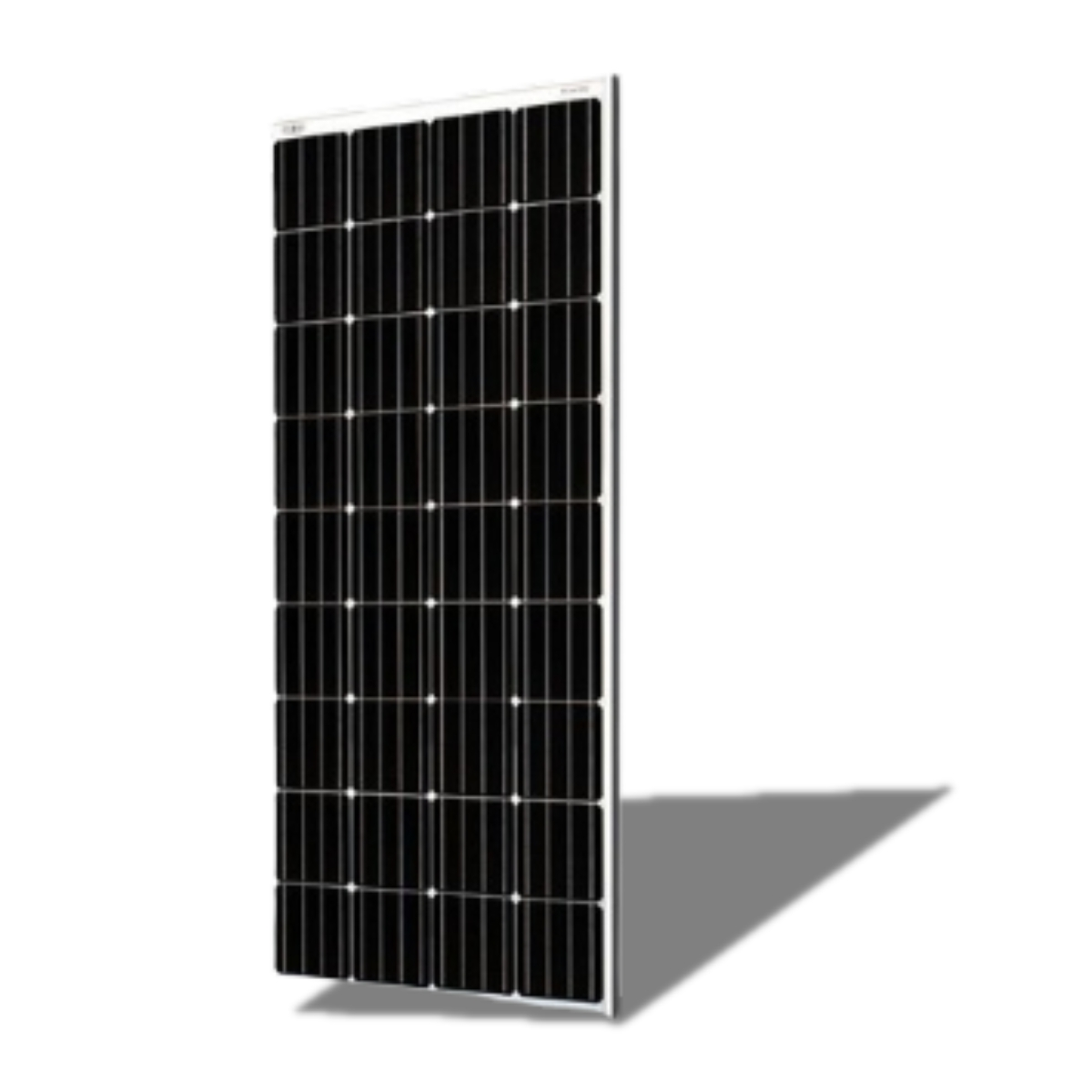

The components of a solar panel include solar cells, a protective glass layer, encapsulants, a backsheet, a frame and a junction box. Some sources also mention silicon glue, anti-reflective coating and busbars as additional components or supporting elements of a solar panel. All solar panel parts work together to convert sunlight into electricity through a process called photovoltaic effect.
The complete solar system also includes a solar inverter, racking, power batteries and a solar controller to manage energy conversion, storage and usage.
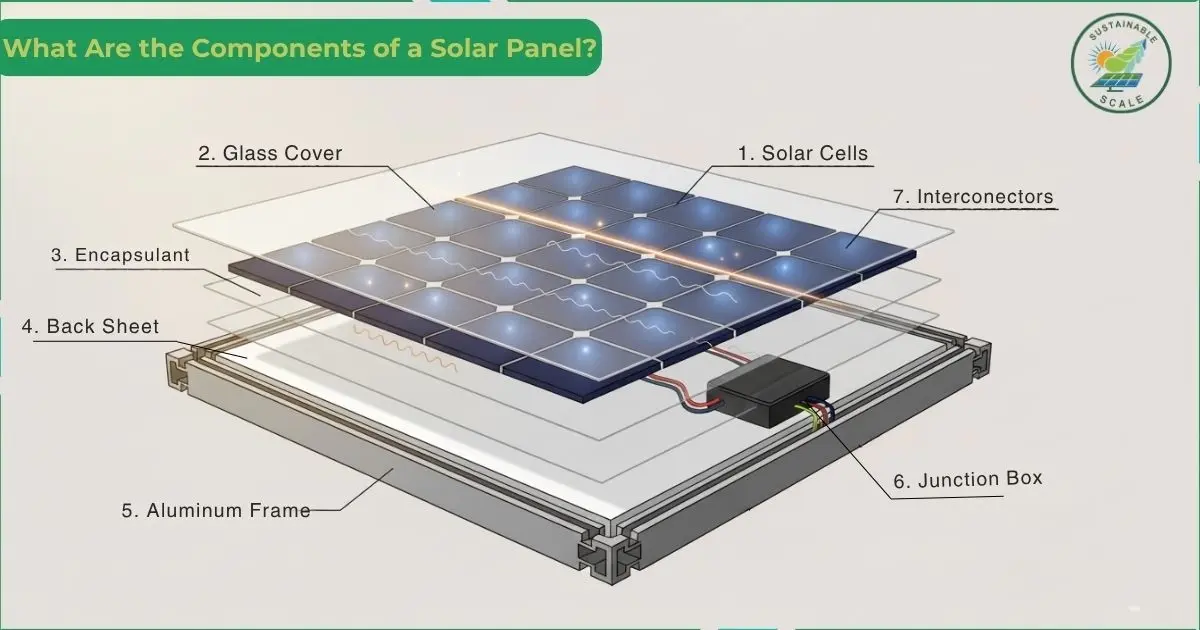
7 main components of a solar panel are listed below.
Solar cells or Photovoltaic (PV) cells are the core elements of solar panels that convert sunlight into electricity using the photovoltaic effect. When sunlight strikes the silicon, electrons are released, creating an electric current. Multiple silicon solar cells are connected to generate sufficient power for practical use. Most modern solar panels use silicon based solar cells, which are monocrystalline or polycrystalline, depending on the manufacturing process.
The diagram below shows how solar cells work.

Glass cover is a solar panel component that makes the topmost layer of solar panels and protects the solar cells from weather, dust and mechanical damage while allowing sunlight to pass through. It is normally made of tempered glass and treated with anti-reflective coatings to maximize light absorption.
Encapsulant is a component of a solar panel, made from ethylene-vinyl acetate (EVA), that seals and protects the solar cells from moisture, dirt and mechanical stress. It is laminated around the cells to provide insulation and prevent oxidation. This layer maintains the longevity and reliability of the solar panel under environmental conditions like moisture, humidity, temperature fluctuations, UV radiation and mechanical stress.
The back sheet is a protective layer on the rear of the solar panel, made from composite materials like fluoropolymers and polyester. It shields the solar cells from moisture, dust and UV radiation while providing electrical insulation and mechanical stability, to help extend the panel’s lifespan.
The aluminum frame is a part of the solar panel that provides structural support and rigidity to the solar panel. It protects the edges and holds all components in place, improving resistance to wind, snow and mechanical impacts. The lightweight yet strong frame makes sure the panel remains stable and durable throughout its operational life.
The junction box is a part of a solar panel located on the back of the panel and houses electrical connections. It routes the generated electricity from the solar cells to external wiring to protect connections from moisture and physical damage. Diodes inside the junction box prevent reverse current flow for safe and efficient power transfer.
Interconnectors are metal strips or wires that link individual solar cells within a panel, so electric current can flow between them. They are crucial for combining the output of multiple cells into a usable voltage and current to maximize the overall efficiency and output of the solar panel.
All components of a solar panel work together as an integrated system to efficiently convert sunlight into usable electricity, keeping the system durable and safe. The process begins when sunlight passes through the glass cover and strikes the solar cells, which generate direct current (DC) electricity via the photovoltaic effect. The solar cells are protected and insulated by the encapsulant and back sheet, which shield them from moisture, dust and mechanical damage. The aluminum frame provides structural support and weather resistance, keeping the entire assembly secure and stable.
Electrical connections are made between the solar cells via interconnectors which allow the current to flow in a controlled manner. The junction box on the back of the solar panel collects and routes this electricity out of the panel, using robust connectors like MC4 plugs for safe and reliable external wiring. These components together make sure that the panel can withstand environmental stresses, maintain electrical integrity and provide consistent power output.
A complete solar power system includes additional equipment such as inverters (to convert DC to AC), racking (for secure mounting), batteries (for energy storage) and controllers (for optimal charging and system management). This synergy between the panel’s internal components and the broader system allows efficient energy production, storage and utilization.
The diagram below shows how all the components of a solar panel like solar cells, glass cover, encapsulant, back sheet, aluminum frame, junction box and interconnectors work together.
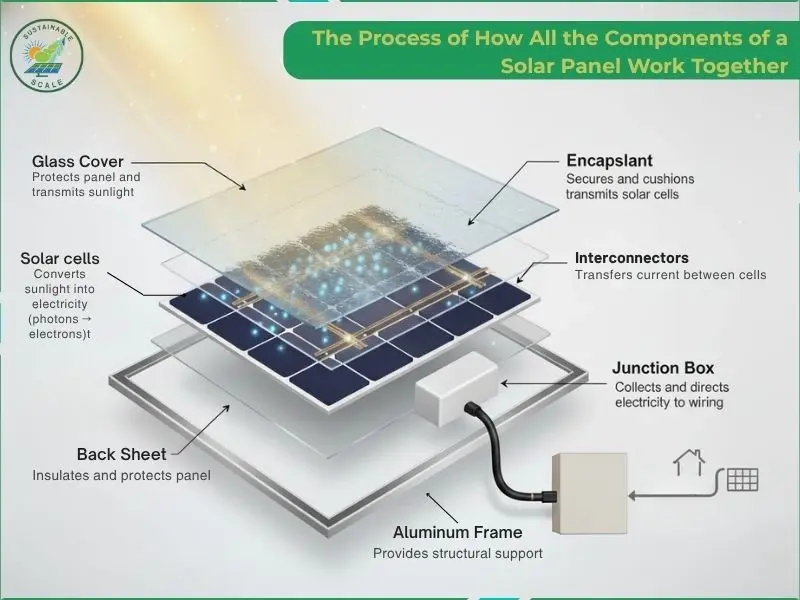
The components that are required for a solar panel system are given below.
A solar panel system including equipment and installation costs around $25,000 to $45,000 for a residential solar system before incentives, with the average around $29,000.
Net costs drop to about $20,000 to $23,000 for a standard solar system after the 30% federal tax credit, though prices vary by state and specific equipment needs.
The raw materials of solar panels are primarily silicon, glass, aluminum, copper, silver and plastic polymers. Silicon, mainly as polysilicon, forms the core solar cells. Glass protects the cells, aluminum provides the frame, copper and silver are used for wiring and contacts and polymers form the protective backsheet in a solar panel.
The most valuable material in solar panels is high-purity silicon because it is essential for efficient electricity generation and its manufacturing process is complex and costly. Silicon is used in over 90% of solar panels according to RatedPower data and is the main factor in both their performance and price.
The lifespan of solar panel materials is between 25 and 30 years, with performance gradually declining due to material degradation and environmental exposure. High-quality materials and proper installation extend this lifespan, but most panels reach the end of their useful life after three decades, at which point significant efficiency loss occurs.
Yes, installing solar panels is worth it for your home because they reduce or eliminate electric bills, increase home value and provide energy independence, often paying for themselves over time. However, upfront costs of solar are high and not every roof or location is ideal for installation, so consider your circumstances before investing.