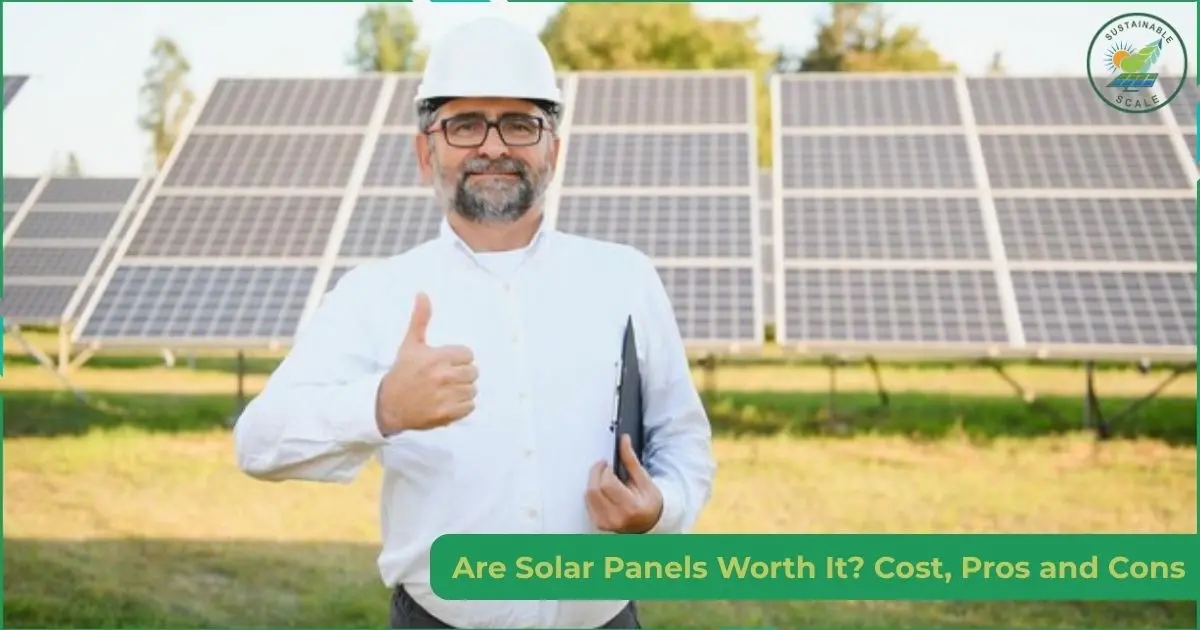

Solar panels or photovoltaic panels provide greater value when installation costs are low, electricity rates are high and local incentives exist which lead to a reduction in electricity costs.
Solar panel installation in the United States in 2025 costs $29,360 before incentives and $20,552 after the federal tax credit, and further reductions are possible through local programs, like incentives and rebates. Solar panel cost varies by state, system size, panel type and installation complexity, with prices per watt ranging from $2.06 in Texas to $3.54 in Wyoming.
Solar panels help you save on electricity bills, increase your home’s value and reduce carbon emissions, all with very little maintenance. However, they involve high upfront costs, rely on sunlight, need plenty of space and increase your property taxes.
How much does it cost to get solar panels?
The cost to get solar panels on an average-size home in the US in 2025 is $29,360 before federal tax credits and incentives, according to the latest stats by EnergySage. The net cost to install solar panels drops to $20,552 after applying the federal solar tax credit. Additional local incentives further reduce the total cost, depending on the state and utility programs.
The average cost of solar panels ranges from $2.50 to $2.90 across the United States, depending on location and installer. Smaller solar systems, like 5 to 6 kW, cost between $12,000 and $18,000 after incentives, while larger residential systems, up to 15 kW, reach up to $38,000.
State incentives and local conditions further reduce the prices of solar panels, and costs are lower in states like California, Texas and Florida due to market competition and additional incentives.
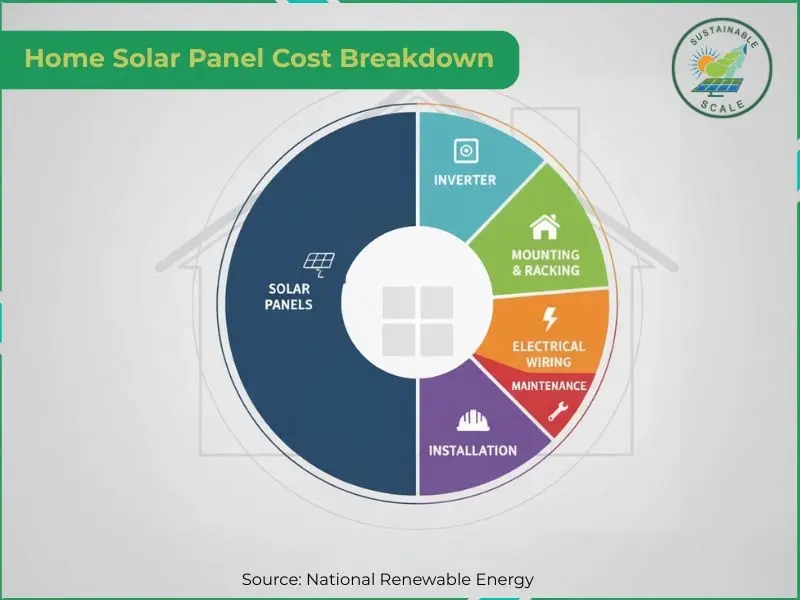
The image below shows the cost breakdown of home solar panels that includes solar panels, inverter, mounting and racking, electrical wiring, installation and maintenance.
What factors affect the cost of solar panels?
The factors that affect the cost of solar panels are outlined below.
- Solar system size: A larger solar panel system increases total cost, but the cost per watt for solar panels decreases as the number of solar panels grows.
- Solar panel type: Monocrystalline solar panels cost more but are more efficient, while polycrystalline and thin-film solar panels are cheaper but less efficient and durable.
- Efficiency and technology: High-efficiency solar panels generate more electricity per area but have a higher upfront price due to advanced solar panel technology.
- Energy needs: Higher energy needs mean installing more solar panels, so the overall solar panel cost rises with greater electricity consumption.
- Installation location: Solar panel costs vary by location due to differences in sunlight, local labor rates and permitting requirements for solar panels.
- Equipment quality: Premium solar panels, inverters and batteries increase costs but offer better performance, durability and longer warranties for solar panels.
- Mounting and racking: Complex mounting systems for solar panels, like ground mounts or custom racks, increase material and labor costs.
- Installation complexity: Difficult roof angles or hard-to-access sites make solar panel installation more labor-intensive and expensive.
- Permitting and compliance: Solar panel projects incur extra costs for permits, inspections and regulatory compliance, depending on local requirements.
- Additional equipment: Adding batteries, advanced inverters, or monitoring systems to solar panels increases the total system price.
- Incentives and rebates: Incentives, rebates and tax credits reduce the net cost of solar panels, but their availability depends on location and policy.
- Maintenance and warranty: Extended warranties and maintenance plans for solar panels raise initial costs but lower long-term risks and expenses.
Do solar panel costs vary by state?
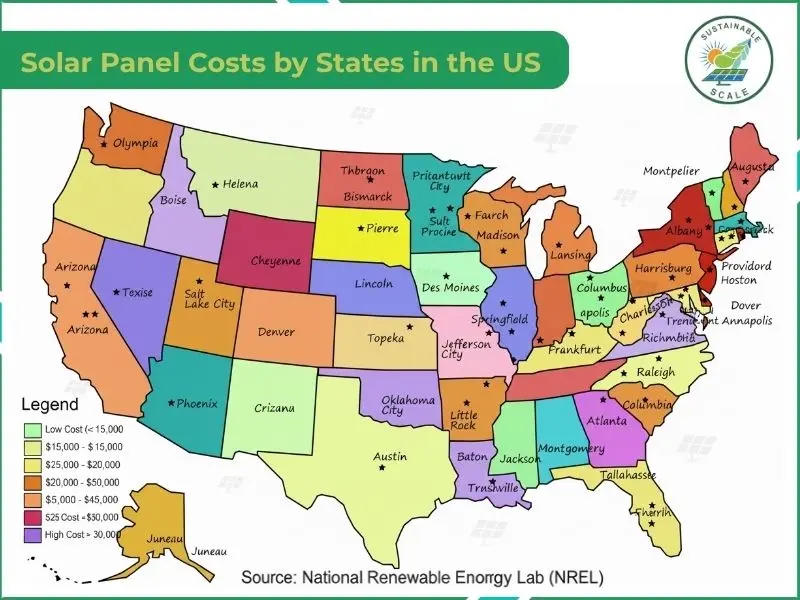
Yes, solar panel costs vary by state depending on state-specific incentives, electricity rates, installer pricing and regional market competition. The average solar panel cost per watt ranges from about $2.06 in Texas to $3.54 in Wyoming, with total system costs after incentives varying from $14,476 in California to $31,636 in West Virginia in 2025, according to EnergySage data.
State-level solar system price differences involve variations in cost per watt and total installation price in the United States. These differences mean your state’s location plays a major role in determining how much you will pay for solar panels.
The choropleth below shows the solar panels cost by state in the US.
What are the pros of solar panels?
The pros of solar panels include clean energy production, energy independence, long-term cost savings, increased property value, and a reduced environmental footprint by harnessing clean and renewable solar energy.
The benefits of getting solar panels for your home are outlined below.
- Solar energy is a renewable and inexhaustible resource and can be used anywhere the sun shines.
- Solar panels reduce carbon emissions and other greenhouse gases, which makes them environmentally friendly and helps combat climate change.
- Installing solar panels lowers electricity bills by generating power for your home or office
- Solar panels increase the value of property, as homes with solar systems are valued higher and sell faster than those without.
- Solar panels require minimal maintenance, as they have no moving parts and only need occasional cleaning to maintain efficiency.
- Solar energy systems are affordable because costs are dropping over the years and incentives, such as tax credits, are available to offset installation expenses.
- Solar panels offer energy independence and reliability, especially when paired with battery storage, which provides power during grid outages.
- Solar energy generation produces no noise pollution, because they are quiet and non-intrusive.
- Solar panels can be installed in a variety of locations, from rooftops to large-scale solar farms, and can support applications beyond electricity, such as heating and water purification.
- Solar power decreases reliance on fossil fuels and contributes to improved air quality and public health.
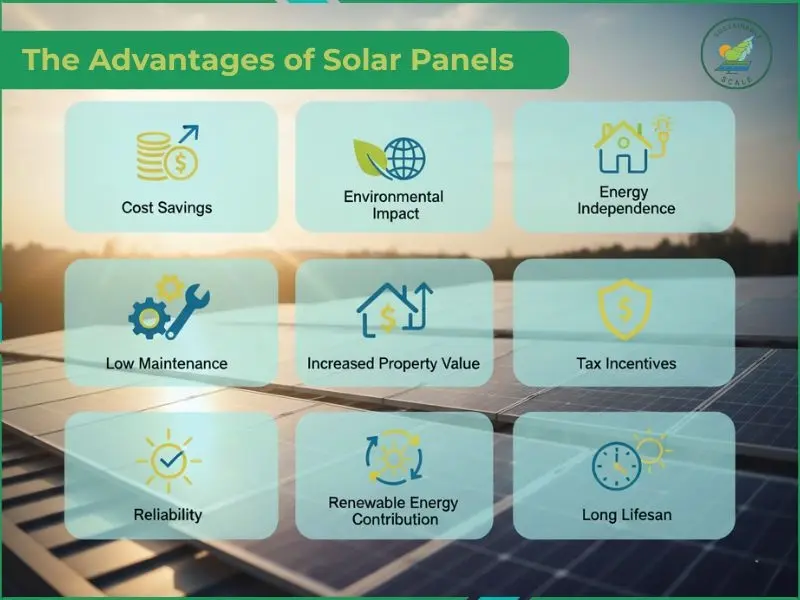
The image below shows the advantages of solar panels like cost savings, environmental impact, energy independence, tax incentives and home value.
What are the cons of solar panels?
The cons of solar panels include high installation costs, dependence on sunlight, large space requirements, increase in property taxes, and the environmental impact of manufacturing and disposal.
The drawbacks of getting solar panels are outlined below.
- Solar panels purchasing and installation, with inverters, batteries, and labor, is expensive and ranges from $10,000 to $50,000 for residential solar systems.
- Solar batteries, which are required in a solar system to store energy for use at night or during cloudy days, add extra costs ranging from $12,000 to $35,000.
- Solar panels are less effective on cloudy, rainy or foggy days and do not generate electricity at night, which makes them unreliable in areas with less sunlight.
- Certain roof types, orientations or shading from trees and buildings reduce panel efficiency and make installation difficult.
- Solar panels require a big roof or land area to generate power, which is not available for all properties.
- It takes many years to recoup the initial investment in solar panels through energy savings, especially if you move before reaching the break-even.
- Solar panels lead to higher property taxes with increased home value, depending on local regulations.
- Solar panel systems are fixed installations and are costly and complex to relocate if you move to a new home.
- Poor solar installation damages roofs, causes leaks and leads to costly repairs if not done by qualified professionals.
- Most solar panels convert only about 15 to 20% of sunlight into usable electricity and require more panels to meet energy needs.
- Solar panels’ production and recycling involve hazardous materials like cadmium and lead, and energy-intensive processes which cause pollution if not managed properly.
What factors determine if a solar panel is worth it or not?
The factors that determine if a solar panel is worth it or not include its installation cost, efficiency, expected payback period, electricity savings, durability, and the homeowner’s length of stay.
8 key factors when figuring out if a solar panel installation is worth it are listed below.
- Upfront cost: The initial cost of purchasing and installing solar panels determines if a solar panel is worth it or not. Solar panels upfront cost varies depending on the size of the system and the type of panels chosen, as monocrystalline panels are more efficient but also more expensive.
- Return on investment (ROI): The ROI of solar panels depends on how much you save on electricity bills over time compared to your upfront investment, and is a factor in determining a solar panel’s worth. A payback period of 12.5 years or less for solar panels is considered a good investment.
- Local electricity rates and energy usage: Solar panels provide the most savings in areas with high electricity rates, and are worth it. Households with higher energy consumption benefit more from solar, as they offset a larger portion of their utility bills.
- Sunlight exposure and roof suitability: The effectiveness of solar panels depends on the geographic location, the amount of sunlight that property receives, and the orientation and slope of the roof. South-facing, unshaded roofs are ideal for solar panel installation. Roof age, size, and obstructions, like chimneys or skylights also impact installation feasibility and efficiency.
- Incentives, rebates and net metering: Government incentives, tax credits (such as the 30% federal solar tax credit in the US), rebates, and net metering policies reduce the cost and improve the financial returns of solar panels. Net metering allows you to sell excess power back to the grid which improves your savings.
- Solar panel efficiency, durability and warranty: Solar panels are worth it when roof space is limited and long-term reliability is required. Higher efficiency panels generate more electricity from the same sunlight and suit constrained roof areas. Durable solar panels provide continued performance in harsh weather, while warranties and certifications confirm panel reliability and support investment value.
- Maintenance and longevity: Solar panels are worth it when maintained for efficiency and longevity. Solar panels require minimal maintenance, and regular cleaning and monitoring can increase their lifespan and efficiency. Solar panels warranties cover 20 to 25 years.
- Personal circumstances and plans: Solar panels are worth it for long-term homeowners, as selling a home within a few years prevents full return on solar investment. Solar panels increase property value, but this advantage applies when owners remain long enough to realize the gain.
How much money do solar panels save?
Solar panels save U.S. homeowners $1,500 per year on electricity, adding up to $31,000 to $100,000 over 25 years according to the 2024 figures of EnergySage. Most solar systems pay for themselves in 7 to 12 years, but the actual savings depend on your location, electricity rates and available incentives.
The U.S. Environmental Protection Agency’s Solar for All program also aims to deliver at least 20% household savings on energy bills for low-income families, with a $7 billion investment projected to generate over $350 million in annual savings for more than 900,000 households.
How are solar panels financially beneficial?
Solar panels are financially beneficial because they reduce or eliminate electricity bills by generating free power from sunlight, protect homeowners from rising energy costs, and increase property value.
Government incentives and tax credits also lower the initial installation cost of solar panels, and the low maintenance requirements mean ongoing expenses are minimal. The savings on electricity bills outweigh the upfront investment over time, which makes solar panels cost-effective for most property owners.
How to get government solar loans?
To get government solar loans, explore federal programs like the Federal Housing Administration (FHA) and Fannie Mae HomeStyle Energy Mortgage. These government programs finance solar panels through home improvement or mortgage loans. State and local incentives also reduce solar installation costs through tax credits and rebates.
6 steps to obtain government solar loans in the United States are outlined below.
- Check if you own your home and have good credit.
- Research federal solar loan programs (FHA, Fannie Mae, VA).
- Find a lender that offers government-backed solar loans.
- Get a quote from a certified solar installer.
- Apply for the solar loan and submit required documents.
- Install solar panels after approval.
Can you recoup the cost of solar panels when selling your house?
Yes, you can recoup the cost of solar panels when selling your house because homes with solar panels sell for 4% to 6.9% more than comparable homes without solar, adding $15,000–$29,000 in value, according to studies, such as the 2025 SolarReviews Home Value Study and the 2019 Zillow Research report. This amount is enough to cover or exceed the installation costs of solar panels after incentives.
How long do solar panels last?
Solar panels last for 25 to 30 years, maintaining at least 80 to 85% of their original output by year 25 due to gradual degradation. Solar panels continue to produce electricity after a 25 years period, but at a reduced efficiency compared to when they are new.
The exact lifespan of solar panels vary depending on factors like panel quality, installation, maintenance and environmental conditions.
Solar Panel

Air Purifier