8 Signs Indicate When to Replace Your Dehumidifier

- Published Date - October 31, 2026
- Modified date - October 31, 2026
Table of Contents
A dehumidifier requires replacement when signs such as noisy operation, poor humidity level, increased electricity consumption, visible mold growth and persistent musty odors start to appear together. It shows noisy operation when internal components like the fan motor or compressor wear out, which leads to constant loud sounds and reduced performance. A dehumidifier fails to maintain a proper humidity level when indoor moisture remains above the desired range, which causes discomfort, condensation and increased risk of mold growth. It consumes more electricity when worn parts force the unit to run longer without achieving results, which increases energy bills and reduces efficiency. It develops visible mold growth when moisture accumulates inside the unit, which contaminates internal parts and spreads allergens into the air.
A dehumidifier produces persistent musty odors when bacteria or mold build up within internal components, which indicates deeper contamination and poor air quality. It becomes unreliable when multiple issues occur together, which signals the end of its functional lifespan and makes replacement a more practical and cost effective solution.
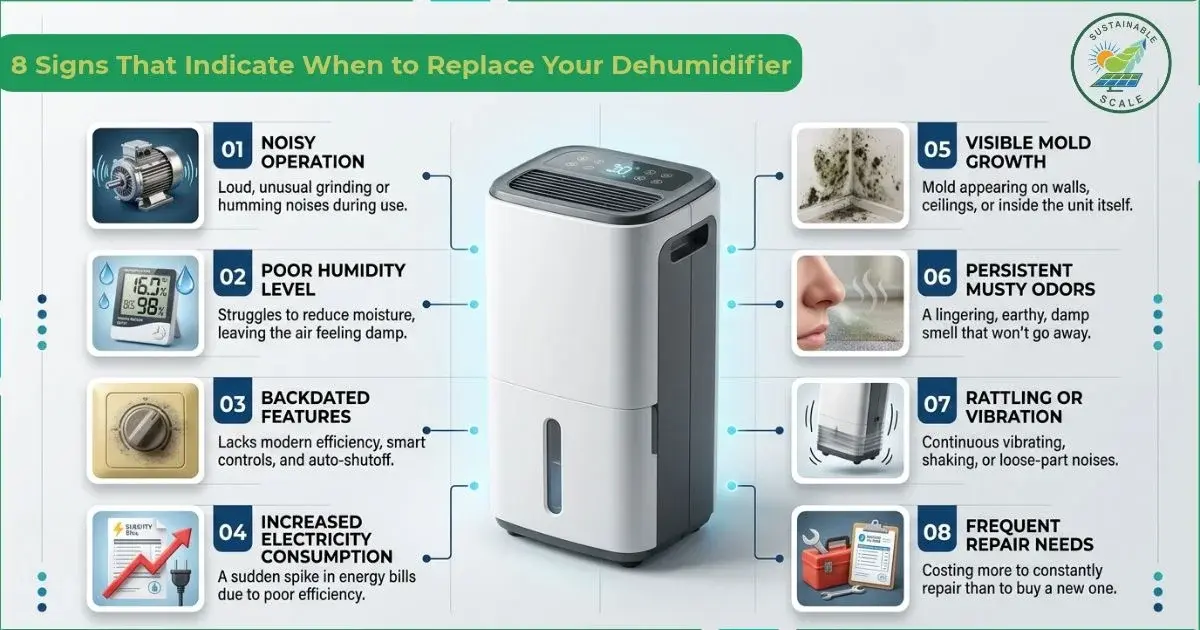
8 signs that indicate when to replace your dehumidifier are listed below.
- Noisy operation
- Poor humidity level
- Backdated features
- Increased electricity consumption
- Visible mold growth
- Persistent musty odors
- Rattling or vibration
- Frequent repair needs
1. Noisy operation
A dehumidifier needs replacement when noisy operation points to deeper problems rather than a simple placement issue. Its internal components such as the fan motor or compressor, wear out or fail if you start noticing constant loud noise, rattling or buzzing sounds during operation. A dehumidifier that is not level produces noise and vibration and if the noise continues even after fixing that, it points to more serious damage. It can be less reliable and more expensive to maintain old age or frequent repairs. You can also notice reduced performance, where the dehumidifier does not control humidity properly anymore. It is better to consider replacement instead of continuing repairs when these problems happen together.
2. Poor humidity level
A dehumidifier with a poor humidity level is a clear sign that your unit is failing and needs replacement. Your dehumidifier’s moisture removal capacity is compromised if you notice that the indoor humidity consistently stays above 60%, even after adjusting settings. This inefficiency leads to discomfort and encourages mold growth or allergens. A dehumidifier is not functioning properly if you notice excessive condensation on windows or the water collection bucket remaining empty during operation. These symptoms suggest deteriorating internal components or weakened refrigerant performance. You should replace the dehumidifier in this case, which ensures reliable humidity control, improved air quality and reduced risk of moisture related damage in your home.
3. Outdated features
A dehumidifier with outdated features struggles to meet modern efficiency and comfort standards, which makes replacement a wise choice. It becomes difficult to accurately monitor humidity levels or optimize performance if your unit relies solely on manual controls without a digital readout. This leads to inconsistent results and wasted energy since the machine does not automatically adjust to changing moisture conditions. Dehumidifiers are now equipped with automatic humidity sensors that regulate operation based on real time readings, which improves convenience and energy savings. Their older units also use phased out refrigerants that reduce efficiency and are not environmentally compliant.
4. Increased electricity consumption
A dehumidifier with increased electricity consumption is a key indicator that your unit is failing and needs replacement. A dehumidifier has worn out components or reduced refrigerant levels when the unit continuously runs without reaching the set humidity. You will notice rising energy bills even though other household energy usage has not changed, a strong sign of declining efficiency. Dehumidifiers also lack modern energy saving features such as variable speed compressors or automatic shut off systems, which causes unnecessary power draw. You should monitor the unit’s energy usage with a power meter, as it helps confirm whether it consumes more electricity than expected. You should upgrade to a newer ENERGY STAR rated dehumidifier if aging parts are behind the issue. This ensures better energy performance, lower costs and consistent humidity control while saving money over time.
5. Visible mold growth
A dehumidifier with visible mold growth is a clear indicator that your unit needs replacement. A dehumidifier’s function and hygiene are contaminated when mold appears inside the unit or on surfaces like the tank, filters or coils. A moldy dehumidifier disperses spores throughout the air instead of improving indoor air quality, which spreads allergens and unpleasant odors that lower air quality. This contamination does not fully remove through cleaning, as spores hide in unreachable areas. A dehumidifier replacement is the safest and most effective solution in such cases. A new dehumidifier provides a healthy air moisture balance, which restores efficiency and maintains a safe living environment.
6. Persistent musty odors
A dehumidifier that produces persistent musty odors is a serious warning sign that the unit needs replacement. These smells occur due to moisture buildup on internal components, which allows mold or bacteria to develop inside the unit. It indicates deeper contamination if the odor persists even after professional cleaning or servicing. A dehumidifier with ongoing odor issues also shows performance problems such as reduced water extraction or uneven airflow. It produces a musty smell mixed with burning or electrical odors when overheating or internal damage occurs. It develops stagnant moisture buildup inside components, which increases microbial growth and worsens odor output. You should replace it when persistent odors and damage remain, so you can restore safe, clean air and get reliable humidity control again.
7. Rattling or vibration
A dehumidifier requires replacement when rattling or excessive vibration indicates mechanical failure and persistent internal damage. It shows rattling or excessive vibration as a clear failure sign, which indicates mechanical failure in internal components such as the fan motor or compressor. It experiences unstable operation and increased energy use when these components wear out or become misaligned. A dehumidifier confirms deeper mechanical failure when noise persists after basic fixes like tightening panels or cleaning internal parts. You should replace it when the unit’s age reaches 5 to 10 years, as aging hardware increases the risk of recurring breakdowns. A dehumidifier replacement restores stable operation, improves efficiency and eliminates vibration caused by irreversible mechanical failure.
8. Frequent repair needs
A dehumidifier requires replacement when frequent repairs indicate major component failure and the end of its lifespan. It shows frequent repairs as a clear replacement sign when more than one service call per year occurs, which indicates declining reliability. It requires replacement when repair costs exceed 50 percent of a new unit, which makes further fixes uneconomical. A dehumidifier experiences multiple failures within a short period when critical components such as the compressor, coils or humidistat degrade or fail. It shows persistent inefficiency through reduced moisture removal, higher energy use or recurring refrigerant issues, like require to replace the dehumidifier compressor or replace refrigerant in the dehumidifier. A dehumidifier reaches the practical end of service life within a 10 to 15 year lifespan, where parts are no longer available for older models, which makes repairs difficult or impossible. You should replace the dehumidifier as it restores stable performance, improves energy efficiency and ensures reliable humidity control.
Why should you upgrade your dehumidifier?
You upgrade your dehumidifier to improve energy efficiency, faster moisture removal, cost effective operations, prevent mold and musty odors and longer equipment life and reduced maintenance.
The reasons you should upgrade your dehumidifier are listed below.
- Improved energy efficiency: A dehumidifier with variable speed compressors and smart sensors adjusts performance, which reduces energy consumption while maintaining stable humidity levels throughout your home.
- Faster moisture removal: A dehumidifier with advanced airflow systems and stronger coils extracts moisture, which stops mold growth and dampness while improving air quality in a shorter time.
- Cost effective operations: A dehumidifier with a modern energy saving design minimizes electricity use and maintenance costs, which provides better value and reliability compared to older units that need frequent repairs.
- Reduced noise levels and modern features: A dehumidifier with advanced fans, vibration control and digital settings runs with less noise while offering greater convenience and consistent humidity control.
- Preventing mold and musty odors: A dehumidifier with improved air filtration and automatic humidity regulation prevents mold spores and bacteria from spreading, keeping your home fresh and healthy.
- Longer equipment life and reduced maintenance: A dehumidifier with durable construction, corrosion resistant coils and self cleaning functions lasts longer and requires less frequent servicing or component replacement.
Should you replace or repair your dehumidifier?
Yes, you should replace your dehumidifier if it has a refrigerant leak or requires expensive repairs like a new compressor, as these issues indicate major mechanical failure. Repairing a dehumidifier costs more than buying a new, energy efficient model, which makes replacement the smarter, long term solution for reliable humidity control.
When should you decide to keep your older dehumidifier?
You should keep your older dehumidifier if it is less than 10 years old and still maintains desired humidity levels below 60%. A dehumidifier remains reliable and effective when it operates without frequent repairs or performance issues, which makes replacement unnecessary for the time being.
How to tell if a dehumidifier is working properly?
You can tell a dehumidifier is working properly when it consistently removes moisture and produces warm, dry airflow. Check the water tank or drain hose to ensure it is collecting water. Feel the airflow coming from the unit to compare the intake and output air. Use a hygrometer to monitor humidity levels. Inspect the coils for frost or ice buildup, as persistent icing reduces airflow and efficiency.
How long does a dehumidifier last?
A dehumidifier lasts 5 to 10 years, which depends on several factors. The factors that impact a dehumidifier’s lifespan include usage frequency, maintenance, environmental conditions and quality. A smaller, cheaper or used unit wears out faster, while high quality or commercial models last longer with proper care and regular cleaning.
Products
Solar Panel
Air Purifier