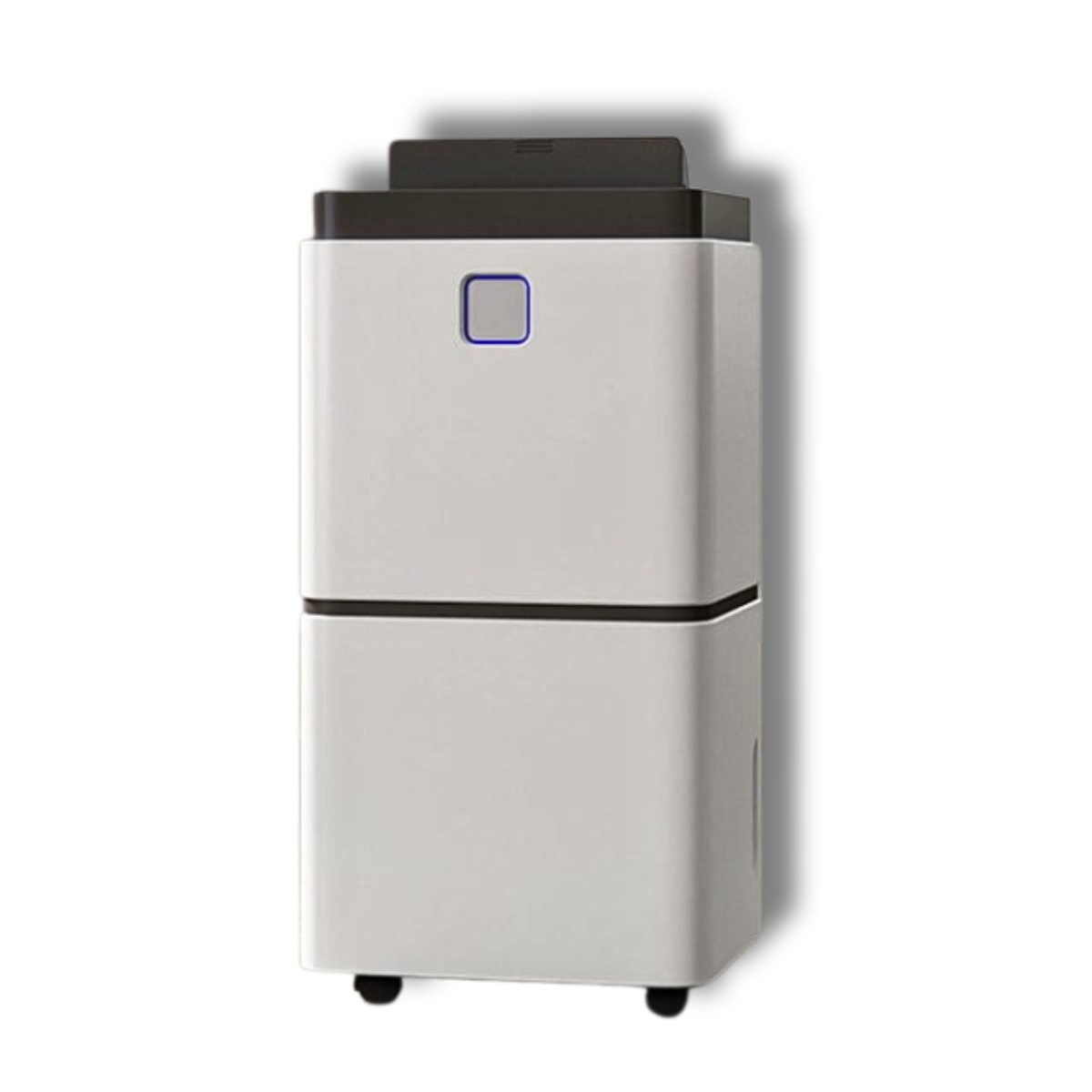


Pool Dehumidification removes excess moisture from the air after pool water evaporates inside an enclosed swimming area. It controls humidity and protects surfaces, finishes, equipment, air quality, and swimmer comfort from moisture related damage. It prevents condensation, mold, corrosion, odors, peeling paint and material deterioration throughout the pool enclosure. It also limits discomfort and maintenance costs that develop when indoor pool humidity remains uncontrolled.
Pool Dehumidification draws humid air through return grilles and filters before sending it across a cold evaporator coil in swimming pool dehumidification systems. The coil captures water vapor as condensate and a drain line directs the collected water to an approved drainage connection. It reheats dried air with recovered heat and distributes it through ducts or supply outlets. Refrigerant units condense moisture, desiccant units absorb moisture, heat pump units recover heat and dilution units replace humid air. Pool Dehumidification combines moisture removal with indoor pool ventilation to manage air exchange and chloramine levels.
Pool Dehumidification requires system sizing based on pool area, water temperature, room temperature, humidity target, activity level, climate and ventilation load. It requires equipment selection based on moisture removal capacity, airflow rate, drainage, installation location, service access and energy use. Pool Dehumidification works when operators maintain 50 to 60% relative humidity, balance ventilation, and direct supply air across windows and exterior surfaces. It requires filter cleaning, coil inspection, drain clearing and humidity monitoring to maintain airflow and moisture removal.
What is pool dehumidification?
Pool dehumidification is the process of removing excess moisture from the air within an indoor pool area to maintain a controlled relative humidity level. It manages moisture created when warm pool water evaporates and releases water vapour into the enclosed environment. This moisture increases indoor humidity and affects building surfaces, air quality, comfort and structural materials throughout the pool enclosure.
Pool dehumidification involves using a system for indoor pool facilities that extracts water vapour and supplies drier conditioned air indoors. It controls humidity in the enclosure and limits condensation on windows, walls, ceilings, fittings and other vulnerable building surfaces. This process protects interior finishes, reduces moisture related deterioration and supports a stable and healthier environment for swimmers, visitors and staff.
Why is dehumidification important for indoor pools?
Dehumidification is important for indoor pools because it prevents condensation, protects building materials and finishes, improves swimmer comfort, protects pool equipment and helps control odors and air quality. These benefits come from a pool dehumidifier system that controls humidity and protects pool room surfaces and equipment from moisture damage.
The reasons why dehumidification is important for indoor pools are given below.
- Prevents condensation: Dehumidification removes water vapor before it condenses on cold surfaces, preventing droplets from forming on glazing, metal frames and pool room fixtures.
- Protects building materials and finishes: Dehumidification limits moisture absorption by wood, drywall, insulation, paint, grout and flooring, reducing material breakdown, peeling, staining and repair requirements.
- Reduces mold and mildew growth: Dehumidification lowers humidity, which supports mold and mildew growth by reducing spores, surface staining, biological buildup and damage within concealed building spaces.
- Protects windows, walls and ceilings: Dehumidification protects windows, walls and ceilings from persistent dampness, which causes corrosion, rot, paint damage, structural decay and surface deterioration.
- Improves swimmer comfort: Dehumidification makes the pool room feel less clammy by controlling humidity, reducing moisture on skin and supporting comfort for swimmers and spectators.
- Helps control odors and air quality: Dehumidification helps reduce musty odors by limiting damp conditions that support microbial growth and degrade air quality within enclosed pool environments.
- Protects pool equipment: Dehumidification protects pumps, motors, filters, controls and electrical components by reducing moisture exposure, which causes corrosion and equipment failure.
What happens if an indoor pool is not dehumidified?
If an indoor pool is not dehumidified, window condensation, corrosion, mold and mildew, structural damage, peeling paint and damaged finishes, uncomfortable indoor conditions, poor air quality and higher maintenance costs can occur. These conditions cause window condensation, corrosion, mold and mildew, structural damage, paint failure, discomfort, poor air quality and maintenance costs.
The consequences of not dehumidifying an indoor pool are given below.
- Window condensation: Water vapor collects on glass, obstructs views, wets seals, affects glazing and leaves deposits on window components, frames, sills, and fittings.
- Corrosion: Moisture reaches metal surfaces, triggers rust, degrades railings, affects fasteners, damages ducts, harms fixtures, corrodes pipes and weakens equipment connections.
- Mold and mildew: Damp surfaces support mold and mildew growth, leave stains, release odors, contaminate materials and encourage microbial growth across walls, ceilings, joints or hidden spaces.
- Structural damage: Moisture and vapor penetrate building materials, weaken timber, saturate insulation, damage drywall, affect ceilings, walls, floors, joints, framing and support sections.
- Peeling paint and damaged finishes: Water vapor loosens paint, separates coatings, harms wall coverings, deteriorates finishes and affects doors, trim, ceilings, furnishings and protective surface layers.
- Uncomfortable indoor conditions: Humidity raises warmth perception, leaves clothing damp, causes sweating and reduces comfort for swimmers, visitors, instructors, workers, staff and pool users.
- Poor air quality: Moisture carries odors, chloramine residues, and contaminants, irritates respiratory passages, affects breathing also reduces freshness for swimmers, workers and visitors
- Higher maintenance costs: Facility deterioration increases cleaning, repairs, replacement work, equipment servicing, surface restoration, labor demands, material use and operating expenditure across the pool facility.
How do indoor pool dehumidifiers work?
Indoor pool dehumidifiers work by taking in humid air, controlling humidity, condensing moisture, draining water, reheating air and distributing dry air. These stages control water vapour and return dry air to the pool enclosure during operation.
The steps of how indoor pool dehumidifiers work are given below.
- Humid air intake: Pool dehumidifiers draw moisture laden air from the pool enclosure through return grilles, filters and fans into internal passages for processing.
- Air cooling: Pool dehumidifiers pass incoming air across a cold evaporator coil and lower air temperature below its dew point to separate moisture.
- Moisture condensation: Pool dehumidifiers cool air until water vapor condenses on coil surfaces and forms liquid water for collection in an internal drain pan.
- Water drainage: Pool dehumidifiers collect condensate in a drain pan and direct water through piping to an approved drain or disposal connection system.
- Air reheating: Pool dehumidifiers warm dry air with the refrigeration system’s recovered heat before returning air to the pool enclosure through supply outlets.
- Dry air distribution: Pool dehumidifiers distribute reheated air through supply grilles or ducts and replace humid enclosure air around pool surfaces and users.
- Humidity control: Pool dehumidifiers maintain consistent humidity by monitoring air conditions and adjusting moisture removal rates throughout daily pool operation and occupancy.
What types of pool dehumidifiers are available?
Available types of pool dehumidifiers are refrigerant (condensing) dehumidifiers, desiccant dehumidifiers, heat pump dehumidifiers, and dilution dehumidifiers.
They remove water vapor through condensation, absorption, heat transfer or air replacement, depending on pool enclosure operation and moisture conditions.
4 types of available pool dehumidifiers are given below.
- Refrigerant (condensing) dehumidifiers: Refrigerant dehumidifiers pass air over a refrigerant evaporator coil to condense water vapor into liquid and discharge drier air into pool enclosures.
- Desiccant dehumidifiers: Desiccant dehumidifiers move air through a moisture absorbing wheel that captures water vapor and also releases moisture through regeneration airflow and exhaust pathways.
- Heat pump dehumidifiers: Heat pump dehumidifiers use a refrigeration cycle to remove moisture, recover heat, regulate air temperature and return air to the pool room.
- Dilution dehumidifiers: Dilution dehumidifiers replace humid indoor air with outdoor air through supply and exhaust systems, serving as a dehumidifier for swimming pool enclosures.
The infographic shows the pool dehumidifier types by mounting and installation.
What size dehumidifier does an indoor pool need?
An indoor pool needs a dehumidifier sized based on pool water surface area, water temperature, room air temperature and humidity, activity level, ventilation, climate and moisture sources. These factors calculate the expected evaporation load and identify moisture removal capacity for recreational-pool temperatures, around 50 to 60% RH, and heavy bather loads.
The key factors used to determine the correct indoor pool dehumidifier size are given below.
- Pool water-surface area: Pool water surface area sets baseline system capacity, as each exposed square foot releases vapour and adds to the total daily removal requirement.
- Water temperature: Water temperature raises the required capacity when warmer water increases evaporation and adds more vapour to the indoor pool environment during operation.
- Room air temperature and humidity: Room air temperature and humidity determine the unit rating by changing the vapour pressure difference between water and air which controls evaporation.
- Pool activity level: Pool activity level raises removal requirements when swimmers, splashing and waves agitate water surfaces and add vapour during periods of use.
- Ventilation and climate: Ventilation and climate influence system capacity because outdoor air exchange adds or removes moisture according to outdoor temperature and relative humidity conditions.
- Additional moisture sources: Additional moisture sources expand the removal requirement through showers, spas, wet decks, laundry area and occupants that add vapour beyond standard pool evaporation.
The infographic shows the different sizes of pool dehumidifiers.
How to choose an indoor pool dehumidifier?
Choose an indoor pool dehumidifier by assessing pool size, water temperature, room temperature, target humidity, dehumidification capacity, airflow rate, energy efficiency, ventilation needs, installation requirements, and drainage options. It matches moisture control with pool use, room conditions, equipment operation, building layout, and water disposal arrangements.
The ways to choose an indoor pool dehumidifier are given below.
- Pool size: Measure the pool’s surface area, which determines evaporation volume and establishes the moisture load that the selected system removes during each pool use period.
- Water temperature: Check water heat because each rise increases evaporation rates, raises humidity production and increases demand on the moisture control system throughout pool operation periods.
- Room temperature: Record indoor conditions because air heat influences evaporation, condensation, occupant comfort and the balance between water, air, equipment, and enclosure surfaces.
- Target humidity: Define desired relative humidity before selection, as the setting guides moisture extraction, condensation prevention, control settings and air condition management throughout pool use.
- Dehumidification capacity: Compare moisture removal capacity against evaporation load, occupancy, pool use and room volume to align equipment output with moisture generation across operating periods.
- Airflow rate: Review air movement to distribute treated air, reach enclosure surfaces, limit condensation and maintain circulation across the pool room during operation.
- Energy efficiency: Examine power use, heat recovery, operating hours and maintenance demands to reduce expenditure and support system operation throughout the pool lifecycle.
- Ventilation needs: Assess air exchange, exhaust paths, vapour removal, supply flow and pressure balance to manage air quality and limit moisture accumulation within pool enclosures.
- Installation requirements: Confirm electrical requirements, equipment location, mounting method, clearance and connections before installation, preventing conflicts with building systems, service routes and access.
- Drainage options: Review ductwork needs and service access with drains, pumps, pipe routes, floor drainage and discharge points before selecting equipment placement locations.
How to dehumidify an indoor pool using a dehumidifier?
Dehumidify an indoor pool using a dehumidifier by choosing the right equipment, setting humidity, positioning the unit, distributing dry air, controlling ventilation, draining moisture, monitoring conditions and maintaining the system. These steps reduce condensation, manage water vapour, protect pool room surfaces, support airflow and sustain controlled conditions throughout the enclosure
The tips to dehumidify an indoor pool using a dehumidifier are given below.
- Choose the right dehumidifier: Choose the right dehumidifier by matching moisture removal capacity with pool surface area, water temperature, room volume, occupancy, evaporation rate and pool use patterns.
- Set the humidity level: Set the humidity level around 50% to 60% RH, reducing condensation, limiting surface dampness, balancing evaporation, protecting finishes and supporting pool room conditions.
- Position the dehumidifier correctly: Position the dehumidifier near return-air paths, keeping intakes clear and directing supply air toward glazing, doors, walls, ceilings and pool side surfaces.
- Distribute dry air: Distribute dry air through suitable ductwork and air outlets, directing treated airflow across windows, doors, walls, ceilings, corners and condensation prone surfaces.
- Control outdoor-air ventilation: Control outdoor air ventilation by balancing supply and exhaust flow, removing chloramines, reducing vapour entry, maintaining pressure balance and supporting air exchange.
- Drain collected moisture: Drain collected moisture through a condensate line connected to drainage or pumping equipment, preventing overflow, standing water, blockages, system disruption and component damage.
- Monitor humidity levels: Monitor humidity levels with integrated humidity sensors, tracking readings, identifying moisture changes, adjusting operation, preventing condensation and maintaining stable pool room conditions.
- Maintain the system: Maintain the system by cleaning filters, inspecting coils, clearing drainage lines, checking controls, scheduling service, preserving moisture extraction and sustaining airflow performance
What are the popular indoor pool dehumidifiers?
The popular indoor pool dehumidifiers are Seresco NE Compact, Dectron Dry-O-Tron, PoolPak ComPak PCP, PoolPak PPK, Desert Aire SelectAire Plus, Desert Aire SelectAire II, Calorex DH75, and Calorex DH110. They regulate pool enclosure climate through moisture extraction, thermal balance, air exchange and surface dampness prevention.
8 best indoor pool dehumidifiers are given below.
- Seresco NE Compact: Seresco NE Compact is designed for indoor pool environments and provides humidity control by extracting moisture, managing air circulation and regulating conditions within pool rooms.
- Dectron Dry-O-Tron: Dectron Dry-O-Tron uses refrigeration technology to remove airborne moisture, limit window fogging and maintain air quality around enclosed swimming water areas.
- PoolPak ComPak PCP: PoolPak ComPak PCP delivers heat recovery and corrosion protection while controlling moisture loads, transferring energy and protecting components within aquatic enclosure systems.
- PoolPak PPK: PoolPak PPK coordinates air movement and thermal regulation, supporting comfortable environmental conditions for swimmers, visitors, staff, pool structures and surrounding surfaces.
- Desert Aire SelectAire Plus: Desert Aire SelectAire Plus balances moisture and temperature in aquatic spaces, supporting air exchange and climate regulation throughout residential, commercial and institutional facilities.
- Desert Aire SelectAire II: Desert Aire SelectAire II operates as a dehumidifier for swimming pool installations, extracting humidity and assisting ventilation functions across enclosed aquatic environments.
- Calorex DH75: Calorex DH75 draws moisture from pool-room atmosphere, reducing surface dampness and preserving glazing, walls, ceilings, finishes and structural materials.
- Calorex DH110: Calorex DH110 processes moisture loads in pool enclosures, maintaining circulation and protecting building elements around larger indoor swimming areas.
Which is the best wall mounted pool dehumidifier?
Dantherm CDP 70T is the best wall-mounted pool dehumidifier because its through wall design places equipment outside the pool enclosure. It delivers humidity control with 840 m³/h airflow and removes 73.9 litres of moisture daily at 30°C and 60% relative humidity. It combines efficient dehumidification with heat recovery, plant room service access and lower noise inside the swimming area.
Are pool dehumidifiers energy efficient?
Yes, pool dehumidifiers are energy efficient because they remove moisture from the air and reduce energy loss from humid pool conditions. They support indoor pool humidity control by recovering and reusing heat from extracted air. Pool dehumidifiers transfer recovered heat to pool water or supply air and use less electricity with properly sized capacity.
How much electricity does a pool dehumidifier use?
A pool dehumidifier uses 1,000 to 10,000 watts (1 to 10 kW) based on its unit’s capacity, pool size and operating conditions. It draws power for compressors, fans, controls and heat recovery components during moisture removal. A pool dehumidifier consumes electricity in large pool enclosures with high evaporation rates and extended operating periods.
How much does an indoor pool dehumidifier cost?
An indoor pool dehumidifier costs about $1,000 to over $40,000 for many residential wall mounted units, while through wall and larger commercial systems cost more. The dehumidifier price depends on pool size, moisture load, system’s capacity and features, installation requirements and energy efficiency. It rises when ductwork, heating functions, controls or plant room installation form part of the project.
Where should an indoor pool dehumidifier be installed?
An indoor pool dehumidifier should be installed inside the pool room when the unit draws air and returns treated air directly. These wall mounted units mount on walls, retaining return paths, discharge paths, drainage, electrical connections and clearance. Ducted systems operate from a nearby mechanical room and placement depends on the system design, duct routing, air distribution, access and layout.
How long should a pool dehumidifier run?
A pool dehumidifier should run 24 hours a day through continuous operation or automatic humidistat control. It operates when indoor humidity rises above the humidistat controlled setting and stops after reaching the selected level. It manages moisture because evaporation occurs around the clock from the pool surface during swimming and closed pool periods.
How do you maintain an indoor pool dehumidifier?
You can maintain an indoor pool dehumidifier by cleaning or replacing air filters, inspecting coils and checking drainage lines for blockages or leaks. It keeps air intakes unobstructed to maintain airflow and support moisture removal. It needs routine cleaning of internal components to prevent dust buildup, corrosion, drainage problems and reduced system performance.
What is the difference between a pool dehumidifier and an air conditioner?
The difference between a pool dehumidifier and an air conditioner is their primary function in managing indoor pool air. A pool dehumidifier removes excess moisture and controls humidity from pool water evaporation. An air conditioner cools indoor air and maintains comfortable conditions, but it does not provide dedicated moisture control for pool enclosures.
Solar Panel
Air Purifier