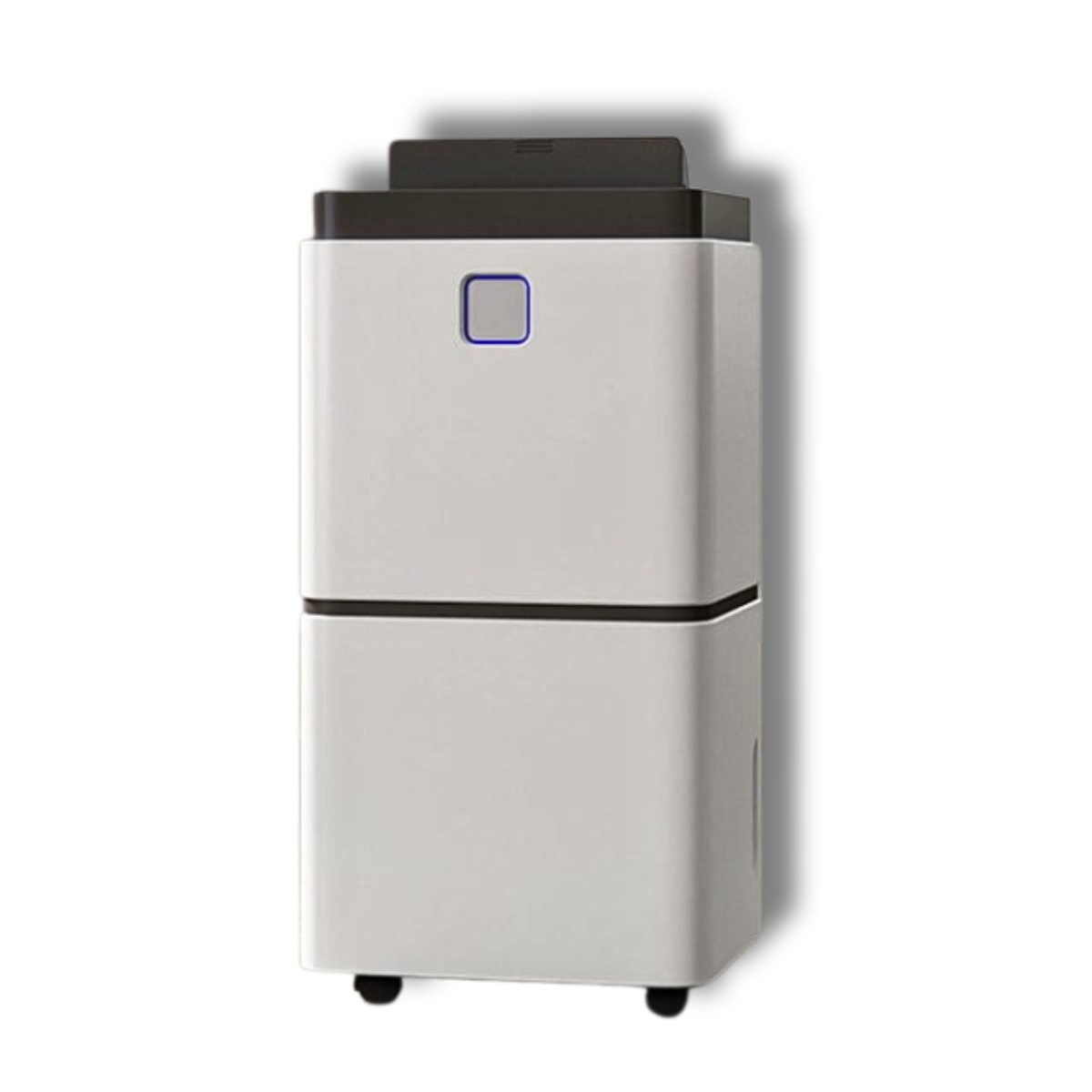


No, you should not run a dehumidifier with the windows open because outdoor air can enter the room. A dehumidifier raises indoor relative humidity, adds moisture, extends compressor cycles, slows drying, increases energy use and reduces moisture-removal efficiency. It requires closing windows during humid weather, rain, active moisture removal, air conditioning use and moisture-producing household activities.
A dehumidifier operates with open windows when users confirm that outdoor humidity is lower than indoor humidity. It performs efficiently when users check humidity readings, use a hygrometer and set 40% to 60% RH before ventilation. A dehumidifier benefits when users open windows for brief ventilation, keep the intake area clear, and close windows when humidity rises. It maintains moisture removal when users empty the tank or connect a drain hose before collected water interrupts operation.
A dehumidifier loses control when users leave windows open during humid conditions or select an undersized unit for the room. It faces repeated moisture loads when users ignore weather conditions, expect rapid drying or skip humidity monitoring. A dehumidifier requires window closure when indoor humidity rises, but dry outdoor air supports air exchange after bathing, cooking or laundry. It protects performance through closed windows, measured humidity, sufficient capacity, unrestricted airflow and regular water removal from the tank.
How do open windows affect dehumidifier performance?
Open windows affect dehumidifier performance by moisture entry, humidity increase, longer runtime, slower dehumidification, higher energy use and reduced efficiency. These effects reflect outdoor air carrying water vapor that raises indoor relative humidity above the desired humidity level and increases electricity consumption.
The ways open windows affect the dehumidifier performance are given below.
- Moisture entry: Open windows allow outdoor air carrying water vapor to flow inside, introducing additional moisture that the dehumidifier must remove to maintain target indoor conditions.
- Humidity increase: Open windows let humid outdoor air continuously enter, which raises indoor relative humidity and makes it harder to reach the desired humidity level efficiently.
- Longer runtime: Open windows cause the dehumidifier to run for extended periods to counteract constant moisture entry that increases wear on components and shortens overall lifespan.
- Slower dehumidification: Open windows make the dehumidifier remove moisture more slowly, as new humid air continuously replaces the dried air the unit is trying to produce.
- Higher energy use: Open windows make the dehumidifier remove moisture more slowly, as new humid air continuously replaces the dried air the unit is trying to produce.
- Reduced efficiency: Open windows reduce the dehumidifier’s efficiency, since it constantly battles incoming humidity instead of recirculating and conditioning the same indoor air.
The infographic below shows whether opening a window helps with humidity.
When should you close the windows while using a dehumidifier?
You should close the windows while using a dehumidifier during high outdoor humidity, active dehumidification, target humidity not reached and rainy weather. These conditions include air conditioning in use and drying clothes indoors, which adds moisture continuously and helps increase indoor moisture within rooms.
The situations when you should close the windows while using a dehumidifier are outlined below.
- High outdoor humidity: Close windows when outdoor humidity is high because humid air enters continuously and makes the dehumidifier work harder to remove moisture.
- Active dehumidification: Keep windows closed during active dehumidification to prevent moisture laden outdoor air from entering and interfering with the unit’s moisture removal process.
- Target humidity not reached: Close windows when the target humidity is not reached because continued outdoor air entry increases indoor moisture and prolongs dehumidifier operation.
- Rainy weather: Keep windows closed during rainy weather because rain increases outdoor humidity, which allows damp air to enter and reduces the effectiveness of dehumidification.
- Air conditioning in use: Close windows while air conditioning operates to prevent humid outdoor air from entering and reduce cooling efficiency while increasing the indoor moisture load.
- Moisture-producing activities: Close windows during moisture producing activities such as drying clothes indoors because these activities add moisture continuously and increase indoor moisture levels.
When should you open the windows while using a dehumidifier?
You should open the windows while using a dehumidifier during low outdoor humidity, dry outdoor conditions, after moisture-producing activities and excess indoor humidity. These conditions follow activities that release concentrated steam, reducing the dehumidifier’s workload when outdoor humidity is lower.
The situations when you should open the windows while using a dehumidifier are outlined below.
- Low outdoor humidity: Open windows when outdoor humidity is lower than indoors, which allows drier air to enter while reducing the dehumidifier’s workload.
- Dry outdoor conditions: Open the windows during dry weather to bring in fresh, moisture poor air without significantly increasing the indoor humidity load.
- After moisture-producing activities: Open the windows after showering or cooking to release concentrated steam and remove excess moisture before closing them again.
- Excess indoor humidity: Open the windows when indoor humidity becomes excessive, provided outdoor air is drier, to exchange saturated indoor air more quickly.
- During brief ventilation: Open the windows briefly to exchange stale, saturated indoor air with fresher outdoor air, then close them to maintain humidity control.
- When outdoor air is drier: Open the windows when outdoor air is drier than indoor air, which helps remove humid air while reducing the dehumidifier’s workload.
How to use a dehumidifier effectively with windows open?
Use a dehumidifier effectively with windows open by checking outdoor humidity, opening windows briefly, positioning the dehumidifier properly and setting the target humidity. These steps exchange stale air, use a hygrometer, maintain around 40% to 60% RH and prevent additional moisture entry.
The steps to use a dehumidifier effectively with windows open are given below.
- Check outdoor humidity: Measure outdoor humidity before opening windows, as drier outdoor air supports moisture removal while humid air increases the dehumidifier workload inside enclosed rooms during operation.
- Open windows briefly: Limit window opening duration to brief intervals, which allows stale air replacement without sustained humid air entry that interferes with moisture removal by the dehumidifier system.
- Position the dehumidifier properly: Place the dehumidifier away from walls and furniture, which leaves open space around its intake and exhaust to support unrestricted room airflow during moisture removal cycles.
- Set the target humidity: Adjust the humidity control to a selected level that balances moisture removal with comfort, then maintain stable operation during window ventilation periods inside occupied rooms.
- Close windows when humidity rises: Shut windows when indoor humidity rises, which blocks outdoor moisture entry and allows the dehumidifier to restore the selected humidity level within occupied rooms after ventilation.
- Monitor indoor humidity: Track indoor humidity readings during operation, which compares them with the selected target and identifies moisture changes that require window closure or adjustment action inside rooms.
- Improve air circulation: Increase airflow by placing the dehumidifier where room air reaches its intake and distributing dry air across moisture prone areas during each moisture removal cycle.
- Empty or drain the tank regularly: Remove collected water from the tank or connect a drain hose, which prevents overflow and preserves uninterrupted dehumidifier operation during moisture removal in enclosed living spaces.
What are the common mistakes when using a dehumidifier with windows open?
The common mistakes when using a dehumidifier with windows open include continuously opening windows, ignoring outdoor humidity, unnecessarily opening windows and using an undersized dehumidifier. These errors replace removed moisture, forcing longer operation, increasing energy use and making the dehumidifier work harder during moisture control.
The common mistakes when using a dehumidifier with windows open are given below.
- Continuous window opening: A dehumidifier loses moisture control when open windows admit humid air, which offsets collected water and prevents the selected indoor humidity level from stabilizing during operation.
- Ignoring outdoor humidity: A dehumidifier faces larger moisture loads when outdoor humidity exceeds indoor humidity, which reduces removal capacity and extends compressor cycles inside the affected room during operation.
- Unnecessary window opening: A dehumidifier repeats moisture removal after unnecessary window opening introduces humid air, which wastes collected water capacity and prevents stable indoor humidity conditions from developing within rooms.
- Undersized dehumidifier: A dehumidifier lacks sufficient extraction capacity for the room moisture load, so window opening keeps humidity above the selected control target during regular operation periods.
- Expecting faster drying: A dehumidifier removes water at its rated capacity, but open windows add humid air and prevent faster drying of indoor materials after household moisture exposure.
- Neglecting humidity monitoring: A dehumidifier operates without accurate feedback when humidity monitoring is neglected, which allows moisture entry through open windows to remain undetected during operation cycles within rooms.
What happens when you use a dehumidifier with windows left open continuously?
When you use a dehumidifier with windows left open continuously, humid outdoor air can enter and increase the moisture load. The unit operates for extended periods, struggles to reach the target humidity and increases electricity consumption.
Why does using a dehumidifier with windows open reduce effectiveness?
Using a dehumidifier with windows open reduces effectiveness because outdoor airflow replaces treated indoor air and disrupts moisture control. A dehumidifier is designed to condition a relatively enclosed space. It faces outdoor air masses that contain additional water vapor, which increases moisture loads beyond its 20 to 50 pint per day removal capacity.
What should you do if the room stays humid with the windows closed?
If the room stays humid with the windows closed, check the hygrometer and adjust the target setting if needed. Clean the filter to maintain airflow, then inspect for leaks around windows, plumbing and doors. Check whether the dehumidifier is correctly sized and operating continuously enough to remove excess moisture.
Can a dehumidifier remove humidity from outdoor air?
No, a dehumidifier cannot remove humidity from outdoor air because outdoor air volume exceeds its moisture removal capacity. A dehumidifier passes air across a cold evaporator coil, which causes air to lose water vapor through condensation. It controls indoor air inside sealed rooms of 500 to 1,500 square feet.
How long does a dehumidifier take to lower humidity?
A dehumidifier takes 4 to 12 hours to lower humidity in a small to medium room. A dehumidifier in damp spaces like basements and crawl spaces requires 24 hours before humidity readings stabilize. Its runtime is based on room size, starting humidity and rated capacity.
What humidity level should a dehumidifier maintain?
A dehumidifier should maintain a humidity level between 40% and 50% for most homes. This dehumidifier setting helps limit excess moisture, discourages mold and dust mites and supports comfortable indoor conditions. It should maintain the range based on seasonal humidity and the specific moisture conditions within the living space.
Where should you place a dehumidifier in a room?
You should place a dehumidifier in a central, open area on a flat surface because unobstructed airflow improves moisture removal. Keep it 12 to 18 inches away from walls and other objects to allow adequate air circulation, prevent blocked intake or exhaust and support efficient operation throughout the room.
Should I open windows when humidity is high?
No, you should not open windows when humidity is high because outdoor air can enter the room and increase the moisture load. A dehumidifier to lower indoor humidity operates with closed windows and maintains levels below the 60% RH threshold. It reduces condensation when outdoor relative humidity remains low.
Solar Panel
Air Purifier