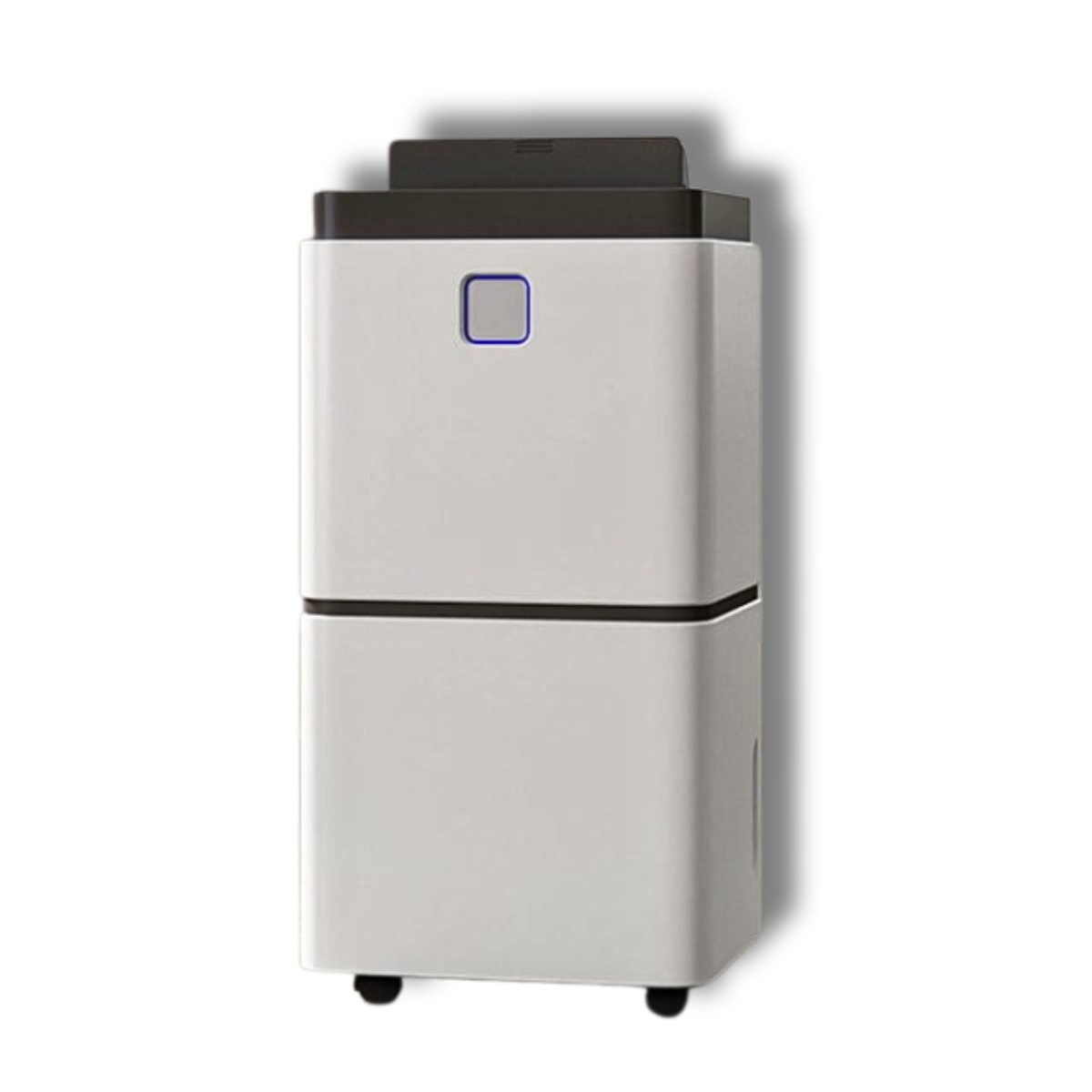
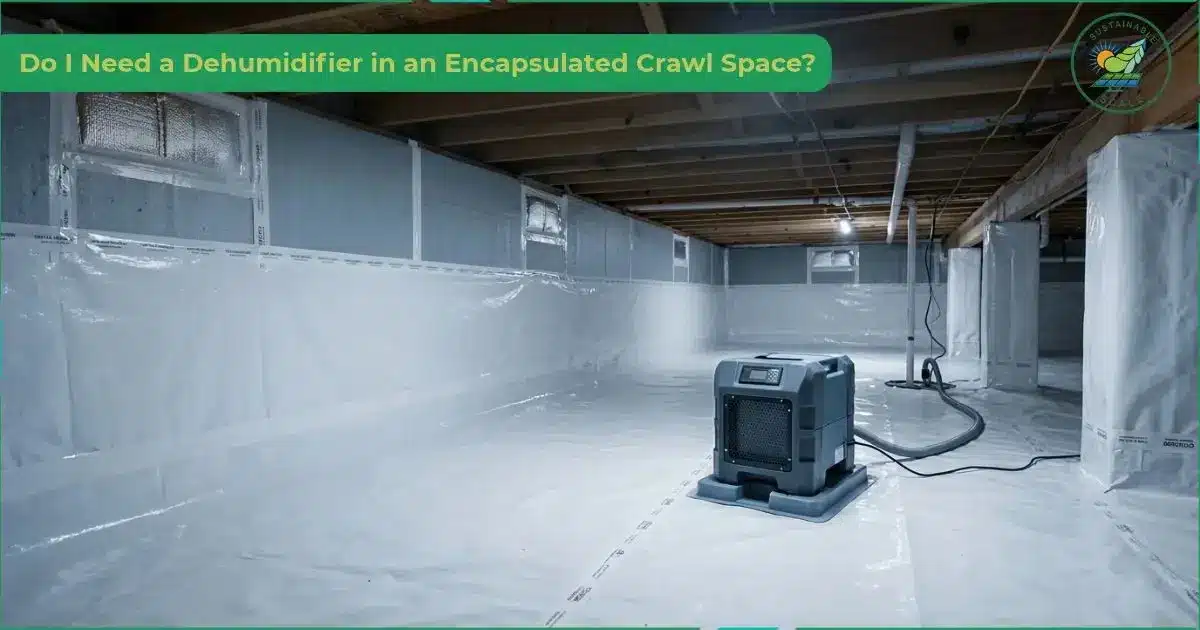

Yes, you need a dehumidifier in an encapsulated crawl space because sealed liners do not control excess moisture already trapped around the foundation surfaces. A dehumidifier sits in a crawl space where the ground and walls are covered with a vapor barrier that blocks outside air and soil gases. A dehumidifier is necessary for encapsulated crawl space applications once relative humidity reaches the 60% mold threshold and dampness starts affecting wood and insulation.
A dehumidifier in an encapsulated crawl space responds to six main factors, including local climate, ground moisture, drainage problems, HVAC leaks and crawl space volume. A unit protects the home’s structure, improves indoor air quality, deters pests and safeguards insulation by keeping humidity between safe limits. A dehumidifier leaves the space at risk of mold growth, wood rot, musty odors and pest infestation. It creates these problems when you do not install and run it as part of the moisture control system.
A dehumidifier for an encapsulated crawl space should match its capacity, operating temperature range and drainage method to the crawl space’s square footage and layout. A unit needs installation on a level surface with continuous drainage and a setpoint between 45% and 55% relative humidity. It is reliable when you clean filters monthly, check the drain hose regularly, schedule annual servicing and use a hygrometer to verify crawl space humidity.
What is an encapsulated crawl space?
An encapsulated crawl space is a foundation area sealed to reduce moisture with a continuous heavy duty vapor barrier across the ground surface. It is enclosed with a 12 to 20 mil polyethylene liner, sealed foundation walls and closed vents that block unconditioned outdoor air from the crawl space.
An encapsulated crawl space includes taped seams, perimeter insulation and tight connections between the liner and structural elements for durable moisture control. An encapsulated crawl space controls moisture by blocking ground evaporation, which limits humid air entry and maintains framing lumber below the 20% moisture content threshold. It helps improve energy efficiency and protect the home’s structure by reducing air leaks between the crawl space and the conditioned rooms above.
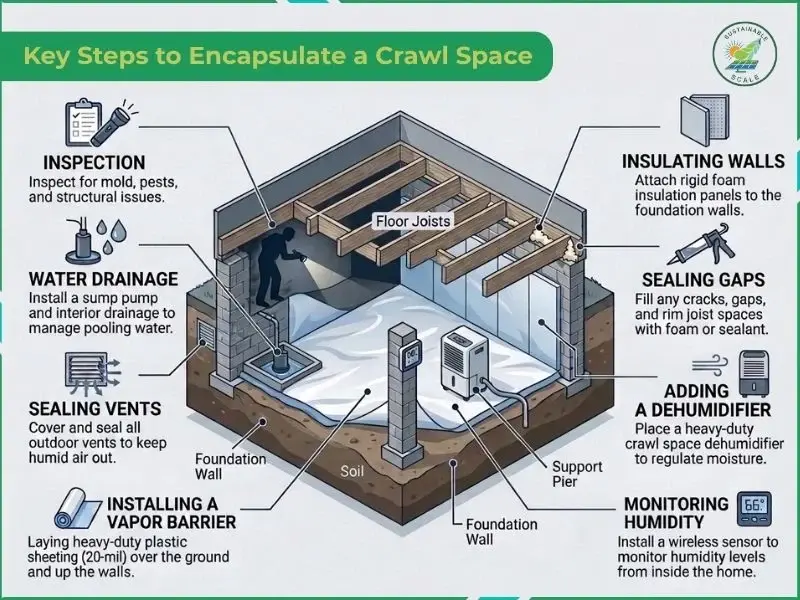
The infographic below shows the key steps to encapsulate a crawl space.
When is a dehumidifier necessary in an encapsulated crawl space?
A dehumidifier is necessary in an encapsulated crawl space when relative humidity stays above 60% for more than 48 consecutive hours. It is also required when ground moisture remains high beneath the vapor barrier, on sites with seasonal water tables or slow drainage. A dehumidifier becomes necessary under poor encapsulation, because torn seams and unsealed vents admit humid outdoor air into the crawl space.
A dehumidifier in an encapsulated crawl space is needed when recurring moisture problems appear on framing, insulation or mechanical equipment. It runs only when the humidistat detects humidity above the selected setpoint, thereby limiting unnecessary electricity use while maintaining stable conditions. It helps the crawl space stay dry enough to prevent mold growth, protect structural components and support long term performance of the encapsulation system.
What factors determine whether I need a dehumidifier in an encapsulated crawl space?
Factors that determine whether you need a dehumidifier in an encapsulated crawl space include climate and outdoor humidity and crawl space moisture levels. These factors together decide when a properly sized dehumidifier is required to control excess moisture and maintain recommended indoor humidity levels.
The factors that determine whether you need a dehumidifier in an encapsulated crawl space are given below.
- Climate and outdoor humidity: A dehumidifier protects an encapsulated crawl space in regions where summer dew points and warm air repeatedly drive humidity beyond recommended indoor humidity levels.
- Crawl space moisture levels: A dehumidifier becomes necessary in an encapsulated crawl space when sensors show readings above 60% relative humidity, signaling the need to control excess moisture.
- Groundwater and drainage issues: A dehumidifier supports an encapsulated crawl space on sites with high water tables or poor drainage, where rising groundwater loads the liner and increases long term drying demand.
- HVAC ducts and plumbing leaks: A dehumidifier counteracts moisture in an encapsulated crawl space when leaking HVAC ducts and plumbing lines add liquid water, which reduces encapsulation effectiveness and elevates humidity.
- Home ventilation and air leakage: A dehumidifier stabilizes an encapsulated crawl space when air leakage between the crawl space and living area transports humid air upward and increases the overall dehumidification load.
- Home size and crawl space volume: A dehumidifier serves an encapsulated crawl space with larger square footage and higher volume and makes sure the system matches capacity needs without oversizing moisture removal.
What are the benefits of using a dehumidifier in an encapsulated crawl space?
The benefits of using a dehumidifier in an encapsulated crawl space include stopping mold and mildew, protecting wood and structure and improving indoor air quality. These benefits keep humidity below the EPA threshold, remove the damp environment that mold and pests need and stabilize conditions for materials and equipment.
The benefits of using a dehumidifier in an encapsulated crawl space are outlined below.
- Stops mold and mildew: A dehumidifier in an encapsulated crawl space maintains humidity below the EPA threshold and removes the damp environment that supports mold germination on joists and subfloor surfaces.
- Protects wood and structure: A dehumidifier in an encapsulated crawl space keeps framing lumber, floor joists and subfloor at safe moisture levels that prevent wood decay, fastener corrosion and structural damage.
- Improves indoor air quality: A dehumidifier in an encapsulated crawl space reduces airborne spores and musty earth odors moving upward through the stack effect into living areas above the crawl space.
- Deters pests: A dehumidifier in an encapsulated crawl space holds relative humidity near the mid-range that discourages termites, camel crickets and rodents that track moisture and hidden water sources.
- Safeguards insulation and HVAC systems: A dehumidifier in an encapsulated crawl space protects fiberglass batts and low-running HVAC ducts by limiting condensation on insulation and metal, preserving R-value and equipment reliability.
What happens if I do not use a dehumidifier in an encapsulated crawl space?
If you do not use a dehumidifier in an encapsulated crawl space, you face mold growth, structural damage, musty odors, pest infestation, HVAC inefficiency and reduced insulation performance. These problems raise moisture levels, weaken structural wood components, reduce indoor air quality and cause damaging building materials to fail over time.
Potential consequences if you do not use a dehumidifier in an encapsulated crawl space are given below.
- Mold growth: Persistent moisture creates conditions for mold growth, which can spread across surfaces and contribute to reducing indoor air quality.
- Structural damage: High humidity can weaken and rot structural wood components, gradually damaging building materials and compromising the crawl space’s structural integrity.
- Musty odors: Excess moisture encourages mold and mildew growth, producing persistent musty odors that can migrate from the crawl space into living areas.
- Pest infestation: Damp wood attracts pests, including termites and other moisture loving insects that increase the risk of infestation and damage to surrounding materials.
- HVAC inefficiency: Excess crawl space humidity can increase the workload on HVAC systems, which makes temperature control less efficient and potentially increases energy consumption.
- Reduced insulation performance: Moisture can saturate insulation materials that reduce their effectiveness and make it harder for the HVAC system to maintain consistent indoor temperatures.
How do you choose the right dehumidifier for an encapsulated crawl space?
You can choose the right dehumidifier for an encapsulated crawl space by matching the crawl space size and selecting the proper capacity. These steps then extend to evaluating energy efficiency, controls, drainage, noise and warranty so the unit fits the crawl space’s square footage and humidity level.
The processes to choose the right dehumidifier for an encapsulated crawl space are given below.
- Match the crawl space size: Measure the crawl space’s square footage and select a dehumidifier rated for that area and moisture load. Use the size data to align performance with the enclosed volume.
- Select the proper capacity: Assess the crawl space’s humidity level and choose a dehumidifier in the 70 to 90 pint per-day range for spaces up to 2,600 square feet. Match capacity so the unit controls moisture without short cycling.
- Check the operating temperature: Confirm the dehumidifier runs reliably below 65°F to handle winter crawl space conditions that can drop toward 40°F. Avoid units that freeze or shut down at lower temperatures.
- Look for energy efficiency: Compare models using the integrated energy factor (IEF) rated in liters per kilowatt-hour and select units at or above 2.0 L/kWh. Use efficiency data to reduce long term electricity costs while maintaining performance.
- Choose a built-in humidistat: Select a dehumidifier with an onboard humidistat that starts and stops the compressor automatically at the chosen setpoint. Use this control to hold target humidity without external controllers.
- Ensure continuous drainage: Verify the dehumidifier supports a gravity drain line or includes a condensate pump for automatic water removal. Use reliable drainage to avoid bucket emptying in tight crawl space conditions.
- Consider low noise operation: Check sound ratings and choose a dehumidifier with quiet operation suitable for installation beneath bedrooms or living areas. Use acoustic data to limit noise transmission through floors.
- Verify warranty coverage: Review manufacturer documentation and select a dehumidifier with at least a five year limited warranty on key components. Use warranty terms to align expected service life with protection against defects.
How should you install and operate a dehumidifier in an encapsulated crawl space?
You should install and operate a dehumidifier in an encapsulated crawl space by completing the encapsulation, placing the unit correctly and setting up continuous drainage. These steps also provide a dedicated electrical outlet and set the target humidity at 45% and 55%.
Key steps to install and operate a dehumidifier in an encapsulated crawl space are outlined below.
- Complete the encapsulation first: Install the vapor barrier and seal all foundation vents to define the dehumidifier load and correct capacity for the encapsulated space. Use complete encapsulation to keep outdoor humidity from overwhelming the unit.
- Place the unit correctly: Set the dehumidifier on a level surface in an unobstructed location near the crawl space center for even air circulation. Use this placement to prevent airflow restrictions and cold or damp pockets.
- Set up continuous drainage: Route condensate through a gravity drain or condensate pump to a floor drain or sump so the dehumidifier never stops for bucket emptying. Use continuous drainage to maintain steady moisture removal.
- Provide a dedicated power source: Connect the dehumidifier to a dedicated electrical outlet on a properly sized circuit to avoid overloads and fire risks. Use this circuit to support reliable compressor and fan operation.
- Keep the crawl space sealed: Close access hatches and foundation vents during operation so humid outdoor air cannot bypass the encapsulation and flood the unit’s capacity. Use sealing to keep the treated air volume stable.
- Set the target humidity: Program the built-in humidistat at 45% and 55% relative humidity to balance mold prevention, structural protection and energy use. Use this setting to hold the crawl space within the safe range.
- Test the dehumidifier operation: Run the unit through several full cycles, then check hygrometer readings and drain flow to confirm the crawl space reaches and maintains the setpoint. Use periodic tests to verify long term performance.
How do you maintain a dehumidifier in an encapsulated crawl space?
You should maintain a dehumidifier in an encapsulated crawl space by inspecting the air filter, cleaning the air filter, and checking the drain hose. These steps include monitoring humidity levels, inspecting cooling coils, cleaning air vents and inspecting encapsulation seals so the unit performs under the manufacturer’s recommendations.
The processes you should follow to maintain a dehumidifier in an encapsulated crawl space are outlined below.
- Inspect air filter: Check the air filter every 30 days for dust buildup that restricts airflow and raises compressor temperature. Use regular inspections to maintain proper airflow across the evaporator coil.
- Clean air filter: Wash the filter in warm water, then dry and reinstall it to restore air passage through the media. Use this cleaning to maintain proper airflow and protect cooling components.
- Check drain hose: Flush the continuous drain hose every few months to remove condensate deposits and algae that block the line. Use clear drainage so water moves freely and overflow shutdowns do not occur.
- Monitor humidity levels: Use a hygrometer placed away from the unit to confirm crawl space readings stay within the safe range year round. Use these readings to adjust settings if humidity drifts outside 45% and 55%.
- Inspect cooling coils: Examine the evaporator and condenser coils twice a year for dust and corrosion that reduce moisture removal capacity. Use coil inspections to keep heat exchange surfaces clean and effective.
- Clean air vents: Clear the intake and discharge vents of debris to prevent airflow restriction that forces the fan to work harder. Use vent cleaning to protect fan life and keep air distribution balanced.
- Inspect encapsulation seals: Examine liner seams, vent covers and access hatch gaskets regularly for gaps that admit outdoor air. Use seal inspections to keep the encapsulated crawl space tight and limit extra runtime.
- Schedule annual maintenance: Schedule a technician once a year for refrigerant, electrical and drainage checks that follow the manufacturer’s recommendations. Use annual servicing to catch developing issues early and extend dehumidifier service life.
What are the common mistakes to avoid when installing a dehumidifier in an encapsulated crawl space?
The common mistakes to avoid when installing a dehumidifier in an encapsulated crawl space are skipping moisture repairs, using poor sealing, wrong vapor barrier and ignoring drainage issues. These mistakes, along with choosing a low-quality vapor barrier, ignoring drainage issues and installing an undersized dehumidifier, leave humidity levels too high.
The common mistakes to avoid when installing a dehumidifier in an encapsulated crawl space are outlined below.
- Skipping moisture repairs: Address groundwater seepage and plumbing leaks before installing the dehumidifier to remove liquid water sources. Use thorough repairs to prevent humidity levels too high after encapsulation.
- Using poor sealing: Seal liner seams and close foundation vents to keep outdoor air from entering the encapsulated crawl space. Use complete sealing so exterior air does not raise the moisture load.
- Choosing the wrong vapor barrier: Select a durable liner instead of a low-quality vapor barrier below 12 mil that tears and leaks ground moisture. Use proper thickness to resist damage and limit evaporation through the barrier.
- Ignoring drainage issues: Install a sump pump or perimeter drain instead of allowing standing water to collect in the crawl space. Use effective drainage so no dehumidifier has to handle pooled water beyond its capacity.
- Installing an undersized dehumidifier: Size the unit for crawl spaces above 2,000 square feet so it does not run continuously and fail early. Use the correct capacity so moisture removal matches the space volume and load.
- Blocking air circulation: Move storage boxes, ductwork and structural obstacles away from the intake and discharge paths to preserve airflow. Use clear circulation so structural obstacles do not create damp pockets in corners.
- Neglecting regular inspections: Perform quarterly checks to find torn seams, clogged drains and rising humidity before mold appears on floor joists. Use routine inspections to keep conditions stable and prevent hidden damage.
- Delaying routine maintenance: Clean filters and coils regularly to avoid fouling that cuts moisture removal and stresses the compressor. Use scheduled maintenance to maintain efficiency and limit unnecessary electricity consumption.
What are the costs associated with installing a dehumidifier in a crawl space?
The costs associated with installing a dehumidifier in an encapsulated crawlspace are the dehumidifier unit, professional installation, electrical work, drainage system and annual maintenance. These costs, including the crawl space dehumidifier and related services, create the largest upfront expense and establish ongoing operating charges that depend on system capacity.
The costs associated with installing a dehumidifier in an encapsulated crawlspace are given below.
- Dehumidifier unit: A dehumidifier for a crawl space unit costs 300 USD to 2,000 USD and higher-capacity models near 90 pints per day sit at the top.
- Professional installation: A dehumidifier installation represents the largest upfront expense, because a technician ensures proper placement, sealed penetrations through the vapor barrier and safe support for the installed unit.
- Electrical work: A dehumidifier requires electrical work costing 200 USD to 600 USD for a dedicated circuit, GFCI outlet, conduit routing from the main electrical panel and breaker sizing.
- Drainage system: A dehumidifier connects to a continuous drainage system that costs 100 USD to 400 USD for gravity hose routing and a condensate pump adds 50 USD to 150 USD.
- Annual maintenance: A dehumidifier needs annual maintenance costing 100 USD to 250 USD for coil cleaning, refrigerant checks and documentation that keeps long term performance stable and warranty coverage intact.
- Electricity costs: A dehumidifier generates electricity costs of 10 USD to 30 USD per month, and efficient units sit at the lower end of that range during regular crawlspace dehumidification.
What are the factors that affect the cost of installing a dehumidifier in a crawl space?
The factors that affect the cost of installing a dehumidifier in a crawl space are given below.
- Crawl space size: Larger crawl spaces need higher-capacity equipment, which raises both the unit price and installation time.
- Dehumidifier capacity: Units rated at 90 pints per day cost roughly double comparable 50 pint models.
- Installation complexity: Crawl spaces with limited clearance below 24 inches increase labor hours and total installation cost.
- Circuit requirements: New circuits and GFCI outlets add $200 to $600 through a licensed electrician.
- Labor rates: Local labor costs range from $50 to $150 per hour, and contractor experience shifts quotes further.
- Feature upgrades: Built-in humidistats, condensate pumps and remote monitoring add $150 to $500 to the unit price.
Is a crawl space dehumidifier worth the investment after encapsulation?
Yes, a crawl space dehumidifier is worth the investment after encapsulation because encapsulation alone does not maintain relative humidity below 60%. A crawl space dehumidifier delivers continuous moisture control that holds readings near safe levels during humid seasons. It prevents mold growth and protects structural components whose repair costs exceed the typical installed price.
What is the ideal humidity for an encapsulated crawl space?
The ideal humidity for an encapsulated crawl space is between 45% and 55% relative humidity because this range keeps surfaces dry enough to avoid mold. An encapsulated crawl space at this level stays below the 60% threshold where mold begins to colonize wood and other building materials. It provides all necessary protection without pushing readings below 40%, which increases dehumidifier runtime and electricity use without extra benefit.
Can I use a dehumidifier in a crawl space without encapsulation?
Yes, you can use a dehumidifier in a crawl space without encapsulation because the unit removes moisture in that environment. A dehumidifier still operates when the crawl space is less effective and less energy efficient. It works harder as open vents and bare soil that a sealed vapor barrier would block force the unit to run longer, increasing operating costs each season.
Can I use a regular portable dehumidifier in a crawl space?
No, you cannot use a regular portable dehumidifier in a crawl space because portable units are not built to run continuously in crawl space conditions. A regular portable dehumidifier stops working near cooler crawl space temperatures and loses capacity under extreme humidity found in unconditioned crawl spaces. It does not move enough moisture for long term moisture control across 1,500 square feet, so the crawl space stays damp and vulnerable to damage.
Can an encapsulated crawl space stay dry without a dehumidifier?
No, an encapsulated crawl space cannot stay dry without a dehumidifier in most climates because the liner does not fully control humidity. An encapsulated crawl space blocks much of the outside moisture but still lets residual vapor and air leakage push readings above 60% during humid months. It stays dry without a dehumidifier only in rare desert climates where outdoor humidity stays low and internal moisture loads remain minimal.
How long does a crawl space dehumidifier last?
A crawl space dehumidifier lasts about 5 to 10 years with regular maintenance because clean components and stable conditions reduce mechanical stress and corrosion. A crawl space dehumidifier reaches the longer end of that range when build quality, humidity levels and maintenance routines keep dirt and moisture under control. It faces dusty conditions and constant heavy use that shorten their lifespan to 3 to 5 years.
Which is the best crawl space dehumidifier?
The AlorAir Sentinel HD90 is the best crawl space dehumidifier because it combines compact sizing with strong moisture removal for tight, damp foundations. The crawl space dehumidifier removes 90 pints per day at AHAM conditions and covers areas up to 2,600 square feet with reliable gravity drainage. It adds automatic defrost and a 6 year limited warranty that support long service life.
Do I need a crawl space dehumidifier for my home?
Yes, you need a crawl space dehumidifier for your home when the space stays humid above 60% or has a musty odor. A dehumidifier in crawl space helps control moisture and improve indoor air quality. It keeps humidity stable and limits mold growth in rooms above.
Solar Panel
Air Purifier