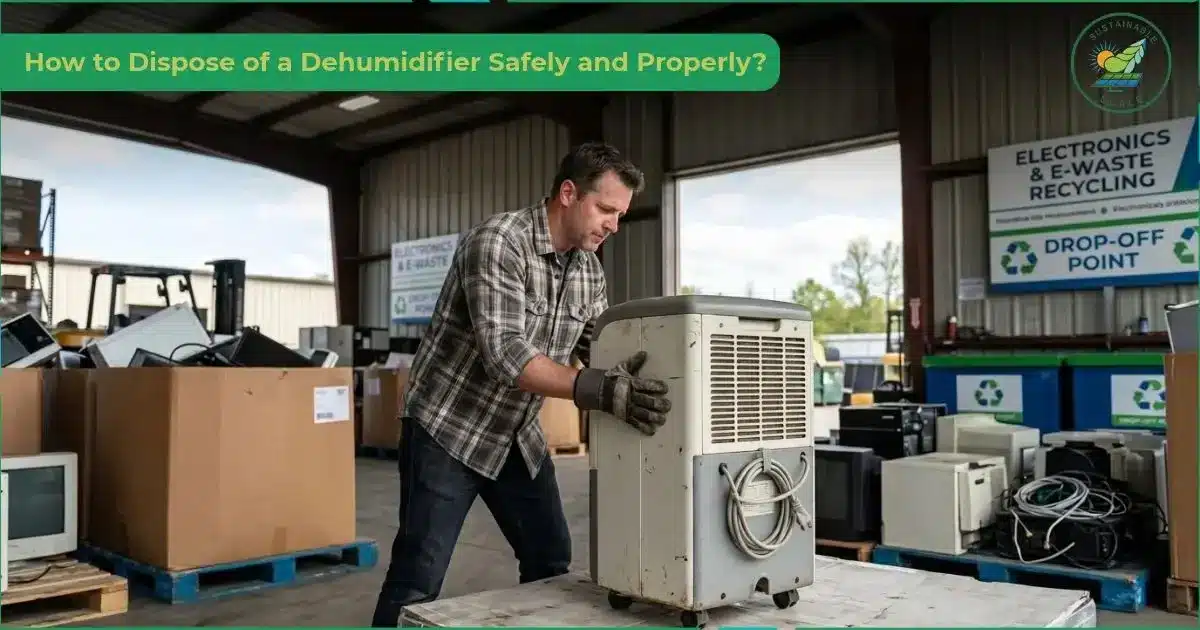
How to Dispose of a Dehumidifier Safely and Properly?

- Published Date - November 1, 2026
- Modified date - November 1, 2026
Table of Contents
A dehumidifier needs safe disposal because units contain harmful refrigerant that affects air, soil and water when units reach the end of their service life. Its internal electrical components create shock and fire risks when people toss broken units into curbside trash without checking disposal restrictions that govern appliance handling. Proper dehumidifier disposal keeps communities protected when owners respect local rules and prevent damaged units from entering mixed waste streams that spread chemical residues.
A dehumidifier is disposed of safely when owners unplug it, empty the tank, clean surfaces and remove filters before transport to appropriate facilities. Its journey continues to appliance recycling centers, e-waste facilities, municipal hazardous waste sites or local recycling centers where technicians separate parts under disposal rules. Dehumidifier disposal laws and regulations include refrigerant recovery, hazardous waste rules and regional requirements that align handling practices with environmental standards for discarded appliances.
A dehumidifier creates problems when owners ignore safe disposal guidance and make common mistakes that increase environmental and health risks. Improper disposal of a dehumidifier includes tossing units in curbside trash, leaving water in tanks, transporting units upside down and ignoring local rules for appliance recycling. Dehumidifier risks include refrigerant release, soil and water contamination, air pollution and injury during handling. Its risks also include legal penalties, harm to sanitation workers, loss of recyclable materials and increased landfill waste.
Why is proper dehumidifier disposal important?
Proper dehumidifier disposal is important because it prevents environmental pollution when units contain harmful refrigerant. It contains contaminated compressor oils and polychlorinated biphenyls (PCBs) that can leak into soil or water. It protects public health and safety when users handle broken units carefully and keep damaged tanks and corroded lines away from regular trash streams.
The dehumidifier supports complying with local disposal regulations when owners use certified collection points that manage refrigerant recovery under municipal rules. The unit maintains public health and safety when technicians remove toxic components and document disposal steps. It keeps flammable residues and chemical mixtures out of household garbage and unauthorized landfills.
How to dispose of a dehumidifier safely?
Dispose of a dehumidifier safely by unplugging the dehumidifier, emptying the water tank, cleaning and drying the unit and removing the air filter before disposal. These steps follow manufacturer’s recommendations, respect local waste regulations and recognize a refrigerant or desiccant dehumidifier to reduce electrical risks during handling.
Key steps to dispose of a dehumidifier safely are outlined below.
- Unplug the dehumidifier: Place the cord away from wet surfaces and keep the power switch off to protect nearby areas. Keep the unit disconnected and prevent current flow that increases electrical risks during disposal.
- Empty the water tank: Pour collected water into a suitable drain and keep the tank clear of residue to protect indoor hygiene. Rinse the tank and prevent stagnant moisture that affects surfaces around the disposal area.
- Clean and dry the unit: Wipe exterior panels and grills and keep surfaces free from dust to support safe handling. Dry internal areas and prevent moisture from entering recycling equipment that manages discarded appliances.
- Remove the air filter: Lift the filter housing carefully and detach the filter to expose internal components for inspection. Keep debris and lint away from processing steps that assess parts for reuse or safe recycling.
- Identify the dehumidifier type: Check labels and note if it is a refrigerant or desiccant dehumidifier to guide disposal planning. Record unit details and support correct handling procedures at facilities that manage appliance waste.
- Use an authorized recycling facility: Bring the unit to a site that accepts appliances and keep it separated from general trash streams at drop-off. Follow site guidance and make sure local waste regulations direct safe end-of-life treatment.
- Avoid household trash: Keep the dehumidifier away from regular garbage bins and protect collection trucks from damage during waste pickup. Prevent discarded units from entering mixed trash loads that increase electrical risks during compaction.
Where to dispose of a dehumidifier?
Dispose of a dehumidifier at appliance recycling centers, e-waste recycling facilities, municipal hazardous waste collection sites, local recycling centers and retailer take-back programs. These locations prevent environmental harm, follow recycling policies and handle electrical components correctly while they separate metals and plastics for safe processing.
The places where to dispose of a dehumidifier are outlined below.
- Appliance recycling centers: Appliance recycling centers accept dehumidifiers and separate metals, plastics and electrical components according to applicable recycling policies.
- E-waste recycling facilities: E-waste recycling facilities process electrical components from dehumidifiers that help recover recyclable materials while reducing environmental harm from improper disposal.
- Municipal hazardous waste collection sites: Municipal hazardous waste collection sites may accept dehumidifiers and handle refrigerants and electrical components according to local recycling policies.
- Local recycling centers: Local recycling centers accept dehumidifiers for material recovery, separating metals and plastics while following applicable waste management and recycling policies.
- Retailer take back programs: Retailer take-back programs may accept old dehumidifiers when purchasing replacements, providing convenient recycling while helping prevent environmental harm from improper disposal.
- Manufacturer recycling programs: Manufacturer recycling programs provide collection or recycling options for dehumidifiers that ensure electrical components and recyclable materials receive appropriate handling.
- Scrap metal recycling facilities: Scrap metal recycling facilities can recover valuable metals from dehumidifiers, although electrical components and refrigerants may require separate handling..
What are the dehumidifier disposal laws and regulations?
The dehumidifier disposal laws and regulations are the Clean Air Act (Section 608), EPA refrigerant recovery requirements and the Resource Conservation and Recovery Act (RCRA). These laws set federal environmental standards, regulate harmful refrigerant gases and classify certain hazardous wastes when they involve refrigerants from dehumidifiers to protect communities.
The dehumidifier disposal laws and regulations are outlined below.
- Clean Air Act (Section 608): Clean Air Act Section 608 regulates refrigerants from dehumidifiers and requires proper recovery, recycling or reclamation to prevent harmful refrigerant gases.
- EPA refrigerant recovery requirements: EPA refrigerant recovery requirements generally require certified technicians to properly recover refrigerants before dehumidifiers containing regulated refrigerants are dismantled or disposed of.
- Resource Conservation and Recovery Act (RCRA): Resource Conservation and Recovery Act rules establish federal environmental standards for managing certain hazardous wastes, including requirements that may apply to discarded dehumidifier components.
- State and local disposal laws: State and local disposal laws can impose additional requirements for dehumidifiers that include refrigerant handling, hazardous waste management and approved disposal locations.
- Retailer take-back programs: Retailer take back programs offer convenient dehumidifier recycling options that help consumers follow applicable disposal requirements and reduce environmental harm.
- Penalties for improper disposal: Penalties for improper disposal can include fines or other enforcement actions when dehumidifiers, refrigerants or hazardous components are handled contrary to applicable environmental requirements.
What are the common mistakes to avoid when disposing of a dehumidifier?
Common mistakes to avoid when disposing of a dehumidifier include tossing it in curbside trash and leaving water in the tank. These mistakes mishandle ozone-depleting refrigerants, misclassify hazardous or electronic waste and encourage mold and mildew growth instead of using appliance recycling programs for safe disposal.
The common mistakes to avoid when disposing of a dehumidifier are given below.
- Tossing in curbside trash: Never throw a dehumidifier in curbside trash because it contains ozone depleting refrigerants and other components classified as hazardous or electronic waste that require proper disposal.
- Leaving water in the tank: Empty and dry the water tank before disposal. Standing water can lead to mold and mildew growth, unpleasant odors, leaks during transport and contamination of other recyclable materials.
- Transporting the unit upside down: Avoid carrying or transporting the dehumidifier upside down, as this causes compressor oil or remaining refrigerant to shift, increasing the risk of leaks and making safe recycling more difficult.
- Ignoring local rules: Do not overlook local disposal regulations. Many communities offer appliance recycling programs or electronic waste collection sites that safely recover refrigerants and recycle reusable materials.
What are the risks of improper dehumidifier disposal?
The risks of improper dehumidifier disposal are refrigerant release, soil and water contamination, air pollution, injury during handling and legal penalties. These risks involve chlorofluorocarbons (CFCs), hydrochlorofluorocarbons (HCFCs), toxic PCBs and hazardous materials that affect communities when units enter regular waste streams.
The risks of improper dehumidifier disposal are outlined below.
- Refrigerant release: Improper dehumidifier disposal leaks refrigerant from damaged coils and lines into surrounding environments. Its escape increases air and climate impacts when units are crushed or dismantled without controlled recovery.
- Soil and water contamination: Improper dehumidifier disposal spills compressor oils and residues onto ground surfaces and drains near storage areas. Its leakage spreads harmful substances through soil and nearby water sources around disposal sites.
- Air pollution: Improper dehumidifier disposal vents refrigerant and chemical vapors during breaking or compacting of units. Its emissions add harmful compounds to surrounding air and contribute to pollution near waste facilities.
- Injury during handling: Improper dehumidifier disposal exposes handlers to sharp edges and unstable loads while lifting and moving units. Its mishandling causes cuts, strains and dropped equipment that injure workers and nearby people.
- Legal penalties: Improper dehumidifier disposal violates disposal rules that govern refrigerant and waste handling in many jurisdictions. Its violations trigger fines, enforcement actions and corrective orders from regulatory agencies.
- Harm to sanitation workers: Improper dehumidifier disposal sends units into curbside trash where trucks compact mixed loads. Its presence breaks housings and releases substances that harm sanitation workers during collection and transport.
- Loss of recyclable materials: Improper dehumidifier disposal discards metal frames, coils and components instead of routing them to recycling streams. Its waste prevents recovery of valuable materials and reduces resource efficiency.
- Increased landfill waste: Improper dehumidifier disposal adds bulky units to mixed landfill loads without separation or treatment. Its contribution occupies limited landfill space and increases long term environmental burdens.
What factors increase the risks of improper dehumidifier disposal?
The factors that increase the risks of improper dehumidifier disposal are given below.
- Refrigerant leakage: Improper dehumidifier disposal leaves units to contain Freon that escapes and contributes to ozone depletion in surrounding environments.
- Electronic waste toxicity: Improper dehumidifier disposal leaves hazardous components inside devices that leach chemicals into soil and water.
- Physical crushing in landfills: Improper dehumidifier disposal places units in landfill loads that collapse housings and spark fires in waste piles.
- Ignition risks: Improper dehumidifier disposal exposes cords and internal wiring that overheat and spark fires in waste streams.
- Unregulated dumping: Improper dehumidifier disposal pushes units into illegal sites that increase harmful materials in unmanaged areas.
- Lack of proper recycling awareness: Improper dehumidifier disposal happens when owners ignore programs that reduce dangerous parts entering general trash.
How do I find out if my dehumidifier contains refrigerant?
You can find out if your dehumidifier contains refrigerant by checking the specification label on the unit and reading the refrigerant type listed there. The dehumidifier shows manufacturer specifications on its rating plate or product sticker, and its documentation confirms whether a sealed system with refrigerant is present.
Do dehumidifiers have freon?
Yes, dehumidifiers have freon in some cases because older refrigerant dehumidifiers were designed with Freon-based refrigerants in their sealed cooling systems. Dehumidifiers use a compressor and coils in those older designs and their operation circulates these refrigerants through the system to condense moisture from the air.
Can I throw a dehumidifier in the trash?
No, you cannot throw a dehumidifier in the trash because it contains refrigerant gases and hazardous environmental pollutants that harm air, soil and water. A dehumidifier is treated as regulated waste in many areas and its contents make it illegal to discard it directly in landfills under disposal rules.
Can I recycle a dehumidifier?
Yes, you can recycle a dehumidifier because it contains recyclable metals, plastics and electronic components that recovery facilities process for reuse. A dehumidifier goes to appliance recycling centers, e‑waste drop‑off sites or municipal programs. Its handling follows local environmental regulations that guide safe collection and material separation.
Where can I recycle a dehumidifier?
You can recycle a dehumidifier at licensed recycling centers because it handles refrigerant and electrical parts under controlled conditions. A dehumidifier goes to local appliance recycling programs or select appliance retailers and its handling follows their intake procedures for safe collection and recovery.
What parts of a dehumidifier can be recycled?
You recycle specific parts of a dehumidifier because their metals and structural components retain value for processing and reuse in manufacturing streams. A dehumidifier yields copper coils, aluminum fins and steel frames and its structure directs recovered elements into specialized recycling channels. Its recovered parts move through sorting and handling steps that make sure compliant recovery in established metal reclamation processes.
How much does it cost to dispose of a dehumidifier?
A dehumidifier disposal costs between $0 and $100 because pricing ranges from free utility or retailer programs to paid hauling and environmental handling fees. A dehumidifier incurs disposal charges that depend on disposal method, refrigerant removal requirements and whether you use a junk removal service or a recycling program. Its total cost reflects local regulations on e‑waste and hazardous materials, as well as pickup versus drop-off services that change transportation and labor pricing.
Products
Solar Panel
Air Purifier