Can you use a dehumidifier in a bathroom?

- Published Date - October 31, 2026
- Modified date - October 31, 2026
Table of Contents
Yes, you can use a dehumidifier in a bathroom because it helps control excess moisture and keeps the space dry and comfortable. A dehumidifier for a bathroom removes humidity from the air by condensing water and drier air back into the room. You should use a dehumidifier in the bathroom when humidity remains high after hot showers that fill the air with steam from hot showers and baths. You should not use a bathroom dehumidifier where water splashes directly onto the unit or when using temporary moisture absorbers.
A dehumidifier in a bathroom pulls humid air from the bathroom using a fan. It also passes the air over cold coils, which turns bathroom moisture into water that collects in a tank or drains out. You should use a small, portable, energy efficient unit for a bathroom as a portable dehumidifier works well in small, steamy spaces, which has quiet operation and auto shut off. A bathroom dehumidifier costs range from $20 to $350, with high end models up to $10,000.
A dehumidifier in a bathroom prevents mold and mildew, protects wood and paint, improves air quality, controls pests and keeps bathroom humidity balanced. It makes the bathroom comfortable, safe and clean while preventing long term moisture damage. Its safety concerns include electrical hazards, overheating, poor maintenance, wrong placement and overdry. You should place a bathroom dehumidifier near the center of the room and 12 to 18 inches away from walls on a raised surface for best performance.
When should you use a dehumidifier in a bathroom?
You should use a dehumidifier in the bathroom when humidity stays high after hot showers that fill the air with steam and moisture. It becomes necessary if the bathroom gets too humid because it lacks adequate exterior venting such as without windows or proper extractor fans. A dehumidifier in the bathroom after a shower helps remove excess moisture and prevents mold and mildew growth. It is also useful if you notice lingering dampness on walls, mirrors or tiles, even when the bathroom is not in use, which means moisture is still building up. A dehumidifier is important in basement bathrooms where soil moisture adds to shower humidity to prevent dampness and keep the air clean.
How does a dehumidifier work in bathrooms?
A dehumidifier works in bathrooms by removing excess moisture from the air to maintain a comfortable and dry environment. It uses fan to pull humid air into the unit. A dehumidifier cools the air over coils, which causes the moisture in the air to condense into water droplets. It collects the condensed water in a reservoir or drains it out to prevent it from returning to the bathroom. It also reheats the air and releases it back into the room, completing the cycle that keeps the bathroom dry and fresh.
What type of dehumidifier do you need in a bathroom?
You need a compact, portable refrigerant dehumidifier in a bathroom, sized for small, humid spaces and rated for rooms up to about 10 to 15 m². It draws in humid air through an intake grille using a fan and passes it over cold evaporator coils chilled by a refrigerant circuit. It cools the air below its dew point, so the water vapor condenses into droplets on the coils.
The dehumidifier directs those droplets into an internal reservoir or drain hose that removes moisture from the room. The unit then passes the drier air over the warm condenser coils, where it is slightly reheated. It expels this warmer, drier air back into the bathroom through the exhaust grille. This helps cut condensation, mold risk and odors.
How much does a bathroom dehumidifier cost?
A bathroom dehumidifier costs $20 to $350, which depends on size and capacity. A small or compact dehumidifier unit costs $20 to $120, which depends on size, capacity and the technology used. A mid sized dehumidifier unit with capacities of 22 to 50 pints or 10 to 25 liters per day costs $200 to $300. A high end dehumidifier unit with advanced inverter technology and capacities over 30 liters costs $1000 to $10000.
What are the benefits of bathroom dehumidifiers?
The benefits of bathroom dehumidifiers include mold and mildew prevention, structural protection, improved air quality and health, odor elimination and pest control. They help maintain a balanced humidity level in the bathroom when you need a dehumidifier and keep the space comfortable and moisture free.
The benefits of bathroom dehumidifiers are given below.
- Mold and mildew prevention: A bathroom dehumidifier removes excess moisture, which helps stop mold and mildew from growing on walls, tiles and grout. It keeps the bathroom clean and free from black spots.
- Protection of the structure: A bathroom dehumidifier protects materials like wood, paint and dry wall from moisture damage, which helps prevent warping, peeling and long term structural issues.
- Improved air quality and health: A bathroom dehumidifier helps remove dampness and allergens by ensuring cleaner air and making it easier to breathe, which reduces potential health problems related to moisture and mold.
- Odor elimination: A bathroom dehumidifier removes musty smells caused by trapped moisture, which keeps the bathroom fresh, clean and comfortable after every use while improving overall air quality indoors.
- Faster drying times: A bathroom dehumidifier helps towels, floors and fixtures dry faster after use, which reduces dampness, prevents slips and keeps the bathroom cleaner, safer and more comfortable for everyday use.
- Pest control: A bathroom dehumidifier reduces moisture that attracts pests like silverfish and cockroaches. It keeps the bathroom cleaner and less inviting for insects, which helps create a healthier environment.
- Maintains balanced humidity: A bathroom dehumidifier helps maintain a balanced humidity level in the space. It prevents long term moisture problems that damage surfaces and mold growth.
What are the safety concerns when using a bathroom dehumidifier?
The safety concerns when using a bathroom dehumidifier include electrical hazard and shock risk, overheating and fire risk, improper placement, maintenance neglect and overdry. These are easily managed if you follow proper usage guidelines.
The safety concerns when using a bathroom dehumidifier are given below.
- Electrical hazard and shock risk: Keep the unit away from water splashing onto it to prevent potential electrical faults. This guarantees safe operation even in steamy bathrooms without the danger of short circuits.
- Overheating and fire risk: Ensure proper ventilation to avoid overheating from restricted airflow around the compressor. Regular filter cleaning during high use periods also helps reduce fire hazards.
- Maintenance neglect: Keep the tank empty and the filters clean to prevent mold inside the unit. Proper care leads to potential electrical faults and reduces the unit’s safety.
- Improper placement: Place the dehumidifier on stable, level surfaces, away from edges or wet areas, to prevent tipping and water damage. Dehumidifiers are safe to use when placed in the correct way.
- Overdrying: Monitors humidity to avoid low levels that cause dry skin, respiratory irritation or wood shrinkage, which uses built-in humidistats for balanced control.
Where should you place your bathroom dehumidifier?
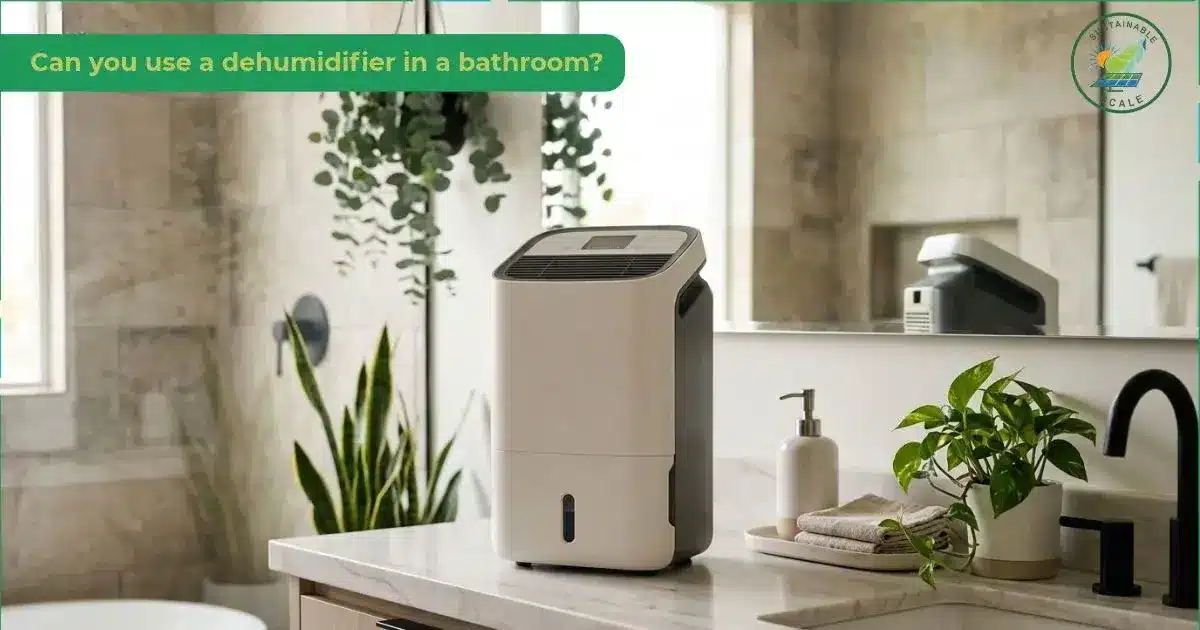
You should place your bathroom dehumidifier near the center of the room, which keeps it away from walls so air circulates easily on all sides. A dehumidifier should be kept at least 12 to 18 inches away from walls to avoid blocking airflow and to allow proper air circulation. It works best on a raised surface such as a counter, to improve airflow and when placed directly on the floor. You should avoid corners or areas exposed to shower steam, as this blocks airflow and reduces its performance. You have to make sure there is enough clearance on all sides so air circulates freely and the unit removes moisture effectively.
When should you not use a dehumidifier in a bathroom?
You should not use a dehumidifier in a the bathroom while showering, as water splashes create electrical safety risks due to the combination of water, high humidity and electrical components. You should avoid using it in very small bathrooms where there is no safe place to position the unit. This makes it difficult to safely operate in high humidity conditions. A dehumidifier should always be plugged into a GFCI outlet and never be used without one to prevent potential electrical faults.
What are the alternatives to bathroom dehumidifiers?
The alternatives to bathroom dehumidifiers are given below.
- Exhaust fan: The exhaust fan runs after a shower to remove moisture from bathroom air through ducted ventilation, clearing steam quickly.
- Portable air circulator: The portable air circulator circulates air to spread humidity and help remove humidity from the bathroom, aiding natural evaporation without mechanical extraction.
- Open windows: Open windows let fresh outdoor air flow naturally and remove moisture from the bathroom when the weather allows.
- Positive input ventilation: Positive input ventilation supplies dry air to remove excess moisture and prevent bathroom humidity from building up.
Should you use a bathroom dehumidifier instead of an exhaust fan?
No, you should not use a bathroom dehumidifier instead of an exhaust fan because an exhaust fan is better for managing persistent high humidity in enclosed areas. A bathroom dehumidifier is best to use alongside an exhaust fan to control ongoing dampness rather than as the main solution.
Should you use a bathroom dehumidifier instead of an air circulator?
Yes, you should use a bathroom dehumidifier instead of an air circulator when the room feels damp, smells musty, shows visible condensation or when humidity is above 60%. A dehumidifier removes moisture from the air, which helps prevent dampness, mold and unpleasant odors in steamy bathrooms.
How to dehumidify a bathroom naturally?
The steps to dehumidify a bathroom naturally are given below.
- Place natural moisture absorbents: Dehumidify a bathroom by using baking soda, charcoal or silica gel to remove moisture from bathroom air and absorb odors.
- Control surface moisture: Dehumidify a bathroom, manage surfaces and control water sources and remove humidity from the bathroom after showers.
- Add humidity absorbing plants: Dehumidify a bathroom with ferns or peace lilies, which remove moisture from bathroom air and improve air quality naturally.
Should you use moisture absorbers instead of bathroom dehumidifiers?
No, you should not use moisture absorbers instead of bathroom dehumidifiers because calcium chloride bags work in electricity free spaces. They only provide temporary relief for bathroom humidity and bathroom moisture, unlike electric dehumidifiers that continuously remove persistent dampness.
What is the ideal bathroom humidity?
The ideal bathroom humidity level is 40 to 60% relative humidity (RH) to prevent mold and mildew growth through strong ventilation. This optimal range keeps surfaces dry post shower, reduces condensation risks and maintains healthy air without over drying skin.
Why is your bathroom so humid?
The main reasons why your bathroom is so humid are given below.
- Insufficient ventilation: Bathroom humidity rises in a humid bathroom because exhaust fans fail or windows stay closed, trapping steam from hot showers and baths.
- Hot water usage: Bathroom moisture increases quickly in a humid bathroom as steam from hot showers and baths saturates the air without proper ventilation.
- Drying wet items indoors: Bathroom humidity worsens in a humid bathroom when wet towels or laundry release extra moisture into the air.
- Structural moisture issues: Bathroom moisture seeps from walls or floors in a humid bathroom with leaks or poor construction and steam from hot showers and baths.
Products
Solar Panel
Air Purifier