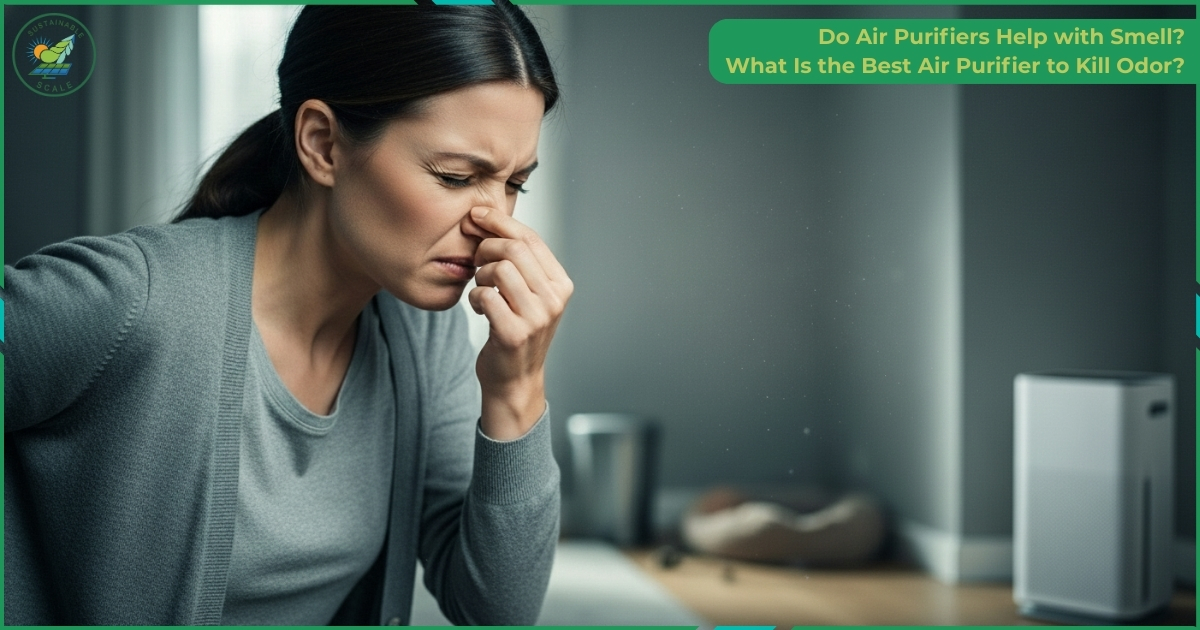
Do Air Purifiers Help with Smell? What Is the Best Air Purifier to Kill Odor?

- Published Date - November 10, 2026
- Modified date - November 10, 2026
Table of Contents
Yes, air purifiers help with smell because they capture odor molecules, particles and gases that create unpleasant indoor scents, which improves overall air freshness. Smell arises when volatile compounds interact with nasal receptors that produce sensations ranging from pleasant to foul. The common sources of smells include food residues, pets, mold and mildew, dirty laundry, kitchen drains, cigarette smoke and body odors that release persistent compounds clinging to fabrics and surfaces. Air purifiers help with multiple types of smells such as pet, food, smoke, garbage, dust, chemical, musty, body and paint odors by filtering and adsorbing the pollutants responsible for them.
Air purifiers remove smells by drawing in polluted air, filtering particles with HEPA or multi-stage filters, adsorbing gases onto activated carbon, trapping odor molecules and releasing clean, fresh air into the room. An air purifier takes 30 minutes to several hours to remove smells that depend on the odor type, room size and clean air delivery rate. They have limitations like reduced performance with saturated filters, inability to eliminate embedded odors, potential ozone generation from ionizers, limited coverage in large rooms and the need for frequent maintenance.
Air purifiers maintain fresh indoor air by ensuring filters are cleaned or replaced regularly, vents and pre-filters are maintained, indicator lights are monitored and units are positioned near odor sources for optimal airflow. The IQAir HealthPro Plus is the best air purifier for smell removal due to its advanced activated carbon, zeolite filters, and True HEPA system.
What is the sense of smell?
Smell is the sense of detecting airborne chemical molecules (odorants) through the nasal cavity or olfaction. It is made of volatile compounds like esters, aldehydes or ketones that enter with a smell in air and interact with olfactory receptor cells lining the nasal cavity.
The sense of smell works by these receptors sending electrical signals to the brain’s olfactory bulb, which processes patterns into smell perception. The brain interprets combinations of signals that use a combinatorial code to distinguish pleasant and unpleasant smells in the air. This allows recognition of a wide range of odor qualities from diverse chemical structures.
What are the common sources of smells?
The common sources of smells include food and cooking odors, pets, mold and mildew, kitchen sinks and drains, cigarette smoke and fireplace soot and body odors. They cling to fabrics, surfaces and ventilation systems that cause persistent indoor odors.
The common sources of smells are outlined below.
- Food and cooking odors: Smells arise from oils, spices and residues left from frying, roasting and baking. Remaining vapors cling to fabrics, walls and ventilation systems that create persistent odors over time in kitchens and adjacent spaces.
- Pets: Smells develop from fur, dander, litter boxes and waste. Over time, these odors embed into carpets, upholstery and pet bedding, which requires regular cleaning and grooming to prevent persistent unpleasantness indoors.
- Mold and mildew: Smells come from fungal growth in damp or humid areas. They release musty volatile compounds that indicate moisture issues, contaminating walls, fabrics and hidden surfaces like basements or bathrooms.
- Dirty laundry and bedding: Smells originate from accumulated sweat, body oils and bacteria. These items trap moisture and organic residues, which promote microbial growth that generates stale, sour odors over time.
- Kitchen sinks and drains: Smells emerge from trapped food waste, grease buildup and decaying organic matter. These residues decompose within pipes and garbage disposals, which release foul odors that spread throughout connected areas.
- Cigarette smoke and fireplace soot: Smells remain from tar, ash and smoke particles that adhere to walls, fabrics and ceilings. These pollutants persist for months, which creates dense, hard-to-remove odors in enclosed areas.
- Body odors: Smells come from perspiration, bacteria, and natural oils on the skin. These compounds intensify without regular hygiene and ventilation, which accumulate in clothing and enclosed spaces with limited airflow.
What are the types of smells air purifiers help with?
The types of smells air purifiers help with include pet odors, food and smoke smells, garbage and dust scents, chemical and VOC fumes, musty or moldy odors and body odors. They capture particles and molecules to improve indoor air quality.
The types of smells air purifiers help with are given below.
- Pet odors: Air purifiers absorb pet dander and hair, which capture microscopic matter that causes lingering pet odors in enclosed spaces where animal smells collect. They trap particles from litter boxes or pet bedding.
- Food smells: Air purifiers reduce lingering cooking odors by filtering strong scents such as burnt food or wildfire smoke residue. They minimize persistent kitchen smells that spread across living areas and remain embedded in fabrics.
- Smoke smells: Air purifiers remove smoke particles and odor molecules, whether from cigarettes, weed smell or other sources. They help restore fresher indoor air when smoke contaminants build up and persist in carpets, curtains or upholstery.
- Garbage smells: Air purifiers help prevent garbage odors from spreading beyond trash bins by capturing airborne molecules. They reduce the unpleasant effect of rotting food waste smells that circulate and cling to surrounding furniture or fabrics.
- Dust smells: Air purifiers capture fine dust particles that release musty scents and cause irritation. They help to minimize stale odors, improve indoor comfort and keep air from smelling unclean by reducing dust buildup.
- Chemical and VOC smells: Air purifiers filter volatile organic compounds released from cleaning products, adhesives or synthetic materials. This helps reduce harsh chemical odors that cause discomfort in enclosed spaces with poor ventilation.
- Musty or moldy odors: Air purifiers reduce stale odors caused by mold spores thriving on excess humidity. They trap these airborne particles and odor carrying molecules that help to maintain fresher air in damp or poorly ventilated environments.
- Body odors: Air purifiers capture sweat related particles and odors that build up over time. They are useful in shared living areas to reduce body smells lingering in fabrics, upholstery or closed off rooms.
- Paint smells: Air purifiers eliminate strong paint fumes released by solvents and chemicals in paints. They filter out lingering volatile smells that spread indoors during renovation or redecorating activities.
How do air purifiers remove smells?
Air purifiers remove smells by drawing in polluted air, filtering particles, adsorbing gases onto activated carbon, trapping odor molecules and releasing fresh, clean air back into the room.
The process of how air purifiers remove smells is given below.
- Air intake: Air purifiers pull surrounding indoor air into the unit through a fan system that ensures continuous circulation for removing airborne particles, odors and gaseous pollutants.
- Particle filtration: Air purifiers capture dust, allergens and microbial irritants using a HEPA or multi-stage filter that prevents odor carrying particles from remaining suspended in the living environment.
- Gas adsorption: Air purifiers use activated carbon filters to adsorb volatile organic compounds and smoke particles, which neutralize odor-causing gases that cannot be removed by particle filtration alone.
- Odor trapping: Air purifiers trap tiny molecules responsible for unpleasant smells within porous carbon pores that reduce lingering odors from pets, cooking and household chemicals.
- Clean air release: Air purifiers release purified, deodorized air back into the room, which improves comfort and enhances indoor air quality for healthier breathing conditions.
How long does it take an air purifier to get rid of smells?
An air purifier takes 30 minutes to several hours to get rid of smells. Air purifier performance varies with the room’s size, odor strength or type and the unit’s clean air delivery rate (CADR). Air purifier performance improves in well ventilated rooms and with clean filters that help reduce strong smells faster. An air purifier to get rid of smells works most efficiently when placed in the center of the room or near the odor source, which confirms it removes the odor effectively.
What are the limitations of air purifiers in removing smells?
The limitations of air purifiers in removing smells are the inability to filter odor gases, reduced efficiency with saturated carbon filters, the inability to remove embedded odors, potential ozone generation and limited room coverage.
The limitations of air purifiers in removing smells are outlined below.
- Fail to filter particles: Air purifiers with HEPA filters only capture particles, which means they cannot directly remove odor molecules or gaseous pollutants released into the air.
- Saturate carbon filters: Air purifiers lose efficiency when saturated filters or insufficient carbon reduce adsorption, which allows cigarette smell and pet odors to escape through the weakened carbon layer.
- Trap surface odors: Air purifiers cannot remove odors deeply embedded in fabrics, carpets or walls, since the smell source is not on surfaces accessible by airflow filtration.
- Generate harmful ozone: Air purifiers that use ionizers or ozone generators emit ozone, which irritates the lungs and fails to neutralize cigarette or chemical smells.
- Cover limited spaces: Air purifiers with small air purifier filter capacity cannot handle larger rooms that makes odor control inconsistent when placed beyond their rated space coverage limits.
- Emit operational noise: Air purifiers produce mechanical and fan noise during use, which interferes with comfort when used overnight for continuous odor control.
- Require frequent maintenance: Air purifiers need regular replacement of saturated filters to maintain efficiency. They lose odor removal capacity and have a shorter overall lifespan when upkeep is neglected.
How to maintain indoor air smelling fresh with air purifiers?
To maintain indoor air smelling fresh with air purifiers, regularly replace or clean filters, clean the exterior and vents weekly, maintain pre-filters monthly, monitor indicator lights and position the purifier near odor sources with good airflow.
The steps to maintain indoor air smelling fresh with air purifiers are given below.
- Replace or clean filters: Replace or clean all filters regularly that focus on the activated carbon filter because it acts as a reliable air purifier and smell remover for lingering household odors.
- Clean exterior and vents: Wipe the air purifier’s surface and vacuum its vents weekly, which prevents dust buildup that restricts airflow and reduces odor removal efficiency throughout indoor spaces.
- Inspect and clean pre-filters: Clean pre-filters monthly to capture visible dust and pet hair early. This confirms that finer filters remain functional for odor removal and overall air freshness.
- Check indicator lights: Monitor the purifier’s indicator lights because they alert when filters are dirty, which helps you address the source of the smell and maintain peak performance.
- Position the air purifier correctly: Place the air purifier for kitchen odors or near odor-prone areas, keep it away from walls or corners for best airflow and maximum smell removal.
What is the best air purifier to remove smells?
The best air purifier to remove smells is the IQAir HealthPro Plus. IQAir HealthPro Plus is considered the best air purifier for odors because it is equipped with large activated carbon filters that adsorb smell-causing molecules like volatile organic compounds (VOCs) from the air. This model features True HEPA filtration, a V50-CELL with 5 lbs of activated carbon plus zeolite and delivers a CADR rating of 213 cfm. It covers up to 319 square feet and costs range between $900 and $1,200, according to Consumer Reports.
What to consider when choosing an air purifier for smell?
To consider when choosing an air purifier for smell, focus on activated carbon filters, specific odors, noise levels, room size, smart features and maintenance. These factors confirm efficient odor removal, quiet use, appropriate coverage, automated performance and manageable filter upkeep for optimal indoor air quality.
Things to consider when choosing an air purifier for smell are given below.
- Filtration technology: Choose an air purifier with an activated carbon filter designed for odor removal. Multi-stage filtration systems that combine HEPA and activated carbon filters are ideal for air cleaning and odor control.
- Type of odors: Identify the kinds of odors like smoke, pets, cooking and chemical odors present to confirm the chosen purifier targets those effectively, as some filters or purifiers are better suited for certain odors.
- Noise level and usage: Consider air purifiers that operate quietly between 20 and 55 decibels (dB). Choose quieter models for bedrooms or quiet spaces to avoid disturbance during sleep or work.
- Room size and coverage: Match the clean air delivery rate (CADR) and purifier capacity to the room size for effective odor removal and air circulation.
- Additional Features: Look for smart sensors that detect odors and automatically adjust fan speeds, energy efficient operation and user friendly controls.
- Maintenance: Check the frequency and cost of filter replacement because activated carbon filters become saturated over time, which loses their effectiveness in odor removal.
Why does an air purifier need an activated carbon filter for smell?
An air purifier needs an activated carbon filter for smell because odors come from gaseous molecules like oxygen or nitrogen and volatile organic compounds (VOCs) released by fast-moving gases that normal particle filters cannot capture. It uses absorption to trap and neutralize tiny chemical particles such as soot, smoke, dust and ammonia, which remove unpleasant odors and improve indoor air freshness.
Which type of air purifiers remove smells?
Activated carbon purifiers remove smell. These types of air purifiers use dense layers of carbon to adsorb volatile organic compounds (VOCs) and neutralize odors effectively. Activated carbon purifiers feature technologies like V-Bank design to maximize odor removal. Their notable models include the Oransi TrueCarbon 200C, Justin Air HealthMate and IQAir HealthPro Plus, which excels at handling strong smells through advanced filtration features.
Can an air purifier get rid of cigarette smoke?
Yes, an air purifier can get rid of cigarette smoke because it targets both particles and odors in the air. Air purifiers remove cigarette smoke using both HEPA and activated carbon filters. HEPA filters remove the fine particles in visible smoke, while activated carbon filters adsorb gases and odors that help with the cigarette smoke smell. A HEPA filter alone is insufficient because it only removes visible smoke particles and not the VOCs that create strong smells.
Do air purifiers help with pet smell?
Yes, air purifiers do help with pet smell because they are designed to capture airborne particles and neutralize odors. Air purifiers remove pet smell effectively when the device combines a HEPA filter with a substantial activated carbon filter. A high quality activated carbon filter adsorbs (binds) odor molecules and gases that help neutralize pet urine smell and minimize lingering pet odors in indoor spaces.
Will an air purifier help with dog smell?
Yes, air purifiers will help with dog smell because activated carbon filters absorb odor particles to remove smells. Air purifiers capture dog fur and skin dander, which reduces pet dander and improves overall indoor air quality.
What is the best air purifier for cat smell?
Austin Air HealthMate is the best air purifier for cat smell because its large activated carbon and zeolite filter absorbs cat urine smell and cat box smell. This makes Austin Air HealthMate one of the best air purifiers for pet related odors.
Does an air purifier detect carbon monoxide?
No, an air purifier does not detect carbon monoxide because most air purifiers do not contain sensors to measure CO and cannot alert household members to its presence. Air purifiers help with carbon monoxide only by reducing trace amounts if equipped with certain filters, but a dedicated carbon monoxide detector or CO alarm is required for reliable detection and safety.
Do air purifiers work?
Yes, air purifiers work because they actively filter airborne particles and contaminants that affect indoor air quality, according to research from Healthline. Air purifiers trap allergens and pollutants using HEPA filters, improve breathing, help with asthma and allergies and reduce unpleasant smells and odors. Air purifiers work best with overall home ventilation and proper maintenance, which improve their impact on indoor air quality.
Products
Solar Panel
Air Purifier