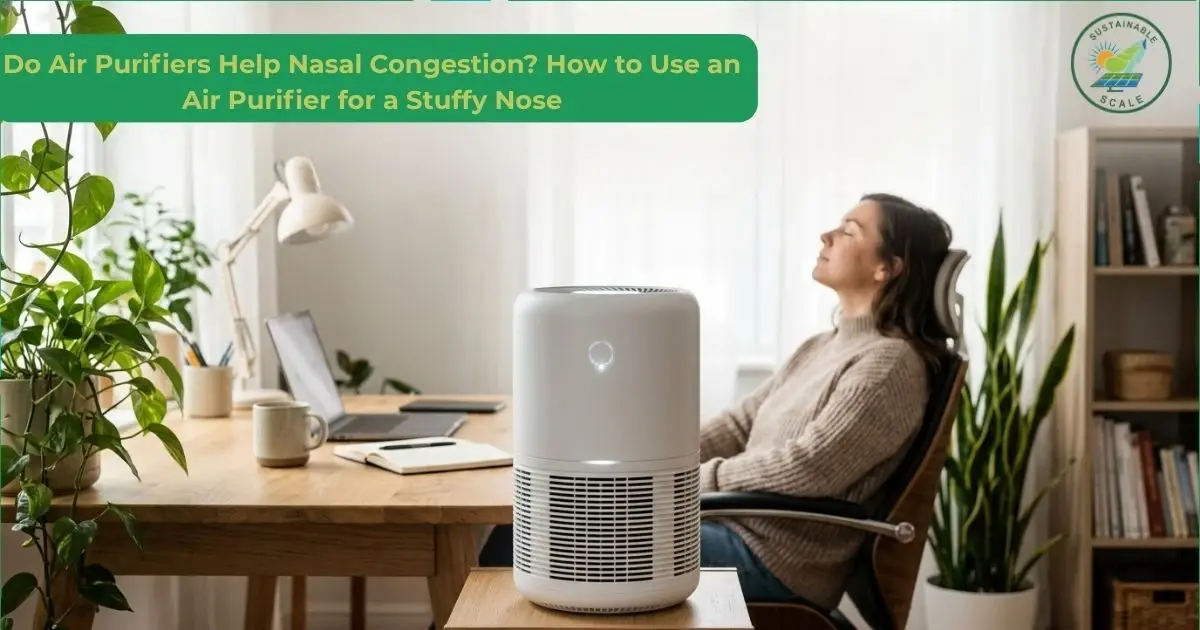
Do Air Purifiers Help Nasal Congestion? How to Use an Air Purifier for a Stuffy Nose

- Published Date - November 2, 2026
- Modified date - November 2, 2026
Table of Contents
Yes, air purifiers help nasal congestion by removing allergens, reducing dust particles, filtering smoke, reducing mold spores and reducing odors and some gases. Nasal congestion is caused by swollen nasal tissues and excess mucus that makes breathing through the nose difficult. Air purifiers capture airborne allergens such as pollen, dust and pet dander before they reach the nasal passages. They also use an activated carbon filter to adsorb odors, smoke and some gases that irritate sensitive nasal tissue.
Air purifiers are used in the room where nasal congestion is most noticeable, especially the bedroom. They should be positioned centrally with at least 12 inches of clearance around the unit, matched to the room size and run consistently. Air purifiers also reduce outdoor allergen exposure when doors and windows remain closed during operation.
You should choose an air purifier based on HEPA filtration, sealed design, activated carbon filtration, room size coverage, noise level and avoidance of ozone producing ionizers. The best air purifiers include Coway Airmega AP-1512HH Mighty, Levoit Core 400S, Blueair Blue Pure 311i Max, Winix 5500-2 and Dyson Purifier Humidify+Cool Formaldehyde. These air purifiers support people with allergies or sinus irritation by lowering airborne particles linked to nasal symptoms. They provide cleaner indoor air but do not treat the underlying cause of congestion.
What is nasal congestion?
Nasal congestion is the blockage or stuffiness of the nose that makes breathing through the nasal passages difficult. It occurs when swollen nasal tissues narrow the airways or when increased mucus restricts airflow. It affects one or both nostrils and causes difficulty breathing, pressure or a stuffy sensation.
Nasal congestion commonly results from colds, allergies and sinus infections that inflame the nasal passages. It also develops after exposure to smoke or dust, which irritates the nasal lining. Nasal congestion worsens when these triggers increase inflammation or mucus buildup.
What are the common symptoms of nasal congestion?
The common symptoms of nasal congestion are a blocked or stuffy nose, difficulty breathing through the nose, increased mucus, a reduced sense of smell and a runny nose. It also causes nasal pressure and discomfort when swelling blocks normal airflow. Nasal congestion from allergies occurs with sneezing and itchy eyes, while sinus infections cause facial pressure and headache.
How do air purifiers help with nasal congestion?
Air purifiers help with nasal congestion by removing allergens, reducing dust particles, filtering smoke and pollutants, reducing mold spores and reducing odors and some gases. They capture airborne particles that inflame nasal tissue before those particles reach the nose. Air purifiers use HEPA and activated carbon filters to remove allergens and irritants that contribute to chronic swelling and ease the blockage that causes a stuffy nose.
The ways air purifiers help with nasal congestion are given below.
- Removes allergens: Air purifiers capture airborne allergens such as pollen and pet dander before they reach and irritate the nasal lining, which helps reduce congestion and swelling.
- Reduces dust particles: Air purifiers pull fine dust from circulation, which lowers particulate matter that settles in nasal passages and causes irritation, discomfort and breathing difficulties.
- Filters smoke and pollutants: Air purifiers with activated carbon filters absorb smoke particles and airborne pollutants that irritate nasal tissue and worsen nasal stuffiness, especially in enclosed indoor spaces.
- Reduces mold spores: Air purifiers trap mold spores circulating indoors, which lowers exposure to these airborne irritants that trigger nasal swelling, congestion and breathing discomfort.
- Reduces odors and some gases: Air purifiers with activated carbon filters adsorb odors and certain gases from cooking, cleaning products and pets, which reduces airborne irritants that affect sensitive nasal tissue.
- Provides cleaner bedroom air: Air purifiers running overnight lower allergen and irritant levels in bedroom air, which reduces exposure to airborne particles linked to congestion, irritation and nasal discomfort.
How to use an air purifier for a stuffy nose?
Use an air purifier for a stuffy nose by placing the purifier, choosing the right size, running the purifier consistently, adjusting the fan speed and closing doors and windows. Run it continuously in the room where congestion is worst, with the fan speed and filter matched to that room’s size.
7 steps to use an air purifier for a stuffy nose are given below.
- Place the purifier: Position the air purifier centrally in the bedroom or main living space, at least 12 inches from walls and furniture, so airflow circulates throughout the entire room.
- Choose the right size: Match the air purifier’s CADR rating to the room’s square footage, since an undersized unit can not clean enough air quickly to reduce airborne particles and congestion.
- Run the purifier consistently: Run the air purifier throughout the day and night rather than cycling it on and off, which helps maintain consistent filtration and reduce airborne particle levels throughout the room.
- Adjust the fan speed: Set the air purifier to a higher fan speed during severe congestion or high pollen periods, then lower the speed when conditions improve to reduce unnecessary energy consumption.
- Close doors and windows: Close doors and windows while the air purifier runs to limit outdoor allergens and airborne particles from entering the room and interfering with indoor air filtration.
- Replace the filters: Replace the air purifier’s HEPA and activated carbon filters according to the manufacturer’s schedule, since clogged filters reduce airflow and limit the unit’s ability to capture airborne allergens.
- Clean the purifier: Clean the air purifier regularly by wiping the housing and vacuuming the pre-filter to remove trapped dust, maintain airflow and support effective filtration throughout the unit’s operating life.
How to choose the right air purifier for a stuffy nose?
Choose the right air purifier for a stuffy nose by confirming its filter type, seal system, activated carbon filter, right CADR and room size, low noise level and avoiding ionizers. Confirm true HEPA filtration when you choose an air purifier, since a lower grade filter leaves fine allergens behind that keep nasal tissue inflamed.
The key features to look for in an air purifier for a stuffy nose are given below.
- True HEPA filter: Confirm the unit uses a certified true HEPA filter, which traps 99.97% of fine particles down to 0.3 microns such as the allergens that trigger congestion.
- Sealed system: Check that air passes only through the filter rather than around it, since gaps in a purifier’s housing let unfiltered particles bypass the HEPA layer entirely.
- Activated carbon filter: Look for a dedicated activated carbon layer, which adsorbs odors, smoke and VOCs that plain HEPA filtration does not capture alone. This layer helps reduce airborne gases and chemical pollutants.
- Right CADR and room size: Match the purifier’s CADR rating to the square footage of the room, since an undersized unit does not clear allergens fast enough to support cleaner indoor air.
- Low noise level: Pick a model rated under 40 to 45 dB on lower speeds, so it runs continuously overnight without disturbing sleep, relaxation or breathing comfort.
- Avoid ionizers: Skip purifiers that rely primarily on ionizers, since they release ozone, which irritates nasal tissue and worsens congestion instead of improving breathing comfort.
What are the best air purifiers for a stuffy nose?
The best air purifiers for a stuffy nose are the Coway Airmega AP-1512HH Mighty, Levoit Core 400S, Blueair Blue Pure 311i Max, Winix 5500-2 and Dyson Purifier Humidify+Cool Formaldehyde. These air purifiers combine true HEPA and activated carbon filtration to remove dust and ultra fine particles that trigger nasal congestion.
The 5 best air purifiers for a stuffy nose are given below.
- Coway Airmega AP-1512HH Mighty: The Coway Airmega AP-1512HH Mighty covers rooms up to 361 square feet with a true HEPA filter and a deodorization carbon layer for odors.
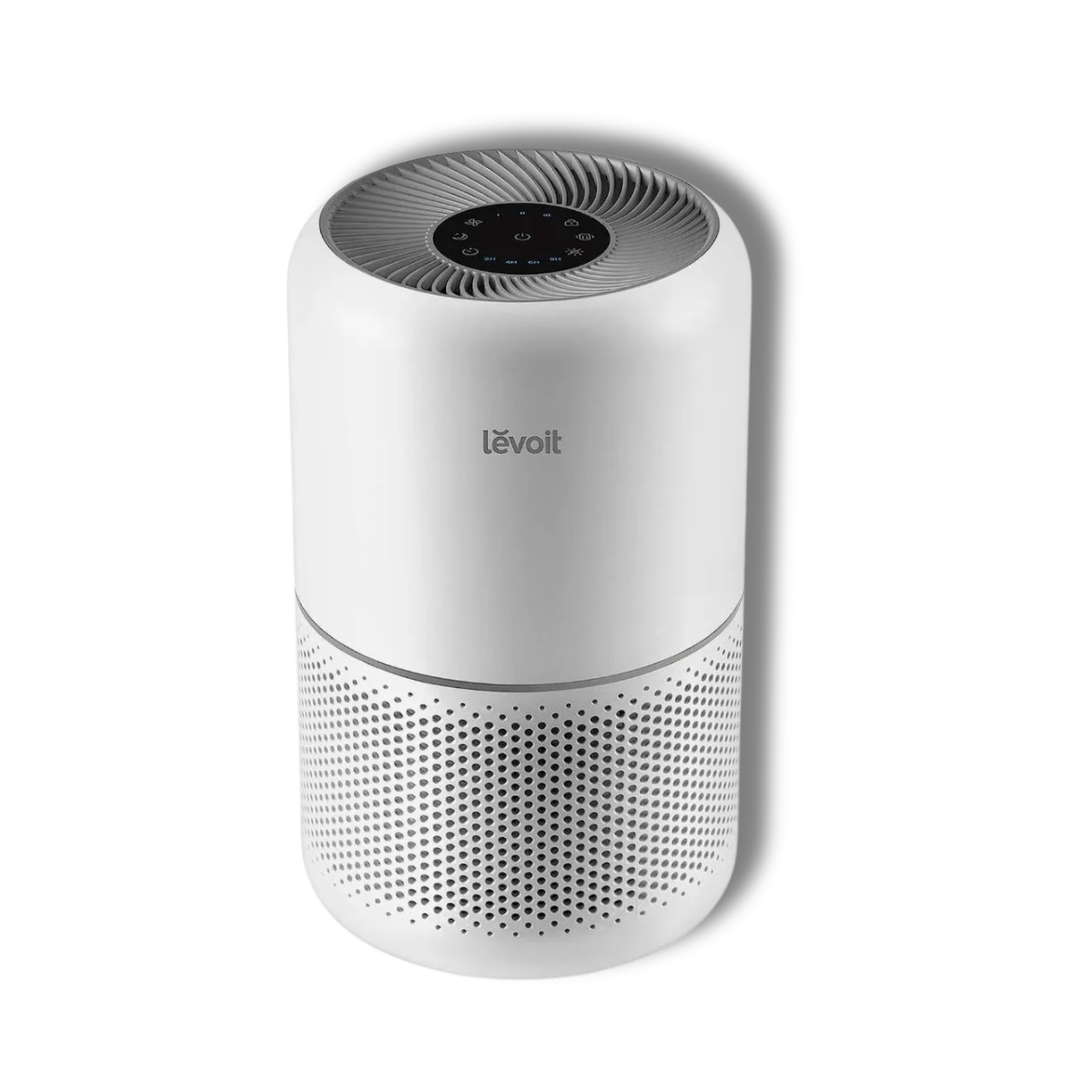
- Levoit Core 400S: The Levoit Core 400S delivers a CADR near 260 CFM for rooms up to 403 square feet and uses a 3 in 1 H13 true HEPA filter.
- Blueair Blue Pure 311i Max: The Blueair Blue Pure 311i Max uses HEPASilent dual filtration to capture 99.97% of particles down to 0.1 microns in 465 square foot rooms.
- Winix 5500-2: The Winix 5500-2 pairs a true HEPA filter with a pelleted activated carbon filter, which covers rooms up to 360 square feet with strong odor removal.
- Dyson Purifier Humidify+Cool Formaldehyde: The Dyson Purifier Humidify+Cool Formaldehyde combines a sealed HEPA H13 filter with a formaldehyde sensor, humidification and cooling in one unit.
What type of air purifier is best for a stuffy nose?
A HEPA air purifier is the best type of air purifier for a stuffy nose. It captures airborne allergens and filters particles as small as 0.3 microns, removing the fine particles that inflame nasal tissue. A true HEPA air purifier with activated carbon also adsorbs odors and gases that plain HEPA filtration leaves behind.
Where should I place the air purifier to relieve a stuffy nose?
You should place the air purifier in a central location to relieve a stuffy nose. The best place to put an air purifier is near the area where you spend the most time, with 12 inches of clear space around it and 3 to 5 feet off the ground. This position helps distribute filtered air effectively.
Can you run an air purifier 24/7?
Yes, you can run an air purifier 24/7 because most models are energy efficient and designed for continuous operation. The pros and cons of running an air purifier include cleaner air throughout the day but also more frequent filter replacements. An air purifier keeps allergen levels low while adding only a small amount to your electricity bill.
Does an air purifier help with allergies?
Yes, an air purifier helps with allergies because a true HEPA filter reduces airborne allergens before they reach the nasal lining. It captures common irritants such as dust mite particles and pet dander, which lowers the exposure that triggers sneezing, itchy eyes and nasal swelling in allergy sufferers.
Can an air purifier help with sinus problems?
Yes, an air purifier can help with sinus problems because it reduces airborne irritants such as pollen, dust and mold spores that inflame sinus tissue. An air purifier reduces the number of irritants circulating indoors, which limits particles that worsen sinus symptoms and improves indoor air quality.
How long does it take an air purifier to help with congestion?
An air purifier takes 30 minutes to a few hours to help with congestion. Its effectiveness depends on its filtration efficiency, CADR rating relative to room size and existing indoor allergen levels. An air purifier with a high CADR in a correctly sized room clears airborne triggers faster than an undersized model in a large, heavily polluted space.
When should you see a doctor for nasal congestion?
You should see a doctor for nasal congestion when symptoms last more than 10 days without improving or when they worsen after initial improvement. Seek care sooner if congestion occurs with severe facial pain, a high fever or swelling around the eyes, since these symptoms indicate an infection or complication requiring treatment.
Products
Solar Panel
Air Purifier