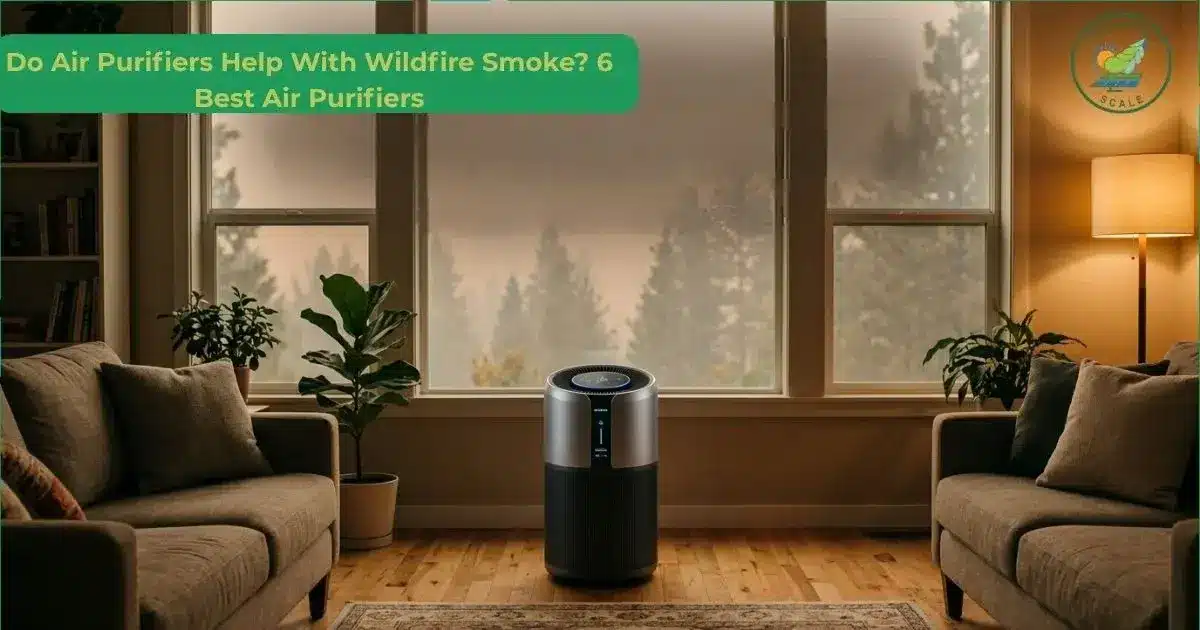

Yes, air purifiers help with wildfire smoke because wildfire smoke contains fine particles and gases, such as PM2.5, carbon monoxide and volatile organic compounds. Air purifiers remove wildfire smoke by pulling smoky air through multi-stage filtration, where HEPA filters trap fine particles, while activated carbon adsorbs some gaseous pollutants and smoke odors. Air purifiers reduce fine smoke particles and indoor PM2.5 levels, remove smoke odors, reduce respiratory irritation, improve indoor air quality, and limit smoke exposure. They also support cleaner indoor air through continuous filtration.
Air purifiers have limitations because they do not prevent smoke infiltration through windows, doors, cracks or vents. They also do not remove every smoke related gas, clean surface residues or maintain performance when filters become saturated. Air purifiers work best when windows and doors remain closed, the unit uses a true HEPA filter, its CADR matches the room size and it runs continuously.
Air purifiers should be chosen based on true HEPA filtration, high smoke CADR, activated carbon, ozone free operation, suitable room coverage, affordable filters, low noise and energy efficiency. Its recommended models include Coway Airmega 400S, Blueair Blue Pure 211i Max, Levoit Core 600S, IQAir HealthPro Plus, Austin Air HealthMate and Alen BreatheSmart 45i.
What is wildfire smoke?
Wildfire smoke is a visible plume released when forests, grasslands or brush burn uncontrollably. It contains a mixture of gases and fine particles that travel long distances with wind currents. Wildfire smoke carries PM2.5, carbon monoxide and volatile organic compounds that pose serious health risks when inhaled. It penetrates homes through windows, doors and ventilation systems, degrading indoor air quality even when outdoor levels appear moderate.
Wildfire smoke harms people with asthma, heart disease or weakened immune systems more than healthy adults. It irritates eyes, throat and lungs, triggering coughing, wheezing and shortness of breath in sensitive groups. Wildfire smoke requires sealed indoor environments and high efficiency air filtration to reduce exposure during active fire events.
How do air purifiers remove wildfire smoke?
Air purifiers remove wildfire smoke by pulling in smoky air and passing it through multi-stage filters that target both particles and gases. They trap fine particles, adsorb gases and odors, release cleaner air and repeat the filtration process continuously.
The steps of how air purifiers remove wildfire smoke are outlined below.
- Pull in smoky air: Air purifiers draw wildfire smoke into the intake fan, which creates steady airflow that moves smoky room air toward the filter media for treatment.
- Trap fine particles: Air purifiers capture PM2.5 and other microscopic particles suspended in wildfire smoke, which trap soot, ash and allergens within dense HEPA fiber layers.
- Adsorb gases and odors: Air purifiers use activated carbon to adsorb gaseous pollutants and smoke related odors, which bind volatile organic compounds and carbon monoxide molecules to its porous surface.
- Release cleaner air: Air purifiers release filtered air back into the room, delivering cleaner airflow that reduces visible haze and lowers health risks from prolonged smoke exposure.
- Repeat filtration: Air purifiers repeat filtration cycles continuously during smoke events, maintaining low particle counts and fresh indoor air until outdoor conditions improve safely.
How much wildfire smoke can air purifiers remove?
Air purifiers remove a substantial portion of wildfire smoke from indoor air when properly sized and operated for the space. They achieve PM2.5 reductions of 60 to 80% in rooms during active smoke events, according to field studies and controlled tests. Air purifiers also capture 99.97% of particles around 0.3 microns with a true HEPA filter, including most smoke aerosols that contribute to health risks.
Air purifiers depend on several factors that determine how much smoke they remove from a room. They perform better when the clean air delivery rate (CADR) matches or exceeds the room’s volume and pollution load. Air purifiers become less effective when large room volumes, high ceilings or air leakage allow smoke to enter continuously. They also struggle when windows, doors or building envelopes remain unsealed during heavy outdoor smoke intrusion.
What are the benefits of using an air purifier for wildfire smoke?
The benefits of using an air purifier for wildfire smoke include reducing fine smoke particles and indoor PM2.5 levels, removing smoke odors and reducing respiratory irritation. Air purifiers also limit smoke exposure, reduce airborne pollutants and support cleaner indoor air.
The benefits of using an air purifier for wildfire smoke are outlined below.
- Reduce fine smoke particles: Air purifiers capture fine particulate matter from wildfire smoke, which removes soot and ash that penetrate deep into the lungs and trigger inflammation.
- Lower indoor PM2.5 levels: Air purifiers lower indoor PM2.5 levels by continuously filtering smoky air, which keeps particle concentrations below health guideline thresholds during active fire events.
- Remove smoke odors: Air purifiers adsorb odor causing gases and compounds from smoke, which reduces lingering burnt smells that make indoor spaces feel stale and uncomfortable.
- Reduce respiratory irritation: Air purifiers reduce respiratory irritation by removing smoke aerosols that aggravate asthma, bronchitis and other chronic lung conditions in sensitive individuals.
- Improve indoor air quality: Air purifiers improve indoor air quality by cutting total particle counts and volatile organic compounds that accumulate when outdoor smoke infiltrates homes.
- Limit smoke exposure: Air purifiers limit smoke exposure for children, older adults and people with heart or lung disease who face higher risks from prolonged inhalation.
- Reduce airborne pollutants: Air purifiers reduce airborne pollutants beyond smoke, including dust, pollen and combustion byproducts that worsen overall indoor pollution loads.
- Support cleaner indoor air: Air purifiers support cleaner indoor air by maintaining steady filtration cycles that keep particle levels low even when outdoor smoke conditions fluctuate.
What are the limitations of air purifiers for wildfire smoke?
The limitations of air purifiers for wildfire smoke include incomplete source control, limited gas removal, filter saturation and coverage constraints. They reduce airborne smoke after it enters a room but do not prevent infiltration or remove all smoke related pollutants and residues.
The limitations of air purifiers for wildfire smoke are outlined below.
- No infiltration prevention: Air purifiers do not stop wildfire smoke from entering through windows, doors, cracks, vents or leaks, so they clean smoke only after it has entered the room.
- Gas and odor restrictions: Air purifiers with HEPA filters capture particles but do not remove every wildfire smoke gas, while carbon filters absorb limited gases and odours before saturation reduces effectiveness.
- Filter saturation: Air purifiers lose airflow and particle removal capacity when wildfire smoke particles clog particle filters, which increases replacement needs and reduces performance during extended smoke events.
- Coverage constraints: Air purifiers clean air only within their rated capacity, so large rooms, open layouts and multiple separate spaces require appropriately sized or additional units.
- Surface re-entry: Air purifiers remove airborne smoke particles but do not remove residues from floors, fabrics, furniture and walls, which release particles back into indoor air later.
How to use an air purifier during wildfire smoke?
Use an air purifier during wildfire smoke by closing windows and doors, choosing a true HEPA model and matching its CADR to the room. Place it strategically, run it continuously, increase fan speed, replace smoke loaded filters and limit indoor smoke sources.
The best practices for using an air purifier during wildfire smoke are given below.
- Close windows and doors: Close windows and doors before operating the purifier to prevent polluted outdoor air from entering the room and to reduce the particle load that filtration must manage.
- Choose a HEPA air purifier: Choose a portable purifier with a true HEPA filter because it captures fine smoke particles such as PM2.5 from indoor air during wildfire smoke events.
- Size the purifier correctly: Select a purifier with a clean air delivery rate that matches the room size because undersized equipment does not lower indoor particle levels effectively.
- Place the purifier strategically: Place the purifier where people spend the most time and keep it away from walls, furniture, curtains and corners that block airflow into the unit.
- Run the purifier continuously: Run the purifier continuously while smoke persists because interruptions allow particles to accumulate again indoors, particularly when outdoor concentrations remain elevated.
- Increase the fan speed: Increase the fan speed to the highest tolerable setting during heavy smoke because greater airflow increases the rate of particle removal from the room.
- Replace smoke loaded filters: Replace filters when they appear dark, dirty or clogged because smoke accumulation reduces airflow and filtering performance. Follow the manufacturer’s instructions for each model.
- Limit indoor smoke sources: Limit smoking, candles, vaping, aerosol sprays, frying and wood burning appliances because these sources add particles that reduce the purifier’s ability to maintain cleaner air.
How to choose an air purifier for wildfire smoke?
Choose an air purifier for wildfire smoke based on its true HEPA filter, high smoke CADR, activated carbon filter, ozone free operation and suitable room coverage. These features help the unit capture fine smoke particles, reduce odors and gases and maintain effective filtration during prolonged wildfire smoke events.
Things to look for in an air purifier for wildfire smoke are given below.
- True HEPA filter: Choose a portable purifier with a true HEPA filter because it captures fine wildfire smoke particles and helps reduce indoor PM2.5 concentrations in a closed room.
- High smoke CADR: Choose a model with a high verified smoke CADR because this rating measures clean air output for small particles and predicts faster wildfire smoke removal.
- Activated carbon filter: Choose an activated carbon filter with substantial carbon weight because HEPA filtration does not capture gases, odours or many volatile compounds from wildfire smoke.
- Ozone free operation: Choose an ozone free air purifier that does not use ozone generators, ionizers or ultraviolet ozone producing features because ozone irritates the lungs and worsens indoor pollution.
- Suitable room coverage: Match the purifier’s rated coverage and smoke CADR to the actual room area. Choose a smoke CADR equal to the room’s square footage for effective wildfire smoke removal.
- Affordable filter replacements: Choose a purifier with available and affordable replacement HEPA and carbon filters because wildfire smoke loads filters quickly and ongoing maintenance determines long term performance.
- Low noise levels: Choose a purifier with acceptable noise at high fan speeds because wildfire events require continuous operation and noisy units discourage sustained use during smoky conditions.
- Energy efficiency: Choose an energy efficient purifier with low power use because continuous operation during multi-day smoke events increases electricity consumption and household operating costs.
What are the best air purifiers for wildfire smoke?
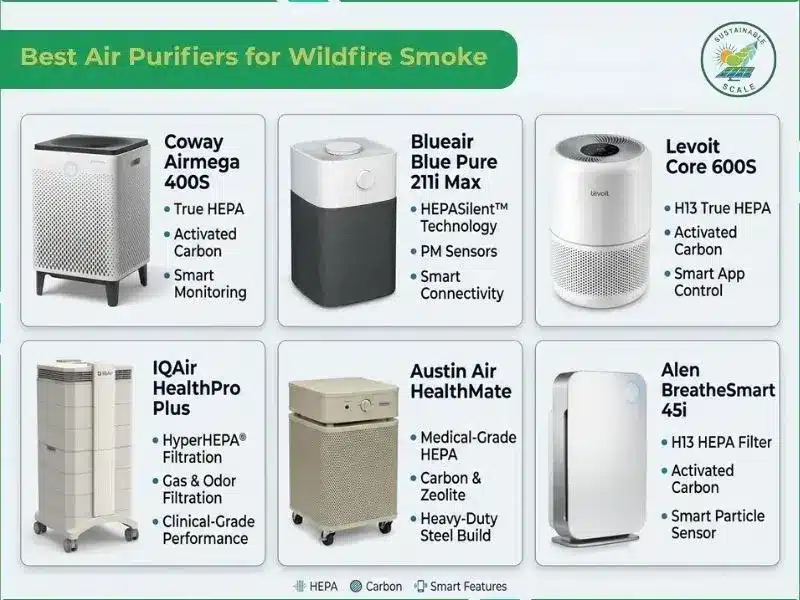
The best air purifiers for wildfire smoke include the Coway Airmega 400S, Blueair Blue Pure 211i Max, Levoit Core 600S, IQAir HealthPro Plus, Austin Air HealthMate and Alen BreatheSmart 45i. These models combine strong particle filtration with features that support smoke, odor and gas control.
6 best air purifiers for wildfire smoke are listed below.
- Coway Airmega 400S
- Blueair Blue Pure 211i Max
- Levoit Core 600S
- IQAir HealthPro Plus
- Austin Air HealthMate
- Alen BreatheSmart 45i
1. Coway Airmega 400S
The Coway Airmega 400S is a premium smart air purifier designed for large rooms and open plan spaces. It costs around $499 to $749 USD based on the retailer and promotions. The Coway Airmega 400S is suitable for wildfire smoke because its dual Max2 filters combine HEPA and activated carbon filtration to capture fine particles and adsorb smoke gases. It offers strong smoke CADR, low noise and app control, but its high price and large footprint do not fit every budget or room layout.
The specifications of Coway Airmega 400S are given in the table below.
Specifications | Coway Airmega 400S |
Filter technology | Washable pre-filter + dual Max2 filters (HEPA and activated carbon) |
Clean air delivery rate (CADR) | 328 smoke CADR (CFM) |
Recommended room size | up to 1,560 ft² at 2 ACH |
Dimensions | 14.8 × 14.8 × 22.8 in (W × D × H) |
Weight | 24.7 lb |
Noise level | 22 to 52 dB |
Electricity consumption | 6 to 66 W |
Filter lifespan | 12 months |
2. Blueair Blue Pure 211i Max
The Blueair Blue Pure 211i Max is a high CADR smart air purifier built for large rooms and open areas. It costs about $245 to $350 USD, based on sales and bundles. It works well against wildfire smoke because it uses HEPASilent dual filtration to capture fine airborne particles while a thick carbon layer handles smoke gases and odors. The Blueair Blue Pure 211i Max delivers very high smoke CADR, quiet operation and simple controls, though its filter life is shorter and replacement costs add up over time.
The specifications of the Blueair Blue Pure 211i Max are given in the table below.
Specifications | Blueair Blue Pure 211i Max |
Filter technology | HEPASilent dual filtration (mechanical + electrostatic) + activated carbon |
Clean air delivery rate (CADR) | 435 CFM smoke CADR |
Recommended room size | 674 ft² (4.8 ACH) |
Dimensions | 22.7 × 14.4 × 14.4 in (H × W × D) |
Weight | 16.2 lb |
Noise level | 23 to 53 dB |
Electricity consumption | 46 W |
Filter lifespan | 6 months |
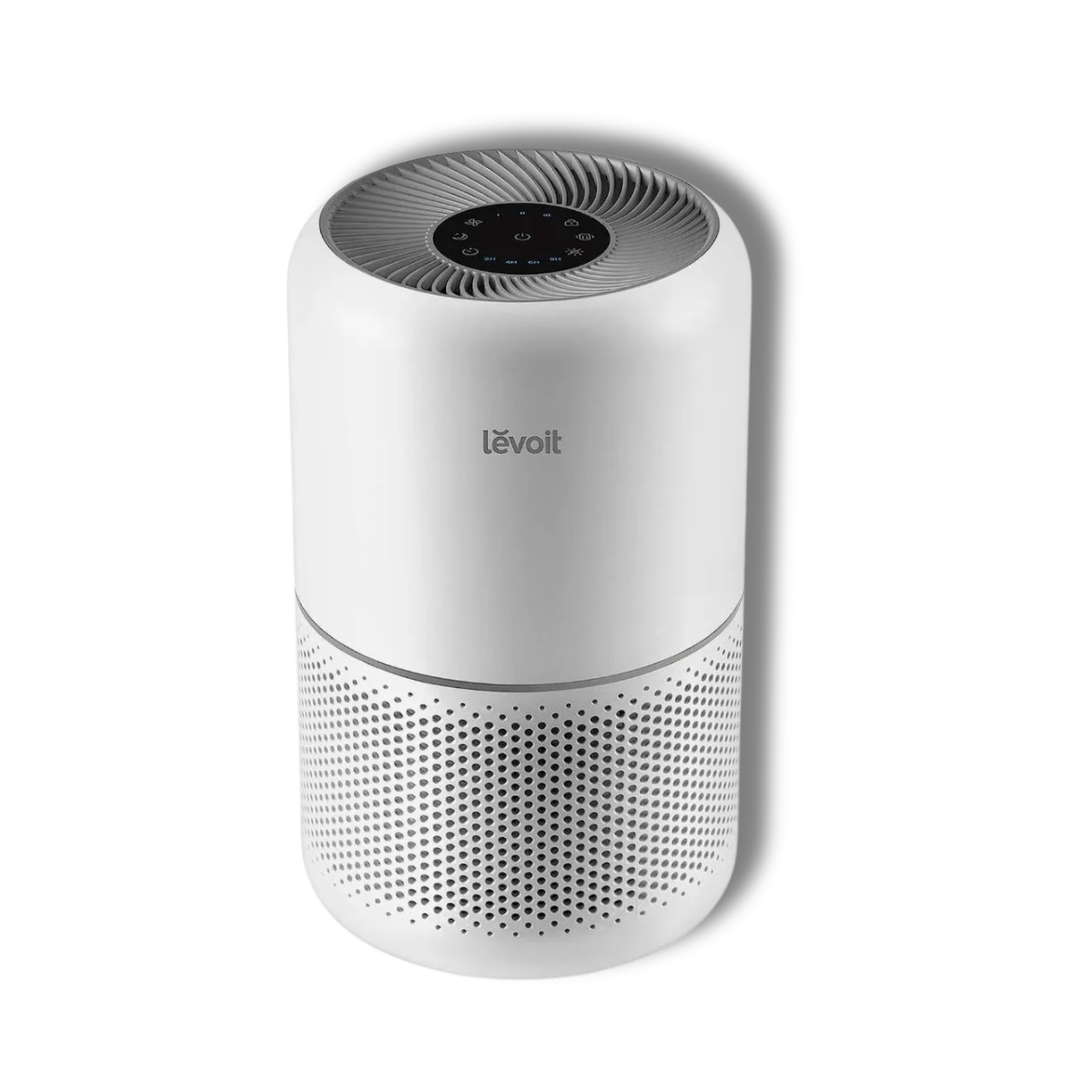
3. Levoit Core 600S
The Levoit Core 600S is a large room smart air purifier with strong particle and odor removal for smoky conditions. It costs $250 to $280 USD at major online retailers. The Levoit Core 600S handles wildfire smoke effectively because of its three-stage filtration. This includes a dedicated Smoke Remover filter and an activated carbon filter to reduce smoke, fumes, gases and odors. The Levoit Core 600S provides high CADR, an auto mode that adjusts fan speed based on sensor readings and app control. Its main drawbacks are moderate noise at top speed and ongoing filter costs.
The specifications of the Levoit Core 600S are given in the table below.
Specifications | Levoit Core 600S |
Filter technology | Three stage filtration (pre-filter, True HEPA, activated carbon with dedicated Smoke Remover filter) |
Clean air delivery rate (CADR) | 391 to 410 CFM smoke CADR (model dependent) |
Recommended room size | 635 ft² ( 5 ACH rating) |
Dimensions | 12.3 × 12.3 × 23.6 in (W × D × H) |
Weight | 13.7 to 16.2 lb |
Noise level | 25 to 54 dB |
Electricity consumption | 56 W (max) |
Filter lifespan | 12 months |
4. IQAir HealthPro Plus
The IQAir HealthPro Plus is a Swiss made medical grade air purifier built for medium to large rooms with severe pollution. It costs between $849 and $1,199 USD, which depends on configuration and retailer. The IQAir HealthPro Plus excels in wildfire smoke because its PreMax pre-filter, V5 Cell activated carbon filter and HyperHEPA H12/H13 particle filter trap ultrafine smoke particles and heavy gas loads. It offers exceptional filtration depth and long term durability, but its high price, heavy weight and elevated power draw limit its appeal for average households.
The specifications of IQAir HealthPro Plus are given in the table below.
Specifications | IQAir HealthPro Plus |
Filter technology | PreMax pre filter + V5 Cell activated carbon filter + HyperHEPA H12/H13 particle filter |
Clean air delivery rate (CADR) | 300 CFM (estimated, not AHAM verified) |
Recommended room size | 1,125 ft² (2 ACH) |
Dimensions | 28 × 15 × 16 in (H × W × D) |
Weight | 35 lb |
Noise level | 25 to 59 dB |
Electricity consumption | Up to 215 W |
Filter lifespan | 2 to 4 years (pre-filter 1 year, HyperHEPA 2 to 4 years, V5 Cell 1 to 2 years |
5. Austin Air HealthMate
The Austin Air HealthMate is a rugged, all metal air purifier designed for whole room smoke and chemical removal. It costs about $845 to $895 USD from official and authorized dealers. The Austin Air HealthMate suits wildfire smoke due to its 360 degree intake, four stage filtration system, true Medical HEPA filter and 15 lb of activated carbon and zeolite. It delivers very long filter life and strong chemical removal, but its high noise, heavy build and lack of smart features make it less convenient for everyday home use.
The specifications of the Austin Air HealthMate are given in the table below.
Specifications | Austin Air HealthMate |
Filter technology | Four stage filtration system (pre-filter, True Medical HEPA filter, activated carbon + zeolite) |
Clean air delivery rate (CADR) | 156 CFM smoke (independent tests); 250 CFM airflow |
Recommended room size | 1,500 ft² (manufacturer claim) |
Dimensions | 14.5 × 14.5 × 23 in (L × W × H) |
Weight | 47 lb |
Noise level | 50 dB |
Electricity consumption | 132 W |
Filter lifespan | Up to 5 years |
6. Alen BreatheSmart 45i
The Alen BreatheSmart 45i is a slim, design focused air purifier with customizable filters for smoke, allergens and odors. It costs around $399 to $469 USD which depends on filter choice and promotions. The Alen BreatheSmart 45i performs well against wildfire smoke because its true HEPA filter, particle sensor and automatic fan adjustment maintain clean air. It offers quiet operation, attractive design and a lifetime warranty. Its lower 255 CADR and higher filter costs over time limit its value for very smoky environments.
The specifications of Alen BreatheSmart 45i are given in the table below.
Specifications | Alen BreatheSmart 45i |
Filter technology | True HEPA filter (with optional Smoke/OdorCell variants) + pre-filter |
Clean air delivery rate (CADR) | 245 to 255 CADR |
Recommended room size | 297 ft² (5 ACH) to 800 ft² (2 ACH, manufacturer claim) |
Dimensions | 25 × 15 × 8.5 in (H × W × D) |
Weight | 15 lb |
Noise level | 23 to 49 dB |
Electricity consumption | 4.4 to 38.5 W (speed dependent) |
Filter lifespan | 9 to 12 months |
How to maintain an air purifier during wildfire smoke?
Maintain an air purifier during wildfire smoke by checking filters, replacing dirty filters, cleaning the prefilter, keeping air intakes clear and cleaning the exterior. These steps help maintain airflow and filtration performance during prolonged smoke exposure.
8 steps to maintain an air purifier during wildfire smoke are outlined below.
- Check the filter regularly: Check the main filter daily during severe smoke exposure because heavy particle loading reduces airflow, traps smoke odours and lowers overall cleaning performance.
- Replace the filter when dirty: Replace the filter when it appears dark grey, brown or releases a smoke smell. Replace it sooner when visual dirt or an indicator shows reduced performance.
- Clean the prefilter regularly: Clean the washable prefilter according to the product manual because this layer captures larger dust and debris before they reach the main particle filter.
- Keep air intakes clear: Keep furniture, curtains, boxes and other obstructions around air intakes away from the air intakes. Clear intake areas prevent restricted airflow and support stable smoke removal.
- Clean the purifier exterior: Clean the purifier exterior with a dry or lightly damp cloth after switching it off. Remove settled smoke dust from the housing, controls and vent covers.
- Maintain unobstructed airflow: Maintain open space around the purifier on every side and avoid placing it in corners. Clear airflow supports effective smoke particle removal throughout the occupied room.
- Monitor filter loading: Monitor filter indicators, airflow changes, visible discoloration and smoke odours. Replace loaded filters promptly because smoke particles accumulate rapidly during extended wildfire events.
- Follow manufacturer instructions: Follow manufacturer instructions for filter type, cleaning methods, replacement intervals and safe operation. Use only compatible filters to maintain intended particle filtration and airflow performance.
How often should you clean an air purifier during wildfire smoke?
You should clean an air purifier at least once a week during wildfire smoke. Check the washable prefilter every few days because heavy smoke load filters faster. Vacuum dust from the intake and outlet grilles during each cleaning. Replace disposable filters when they appear clogged, smell smoky or reach their recommended service interval.
How do you clean an air purifier filter?
Clean an air purifier filter by unplugging the unit and removing the filter as directed. Clean washable or vacuumable filters by gently vacuuming or washing only when permitted by manufacturer recommendation. Dry washable filters completely before reinstalling them. Replace disposable HEPA and carbon filters instead of washing them.
How long does an air purifier take to remove wildfire smoke?
An air purifier takes 30 minutes to several hours to remove wildfire smoke from indoor air. It works faster in smaller rooms with lower smoke concentration. It removes particles faster with a higher purifier CADR, clean filters and a sealed room. It also performs more slowly when filter condition declines or outdoor smoke enters continuously.
Can air purifiers remove carbon monoxide?
No, air purifiers can not remove carbon monoxide because this small gas molecule passes through standard HEPA filters and activated carbon filters. Air purifiers require certified carbon monoxide alarms for safety, so install alarms near sleeping areas and leave immediately when they activate.
How often should you run an air purifier during wildfire smoke?
You should run an air purifier during wildfire smoke continuously, 24 hours a day, while smoke levels remain elevated. An air purifier provides continuous filtration at a higher fan speed when indoor smoke concentrations increase. You should continue operating air purifiers until outdoor air quality improves.
How much does it cost to run an air purifier during wildfire smoke?
It costs about $5 to $15 per month to run an air purifier during wildfire smoke,e based on the electricity rate, fan speed and operating time. An air purifier consumes more electricity at higher fan speeds and longer operating times. An air purifier with lower energy consumption costs less to operate continuously.
What type of air purifier is best for wildfire smoke?
A HEPA air purifier is best for wildfire smoke because it captures fine particulate matter, like PM2.5, while activated carbon helps remove VOCs. It filters more smoke filled air with a high smoke CADR and delivers faster particle removal. It also targets gaseous pollutants with activated carbon.
What MERV rating do you need for wildfire smoke?
A MERV 13 or higher filter is recommended for wildfire smoke because it provides greater particle filtration for fine smoke particles. It works with compatible HVAC systems to improve indoor air filtration. It also provides effective smoke filtration without restricting airflow when the HVAC system supports the selected filter.
Which is the best air purifier for cigarette smoke?
The IQAir HealthPro Plus is the best air purifier for cigarette smoke because its HyperHEPA filter captures fine smoke particles. Its V5 Cell filter uses activated carbon and alumina to reduce gaseous pollutants. It also combines particle filtration and gas phase filtration for more comprehensive cigarette smoke removal.
Solar Panel
Air Purifier