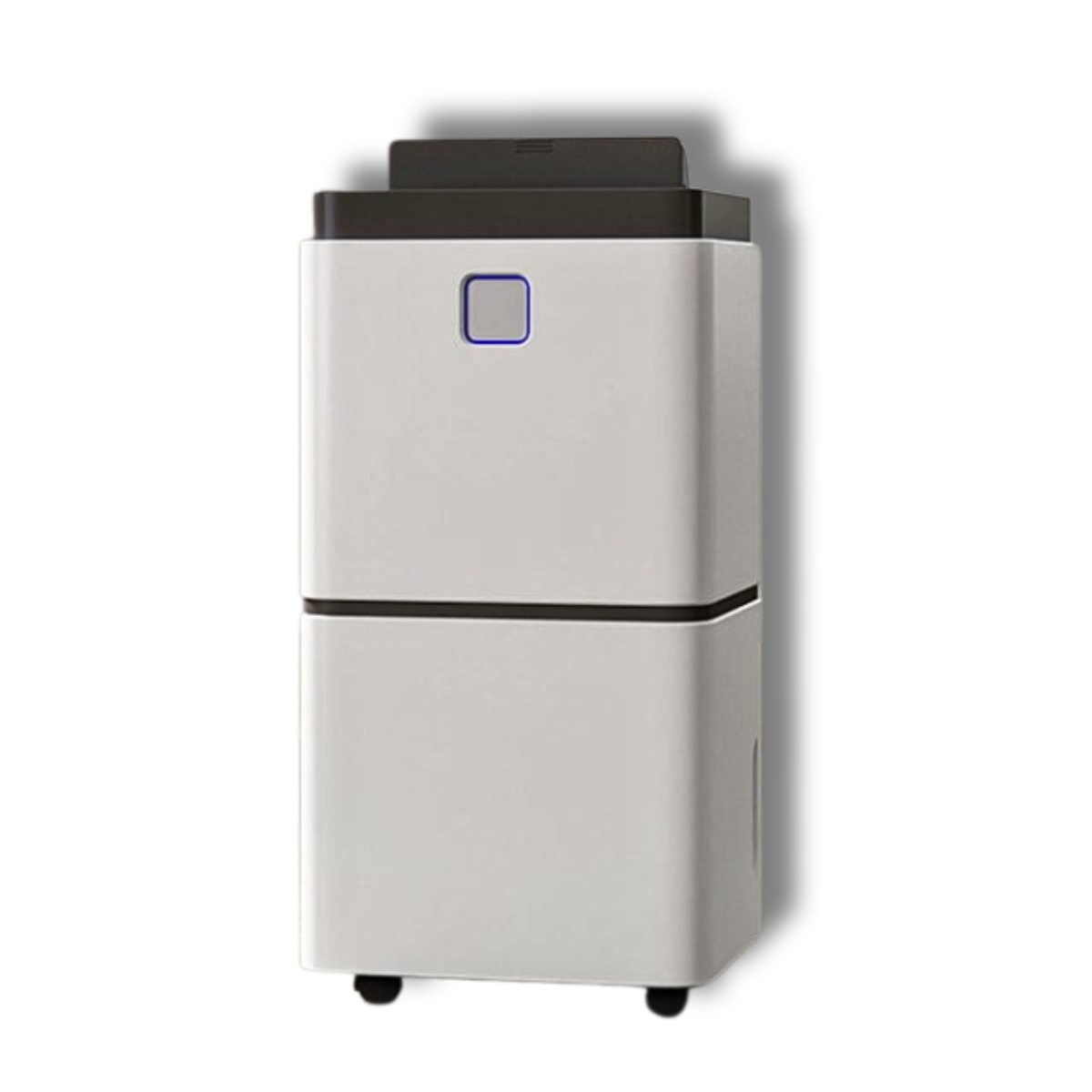


No, dehumidifiers are not loud because units produce 40 to 60 dB(A), resembling a refrigerator hum or conversation during moisture removal cycles inside homes.
They generate sound because compressor operation, fan movement, airflow, vibration, drainage, filters, coils, loose parts and wear affect cabinet operation during moisture extraction. They create mechanical sound because refrigerant dehumidifiers compress refrigerant, circulate air through filters and coils and transfer vibration through cabinet panels and flooring.
Dehumidifier noises that users cannot control include compressor cycling, fan movement, refrigerant flow, cabinet vibration, construction and startup or shutdown sounds during operation. Dehumidifiers produce hum when the compressor motor compresses refrigerant, transfers heat and moves vibration through internal mounts, cabinet panels and supporting floors. They generate drainage sounds when water enters buckets, travels through hoses, meets restrictions or activates condensate pumps during collection and removal cycles.
Dehumidifiers become quieter through level placement, anti-vibration mats, filter cleaning, coil cleaning, clearance, loose part tightening, inspection and reduced fan speed during operation. They reduce sound when users remove intake obstructions, inspect fan blades, examine compressor changes and prevent cabinet movement across flooring during moisture removal. The best quiet dehumidifiers are Frigidaire FFAD2233W1, Midea Cube 20-Pint Smart, GE 25-Pint, VEVOR 35-Pint Smart, hOmeLabs HME1003 and Waykar PD160B 10-Pint. They support humidity control, drainage and airflow settings, while a quiet dehumidifier serves bedrooms and a low noise dehumidifier serves workspaces.
How loud are dehumidifiers?
Dehumidifiers are noticeable but not overwhelmingly loud during normal operation. Portable residential models run between 40 to 60 dB(A), a range that feels like a quiet conversation or a refrigerator’s hum. Low noise sits around 40 to 45 dB, medium around 45 to 55 dB, and high reaches 55 to 60 dB or more. Dehumidifier size and capacity influence loudness, with larger, higher capacity compressors tending to be louder. Vibration from the motor and fan adds to perceived noise, especially on hard floors. Dehumidifier placement also affects perceived loudness because corners and walls can amplify sound while elevated or isolated surfaces can dampen it.
The infographic shows the dehumidifier sound levels by type.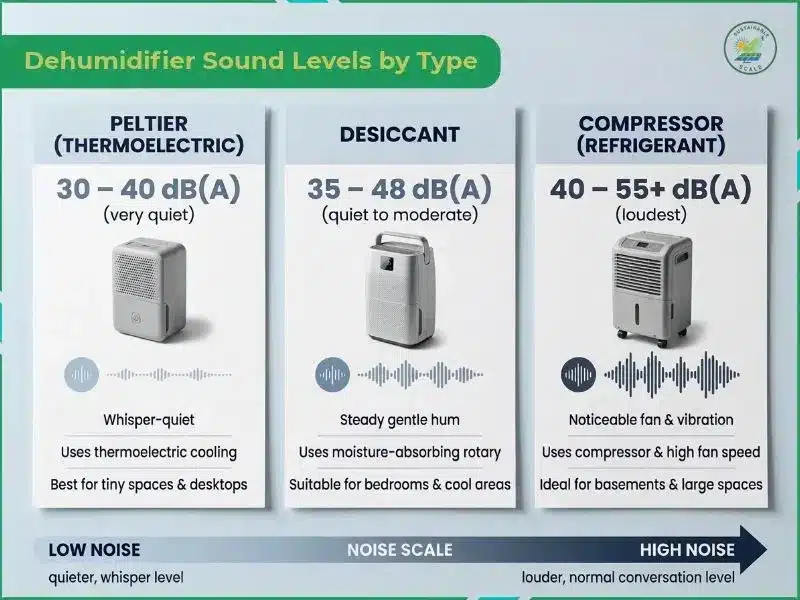
Why are dehumidifiers so loud?
Dehumidifiers are so loud because compressor operation, high fan speed, dirty air filters or coils, loose components, uneven placement, vibration, drainage and wear increase operating sound. Refrigerant dehumidifiers create mechanical noise when the compressor cycles operate at higher settings during moisture removal, especially when airflow and component movement increase. They produce more fan noise when a clogged filter restricts airflow and forces internal parts to work harder during continuous moisture extraction. They create water drainage noise when an internal condensate pump moves collected water through the drainage system during normal operating cycles.
The causes of a dehumidifier becoming loud are listed below.
- Compressor operation
- High fan speed
- Dirty air filter or coils
- Loose components
- Uneven placement and vibration
- Water drainage and pump noise
- Worn or damaged components
Compressor operation
Compressor operation creates dehumidifier noise through motor movement, refrigerant pressure changes and vibration transfer during each compression cycle. The compressor motor produces noise as rotating components move and compress refrigerant inside the sealed system during operation. Motor vibration creates a low frequency hum that travels through the cabinet and reaches the floor beneath the operating unit. Refrigerant pressure changes produce a brief buzz when the compressor starts, adding noise before compression continues through the system.
High fan speed
High fan speed creates dehumidifier noise through increased airflow, turbulence, and fan movement during moisture removal. Fan blades rotate faster and move more air through the intake, filter, coils and outlet. Rapid airflow creates turbulence and produces rushing air noise around the dehumidifier during operation. Fan motors generate their own mechanical sound as they turn the blades. Fan noise combines with compressor hum and sounds noticeably louder than operation at a lower fan setting.
Dirty air filter or coils
Dirty filters and coils cause dehumidifier noise by restricting airflow and increasing resistance as air moving through the appliance passes through blocked surfaces. They make the fan motor work harder to pull air, which increases motor strain and makes the fan produce a louder hum during operation. Restricted airflow creates turbulence around the fan, which generates high pitched airflow noise as air passes through narrowed pathways inside the unit. Dirty evaporator and condenser coils restrict airflow and reduce heat exchange, which increases fan workload and adds noise during the operating cycle.
Loose components
Loose components create dehumidifier noise through amplified vibration, panel resonance, and contact between moving parts. Parts near the compressor, fan or motor vibrate against the cabinet, causing vibration during operation. Panels amplify movement through resonance and produce rattling or buzzing sounds across the housing. Fan and blower assemblies create tapping patterns when mounts or blades loosen. Water buckets and internal trays create knocking patterns when they shift against their supports. These movements change noise patterns as components strike surfaces, shift and transfer motion through the housing.
Uneven placement and vibration
Uneven placement and vibration create dehumidifier noise through unstable support, resonance, structure transmission and component interaction. An uneven surface causes the unit to wobble as the compressor and fan operate. This movement places an uneven load on internal parts and amplifies normal operating vibration. Vibration generates audible buzzing through the cabinet, floor, and nearby structures. This transmission makes the sound louder than the dehumidifier itself as vibration reaches the structure. Internal components contact during movement and their interaction adds rattling noise that increases the dehumidifier’s operating sound.
Water drainage and pump noise
Water drainage and pump operation create dehumidifier noise through water movement, hose restriction, pump movement and cycling. Water drops onto the bucket and produce tapping sounds during collection. Drainage creates splashing or flowing sounds as water enters the continuous drain hose. Hose bends or clogs restrict flow and cause pressure changes inside the drainage path. The drain pump adds motor noise as it activates to push water upward toward a drain. Its operation produces cycling noise during repeated short cycles as the pump starts, drains collected water, stops and restarts.
Worn or damaged components
Worn or damaged components create dehumidifier noise through friction, vibration, imbalance and electrical faults. Fan blades and blower wheels rattle when blower wheels become bent during rotation. Bearings and bushings grind when wear causes excess shaft movement. Motor and drive components vibrate through loose motor mounts. Start relay and capacitor faults create clicking sounds during startup and interrupt the electrical process that activates the dehumidifier motor. Compressor and refrigeration components produce sounds beyond the dehumidifier’s normal operating hum when internal compressor wear develops.
Which dehumidifier noise factors cannot be controlled?
Dehumidifier noise factors that cannot be controlled include compressor operation, fan motor and airflow, refrigerant flow, normal mechanical vibration, unit design and construction and compressor start-up and shutdown noise. They produce operating sound as the compressor compresses refrigerant, the fan moves air and internal components vibrate.
The dehumidifier noise factors that cannot be controlled are given below.
- Compressor operation: Produces a steady low hum while compressing refrigerant and transferring heat through the sealed cooling system, which users cannot control during normal moisture removal.
- Fan motor and airflow: Generate sound from blade rotation, motor movement and air circulation during a dehumidification cycle, which users do not remove because airflow supports moisture removal during operation.
- Refrigerant flow: Moves through the evaporator coil and creates pressure related sound inside the sealed cooling circuit, which users cannot change during moisture removal.
- Normal mechanical vibration: Travels through internal mounts, cabinet panels and flooring as components operate, creating sound users cannot remove during normal moisture extraction processes.
- Unit design and construction: Determine sound transmission through housing materials, component layouts, panel connections and internal supports, which vary by model and placement after purchase.
- Compressor start-up and shutdown noise: Occurs when automatic controls start or stop compressor cycles, which users cannot control during humidity based operating cycles inside the unit.
How to make a dehumidifier quieter?
Make a dehumidifier quieter through stable placement, anti vibration mats, air filter and coil cleaning, clearance, component checks, airflow control and lower fan speed. These steps reduce vibration, restore airflow, limit operating noise and prevent louder fan operation during moisture removal.
The tips to make a dehumidifier quieter are given below.
- Stable placement: Place the dehumidifier on a level surface to prevent cabinet movement, reduce floor vibration and stop nearby furniture from amplifying operating sound.
- Anti vibration mat: Position an anti vibration mat beneath the unit to absorb mechanical vibrations and limit sound transmission through hard flooring during dehumidifier operation.
- Air filter cleaning: Clean the air filter to remove dust and lint, restore air circulation and reduce strain on the fan motor during moisture removal.
- Coil cleaning: Remove debris from the coils to restore airflow, support efficient heat transfer and lower noise caused by restricted air movement during operation.
- Adequate clearance: Keep space around intake and outlet openings to maintain proper airflow and prevent walls, furniture or stored items from blocking air circulation.
- Loose parts: Tighten loose panels, screws, bucket connections and internal fasteners to stop rattling sounds that occur when components vibrate during normal dehumidifier operation.
- Fan inspection: Check fan blades and motor parts for debris, wear or imbalance that creates sound and reduces air circulation through the dehumidifier.
- Compressor inspection: Examine the compressor after changes in humming, rattling or cycling sounds to identify damaged parts that increase operating noise during moisture removal.
- Airflow restrictions: Remove objects from intake and outlet areas to restore circulation and prevent internal systems from working harder and increasing operating noise.
- Lower fan speed: Select a lower fan speed to reduce blade rotation, airflow force, motor sound and louder fan operation during moisture removal.
What are the best quiet dehumidifiers?
The best quiet dehumidifiers are Frigidaire FFAD2233W1, Midea Cube 20-Pint Smart, GE 25-Pint, VEVOR 35-Pint Smart, hOmeLabs HME1003 and Waykar PD160B 10-Pint. They provide moisture removal, airflow control, drainage options and humidity settings without excessive operating noise for different indoor spaces.
The best quiet dehumidifiers are given below.
- Frigidaire FFAD2233W1: Frigidaire FFAD2233W1 removes moisture at 43 to 49 dB and supports indoor comfort through humidity control, washable filtration and three fan speeds.
- Midea Cube 20-Pint Smart: Midea Cube 20-Pint Smart delivers convenient humidity control with connected settings, tank monitoring, drainage support, and scheduling for apartments, bathrooms, closets or bedrooms.
- GE 25-Pint: GE 25-Pint removes moisture from indoor air and manages humidity through digital controls, drainage options and fan settings for daily room use.
- VEVOR 35-Pint Smart: VEVOR 35-Pint Smart supports basement and living area moisture removal with timer controls, drainage connections and humidity monitoring without excessive operating noise.
- hOmeLabs HME1003: hOmeLabs HME1003 removes moisture across large areas and uses drainage support, humidity controls and internal systems during continuous indoor operation.
- Waykar PD160B 10-Pint: Waykar PD160B 10-Pint serves as a quiet dehumidifier for bedroom use and removes moisture through fan operation and humidity controls.
Which is the best quiet dehumidifier for a basement?
Midea Cube is the best quiet dehumidifier for a basement because it removes 50 pints daily while producing sound at 42 dB. It provides effective moisture control and reduces excessive operating noise during water removal. It includes adjustable humidity control and continuous drainage capability, directing water into a sink or floor drain.
Which type of dehumidifier is quiet?
A desiccant dehumidifier is quiet because it removes water without a compressor and limits mechanical sound from refrigeration components. It uses a rotating moisture absorbing wheel to collect water from air, releases dry air through the moisture removal process. It avoids the loud compressor used by compressor based models, while whole house dehumidifiers send operating sound from rooms through ductwork.
Are whole-house dehumidifiers loud?
No, whole house dehumidifiers are not loud because components are installed in a mechanical space away from bedrooms and living areas. They remove moisture from air distributed through ductwork, keeping compressor and fan sound away from rooms. Their noise level varies by model, fan speed, installation and duct design while ducting limits sound in occupied rooms.
Is there any silent dehumidifier?
No, there is no completely silent dehumidifier because units need fans and compressors or other moving components to remove moisture from the air. Dehumidifiers create sound when fans move air and internal parts run during water extraction inside the unit. Some models operate very quietly, but their systems still produce sound from airflow, vibration and mechanical movement during operation.
Where should you place a dehumidifier to minimize noise?
You should place a dehumidifier on a stable, level surface in a basement, utility room or enclosed area to minimize noise. It should be kept away from bedrooms and living areas where distance helps reduce perceived sound from fan movement and compressor operation. A dehumidifier needs space around the intake and outlet, allowing airflow without contact with walls, furniture or stored items.
Can you run a dehumidifier while sleeping?
Yes, you can run a dehumidifier while sleeping because it lowers excess moisture and reduces dampness in bedroom air overnight. A dehumidifier curbs dust mites and stops mold growth by lowering humidity on bedding, walls, furniture and room surfaces. The benefits of sleeping with a dehumidifier include moisture control, allergen reduction, less condensation and improved bedroom conditions during sleep.
How often should a dehumidifier run?
A dehumidifier should run as needed to maintain indoor humidity around 30% to 50%. It runs several hours daily when water remains in the air. It uses a humidistat to cycle on and off automatically after humidity reaches the setting. It stops when the room reaches the setting and starts when humidity rises.
How do dehumidifier noise levels compare with other appliances?
Dehumidifier noise levels compare with other appliances such as refrigerators, air conditioners or fans, depending on model and operating mode. Portable units usually fall in the 40 to 60 dB(A) range, similar to a quiet fridge or box fan. Whole house systems can be louder at high fan speeds but often blend into background HVAC noise when ducted.
Solar Panel
Air Purifier