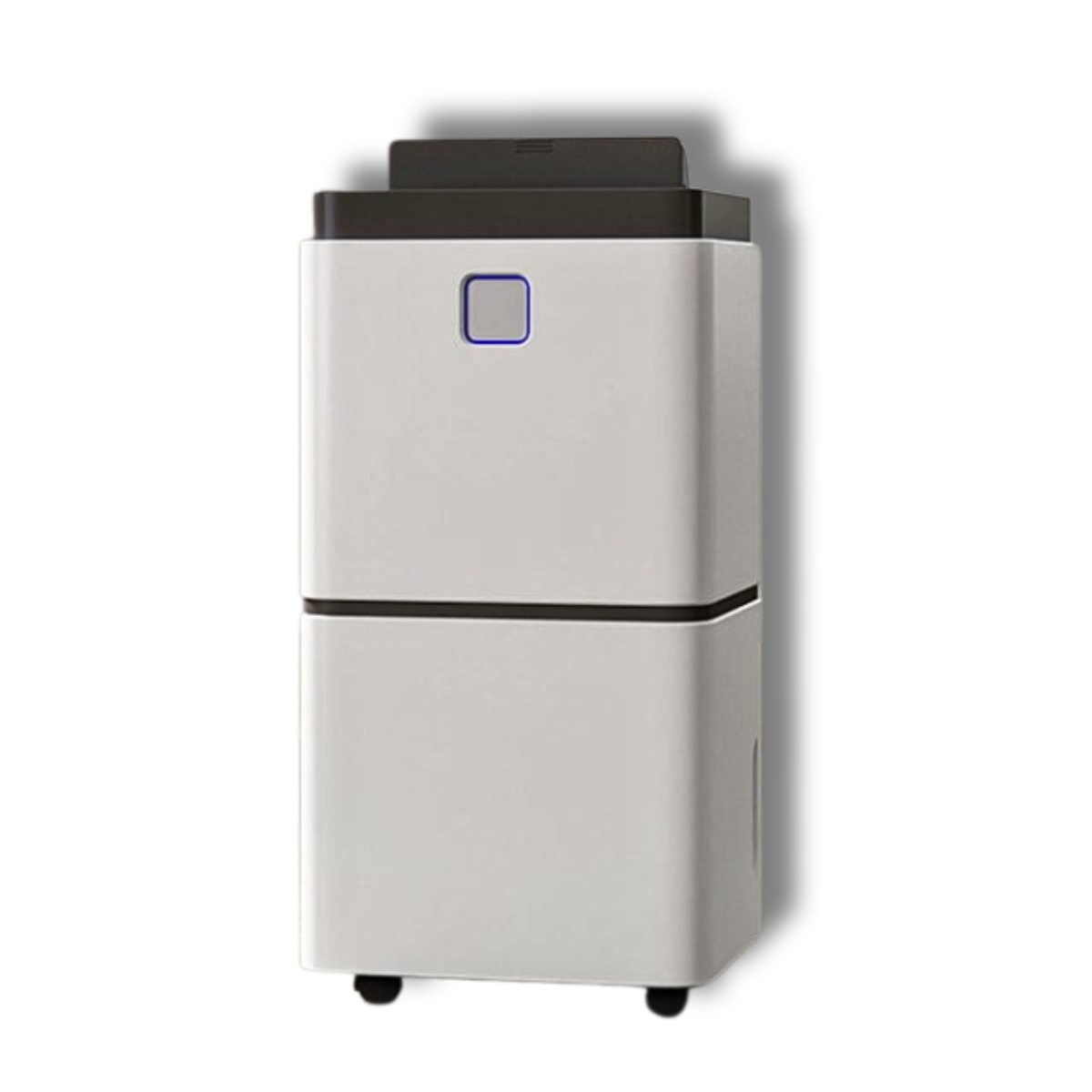


A dehumidifier costs around 15 USD to 40 USD per month to run, based on wattage, operating hours and energy prices in different regions. It consumes around 0.3 to 0.7 kWh of electricity per hour, which shows moderate energy usage compared to heavy household appliances. A dehumidifier’s running cost is calculated by identifying wattage, estimating daily usage hours, converting consumption into kilowatt hours and multiplying by the electricity rate. Its electricity cost is influenced by capacity, efficiency rating, usage duration, climate conditions, features and brand type. It also uses more energy when the unit is larger, runs longer hours or operates in highly humid environments.
A dehumidifier in very damp conditions increases runtime, which raises total energy consumption measured in kilowatt hours. It reduces operating cost when correctly sized for the room and used with energy efficient settings and proper humidity control. A dehumidifier also lowers electricity usage by being maintained regularly, sealing the room and replacing worn out filters on time. The unit becomes more cost efficient when paired with renewable energy plans or community solar options that reduce electricity pricing. It does not necessarily use a lot of electricity because its consumption depends on runtime and environmental conditions.
A dehumidifier becomes more efficient when upgraded to energy star rated models, which reduce energy use by 15% to 30%. It is generally cheaper to run than an air conditioner because it only removes moisture instead of providing full cooling.
How much does a dehumidifier cost to run per month?
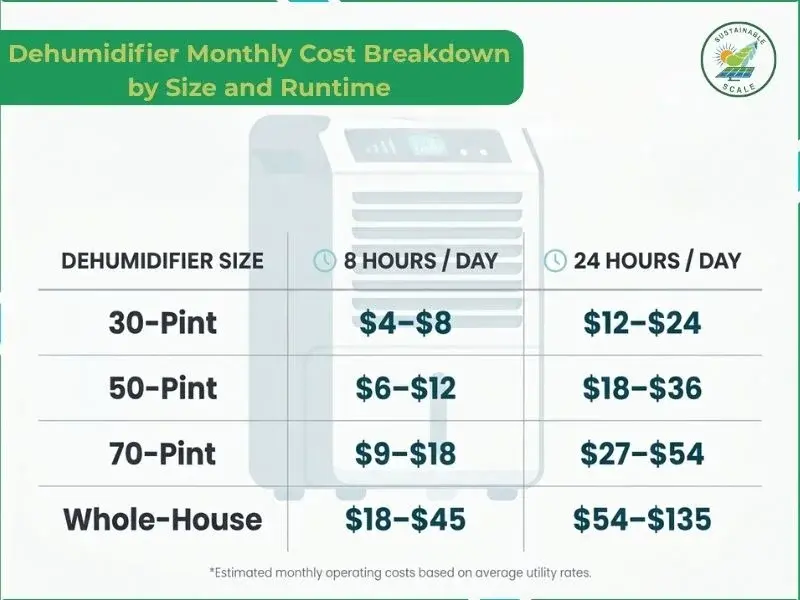
The cost to run a dehumidifier ranges from 15 to 40 USD per month, which depends on wattage and electricity rate. A dehumidifier consumes electricity and its power rating determines how much energy it uses over time. This estimate assumes the unit operates for eight hours per day, which results in moderate energy consumption and lower operating costs. A dehumidifier’s monthly cost is calculated by multiplying daily energy usage by the local electricity rate per kWh.
A dehumidifier’s runtime has a direct impact on electricity consumption and overall operating expenses. A dehumidifier that runs 24/7 increases monthly costs because the unit continuously draws power. The unit’s continuous operation consumes more energy and results in higher electricity costs, compared with eight hours of daily use.
The image below shows dehumidifier monthly cost breakdown by size and runtime.
How much electricity does a dehumidifier use?
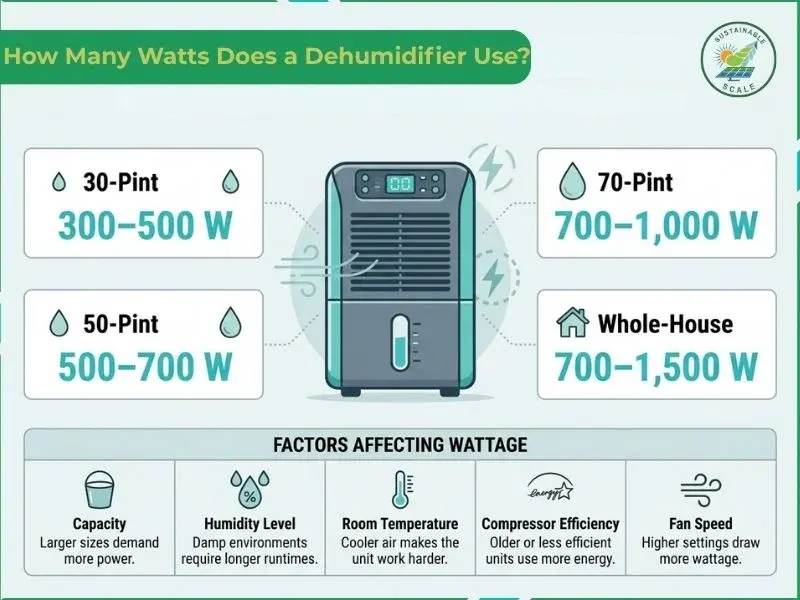
A dehumidifier uses around 0.3 to 0.7 kWh of electricity per hour, which depends on its wattage and runtime. Its power rating indicates how many watts the unit uses and helps estimate energy consumption in kilowatt hours (kWh). Its energy use is calculated by multiplying the unit’s wattage by its operating time and dividing by 1,000. A tiny tabletop dehumidifier operates at the lower end of the wattage range, while a larger unit that extracts more pints of moisture uses more electricity. A dehumidifier does not necessarily use a lot of electricity, as energy consumption depends on the unit’s capacity, humidity level and daily runtime. Its higher capacity units consume more energy but they still operate efficiently when matched to the room size and moisture load.
The image below shows how many watts a dehumidifier uses.
How to calculate the dehumidifier running cost?
To calculate the dehumidifier’s running cost, find the wattage, estimate daily operating hours, calculate daily kWh and calculate the daily cost. This helps to understand how much electricity the dehumidifier consumes in a day and how that usage translates into actual running expenses.
4 steps to calculate the dehumidifier running cost are outlined below.
- Find wattage: Check the dehumidifier’s watt rating on its specification label or nameplate. This value represents the unit’s power usage and serves as the baseline for all energy and cost calculations.
- Estimate daily operating hours: Estimate how many hours the dehumidifier runs per day based on humidity levels, room size and user settings. This runtime is essential for calculating total daily energy consumption accurately.
- Calculate daily kWh (Formula): Multiply wattage by daily operating hours and divide by 1,000 to convert into kilowatt hours. This shows how much energy the dehumidifier consumes per hour and per day.
- Calculate daily cost: Multiply the total daily kWh by the local electricity rate per kWh. This cost calculation formula determines the final daily running expense based on actual power usage.
What factors affect the cost of running a dehumidifier?
The factors that affect the cost of running a dehumidifier include capacity and size, energy efficiency rating, usage duration or settings, and climate or humidity levels. These factors influence how much electricity the unit consumes, which is measured in kilowatt hours (kWh) and directly affects overall power usage costs.
The factors that affect the cost of running a dehumidifier are given below.
- Capacity and size: A dehumidifier with higher capacity and size uses more power to remove moisture from larger spaces. It increases total electricity use and monthly expenses.
- Energy efficiency rating: A dehumidifier with a higher efficiency rating extracts more moisture per unit of electricity. It reduces wasted energy and lowers overall operating costs.
- Usage duration and settings: A dehumidifier running longer hours or at higher speeds increases total kWh consumed. Its final cost can be determined by multiplying the value by the local electricity rate.
- Climate and humidity levels: A dehumidifier in very humid climates runs more frequently and for longer durations. It results in higher cumulative runtime and greater power usage costs each month.
- Features and smart functions: A dehumidifier with additional features such as heaters, pumps or continuous modes increases power draw. It adds extra load that raises overall energy consumption and cost.
- Brand and unit type: A dehumidifier from premium or commercial oriented brands uses advanced compressors or controls. It aligns technology choices with durability, performance and long term energy usage.
How to reduce the electricity cost of a dehumidifier?
To reduce the electricity cost of a dehumidifier, choose the right size, run the dehumidifier when necessary, keep the use area sealed and replace worn out filters. These ways reduce unnecessary energy usage, lower overall electricity costs and confirm the dehumidifier operates more efficiently based on actual room conditions and humidity levels.
The ways to reduce the cost of a dehumidifier are outlined below.
- Choose the right size dehumidifier: Match the dehumidifier’s pint capacity with the room size so it removes moisture efficiently without wasting energy or running longer than necessary for effective operation.
- Run the dehumidifier when necessary: Operate the unit only during high humidity periods to reduce total runtime, lower energy consumption and prevent unnecessary electricity costs over extended daily usage.
- Keep the use area sealed: Close doors, windows and any gaps to prevent humid outdoor air from entering so the dehumidifier reaches target humidity faster with less energy use.
- Maintain the dehumidifier regularly: Clean coils, drains and sensors regularly to maintain airflow efficiency, improve moisture removal performance and confirm the unit consumes less power during operation.
- Replace worn out filter: Replace clogged or worn filters to maintain smooth airflow and prevent the compressor from overworking, which helps reduce unnecessary electricity consumption and improve efficiency.
- Use energy saving brands: Choose energy efficient brands with efficient compressors and smart controls that reduce long term electricity usage while maintaining strong and consistent dehumidification performance in different conditions.
What are the alternatives to lowering the electricity cost of a dehumidifier?
The alternatives to lowering a dehumidifier’s electricity costs include changing how electricity is sourced and priced for the home. A dehumidifier owner can reduce electricity bills by joining a community solar project or choosing renewable energy plans. These options use cleaner energy sources and different pricing structures, which help lower overall monthly electricity costs.
Should you upgrade to an energy star rated dehumidifier?
Yes, you should upgrade to an energy star rated dehumidifier because it uses 15% to 30% less energy than standard models and helps reduce long term electricity costs. The energy savings from operation offset the higher purchase price, which allows the unit to pay for itself over time through lower monthly utility bills.
Do dehumidifiers use a lot of electricity?
No, dehumidifiers do not use a lot of electricity because their power consumption is generally moderate. They use less energy than heavy household appliances and actual usage depends on daily runtime and humidity levels. A dehumidifier’s electricity consumption increases when it runs continuously in very damp spaces or when it is not properly sized for the room.
Is a dehumidifier cheaper to run than an air conditioner?
Yes, a dehumidifier is cheaper to run than an air conditioner because it uses less electricity and does not perform full air cooling. It removes moisture from the air, which requires less energy compared to the cooling process of an air conditioner, while an air conditioner consumes more power and has higher operating costs.
Solar Panel
Air Purifier