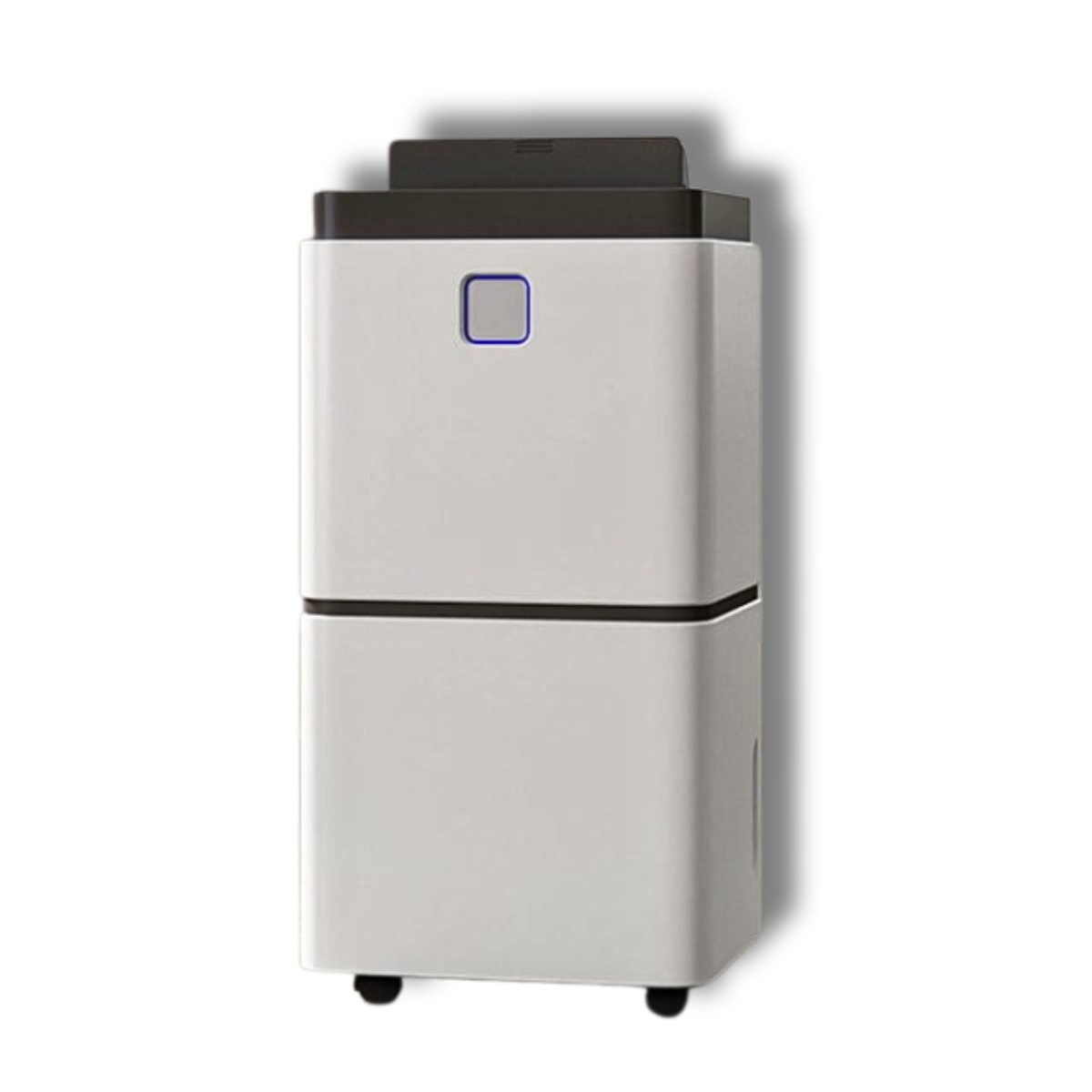


Wall mounted dehumidifier is a compact moisture control unit that hangs on a wall to remove excess humidity from indoor air. It pulls humid air across cold coils, condenses water into a collection path and returns drier air for targeted moisture control in defined rooms. Wall mounted dehumidifiers include variants that mount on the wall surface or are built into the wall cavity. They use continuous drain capability in some units, so collected condensate leaves the unit without manual emptying.
Wall mounted dehumidifier serves bedrooms, living rooms, basements, hallways, offices and storage areas where floor space is limited, but humidity rises. It protects finishes, limits mold risk, improves comfort and supports building durability. It faces limitations related to fixed mounting height, coverage limited to nearby zones, dependence on proper drainage and noise that affects quiet spaces. A wall mounted dehumidifier costs between $1,400 and $1,800 for residential and light commercial applications.
Wall mounted dehumidifier needs careful selection by matching room size, dehumidifier’s capacity, mounting style, drainage setup and energy performance to building conditions. Its popular models include Santa Fe UltraMD33 series and IDS IW-series units with varied capacities and controls. It installs through location planning, bracket mounting, drain line routing and electrical connection that respects a dedicated circuit and manufacturer instructions. It maintains performance through regular filter cleaning, vent clearing, coil cleaning, leak inspection, drain checks and scheduled service that keep airflow and drainage stable.
What is a wall mounted dehumidifier?
A wall mounted dehumidifier is a moisture control device installed on or inside a wall that works to remove excess humidity from the air. It operates through air intake, condensation and water collection or drainage. It maintains indoor humidity levels through automatic humidity control and supports stable air conditions. A wall mounted dehumidifier uses a design that supports space saving installation in residential or commercial areas. It includes components such as a fan, coil and drainage system that enable quiet operation.
A wall mounted dehumidifier manages air moisture by drawing in humid air and releasing drier air into the same space. It supports integration with wall systems and connects to drainage lines for continuous water removal. A unit reduces moisture buildup that leads to condensation and related issues. It provides control settings through onboard or external interfaces to select a humidity level. It maintains consistent performance through sensor based monitoring and system response.
How does a wall mounted dehumidifier work?
A wall mounted dehumidifier works by air Intake, moisture removal, water collection and drainage, air treatment and dry air discharge. A wall mounted dehumidifier uses a system flow where it draws humid indoor air through an internal path. It processes air through stages that support moisture separation and release of air in sequence.
The 5 steps of how a wall mounted dehumidifier works are listed below.
- Air Intake: A wall mounted dehumidifier draws humid indoor air through an intake grille and filter, where dust and airborne particles are captured before the air enters the internal moisture removal system.
- Moisture removal: A refrigerant model cools the incoming air to condense the moisture, while a desiccant model absorbs moisture using a desiccant material before continuing the drying process.
- Water collection and drainage: A wall mounted dehumidifier directs water toward a reservoir or a drain connection during the operation cycle. It enables water collection and drainage without interruption in system flow.
- Air treatment: A wall mounted dehumidifier processes air after moisture removal through a path that supports balance in system conditions. It stabilizes airflow and prepares it for the discharge stage.
- Dry air discharge: A wall mounted dehumidifier releases air back into space through the outlet after completion of cycle stages. It completes dry air discharge and maintains cycle continuity in the system.
What are the types of wall mounted dehumidifiers?
The types of wall mounted dehumidifiers are in-wall dehumidifiers (recess-mounted) and on-wall dehumidifiers (surface-mounted). Wall mounted dehumidifiers use a category view that distinguishes units built into the wall cavity and units attached directly to the wall surface. They support selection based on installation needs, space layout and access preferences, which guide type choice.
2 main types of wall mounted dehumidifiers are given below.
- In-wall dehumidifiers (recess-mounted): In-wall dehumidifiers integrate within framing where the unit is built into the wall cavity between studs and aligned with wall systems. They connect to drainage and power lines and are simpler to access for maintenance.
- On-wall dehumidifiers (surface-mounted): On-wall dehumidifiers mount against existing wall faces where the unit is attached directly to the wall surface with brackets or mounting rails. They connect to drainage and power routes and support easier to install positioning that keeps service and control access clear.
Where to use a wall mounted dehumidifier?
Use a wall mounted dehumidifier in basements, bathrooms, kitchens, bedrooms, living rooms, offices, hospitals, laundry rooms, garages and storage rooms. It manages indoor humidity across residential, commercial and specialized environments to support comfort, moisture control and the protection of occupants, equipment and stored materials.
Places to use a wall mounted dehumidifier are outlined below.
- Basements: A wall mounted dehumidifier for the basement operates in nearby storage zones that link with central HVAC systems. It manages air conditions and supports long term moisture protection in enclosed spaces.
- Bathrooms: A wall mounted dehumidifier for bathroom functions in wash areas where occupants experience mirror fogging. It reduces fogging on mirrors and maintains humidity levels that align with space usage.
- Kitchens: A wall mounted dehumidifier in kitchens serves cooking and cleaning zones around appliances and sinks. It controls moisture from cooking activities and supports air balance for connected rooms.
- Bedrooms: A wall mounted dehumidifier in bedrooms operates in sleeping zones where humidity affects bedding and surfaces. It stabilizes air moisture and supports consistent comfort during daily use.
- Living rooms: A wall mounted dehumidifier in living rooms works in shared spaces that connect to adjacent rooms and circulation paths. It maintains humidity balance and supports air quality for occupants.
- Offices: A wall mounted dehumidifier in offices serves workspaces with equipment and occupancy driven moisture. It manages humidity across desk areas and supports focused working conditions.
- Hospitals: A wall mounted dehumidifier in hospitals functions in clinical and support zones that require stable humidity control. It helps protect equipment and materials and supports environmental standards for patient care.
- Laundry rooms: A wall mounted dehumidifier in laundry rooms operates near washers, dryers and drying racks. It manages moisture from wet fabrics and supports conditions that limit damp buildup.
- Garages: A wall mounted dehumidifier in garages serves vehicle and storage spaces exposed to outdoor contact. It regulates humidity levels and supports surface protection for stored items.
- Storage rooms: A wall mounted dehumidifier in storage rooms works around stored materials and packed inventory. It maintains moisture control and supports long term preservation of contents.
What are the benefits of a wall mounted dehumidifier?
The benefits of a wall mounted dehumidifier include space-saving and discreet, lower maintenance, targeted humidity control, damage prevention and health and comfort. Wall mounted dehumidifiers provide targeted moisture control that supports indoor conditions across different rooms and uses. They prevent structural damage by limiting moisture exposure and help in deterring mold growth on materials and surfaces.
The advantages of wall mounted dehumidifiers are outlined below.
- Space-saving and discreet: A wall mounted dehumidifier frees floor area and sits within wall lines where they interact with room airflow patterns. It maintains operation without obstructing movement and keeps equipment positions stable.
- Lower maintenance: A wall mounted dehumidifier uses permanent mounting points and accessible panels that simplify servicing tasks and filter changes. It reduces manual handling and keeps maintenance routines consistent.
- Targeted humidity control: A wall mounted dehumidifier focuses on humidity regulation in specific rooms or zones where moisture levels vary. It maintains set ranges and supports balanced conditions for connected spaces.
- Damage prevention: A wall mounted dehumidifier limits condensation and moisture buildup on building elements and contents. It protects finishes, materials and stored items from long term moisture related damage.
- Health and comfort: A wall mounted dehumidifier supports breathable air conditions that reduce dampness sensations in occupied rooms. It helps maintain comfort ranges that align with everyday activities and rest.
- Safety and protection: A wall mounted dehumidifier reduces slip risks and corrosion on surfaces exposed to moisture. It supports safer environments for occupants and equipment in rooms with recurring damp conditions.
- Quiet operation: A wall mounted dehumidifier runs with controlled sound patterns that suit living and working spaces. It maintains performance while limiting noise impact for occupants during daily use.
What are the limitations of a wall mounted dehumidifier?
The limitations of a wall mounted dehumidifier include permanent installation, drainage restrictions, fixed capacity, higher upfront costs, airflow constraints and maintenance access. Wall mounted dehumidifiers rely on a dedicated power outlet and a fixed square-footage capacity, with reliance on gravity or pump drainage. They shape placement options, system layout and long term flexibility in controlled rooms.
The disadvantages of wall mounted dehumidifiers are given below.
- Permanent installation: A wall mounted dehumidifier remains fixed at installed positions within wall structures and room layouts. It restricts relocation flexibility and requires planning for future changes in building use or space configuration.
- Drainage restrictions: A wall mounted dehumidifier depends on nearby drain points and suitable routing paths for discharge lines. It requires coordination with plumbing routes that match reliance on gravity or pump drainage across installation zones.
- Fixed capacity: A wall mounted dehumidifier operates within a fixed square-footage capacity defined by unit design and rating. It limits humidity control performance when the room size or moisture load exceeds specified coverage ranges.
- Higher upfront costs: A wall mounted dehumidifier involves equipment purchase, installation work and connection to a dedicated power outlet. It increases initial project spending compared to portable units and requires budget allocation for permanent placement.
- Airflow constraints: A wall mounted dehumidifier interacts with room airflow patterns that depend on vents, openings and obstructions. It reduces efficiency when furniture, doors or partitions block intake and discharge paths around the mounted unit.
- Maintenance access: A wall mounted dehumidifier relies on service access through front or side panels at the installed height and location. It complicates maintenance when nearby fixtures or tight spaces limit reach for inspection, cleaning and component replacement.
How much does a wall mounted dehumidifier cost?
A wall mounted dehumidifier in the USA costs between $1,400 and $1,800 for residential and light commercial applications, according to Sylvane. In-wall mounted dehumidifiers are priced at around $1,540, while on-wall surface-mounted models cost around $1,480. The overall price varies with moisture removal capacity, features, installation method and intended use.
Commercial and industrial wall mounted dehumidifiers usually start at about $1,800 and can exceed $4,000 for high capacity systems built for large or demanding spaces. They cost more because they offer greater moisture removal, continuous operation and advanced humidity controls. Comparing capacity, energy efficiency and installation requirements helps buyers choose a model that fits both their space and budget.
What factors affect the cost of a wall mounted dehumidifier?
The factors that affect the cost of a wall mounted dehumidifier are outlined below.
- Capacity (pints per day): A wall mounted dehumidifier with larger capacity units costs more and needs appropriately sized moisture removal.
- Installation style (in-wall vs. on-wall): A wall mounted dehumidifier in-wall configurations needs more framing access than on-wall mounting locations.
- Drainage requirements: A wall mounted dehumidifier needs reliable condensate drainage connections that keep moisture moving away from the unit.
- Electric modification: A wall mounted dehumidifier needs dedicated wiring setups and panel changes when circuits are updated for new loads.
- Professional plumbing installation: A wall mounted dehumidifier needs professional plumbing installation when condensate lines tie into existing drainage networks.
- Energy efficiency: A wall mounted dehumidifier with Integrated Energy Factors (IEF) ratings uses energy performance benchmarks that guide lifecycle operating costs.
- Air quality features: A wall mounted dehumidifier with built-in features increases the equipment cost and adds extra air treatment options.
- Commercial vs. residential build: A wall mounted dehumidifier in commercial builds matches heavier duty usage cycles than typical residential operating patterns.
How to choose a wall mounted dehumidifier?
Choose a wall mounted dehumidifier based on room size, dehumidification capacity, mounting style, humidity control features, drainage option, energy efficiency, noise level and maintenance requirements. These factors help match the unit to the installation environment, moisture conditions, operating requirements and long-term performance expectations.
10 things to check while choosing a wall mounted dehumidifier are outlined below.
- Room size and coverage area: Match room size and coverage area to remove moisture without becoming underpowered or oversized. Align performance with defined square footage and layout characteristics for each treated space.
- Dehumidification capacity: Select dehumidification capacity so higher-capacity models address increased moisture loads across seasons. Relate daily pint ratings to expected humidity levels and occupancy patterns in designated rooms.
- Mounting style: Choose a mounting style so that in-wall or on-wall mounting fits the framing, wall depth and inspection access. Link airflow paths and service access with structural constraints and clearance requirements.
- Humidity control features: Use humidity control features so target setpoints, schedules and runtime behaviors follow comfort goals. Connect user controls and sensor feedback with desired indoor humidity bands under normal operating conditions.
- Drainage option: Plan drainage option so a wall mounted dehumidifier with continuous drain uses gravity or pump paths that move condensate away. Tie hose routing and drain locations to building drainage provisions.
- Energy efficiency and power consumption: Track energy efficiency and power consumption so operating expenditures stay predictable over the years. Compare amperage, voltage and runtime characteristics with panel ratings and circuit limitations.
- Noise level during operation: Limit noise level during operation to acceptable ranges for occupied rooms and workspaces. Relate fan noise and vibration behaviors to acoustic comfort needs and background sound levels.
- Maintenance requirements and accessibility: Organize maintenance requirements and accessibility so service tasks remain straightforward for technicians or staff. Match filter access and component cleaning with scheduled maintenance routines.
- Climate and temperature suitability: Match climate and temperature suitability so performance remains stable under local environmental conditions. Relate operating range and defrost behaviors to seasonal patterns and temperature swings.
- Build quality and durability: Maintain build quality and durability so units deliver value across expected service life and usage intensity. Associate component integrity and mounting hardware with long term reliability expectations.
What are the popular wall mounted dehumidifier models?
The popular wall mounted dehumidifier models are Santa Fe UltraMD33, Santa Fe UltraMD33X, Santa Fe UltraMD33E, IDS IW-25-5, IDS IW-25 and SantaFe UltraMD33D. These wall mounted dehumidifier models vary in dehumidification capacity, installation configuration, drainage design, control features and application suitability to meet different residential and commercial humidity control requirements.
8 popular wall mounted dehumidifier models are given below.
- Santa Fe UltraMD33: Santa Fe UltraMD33 operates as a high capacity in-wall dehumidifier that manages continuous moisture removal in defined coverage zones. It keeps performance aligned with basement usage and structured in-wall installation requirements.
- Santa Fe UltraMD33X: Santa Fe UltraMD33X builds on the Santa Fe UltraMD33 platform with specific control features that refine humidity management and runtime behaviors. It keeps dehumidification aligned with targeted indoor humidity bands and scheduling needs.
- Santa Fe UltraMD33E: Santa Fe UltraMD33E extends the Santa Fe UltraMD33 family with monitoring refinements that support operational oversight. It keeps performance visibility aligned with maintenance schedules and troubleshooting activities.
- IDS IW-25-5: IDS IW-25-5 functions as an in-wall dehumidifier that balances capacity and noise for living areas and workspaces. It keeps drainage connections aligned with condensate routing across structural and plumbing layouts.
- IDS IW-25: IDS IW-25 provides an in-wall solution that targets medium moisture loads in specific rooms and circulation corridors. It keeps coverage capabilities aligned with pint-per-day ratings and defined floor plans.
- IDS IW-15: IDS IW-15 serves localized spaces where moisture levels remain moderate but persistent across seasons. It keeps capacity aligned with humidity reduction in focused room applications and limited wall sections.
- Santa Fe UltraMD33D: Santa Fe UltraMD33D integrates continuous drain capability into the UltraMD33 series for uninterrupted condensate removal. It keeps drain routing aligned with hose placement and gravity or pump discharge points.
- IDS IW-35W: IDS IW-35W operates as a wall unit that supports wider coverage zones in residential and light commercial settings. It keeps airflow and moisture removal aligned with larger rooms and interconnected occupied spaces.
How to install wall mounted dehumidifiers?

Install wall mounted dehumidifiers by choosing the perfect location, preparing the wall, mounting the dehumidifier, setting up the drainage and connecting the power. These installation steps ensure proper airflow, effective condensate drainage, secure mounting and reliable operation for long-term humidity control.
Five steps to install wall mounted dehumidifiers are outlined below.
- Choose the perfect location: Select an unobstructed wall near the dampest area and maintain 15 to 30 cm of clearance around the unit. Position mounting height and orientation so airflow and service access remain clear.
- Prepare the wall: Mark stud locations and confirm structural integrity for the mounting hardware and bracket layout. Drill pilot holes and align anchors so brackets secure directly into load bearing framing.
- Mount the dehumidifier: Lift the unit onto the installed bracket and secure fasteners through the designated attachment points. Tighten mounting hardware and confirm the unit sits level against the wall surface.
- Set up the drainage: Route the drain line from the outlet connection to a discharge point and secure hose runs. Confirm drainage slopes maintain continuous flow away from the unit.
- Connect the power: Use a dedicated circuit that meets the voltage and amperage specifications. Verify connections, restore power and confirm the unit cycles correctly through normal operation.
What are the factors to consider when installing wall mounted dehumidifiers?
The factors to consider when installing wall mounted dehumidifiers are outlined below.
- Location and room size: Match the dehumidifier’s capacity to the room area and position it for clear airflow paths.
- Wall material and mounting type: Evaluate the wall characteristics and select a proper mounting method to secure the unit safely.
- Drainage setup: Plan the drainage route for uninterrupted water removal from the dehumidifier to a suitable discharge point.
- Power and electrical requirements: Check the electrical supply and confirm circuits support startup and running loads without overloading.
- Environment and noise: Assess surrounding activities and place the unit where operating noise remains acceptable to occupants.
How to maintain wall mounted dehumidifiers?
Maintain wall mounted dehumidifiers by cleaning the air filter, clearing the vents, checking the drain line, inspecting for leaks and cleaning the exterior. These maintenance steps on a regular schedule to remove dust and debris, protect components and reduce electrical issues. Schedule deeper checks that keep humidity control stable.
Ten steps to maintain wall mounted dehumidifiers are outlined below.
- Clean the air filter: Remove the air filter to remove dust and debris that restrict airflow across the intake surface. Rinse or replace the filter and reinstall it securely for consistent airflow.
- Clear the vents: Keep intake and exhaust vents free from obstructions that restrict airflow through the unit. Brush away buildup, move nearby items and maintain clear ventilation paths around the cabinet.
- Check the drain line: Inspect and confirm condensate flows steadily toward the chosen discharge point. Flush blockages and reposition the line to prevent standing water and related moisture issues.
- Inspect for leaks: Examine fittings, tubing and the cabinet for signs of leaks if moisture escapes. Tighten connections, correct routing and dry affected areas to prevent damage and mold formation.
- Clean the exterior: Wipe the exterior cabinet and nearby wall surfaces to limit dust accumulation. Remove marks, clear airflow openings and keep surfaces accessible for service and inspection work.
- Set humidity levels: Adjust humidity levels on the control panel to match indoor comfort and protection needs. Confirm readings with a hygrometer and refine setpoints to stabilize indoor humidity.
- Check wall mounting: Examine wall mounting hardware to confirm brackets and fasteners remain secure. Tighten loose components, correct misalignment and reduce vibration that affects stability and long term mounting performance.
- Clean the coils: Access coil surfaces and clean accessible coils where buildup appears on fin surfaces. Use suitable tools to remove deposits and keep heat exchange areas clear for steady operation.
- Schedule maintenance: Plan maintenance intervals that match runtime hours and seasonal usage patterns for the dehumidifier. Track completed tasks, group related inspections and coordinate service when performance trends change.
- Follow manufacturer guidelines: Review manufacturer guidelines that describe recommended maintenance procedures and intervals. Apply the listed steps and update practices when instructions, firmware or replacement parts change over time.
Do in-wall mounted dehumidifiers need regular maintenance?
Yes, in-wall mounted dehumidifiers need regular maintenance because scheduled cleaning and inspection prevent system failures and keep components from degrading. In-wall mounted dehumidifiers receive filter cleaning, drain checks and coil cleaning, which helps the unit run efficiently and extends its lifespan through consistent performance.
Can I retrofit an in-wall mounted dehumidifier into a finished room?
Yes, you can retrofit an in-wall dehumidifier into a finished room if the wall construction and utilities support a safe installation. An in-wall mounted dehumidifier requires a properly sized opening and structural support that match the unit’s specifications. It depends on drainage routing and electrical access, which keep the operation reliable.
Will a wall mounted dehumidifier control humidity in my entire house?
No, a wall-mounted dehumidifier will not control humidity in your entire house because it is designed to control humidity in a single room. A wall mounted dehumidifier targets the air within its immediate coverage zone and depends on room airflow patterns. It provides comfort and protection in that space, but does not provide whole house humidity control.
Can I use wall mounted dehumidifier in a crawl space?
Yes, you can use wall mounted dehumidifier in a crawl space if the structure supports safe mounting and service access in low-clearance areas. Wall mounted dehumidifier requires that the bracket be mounted securely and that a proper drainage route carry condensate away from the unit. It keeps the operation reliable when airflow, wiring and inspections remain safe in the crawl space.
How loud are wall mounted dehumidifiers compared to portable units?
Wall mounted dehumidifiers run quieter than portable units when they use wall anchored housings and fixed mounting, which reduces vibration transfer. They operate around 45 to 46 dB in normal cycles and they keep perceived noise lower by avoiding floor borne resonance and movement.
Is a wall-mounted dehumidifier better than a portable dehumidifier?
Yes, a wall mounted dehumidifier is better than a portable dehumidifier when you want fixed coverage in a specific area. A wall mounted dehumidifier provides quieter operation and saves floor space while delivering a permanent moisture control solution for targeted rooms. It keeps humidity reduction stable without occupying walkways or movable surfaces.
What is the difference between an in-wall mounted and an on-wall mounted dehumidifier?
The difference between an in-wall mounted and an on-wall mounted dehumidifier is how each unit integrates with the structure and remains visible. An in-wall mounted dehumidifier stays installed inside the wall cavity as a permanent setup that keeps the unit flush with the interior surface. An on-wall mounted dehumidifier stays attached to the wall surface and is accessible for maintenance through its exposed housing.
What is the difference between a wall-mounted dehumidifier and a whole-house dehumidifier?
The difference between an in-wall mounted and whole-house dehumidifier is the area each unit covers. A wall-mounted dehumidifier controls moisture in a specific room, which suits localized humidity problems. A whole-house dehumidifier manages humidity throughout the home and is integrated with the HVAC system. It requires more complex installation than a wall-mounted unit.
Is a wall-mounted dehumidifier worth the cost?
Yes, a wall mounted dehumidifier is worth the cost because it delivers targeted humidity control and reduces clutter in busy areas. A wall mounted unit provides permanent moisture control and saves floor space while serving as a long term solution for damp rooms. It supports consistent air quality improvement without needing relocation or frequent repositioning.
Why does buying wall mounted dehumidifiers matter?
Buying wall mounted dehumidifiers matter because it supports stable moisture management and keeps floor areas free for daily movement. Wall mounted dehumidifiers provide a permanent, space saving solution for controlling humidity in rooms that experience persistent dampness. They support continuous operation with quieter performance, which encourages regular use without disrupting nearby activities or conversations.
Solar Panel
Air Purifier