Do I Need a Dehumidifier in My Basement? Installation, Uses and Benefits

- Published Date - October 31, 2026
- Modified date - October 31, 2026
Table of Contents
Yes, you need a dehumidifier in your basement if the humidity is high or the space is prone to dampness. A basement dehumidifier helps protect your home and belongings by removing excess moisture, preventing mold and mildew and eliminating musty odors. It also safeguards structural materials like wood, concrete and finishes.
A dehumidifier in the basement draws in damp air, cools it over an evaporator coil, collects the water in a reservoir or drainage system and then reheats and releases dry air back into the space. Its key components include a compressor, coils, fan, humidistat and drainage line. A basement of 1,000 to 1,500 sqft needs a 70 to 80 pints per day (PPD) unit, larger or very damp basements need 100 to 145 PPD units. You need a dehumidifier of over 150 PPD for extremely humid or commercial spaces. The best dehumidifiers for a basement include the Midea Cube 50 Pint for performance and smart control, the Frigidaire 50 Pint for large or damp basements and the GoveeLife H7151 for smaller spaces.
A dehumidifier should be installed in the basement by choosing the right unit, placing it properly, setting up continuous drainage and then turning it on. You should use a dehumidifier by setting the target humidity about 40 to 50%, running the unit until moisture is controlled and performing regular maintenance like cleaning filters. A dehumidifier in the basement prevents mold, removes odor, protects the structure, improves air quality and turns a damp basement into a safe, comfortable, usable space.
How does a dehumidifier work in a basement?
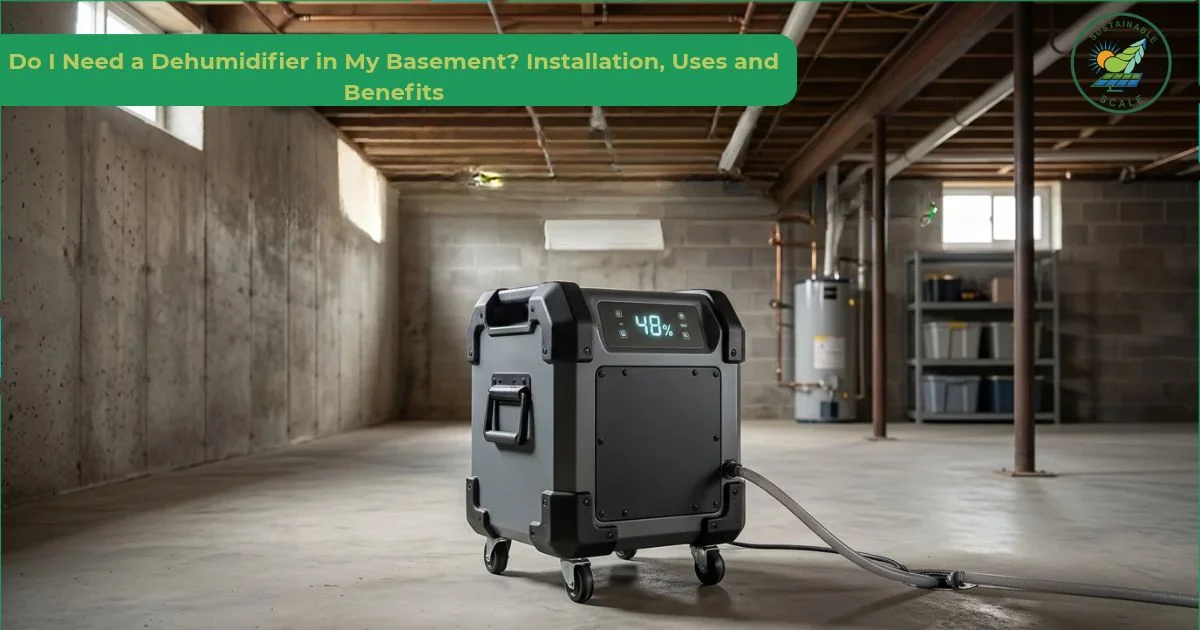
A dehumidifier works in the basement by removing excess moisture from indoor air through a precise sequence of operations. It draws in damp, heavy air using refrigerant filled coils through the intake vent. A basement dehumidifier cools the air with the evaporator coil, causing water vapor to condense into liquid, which collects in the collection tray or drainage system. It reheats the air with the condenser coil and releases dry, conditioned air back into the basement.
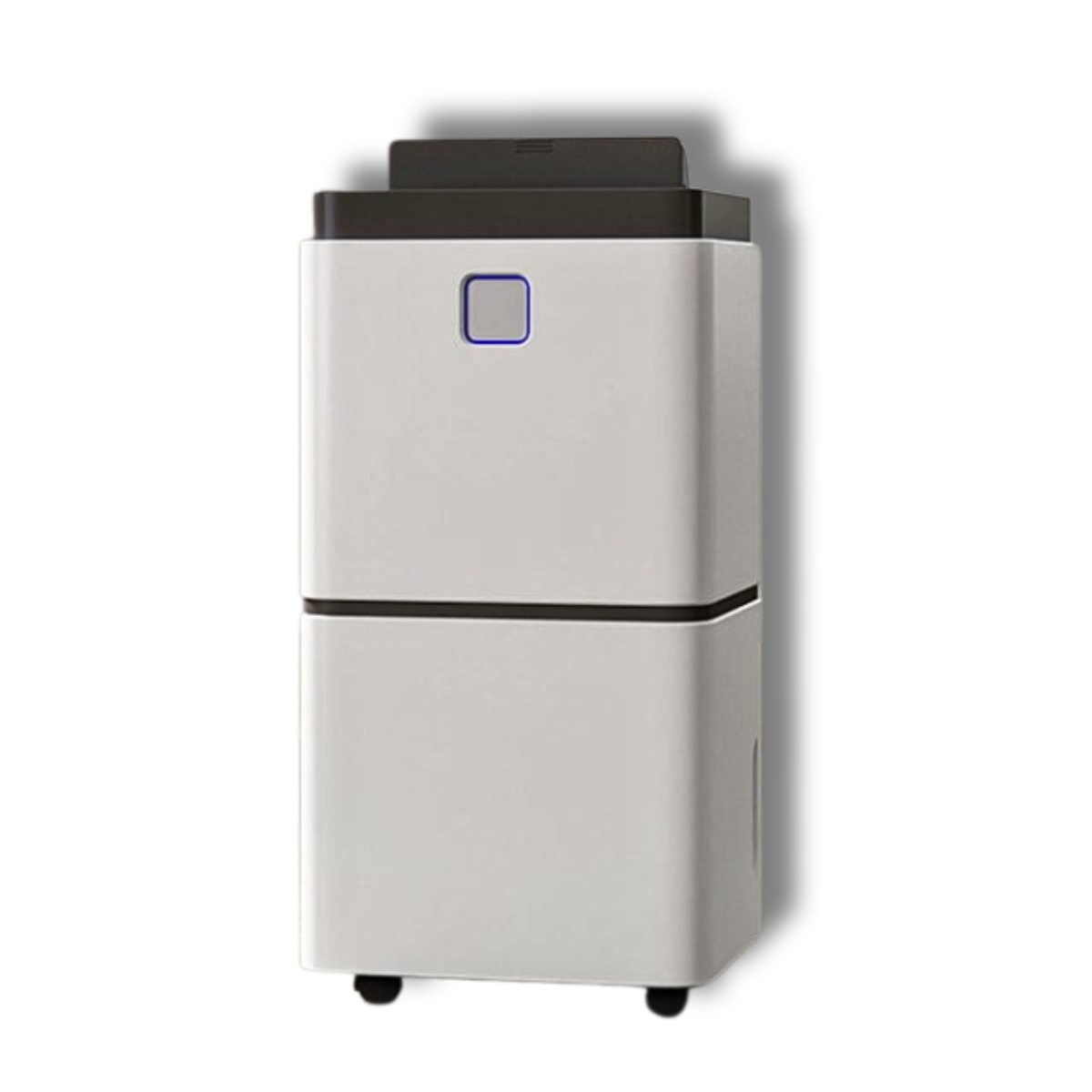
A dehumidifier contains essential components such as a compressor, evaporator coil, condenser coil, fan assembly, humidistat, water reservoir and drainage line. Its basement specific features include larger reservoirs, continuous drain connections, low temperature defrost sensors and high capacity refrigerant coils. It protects your home from moisture damage by maintaining basement humidity levels between 30 to 50%.
What size dehumidifier do I need for a basement?
You need a dehumidifier with a capacity of 50 to 70 pints per day (PPD) for a basement that depends on the basement’s size, drainage option and energy efficiency. A basement between 1,500 and 2,500 square feet, especially very damp basements, requires 70 to 80 PPD or up to over 100 PPD to remove moisture efficiently. A wet basement with visible moisture stains or 70 to 80% relative humidity requires 100 to over 145 PPD units and larger units secure faster humidity control and lower energy use. A basement in humid or hot regions needs larger units, while a basement in cooler, drier climates functions with 50 to 70 PPD units. A basement in extremely humid tropical climates requires commercial grade 120 to over 150 PPD units for year round moisture management.
What are the best dehumidifiers for a basement?
The best dehumidifiers for a basement include Midea Cube 50 Pint, Frigidaire 50 Pint and GoveeLife H7151. These are suited to different needs and spaces.
3 best dehumidifiers for a basement are listed below.
- Best dehumidifier overall: Midea Cube 50 Pint is the best basement dehumidifier because it offers strong moisture removal, a flexible stackable cube design and smart app control for easy monitoring.
- Best for high performance and large spaces: Frigidaire 50 Pint is ideal for big or very damp basements because it delivers fast drying performance, simple controls and convenient continuous drain options.
- Best budget option: GoveeLife H7151 is the best budget basement dehumidifier because it combines affordable pricing, app based smart control and reliable daily moisture removal for smaller or moderately damp basements.
How to install a dehumidifier in a basement?
To install a dehumidifier in a basement, choose the right unit, position the unit, set up continuous drainage and power on the unit.
4 steps to install a dehumidifier in a basement are outlined below.
- Choose the right unit: Choose the right basement dehumidifier sized for your square footage and dampness level. It secures its rating for cool, below‑grade spaces and has continuous drainage if possible.
- Position the unit: Position the dehumidifier on a level surface with good airflow, at least several inches from walls and away from dust, clutter or direct heat sources.
- Set up continuous drainage: Set up continuous drainage by attaching a drain hose if your dehumidifier model allows. Route it to a floor drain or condensate pump, which confirms the hose slopes downward with no kinks or sharp bends.
- Power on: Power on the unit, plug the dehumidifier into a grounded outlet and set your target humidity to 40 to 50%. Select fan speed and let it run while you monitor moisture and adjust settings as needed.
Where to place a dehumidifier in the basement?
To place a dehumidifier in the basement, choose a central location away from walls and obstructions to maximize moisture removal and airflow throughout the space. A basement dehumidifier should have free airflow on all sides, which maintains 6 to 12 inches of clearance from walls, furniture and stored items for proper circulation. It should be elevated on a flat, stable surface to prevent water damage and allow better air circulation underneath. You should place the dehumidifier closer to damp areas like corners, foundation cracks or condensation on walls, while maintaining clearance to secure consistent humidity control throughout the space.
Where to drain a dehumidifier in the basement?
You can drain a dehumidifier in the basement directly into a floor drain, utility sink, sump pit or outside through a window or wall hole. A basement dehumidifier’s simplest draining method is a gravity drain. Gravity drain connects a hose to the dehumidifier’s outlet and lets water flow downhill into a floor drain or sink without any pump. A dehumidifier in the basement uses a condensate pump to automatically move water up to 20 feet to a sink, window well or exterior drain. You can also run the drain hose directly into a sump pit or route it through a basement window or a small hole drilled through the foundation wall. Dehumidifiers also come with a built-in pump for automatic drainage. They allow manual emptying of the water bucket into a sink or toilet if no other drain options exist.
How to use a dehumidifier in the basement?
To use a dehumidifier in the basement, set the targeted humidity level at 40 to 50% relative humidity, which is ideal for most homes. It adjusts humidity to 45 to 50% in summer to reduce mold risk and maintain comfort, while in winter, it maintains 35 to 45% because cold air holds less moisture. It sets the humidity lower at 30 to 40% in very damp spaces with musty odors or visible condensation. A basement dehumidifier runs until moisture is under control, then returns to the standard range. You should place a dehumidifier on a flat, elevated surface with good airflow and set it within the recommended range for effective basement use. It cycles automatically according to your settings. A dehumidifier in the basement requires regular maintenance such as cleaning or replacing filters, checking coils and ensuring the drain or bucket functions properly. A basement dehumidifier works best with an independent hygrometer placed at chest height because built-in humidity sensors are inaccurate to verify actual humidity and fine tune settings.
When to use a dehumidifier in a basement?
The signs to use a dehumidifier in a basement are given below.
- High humidity levels: A dehumidifier should be used when the basement relative humidity exceeds 50 to 60% or the space feels uncomfortable for long periods.
- Visible mold or mildew: A dehumidifier should be used if you see mold spots on walls, furniture or stored items.
- Musty odors: A dehumidifier should be turned on if lingering musty or earthy smells indicate hidden dampness or early mold growth.
- Condensation or dampness: A dehumidifier is useful when condensation forms on windows, pipes, walls or when damp floors are present near corners.
- Post flooding or leaks: A dehumidifier should run continuously after flooding, burst pipes or leaks to dry materials, which prevent mold buildup.
- Humid seasonal conditions: A dehumidifier is effective during humid seasons when outside moisture raises basement humidity above safe levels.
When to turn off a dehumidifier in the basement?
The situations to turn off a dehumidifier in a basement are given below.
- Cold temperatures: A dehumidifier should be turned off when basement temperatures fall below 60°F(15°C), because cold air freezes coils.
- Low humidity levels: A dehumidifier should be switched off when humidity stays under 45%, which prevents wasted energy and unnecessary use.
- Dry seasonal conditions: A dehumidifier should be paused during winter months when indoor humidity naturally remains within the safe range.
- No moisture collection: A dehumidifier should be turned off if the bucket or drain stays dry for days, showing dryness.
How long to run a dehumidifier in the basement?
A dehumidifier in the basement should run 12 to 24 hours a day. You should run a dehumidifier in the basement continuously at first, especially in damp basements that hold a lot of moisture. It is best to run a basement dehumidifier 24/7 initially for several days so it removes moisture quickly. You should keep it operating until the humidity drops to your target level of 40 to 50%, especially in very damp or below‑grade spaces where long‑term operation is required.
What are the benefits of a dehumidifier in the basement?
A basement dehumidifier reduces excess moisture, protecting your health, home and stored belongings in cool, damp, below‑grade spaces.
The benefits of a dehumidifier in the basement are listed below.
- Prevents mold and bacteria growth: A dehumidifier reduces excess moisture so humidity stays below 50 to 60%. It creates dry conditions that discourage mold, mildew, dust mites and moisture‑loving bacteria from colonizing surfaces.
- Eliminates musty odors: A dehumidifier dries damp air and materials, removing the moisture that feeds mold and mildew, which in turn reduces persistent musty, earthy basement smells that spread upstairs.
- Protects structural integrity: A dehumidifier helps protect your building’s structural integrity by limiting moisture that causes wood rot, peeling paint, rusted metal and gradual damage to beams, joists and subfloors.
- Improves indoor air quality: A dehumidifier lowers airborne mold spores and allergens from damp basements. It improves indoor air quality and reduces respiratory irritation for people with asthma or allergies.
- Enhances HVAC efficiency: A dehumidifier makes basement and upstairs air easier to heat and cool. It reduces the load on your HVAC system and potentially lowers energy use, especially in humid summers and winters.
- Protects stored items: A dehumidifier keeps humidity low around cardboard boxes, clothing, furniture and electronics. It reduces warping, rust, mold stains and deterioration of valuables stored in the basement.
- Increases usable space: A dehumidifier turns a damp, uncomfortable basement into a drier, more comfortable area that can be safely used as a living, storage, office or recreational space year‑round, including winter.
Will a basement dehumidifier help the whole house?
Yes, a basement dehumidifier will help lower humidity in the whole house, but only partially. It works best when moisture originates in the basement and when airflow between floors is good. A ducted whole house dehumidifier or multiple units are more effective for consistent, balanced humidity control throughout the home.
Will a dehumidifier in the basement help the upstairs?
Yes, a dehumidifier in the basement will help the upstairs because it removes moisture from the basement air. These are the main sources of humidity rising through the home. A dehumidifier in the basement will not control humidity effectively as a dedicated unit or system serving the upper floors directly.
Do I need to run a dehumidifier in my basement in winter?
No, you do not need to run a dehumidifier in your basement in winter because cold air holds less moisture. This makes the air naturally drier and most basements stay within a safe range. You only need to run a dehumidifier in winter if a hygrometer reads above 50 to 60% or you notice dampness or mold.
Should I leave my basement dehumidifier on all the time?
No, you should not leave your basement dehumidifier on all the time because it wastes energy. You can run a basement dehumidifier frequently during humid seasons, but once humidity stays around 40 to 50%, switch to an automatic mode or humidistat.
Is it worth having a dehumidifier in the basement?
Yes, it is worth having a dehumidifier in the basement because it reduces excess moisture that damages wood, concrete and finishes. It prevents mold and mildew growth, eliminates musty odors, improves overall air quality and protects your home from structural damage.
What happens if you don’t run a dehumidifier in your basement?
If you don’t run a dehumidifier in your basement, moisture can build up and harm both your home and your health. A basement’s high humidity causes musty odors, mold growth, warped wood and damage to structural materials. Its damp conditions attract pests and worsen allergies or other respiratory issues.
Do I need a dehumidifier or a humidifier for my basement?
Yes, you need a dehumidifier or humidifier for your basement, depending on your humidity levels. A dehumidifier removes excess moisture to prevent mold and damage if the basement is damp or has above 50 to 60% humidity. A humidifier adds moisture for comfort and to protect the mater, if it is very dry below 30 to 35% in winter.
Products
Solar Panel
Air Purifier