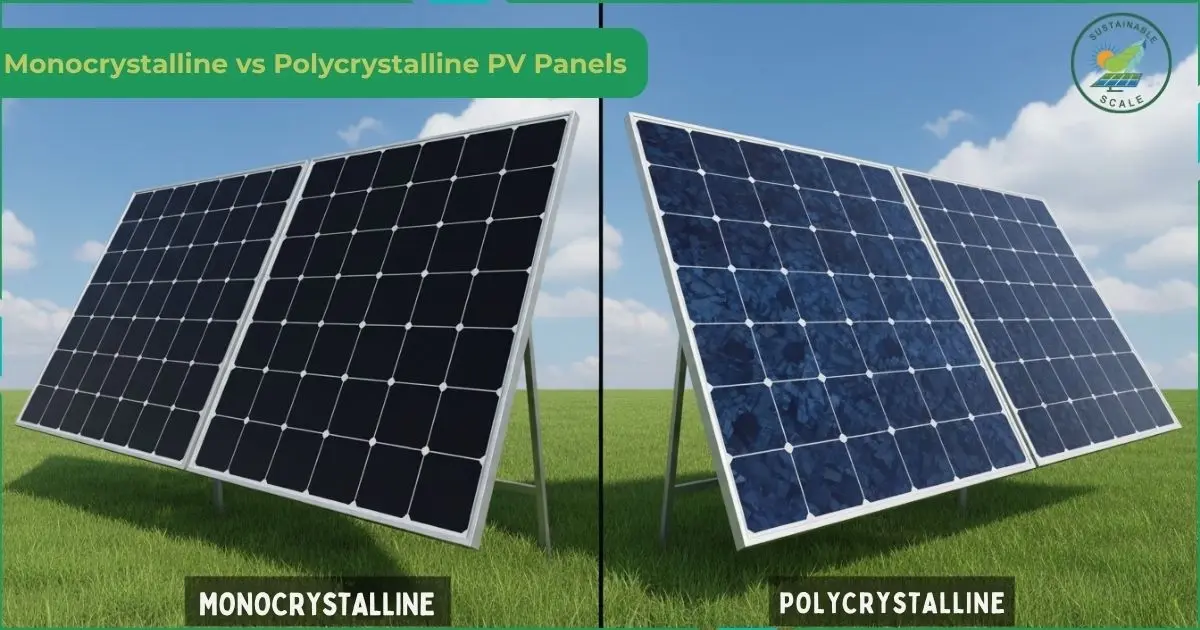

Monocrystalline and polycrystalline solar panels are both popular pv module types, but they differ in structure, efficiency, cost and appearance. Monocrystalline panels are made from a single, high-purity silicon crystal which gives them a uniform black look and higher efficiency of 17% to 22%. They perform better in high temperatures, require less space for the same output and last 30 to 40 years.
Polycrystalline panels are produced by melting multiple silicon fragments which results in a blue, speckled appearance and lower efficiency of 13% to 17%. They are less efficient and slightly bulkier, but are more affordable, generate less manufacturing waste and offer solid durability, lasting around 25 to 30 years.
You need to consider your available space, budget, climate and energy needs when choosing between monocrystalline or polycrystalline solar panels. Monocrystalline panels are ideal for limited space and higher long-term performance, while polycrystalline panels suit larger installations with tighter budgets. Both types of photovoltaic panels are reliable, but monocrystalline panels offer better efficiency and longevity.
What are monocrystalline solar panels?
Monocrystalline solar panels, also known as mono-crystalline or single-crystal solar panels, are a type of photovoltaic (PV) panel that are made from a single, high-purity silicon crystal grown as a cylindrical ingot to generate electricity from sunlight. They are the most efficient and high-quality solar panels available for residential and commercial applications.
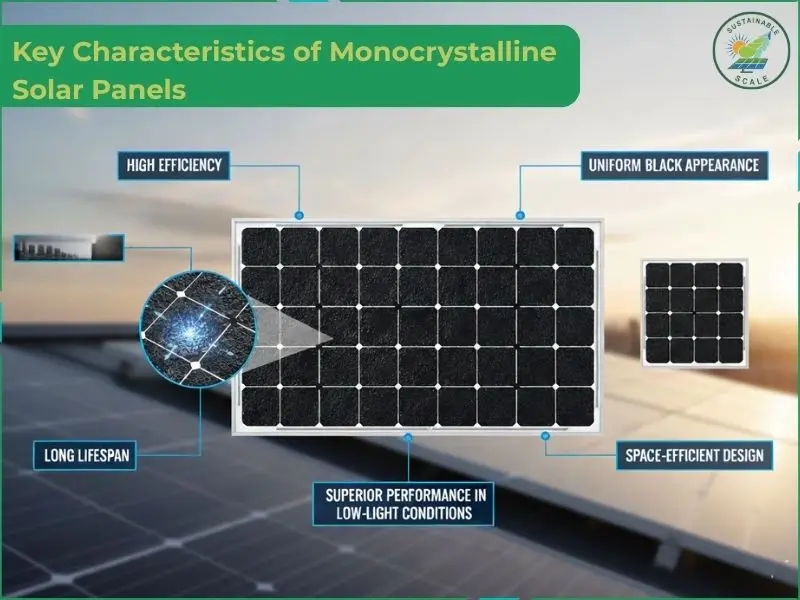
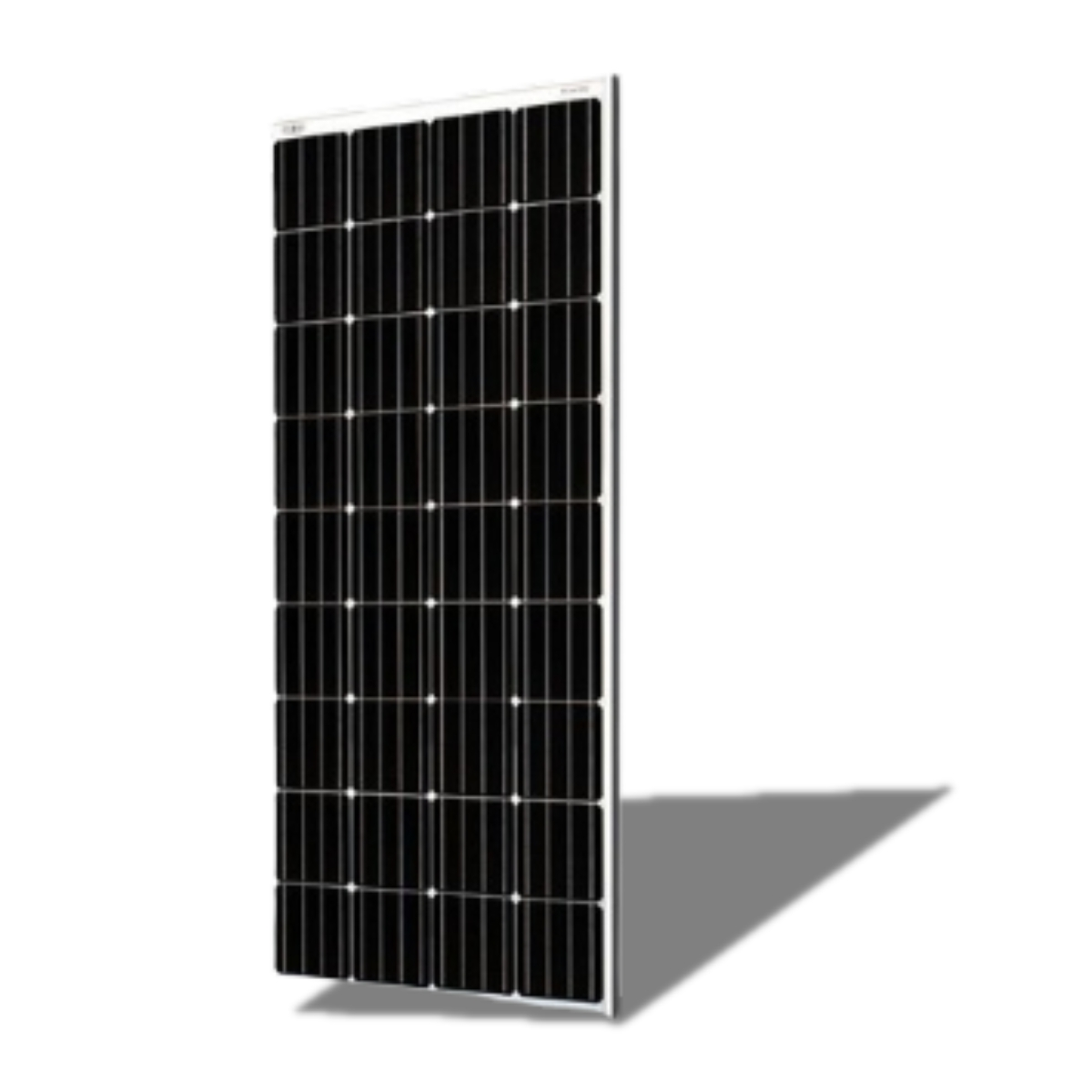
The key characteristics of monocrystalline solar panels like efficiency, appearance, lifespan and design are shown below.
What are polycrystalline solar panels?
Polycrystalline solar panels, also known as multicrystalline solar panels, are a type of photovoltaic panel made by melting together multiple fragments of silicon to form the wafers that make up each solar cell. Polycrystalline panels are composed of many smaller silicon crystals fused together which gives them their characteristic blue, mosaic-like appearance.
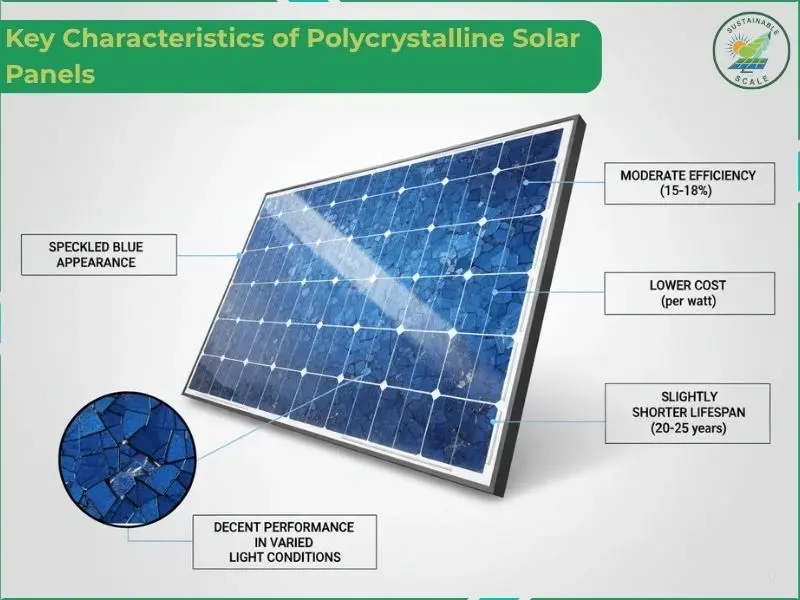
The key characteristics of polycrystalline solar panels such as efficiency, cost, lifespan and appearance are shown below.
What are the differences between monocrystalline and polycrystalline solar panels?
The differences between monocrystalline and polycrystalline solar panels are based on their cost, efficiency, color, manufacturing, temperature coefficient and durability.
Monocrystalline panels are constructed from single and high-purity silicon crystals, which give them a uniform black color and rounded edges. This structure provides higher energy conversion efficiency which ranges from 17% to 22%, making them ideal for installations where space is limited. They also perform better in high temperature environments and lose less efficiency as temperatures rise. Their manufacturing process is more complex and energy-intensive and results in a higher price point.
Polycrystalline panels, in contrast, are made by melting together multiple silicon fragments, producing a blue, mosaic like appearance and square shaped cells. They are less efficient, between 15% and 17%, but are more affordable and easier to manufacture.
Both monocrystalline and polycrystalline solar panels are durable and can last for decades, but monocrystalline panels give superior performance and longevity, whereas polycrystalline panels are favored for their cost-effectiveness and straightforward production. You need to consider your budget, space and specific energy needs when choosing between them.
1. Cost difference between monocrystalline and polycrystalline solar panels
Monocrystalline solar panels are more expensive than polycrystalline solar panels and cost between 30 and 50 cents per watt, which means a 400-watt panel ranges from $120 to $200 in the United States. Polycrystalline panels are less expensive and are priced from 25 to 70 cents per watt, so a similar size panel costs $100 to $210.
2. Efficiency difference between monocrystalline and polycrystalline solar panels
Monocrystalline solar panels are more efficient than polycrystalline panels, which means monocrystalline panels generate more electricity per square foot, but require a higher initial investment. Monocrystalline solar panels offer efficiencies between 15% and 24%, with most modern panels in the 17 to 22% range. Polycrystalline panels achieve 13 to 20% efficiency, most commonly 15 to 17%. Monocrystalline panels are about 20% more efficient than polycrystalline ones to provide greater energy production from the same area, which makes them preferable where space is limited.
3. Appearance difference between monocrystalline and polycrystalline solar panels
Monocrystalline solar panels have a uniform deep black or very dark blue color, while polycrystalline solar panels have a blue or sometimes bluish-silver hue, with a speckled or marbled appearance. This difference in appearance is due to the silicon crystal structure used in each panel’s manufacturing. Monocrystalline panels are made from a single, large silicon crystal, while polycrystalline panels are made from multiple smaller crystals melted together.
Monocrystalline panels have a smooth and uniform surface, while polycrystalline panels have a less smooth surface with visible crystalline granules or grain-like structures.
Solar cells in monocrystalline solar panels have rounded or cut-off corners which gives them a unique look, while polycrystalline panels are square-shaped with sharp edges and lack the rounded corners.
4. Durability difference between monocrystalline and polycrystalline solar panels
Monocrystalline solar panels offer greater durability and a longer lifespan compared to polycrystalline panels. Monocrystalline panels last between 30 and 40 years, while polycrystalline panels begin to struggle after 25 to 35 years. Both types can withstand harsh weather, but monocrystalline panels are less affected by high temperatures and maintain their efficiency better over time due to a lower temperature coefficient. This means monocrystalline panels not only last longer but also degrade more slowly and provide long-term performance.
5. Longevity difference between monocrystalline and polycrystalline solar panels
Monocrystalline and polycrystalline solar panels both provide long service lives, but monocrystalline panels are more durable and have a longer lifespan. Monocrystalline panels operate efficiently for 30 to 40 years, while polycrystalline panels usually last about 25 to 30 years before their performance declines.
The difference in longevity of monocrystalline and polycrystalline panels is due to the superior initial quality and slower degradation rate of monocrystalline cells, which maintain higher efficiency even after decades of use.
6. Temperature coefficient difference between monocrystalline and polycrystalline solar panels
Monocrystalline solar panels have a lower temperature coefficient, between -0.3% to -0.5% per °C, meaning they lose less efficiency when temperatures rise. Polycrystalline panels have a higher coefficient, between -0.37% to -0.5% per °C or higher, so they lose more output in heat. Monocrystalline panels, therefore, perform better and maintain higher efficiency in hot conditions than polycrystalline panels.
What are the pros and cons of monocrystalline solar panels?
Monocrystalline solar panels are highly efficient, require less space than other types and last longer. They perform well in high temperatures and low-light conditions and have an attractive appearance. However, they are more expensive due to complex manufacturing, can be fragile and lose some efficiency if partially shaded or exposed to certain environmental factors.
What are the advantages of monocrystalline solar panels?
The advantages of monocrystalline solar panels are given below.
- Monocrystalline solar panels offer the highest efficiency among mainstream solar types, ranging from 15% to 24%.
- Monocrystalline solar panels require up to 20 to 30% less space than polycrystalline panels for the same power output.
- Monocrystalline solar panels have a long lifespan and last 30 to 40 years.
- Monocrystalline solar panels perform better in heat, with a low temperature coefficient of about -0.3% to -0.5% per °C.
- Monocrystalline solar panels feature a sleek, uniform black appearance, which people find visually appealing.
- Monocrystalline solar panels maintain up to 90% of their rated output even in low-light conditions.
What are the disadvantages of monocrystalline solar panels?
The disadvantages of monocrystalline solar panels are given below.
- Monocrystalline solar panels cost about 20 to 30% more than polycrystalline panels.
- Monocrystalline solar panels generate up to 30 to 50% of silicon waste during manufacturing.
- Monocrystalline solar panels are fragile and require tempered glass for protection.
- Monocrystalline solar panels lose 10 to 30% efficiency when partially shaded, depending on the setup.
What are the pros and cons of polycrystalline solar panels?
Polycrystalline solar panels are known for their lower cost and eco-friendly manufacturing, as they generate less silicon waste. Their efficiency is between 13% and 16%, so more panels or space is needed for the same power output. They are durable in various climates, but perform less efficiently in high heat and have a blue, grainy look.
What are the advantages of polycrystalline solar panels?
The advantages of polycrystalline solar panels are outlined below.
- Polycrystalline solar panels are more cost-effective, with prices lower than monocrystalline panels.
- Polycrystalline solar panels use a simpler manufacturing process that generates less silicon waste and is more environmentally friendly.
- Polycrystalline solar panels can function reliably in a wide range of climates and are built to withstand various weather conditions.
- Polycrystalline solar panels use recycled silicon and reduce the environmental impact of production.
What are the disadvantages of polycrystalline solar panels?
The disadvantages of polycrystalline solar panels are outlined below.
- Polycrystalline solar panels have lower efficiency which ranges from 13% to 16%.
- Polycrystalline solar panels require more roof or ground space to produce the same power as more efficient panels.
- Polycrystalline solar panels are more affected by high temperatures and cause a greater drop in efficiency in hot climates.
- Polycrystalline solar panels have a less uniform, blue and grainy appearance, which some consider less aesthetically pleasing.
- Polycrystalline solar panels are less efficient in low-light conditions compared to monocrystalline panels.
How to choose between monocrystalline or polycrystalline solar panels?
To choose between monocrystalline or polycrystalline solar panels, you need to consider your available space, budget, climate conditions and efficiency needs or long-term energy goals.
The process for selecting the right solar panel is outlined below.
- Check the available space on your roof or property because monocrystalline panels need less space for the same output, so they are better if space is limited.
- Review your budget, as polycrystalline panels are more affordable upfront, while monocrystalline panels cost more but offer better long-term value.
- Assess your efficiency needs because monocrystalline panels have higher efficiency (15 to 23%) and perform better in producing more electricity from the same area.
- Consider your local climate because monocrystalline panels handle high temperatures better and lose less efficiency in hot weather.
- Think about the visual appearance of your solar panels. monocrystalline panels have a sleek black look, while polycrystalline panels are blue and speckled.
- Compare the expected lifespan of monocrystalline and polycrystalline panels. Monocrystalline panels last longer and maintain performance better over time.
- Research solar manufacturer reputation, warranty and support before making a final decision and this is important when selecting both types.
How to identify if a solar panel is monocrystalline or polycrystalline?
To identify if a solar panel is monocrystalline or polycrystalline, check the color and appearance of the solar cells because both use silicon but differ in crystal structure. Monocrystalline panels have black cells and a sleek, uniform look with rounded edges. Polycrystalline panels have blue cells with a speckled, less uniform appearance and square edges.
What is the manufacturing process for monocrystalline and polycrystalline solar panels?
The manufacturing processes for monocrystalline and polycrystalline solar panels share overlapping steps but differ in crystal formation. Monocrystalline panels begin with the Czochralski process, a silicon seed crystal is dipped into molten polysilicon and slowly rotated or pulled upward to grow a cylindrical single-crystal ingot. This ingot is sliced into thin wafers using diamond-coated wire saws.
Polycrystalline panels use directional solidification, multiple silicon fragments are melted in a mold and cooled slowly from the bottom up, forming a multicrystalline ingot with multiple crystal grains. Both types then proceed to cell fabrication, where wafers are chemically textured, doped with phosphorus (for electron-rich layers) and coated with anti-reflective materials.
What are the maintenance requirements for monocrystalline and polycrystalline solar panels?
Monocrystalline and polycrystalline solar panels both require minimal maintenance with regular cleaning at least twice a year or more in dusty areas, periodic visual inspections to check for damage or debris and monitoring of system performance for efficiency drops. Wiring and connections should be inspected by professionals every few years for safety and optimal function.
What are the environmental impacts of producing monocrystalline and polycrystalline solar panels?
Monocrystalline solar panels have higher environmental impacts during production due to energy-intensive processes like silicon molding and cutting which generates greenhouse gas emissions when powered by fossil fuels. Polycrystalline panels, on the other hand, have a lower carbon footprint as they avoid single-crystal formation complexities while still requiring substantial energy for silicon melting.
Are Tesla solar panels monocrystalline or polycrystalline?
Tesla solar panels are monocrystalline because they are manufactured using high-efficiency monocrystalline silicon cells, which are known for their sleek appearance, high energy conversion rates, from 19.3% to 20.9% efficiency, and reliable performance. Tesla uses its own proprietary technology for these panels and offers them in various sizes for residential and commercial installations.
Do monocrystalline solar panels require direct sunlight?
No, monocrystalline solar panels do not require direct sunlight to function; they can generate electricity from both direct and indirect sunlight, including on cloudy days or in partial shade. However, their efficiency and energy output are higher under direct sunlight, which is why optimal performance is achieved with ample direct sun exposure.
Which is better, N type or P type solar panels?
N-type solar panels are better than P-type panels for most users due to their higher efficiency which is 25% or more versus P-type’s 23% or less, longer lifespan, and resistance to light and potential induced degradation.
N-type panels are more expensive and less widely available compared to the more affordable and common P-type panels.
What are the other types of solar panels?
Other types of solar panels are thin-film, PERC, bifacial, transparent, solar tiles and perovskite panels. Each of these offers unique features such as flexibility, higher efficiency, dual-sided energy capture, transparency, roofing integration or cutting-edge technology for different applications beyond traditional crystalline silicon panels.
Solar Panel

Air Purifier